
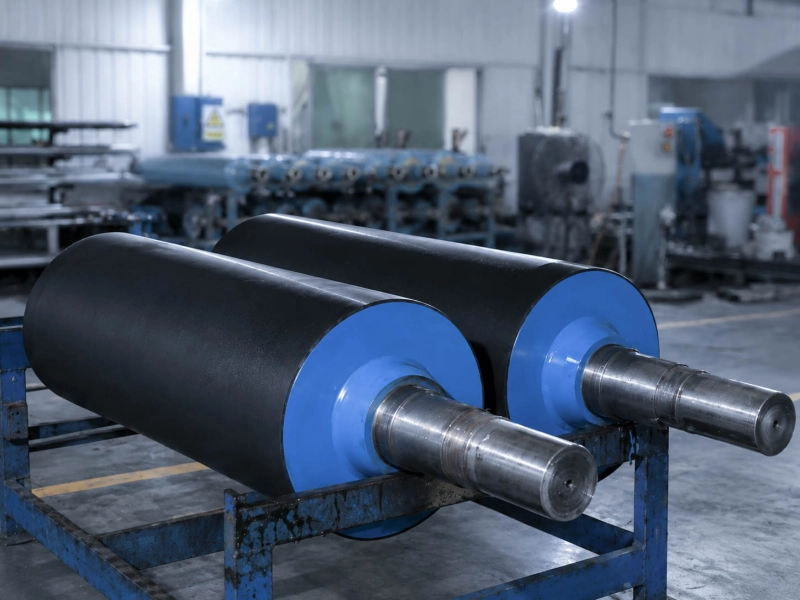
Two large black rubber rollers with blue end plates stored on a steel rack in a factory workshop

Plywood Glue Spreader Roll Covers: What to Specify

Plywood Glue Spreader Roll Covers: What to Specify Replacing a plywood glue spreader rubber roller is usually straightforward when the original roll has performed well and its specifications are available. If the adhesive, veneer width, and operating conditions remain unchanged, you can request a quotation based on the original dimensions and groove design. First, confirm

Plywood Glue Spreader Roll Covers: What to Specify Read More »
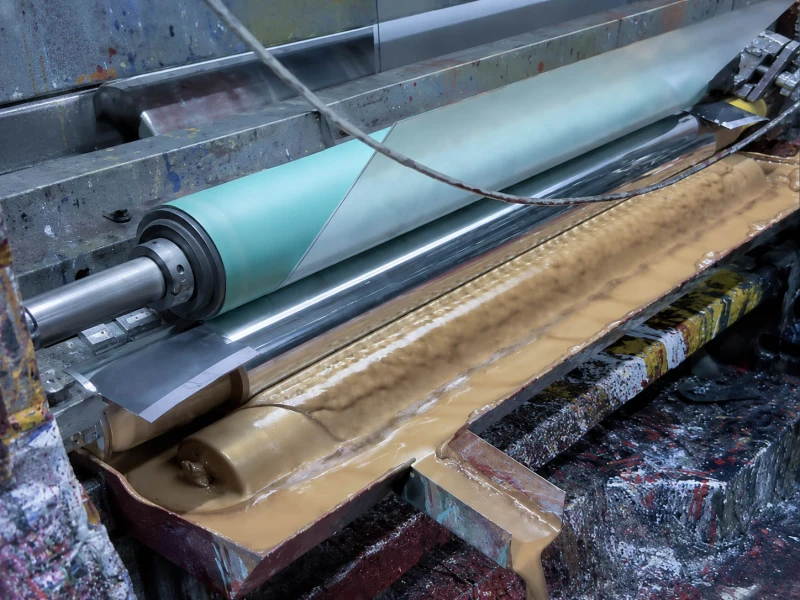
industrial transfer and coating roller process

Plywood Glue Spreading Problems: Bare Spots and Uneven Coverage

Plywood Glue Spreading Problems: Bare Spots and Uneven Coverage Bare spots on plywood veneer may appear as scattered dry patches, a continuous strip, or marks repeating along the feeding direction. The first step is to find out whether the missing glue follows the wood, stays at one position across the machine width, or repeats with

Plywood Glue Spreading Problems: Bare Spots and Uneven Coverage Read More »

Offset Roller Diameter Change After Washing

Offset Roller Diameter Change After Washing An offset press may run normally before washup, then show a different nip stripe, unstable ink transfer, or a roller that feels softer or harder afterward. If that happens, measure the roller before changing the pressure. Check diameter and hardness while the roller is stable, immediately after washing, and

Offset Roller Diameter Change After Washing Read More »

Gravure ESA Impression Roll Problems

Gravure ESA Impression Roll Problems Weak electrostatic assist often appears first as a printing change. Fine image areas develop more missing dots, one band across the web transfers less cleanly, or the improvement normally seen with ESA on becomes noticeably smaller. Arcing and changing resistance give stronger location clues. Pay particular attention when either starts

Gravure ESA Impression Roll Problems Read More »