Custom Rubber Traction Rollers

Traction rollers are used where the line needs steady feeding, controlled grip, and stable speed synchronization between the roller surface and the moving material.

A traction roller is not judged only by whether it turns. It is judged by whether it can keep holding the material steadily during start-up, acceleration, speed changes, and continuous running, without creating unnecessary marking, drag, or unstable feeding.

On many film, paper, foil, nonwoven, fabric, and similar web handling lines, traction rollers are reviewed when customers see slipping, unstable feeding, poor synchronization, or downstream instability before guiding, slitting, laminating, printing, or rewinding.

If the problem only appears during start-up, acceleration, or after the roller surface changes, the traction position often needs a more specific review than a simple replacement by size.

You do not need everything ready before contacting us.

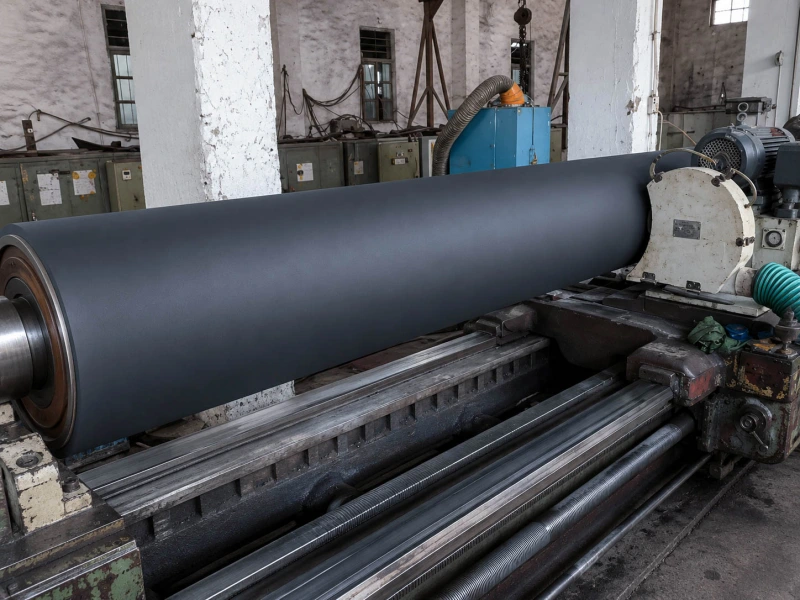
Black rubber traction roller mounted on a factory lathe

What a Traction Roller Actually Does on the Line

A traction roller is there to keep the material moving in a controlled way. It is not simply there to create more friction.

In actual production, it is usually expected to help with:

steady feeding into the next section

stable grip during start-up, stopping, and acceleration

speed synchronization between upstream and downstream sections

lower risk of slipping before guiding, slitting, laminating, printing, or rewinding

enough traction without crushing, scratching, stretching, or marking the material

more stable web handling when speed, tension, or surface condition changes

A usable traction setup is always a balance. Too little grip leads to slipping and unstable feeding. Too much grip can create drag marks, indentation, abrasion, local stretching, or faster cover wear.

For this reason, traction review should focus on controlled feeding and stable contact, not on making the surface as aggressive as possible.

Where Traction Requirements Usually Change

Traction review often becomes more sensitive in the following positions:

Start-up and acceleration positions

A setup that looks acceptable at steady speed may still slip during start-up or acceleration, especially when wrap angle is limited or grip reserve is not high enough.

Before guiding or slitting

If traction becomes unstable before a guide section or knife section, customers may first notice tracking movement, tension variation, or unstable slitting before they identify the traction position as the source.

Before rewinding

When the material reaches rewinding in an unstable state, winding quality may change even if the rewinding section itself is not the original cause.

Smooth, low-friction, or surface-sensitive materials

Some films, foils, coated materials, and release-oriented surfaces are harder to hold steadily. In these positions, traction has to be reviewed together with pressure, wrap angle, and surface finish.

Contaminated or heat-affected sections

Dust, mist, adhesive transfer, release agents, heat, or general surface contamination can change traction behavior much faster than expected.

Key Parameters for Traction Roller Selection

The performance of a traction roller is usually determined by hardness, surface finish, contact pressure, wrap angle, line speed, and the surface condition of the material being handled.

Parameter Impact on Traction Performance
Hardness Traction rollers are commonly evaluated in the range of approximately 50–90 Shore A. Softer covers help improve contact conformity, while harder covers offer better shape stability and wear resistance. The final hardness should be confirmed based on pressure, material surface, and indentation risk.
Surface Finish Smooth, matte, traction-oriented, grooved, crowned, or other custom surfaces can affect grip, air or liquid release, material protection, and running stability.
Contact Pressure Insufficient pressure can lead to slipping. Excessive pressure may damage the material surface or accelerate roller wear.
Wrap Angle A smaller wrap angle means less effective contact between the material and the roller surface, which increases the demand for reliable grip.
Line Speed and Start-Stop Conditions High-speed operation, frequent stopping, starting, or acceleration can make slippage and speed synchronization problems more obvious.
Material Surface Smooth film, paper, nonwoven, foil, and fabric all have different requirements for friction, indentation control, and surface protection.
Condition of the Existing Roller If the old roller surface has become glossy, worn, hardened, or locally damaged, its original hardness and surface condition may no longer represent the actual requirement.

Hardness

Traction rollers are commonly evaluated in the range of approximately 50–90 Shore A. Softer covers help improve contact conformity, while harder covers offer better shape stability and wear resistance. The final hardness should be confirmed based on pressure, material surface, and indentation risk.

Surface Finish

Smooth, matte, traction-oriented, grooved, crowned, or other custom surfaces can affect grip, air or liquid release, material protection, and running stability.

Contact Pressure

Insufficient pressure can lead to slipping. Excessive pressure may damage the material surface or accelerate roller wear.

Wrap Angle

A smaller wrap angle means less effective contact between the material and the roller surface, which increases the demand for reliable grip.

Line Speed and Start-Stop Conditions

High-speed operation, frequent stopping, starting, or acceleration can make slippage and speed synchronization problems more obvious.

Material Surface

Smooth film, paper, nonwoven, foil, and fabric all have different requirements for friction, indentation control, and surface protection.

Condition of the Existing Roller

If the old roller surface has become glossy, worn, hardened, or locally damaged, its original hardness and surface condition may no longer represent the actual requirement.

Common Problems

We usually start checking a traction roller when the line still runs, but no longer runs steadily enough.

Typical first signs include:

Common causes often include an overly smooth surface, surface contamination, unsuitable hardness, insufficient pressure, limited wrap angle, or mismatch between the cover and the material being handled.

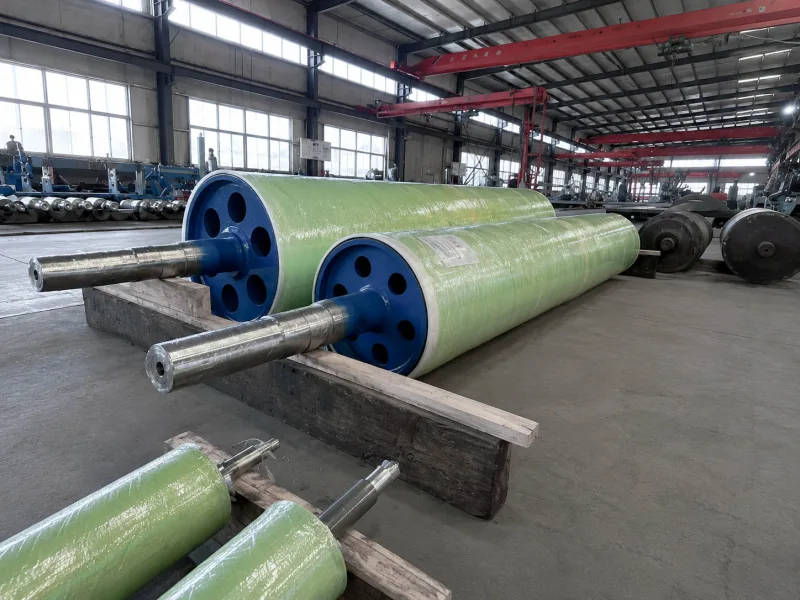
green rubber traction roller batch

How to Judge Whether the Problem Really Comes From the Traction Roller

A traction roller can directly affect slipping and unstable feeding, but not every traction-related symptom starts from the roller alone.

More likely roller-related

The issue is more likely to come mainly from the traction roller when:

  • the roller surface has become glossy, worn, hardened, or contaminated
  • grip clearly decreases after surface aging or local damage appears
  • the line runs better temporarily after the roller is cleaned, but the problem returns soon
  • hardness, pressure, or surface finish does not match the actual material and running condition
  • wrap angle is limited, but the surface still cannot hold the material reliably
  • the old roller was copied by size only, while the running condition itself was never reviewed

More likely line-related or mixed

The issue is more likely to involve the line condition as well when:

  • tension control has changed
  • drive synchronization is unstable
  • installation accuracy or roller runout is not normal
  • the material surface condition has changed
  • line speed, acceleration pattern, temperature, or downstream load is different from before

In many real projects, the correct answer is not “roller only” or “machine only.” The traction position and the overall line condition often need to be checked together.

Why Copying an Old Roller Is Often Not Enough

For traction positions, copying an old roller by outside diameter and cover material alone is often not enough.

That is usually because one or more of these things have already changed:

the old surface has become glossy, worn, hardened, or contaminated over time

the original hardness is no longer the actual working hardness

the old design was only marginally acceptable, but the line kept running until the problem became more obvious

the material surface has changed

the line now runs faster, starts harder, or has a different downstream load

the section after the traction roller has become more sensitive than before

If the running problem has already changed, copying the same outside dimensions and nominal rubber type may only reproduce the same failure mode.

How the Material Being Handled Changes the Review

The same traction idea does not perform the same way on every material.

Smooth film and coated web

These positions often need stable grip without drag marks or pressure marks. On many Film Converting Rollers lines, the traction condition has to stay stable before the material enters guiding, slitting, laminating, or rewinding sections.

Flexible packaging structures

On many Flexible Packaging Rollers lines, traction often has to stay stable through start-up, acceleration, and structure change while still protecting printed or treated surfaces.

Slitting and rewinding positions

On many Slitting and Rewinding Line Rollers positions, a traction problem may first appear as unstable feeding, edge movement, tension variation, or less consistent winding quality.

Paper, nonwoven, and fabric

These materials may respond differently to compression, dust, moisture, and surface conformity. In some positions, stable feeding depends not only on nominal grip, but also on contact consistency.

Foil and thin metal strip

Foil handling can become more sensitive when the surface is smooth, thin, or easier to mark. The roller has to hold the material steadily without creating unnecessary surface risk.

Common Material and Surface Options

There is no single universal material for every traction roller. The correct direction depends on what the roller is trying to do on the line.

Common material directions include:

polyurethane rubber rollers — often reviewed where wear resistance, grip stability, and service life matter

NBR / nitrile rubber rollers — often reviewed for some oil-contact, adhesive, printing, or general industrial contact positions

EPDM, neoprene, natural rubber, or SBR directions — sometimes reviewed for more general traction positions depending on resilience, environment, and operating demand

anti-static / conductive rubber rollers — often reviewed where static build-up, dust attraction, or contamination risk affects feeding stability

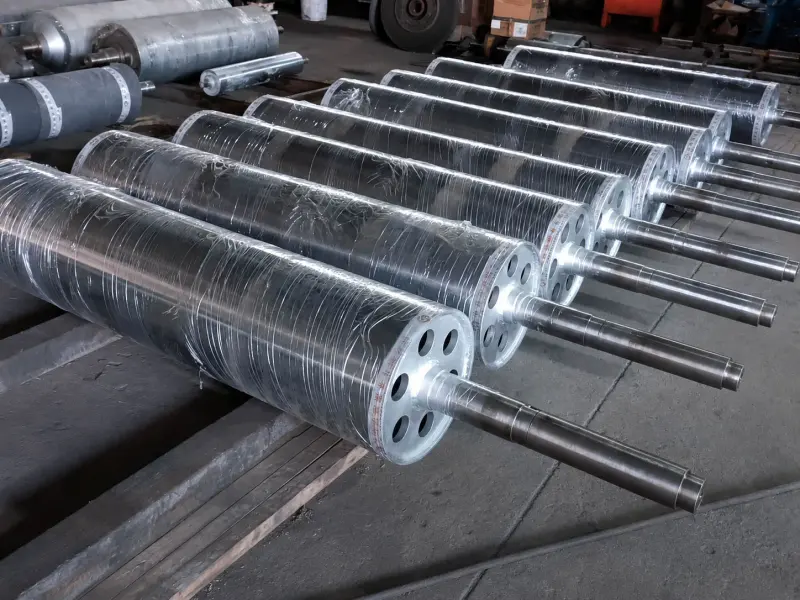
traction roller batch

Common surface directions include:

smooth surface — when surface protection matters more

matte or traction-oriented surface — when more reliable grip is needed

grooved surface — when air release, drainage, or certain contact behavior matters

crowned surface — in some cases where contact compensation is needed across the face width

Material and surface should be reviewed together. A traction roller that grips well but damages the material is not a successful result.

Frequently Asked Questions

In many cases, they can be understood in a similar way.

“Feed roller” usually refers to a roller that feeds material into or out of a section. “Traction roller” places more emphasis on grip, stable feeding, and speed synchronization.

If the main issue is slipping, poor grip, or unstable web speed, it is better to evaluate the roller as a traction roller.

No.

A softer rubber cover can conform better to the material, but it may also cause deformation, heat build-up, faster wear, or unstable speed response.

A harder cover is usually more stable and wear-resistant, but if the contact condition is not suitable, it may provide insufficient grip or create indentation risks.

Hardness should be confirmed based on the material surface, pressure, wrap angle, line speed, and indentation requirements.

No.

Polyurethane is common in traction positions where wear resistance, grip, load capacity, and service life are important. However, it is not the fixed answer for every traction roller.

If the application involves heat, oil, weather exposure, release requirements, or surface protection concerns, NBR, EPDM, silicone, or other compound options may be more suitable.

If the old roller has been running stably, replacement based on the existing specifications is usually workable.

If the old roller already shows slipping, fast wear, glossy surface, hardening, indentation, or speed synchronization problems, the material, hardness, and surface finish should be reviewed together with the current operating issue.

Custom Roller Manufacturing, Formulations, and Quality Control

A reliable rubber roller depends on more than size matching. Compound formulation, hardness stability, cover thickness, surface finish, shaft structure, and running accuracy all affect how the roller performs on your line.

Wolorin supports both routine replacement roller projects and more demanding custom industrial rubber roller projects, with established manufacturing experience, production equipment, inspection equipment, available certificates, and documented quality checks. Our rubber compound formulation system can be matched to different operating requirements.

Before shipment, key items such as cover hardness, shaft details, surface condition, and running accuracy can be checked according to project requirements.

You can review our manufacturing scope, quality control process, and company background through the pages below.

Request a Quote

If you already have drawings, dimensions, or existing roller details, you can send them directly for customization.

If the information is not complete, you can also start by sending the operating position, contact material, and current problem. Wolorin will help confirm a suitable material, hardness, surface finish, and structure based on the actual role of the roller in your production line.