Solid silicone
Heat, sticking, release, surface-sensitive contact, or long-running stability is the main concern
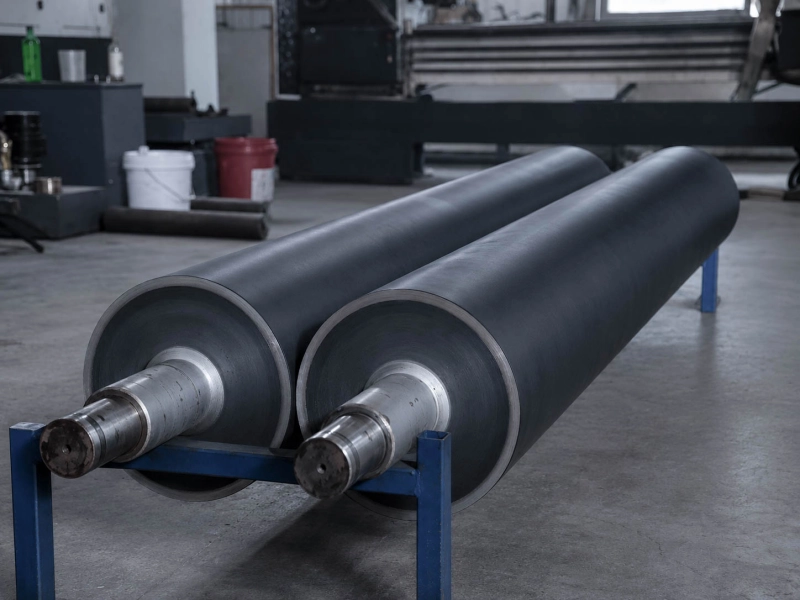
Solid silicone rollers are used when a roller cover needs to stay stable under heat, reduce sticking, and keep controlled contact with the material surface.
They are often reviewed for heated contact, release-related sections, pressure contact, transfer support, guide contact, and film or coating lines where the roller surface cannot change too quickly during use.
The final result is usually decided by material grade, hardness, surface finish, cover thickness, roller structure, and actual line conditions.
You do not need complete drawings to start. Roller size, photos, working position, contact material, operating temperature, or the current surface problem can already help with the first review.
Good heat stability
Reliable mechanical performance
Good aging resistance and long-term stability
Suitable for projects that require surface protection and stable contact performance
Can be further adjusted according to project requirements
In some applications, solid silicone can also combine anti-stick performance, release properties, and surface protection.
However, actual performance still depends on the specific role of the roller on the line and whether it has been properly configured.
These characteristics still need to be judged by roller position. A silicone covering used on pressure rollers, transfer rollers, guide rollers, or tension control rollers may require different hardness, finish, cover thickness, and running accuracy.
Heat-related contact sections where the rubber covering needs to remain stable
Release or anti-stick positions where adhesive, coating, film surface, or heated material may contact the roller
Surface-sensitive contact where pressure marks, scratches, or surface transfer need to be reduced
Coating, laminating, film converting, and flexible packaging lines where web handling needs to stay steady
Light guide or tension-related contact positions where the roller surface should stay clean and consistent
For broader line context, solid silicone rollers often connect with Film Converting Rollers and Coating and Laminating Line Rollers.
Typical hardness range: about 30–80 Shore A
Typical temperature direction: standard projects usually first consider continuous operating conditions below 180°C
Typical focus: heat stability, mechanical performance, aging resistance, and surface contact performance
Solid silicone rollers are commonly produced using HTV silicone or HCR silicone routes.
Operating temperature
Contact material
Requirements for mechanical performance and running stability
Requirements for surface contact results
Roller size, structure, and operating conditions
Requirements for service life and long-term stability
Solid silicone rollers are not limited to one fixed approach. For projects with higher requirements, more targeted adjustments can still be made to the material, surface, and structure based on the standard route, so the roller can maintain more stable performance under more demanding operating conditions.
For some standard projects, established solutions can usually move into production more quickly.
For projects involving higher temperatures, stricter surface requirements, or longer service life expectations, getting the material route and operating conditions right earlier usually saves more time than repeated replacement later.
A solid silicone roller can still perform poorly if the material name is correct but the working details are mismatched.
The following points usually need attention:
For this reason, the roller position and contact result are usually just as important as hardness or temperature resistance.
Solid silicone is not always the only possible material direction. Some working conditions may point to a nearby material route.
| Material direction | When it may need review |
|---|---|
| Solid silicone | Heat, sticking, release, surface-sensitive contact, or long-running stability is the main concern |
| Liquid silicone | Cleaner contact, finer surface behavior, lower-mark contact, or LSR-related production requirements are more important |
| FKM rubber | Oil, solvent, aggressive medium, or stronger chemical resistance is more central |
| Anti-static / conductive rubber | Static control, dust attraction, or electrical behavior is the main issue |
| PU / NBR rubber | Grip, wear resistance, oil contact, or stronger traction is more important |
Heat, sticking, release, surface-sensitive contact, or long-running stability is the main concern
Cleaner contact, finer surface behavior, lower-mark contact, or LSR-related production requirements are more important
Oil, solvent, aggressive medium, or stronger chemical resistance is more central
Static control, dust attraction, or electrical behavior is the main issue
Grip, wear resistance, oil contact, or stronger traction is more important
The right direction depends on what the roller touches, how it runs, and what result the line needs after installation.
Solid silicone rollers are commonly used in industrial projects that require heat stability, mechanical performance, long-term running stability, and reliable surface contact performance.
They are suitable for a wide range of standard rubber-covered roller applications and can also be further adjusted in hardness, surface finish, and structure according to actual operating conditions.
Both belong to the silicone family, but they are not the same route.
Solid silicone rollers are more commonly used in standard industrial roller projects, while liquid silicone rollers are usually more suitable for projects with higher requirements for cleanliness, surface consistency, and molding precision.
The right choice still depends on the actual operating conditions and application goals.
In some applications, they do.
Solid silicone rollers can combine anti-stick performance, release properties, and surface protection in the right setup.
However, the actual result still depends on the specific role of the roller on the line, as well as whether the hardness, surface finish, and structure are properly matched.
They can be.
For projects that require better surface protection and stable contact performance, solid silicone rollers are one of the commonly used material routes.
Whether they are the right choice still depends on the material surface requirements, pressure, temperature, and operating conditions.
No.
In addition to standard routes, more demanding projects can also use more targeted material, surface, and structural adjustments, so the roller can maintain more stable performance under more complex operating conditions.
A reliable rubber roller depends on more than size matching. Compound formulation, hardness stability, cover thickness, surface finish, shaft structure, and running accuracy all affect how the roller performs on your line.
Wolorin supports both routine replacement roller projects and more demanding custom industrial rubber roller projects, with established manufacturing experience, production equipment, inspection equipment, available certificates, and documented quality checks. Our rubber compound formulation system can be matched to different operating requirements.
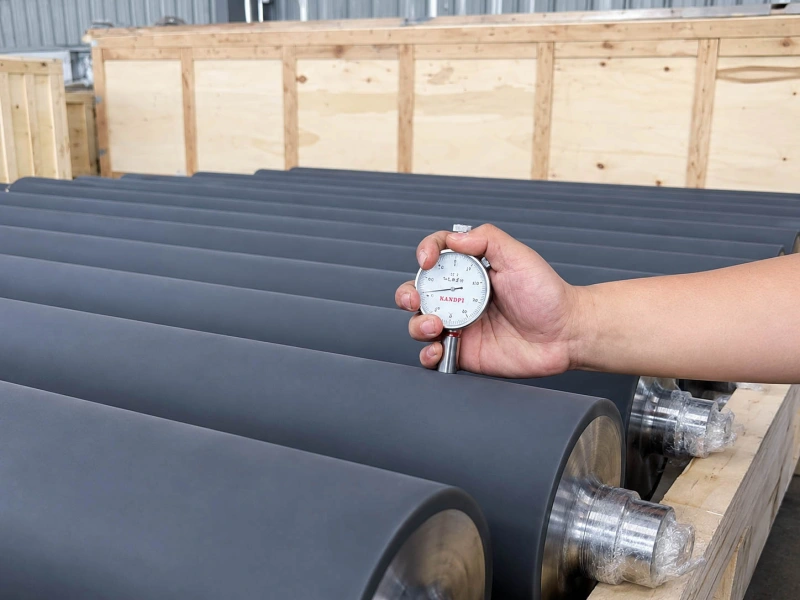
Before shipment, key items such as cover hardness, shaft details, surface condition, and running accuracy can be checked according to project requirements.
You can review our manufacturing scope, quality control process, and company background through the pages below.
For pressure-contact positions where marks, pressure balance, and cover hardness need review.
Transfer RollersFor coating, adhesive, ink, or medium-transfer positions where surface condition matters.
Guide RollersFor web path contact where clean and steady running is required.
Tension Control RollersFor positions affected by web stability, tension change, and running accuracy.
Film Converting RollersFor film lines where surface contact, tracking stability, static, or roller marks may affect production.
Coating and Laminating Line RollersFor heat, adhesive, release, pressure, and lamination contact conditions.
Liquid Silicone RollersFor LSR-related contact requirements and finer surface behavior.
Anti-Static / Conductive Rubber RollersFor static, dust attraction, or electrical behavior that cannot be solved by silicone material alone.
Send your drawings or samples directly to us. Currently without drawings? Contact our team for an initial evaluation.