Custom EPDM Rubber Rollers
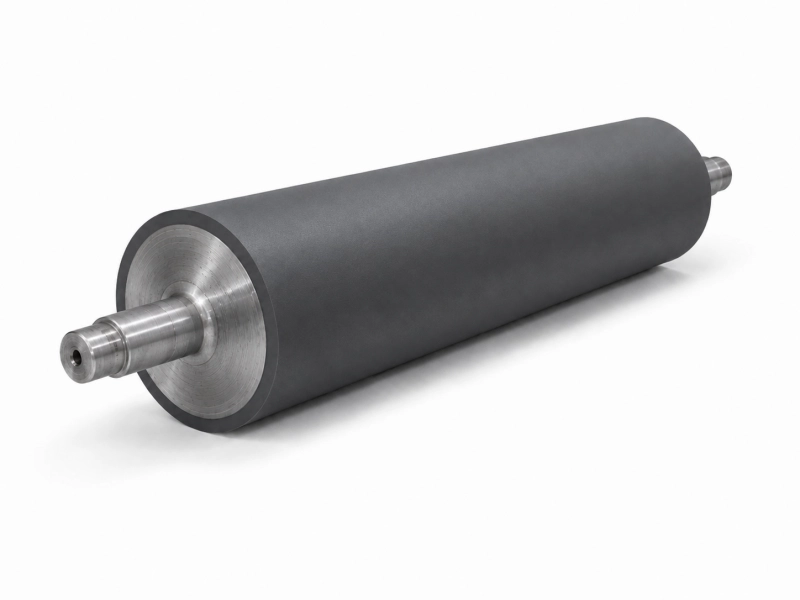
EPDM rubber rollers are used where long-term environmental stability matters more than general-purpose rubber performance.
They are often reviewed for ozone exposure, weathering, humid air, water contact, hot water, steam-related positions, mild acids, mild alkalis, and applications where the rubber cover may age, crack, harden, or lose elasticity over time.
EPDM is not the right material for every roller. For oil, fuel, grease, strong solvents, heavy abrasion, or high-grip drive positions, NBR, FKM, polyurethane, silicone, or another compound may be more suitable.
Different projects do not require exactly the same EPDM solution.
In some positions, a standard compound is enough. In others, the project may place more emphasis on media compatibility, service-life stability, surface condition, or long-term running performance. In these cases, modified compounds or special EPDM formulations can also be considered according to the actual operating conditions.
Some rollers may look acceptable at the beginning because they can be installed and run, but the real differences often become clear only after a period of operation.
You do not need everything ready before contacting us.
Where EPDM Rollers Are Used When Cover Aging Matters
EPDM is often reviewed for roller positions where the surrounding environment slowly affects the rubber cover. The issue may not appear on the first day of installation. A roller can run normally at first, but after longer exposure to air, moisture, ozone, UV, hot water, steam, cleaning liquid, or outdoor conditions, the cover may begin to crack, harden, lose elasticity, or show unstable contact.
EPDM is usually reviewed when these problems are more related to environmental aging than to one-time mechanical failure.
Common review directions include:
Outdoor, weather, ozone, and UV exposure
EPDM is often reviewed for weather-resistant rubber rollers, ozone-resistant EPDM rollers, and outdoor EPDM rubber rollers where cracking, hardening, or surface aging is the main concern.
Humid and wet-contact sections
For wet process areas, washing sections, water-contact positions, or damp material handling, EPDM may be considered when water-related aging and elasticity stability matter.
Hot water, steam, and repeated cleaning
For rollers exposed to hot water, steam, cleaning liquid, or repeated washdown, the review should check whether the cover can keep stable elasticity, surface condition, and bonding after repeated exposure.
Mild acids, mild alkalis, and cleaning media
EPDM may be suitable for some mild acids, mild alkalis, and selected polar media. The actual media, concentration, temperature, and contact time should still be confirmed.
Longer replacement-cycle positions
If a roller looks acceptable at first but begins to age, crack, harden, lose stable contact, or need replacement sooner than expected, EPDM may be worth reviewing.
EPDM Roller Material Names
EPDM usually refers to ethylene propylene diene monomer rubber. In roller projects, the same material direction may also be described as EPDM rubber rollers, EPDM rubber-covered rollers, EPDM covered rollers, EPDM roller covers, industrial EPDM rollers, or ethylene propylene diene rubber rollers.
These names usually point to the same material family, but the final roller should not be decided by the material name alone. Hardness, cover thickness, surface finish, bonding, core structure, contact media, temperature, and roller position should be reviewed together.
Common Material Parameters and Customization Directions
Common EPDM selection range
- Typical continuous operating temperature: about -40°C to +120°C
- Common hardness directions: 50 / 60 / 70 Shore A
- Common media directions: hot water, steam, mild acids, mild alkalis, cleaning environments, and some polar media
- For oils, fuels, grease, or more complex media, further confirmation is usually needed based on the specific media and operating conditions
- For positions with higher requirements for wear resistance, grip, surface condition, or service life, a modified EPDM approach may also be evaluated according to the actual project
These ranges are more suitable for initial material matching.
Once a project moves forward, the review is usually combined with line speed, contact pressure, temperature fluctuation, contact material, roller position, and service-life targets.
When EPDM Is the Right Direction — and When It Is Not
EPDM should be selected by working condition, not by material name alone.
| Main Condition | EPDM Review Direction |
|---|---|
| Ozone, air exposure, weathering, sunlight, outdoor use | Usually a strong EPDM direction |
| Humidity, water contact, hot water, steam | Usually worth reviewing |
| Mild acids, mild alkalis, cleaning conditions | May be suitable, but media details should be confirmed |
| Long-term surface aging, cracking, hardening | A practical review direction |
| Oil, grease, fuel, petroleum-based media | Usually not the first choice |
| Strong solvents or mixed chemical media | Compatibility should be checked before choosing EPDM |
| Heavy abrasion, strong traction, high drive load | Other materials may perform better |
| Fine release, anti-stick, or heat-release surfaces | Silicone or other release-oriented materials may need comparison |
A safer decision comes from checking the material environment, roller function, contact material, and expected replacement cycle together.
EPDM Roller Positions Often Reviewed
EPDM is a material direction. The final roller still needs to match its actual position on the line.
EPDM is often reviewed together with:
where wet contact, liquid removal, or damp material handling is part of the process
pressure rollerswhere stable contact is needed in humid, outdoor, or cleaning-related conditions
guide rollerswhere exposed air, moisture, or water-related surroundings may affect long-term running
Paper Converting Rollerswhere humidity, cleaning, water contact, or paper dust may influence cover life
Textile Processing Rollerswhere wet processing, squeezing, guiding, or environmental exposure may affect service life
Nonwoven processing applicationswhere moisture, pressure contact, dust, or surface stability needs review
These are review directions, not automatic material decisions. The roller function, contact material, pressure, speed, and surface requirement still matter.
Application Review Examples
The examples below show how EPDM is usually reviewed in roller projects.
Wet-contact roller with early surface aging
If a roller near a wet section runs normally at first but later shows hardening, cracking, or loss of elasticity, EPDM may be reviewed together with cover hardness, cover thickness, surface finish, bonding, temperature, cleaning method, and contact pressure.
Outdoor or exposed guide roller
If a guide roller works in exposed air, outdoor equipment, or humid surroundings, the main concern may be ozone, UV, moisture, and temperature fluctuation instead of heavy load. EPDM may be reviewed when environmental aging is the main issue.
Hot water or steam-related pressure roller
If a pressure roller works near hot water, steam, or repeated cleaning, the review should check working temperature, exposure time, pressure condition, surface marking risk, cover thickness, hardness, and whether modified EPDM is needed.
What Affects the Final EPDM Roller Result
Choosing EPDM is only one part of the roller design. The final result also depends on:
compound direction, especially when hot water, steam, cleaning media, or longer service life is involved
hardness, which affects pressure response, deformation, cushioning, and contact stability
cover thickness, which affects cushioning, heat build-up, grinding allowance, and long-term cover behavior
surface finish, such as smooth, ground, matte, grooved, crowned, or application-specific finish
bonding and core condition, especially for rubber-covered rollers built on existing metal cores
operating condition, including temperature, humidity, media, speed, pressure, cleaning method, and downtime pattern
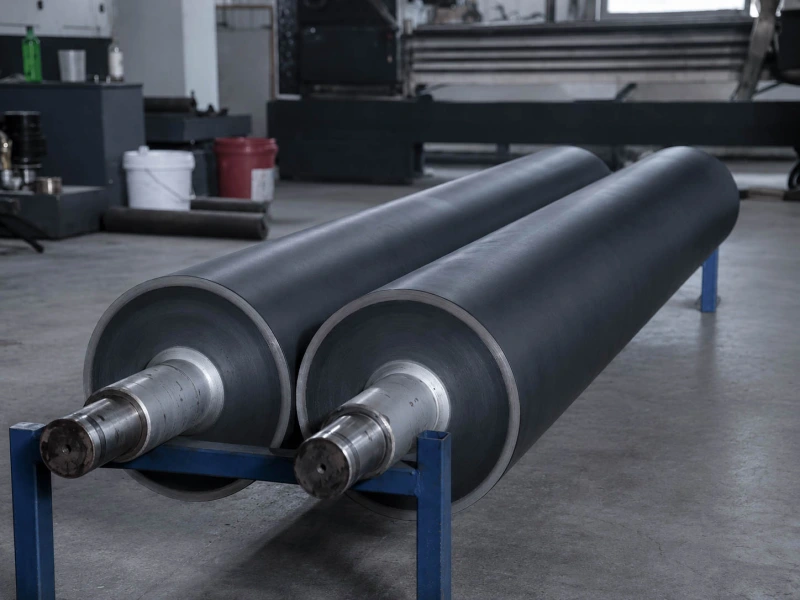
A thicker cover or harder cover is not automatically better. The design should match the roller position and actual working condition.
Related Roller Functions and Applications
These pages may help when reviewing EPDM together with wet-contact positions, environmental exposure, or nearby material choices.
For wet-contact, liquid removal, squeezing, and damp material handling positions.
Pressure RollersFor controlled contact positions where pressure behavior and aging resistance both matter.
Guide RollersFor exposed, humid, or water-related running positions.
Paper Converting RollersFor paper handling, coating, rewinding, cleaning, humidity, and paper dust related applications.
Textile Processing RollersFor fabric guiding, wet process contact, squeezing, and aging-related review.
Nonwoven Processing RollersFor nonwoven lines involving moisture, pressure contact, dust, or surface stability.
Hypalon / CSM Rubber RollersFor comparison when stronger weathering, ozone, or special environmental resistance may be needed.
Neoprene / CR Rubber RollersFor comparison with a balanced general industrial rubber direction.
Browse More Roller Categories
You can also continue by material category, roller function, or application type.
Custom Roller Manufacturing, Formulations, and Quality Control
A reliable rubber roller depends on more than size matching. Compound formulation, hardness stability, cover thickness, surface finish, shaft structure, and running accuracy all affect how the roller performs on your line.
Wolorin supports both routine replacement roller projects and more demanding custom industrial rubber roller projects, with established manufacturing experience, production equipment, inspection equipment, available certificates, and documented quality checks. Our rubber compound formulation system can be matched to different operating requirements.
Before shipment, key items such as cover hardness, shaft details, surface condition, and running accuracy can be checked according to project requirements.
You can review our manufacturing scope, quality control process, and company background through the pages below.
Request a Quote
If you already have drawings, samples, an existing roller, or current parameters, you can send them directly to us for quotation.
If the information is still incomplete, you can also start by providing the roller position, operating temperature, contact media, and the current issue. This is usually enough to begin the initial project review.