Unwind and entry
The focus is stable entry support, smooth web path control, and reduced flutter or drift.
Slitting and rewinding lines turn wide parent rolls into narrower finished rolls. In this process, roller performance affects more than transport. It can influence unwind stability, web tracking, traction, slit-lane support, edge protection, and final rewind quality.
A line may still be running while roller-related problems are already building. Web drift, traction slip, unstable tension, roller runout, or unsuitable surface contact may later appear as lane wandering, edge damage, telescoping, loose edges, or uneven roll hardness.
Wolorin supplies custom rubber rollers for guide, traction, nip, support, contact, and rewind-related positions on slitting and rewinding lines. These projects commonly involve film, paper, foil, label stock, laminates, coated materials, and flexible packaging webs.
You do not need everything ready before contacting us.
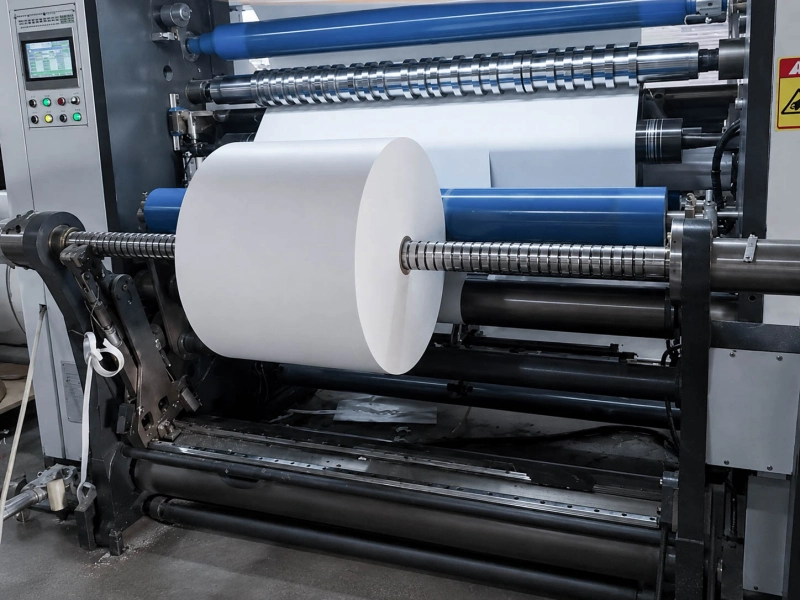
On a slitting and rewinding line, roller requirements change as the web moves forward.
The focus is stable entry support, smooth web path control, and reduced flutter or drift.
The line needs controlled edge position, steady grip, and speed consistency. Projects in this area often overlap with guide rollers, traction rollers, and tension control rollers.
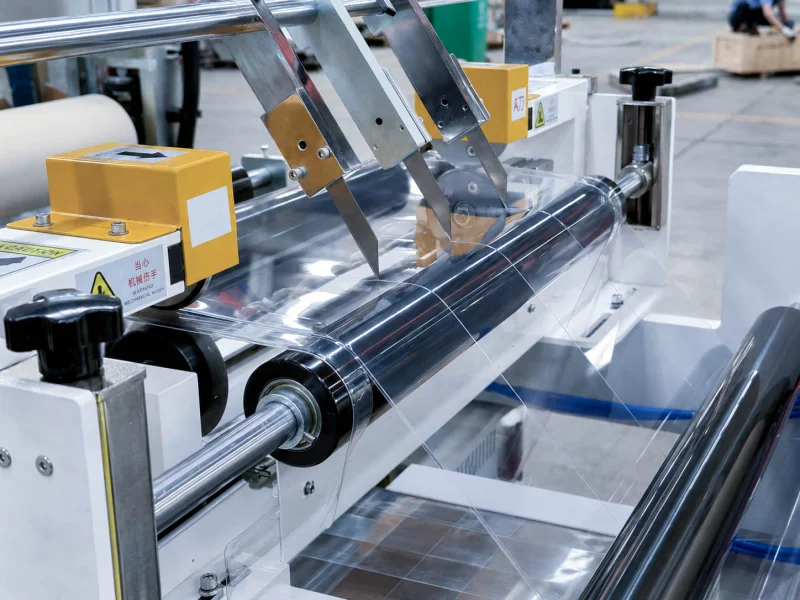
The focus shifts to web support around the knife area, cleaner lane separation, and lower risk of edge rubbing or disturbance.
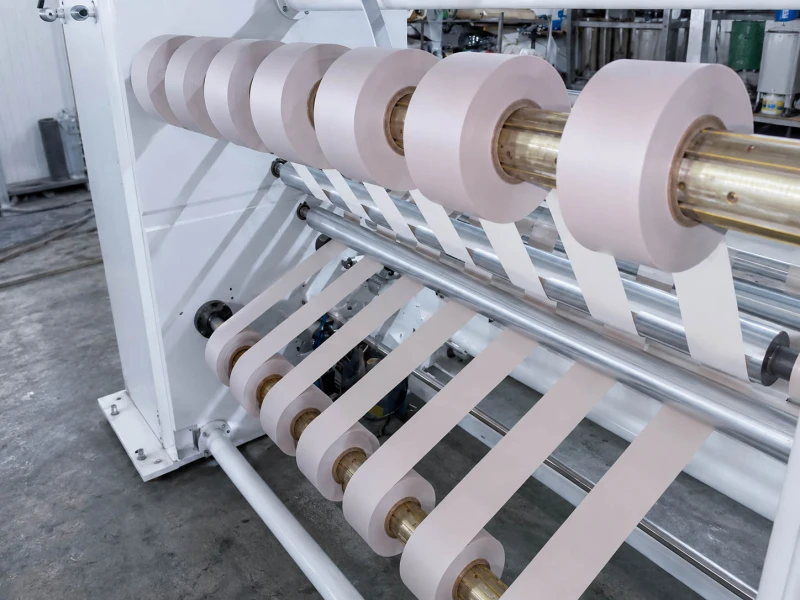
One wide web has become multiple narrow lanes. At this stage, small running errors are easier to see. Lane wandering, edge contact, and lane-to-lane variation become more critical.
The final result appears in roll shape, edge alignment, roll hardness, and winding consistency. Rewind-related review often overlaps with pressure rollers, but the result still depends on how the upstream sections are running.
This is why slitting and rewinding should not be reviewed as only one roller position. The line sections work together, and the final roll often reflects what happened upstream.
| Line Problem | Roller Factors to Review |
|---|---|
| Web drift at entry | Guide stability, roller runout, shaft condition, surface wear |
| Unstable web path before slitting | Contact stability of guide and traction rollers |
| Traction slip or speed mismatch | Cover hardness, surface friction, nip pressure, surface condition |
| Lane wandering after slitting | Slit-lane support, roller flatness, running stability |
| Edge rubbing, cracking, or pressure damage | Roller hardness, surface roughness, contact pressure |
| Telescoping, coning, or loose edges | Tension stability, rewind contact pressure, upstream running condition |
| Uneven finished roll hardness | Lay-on / contact roller pressure, cover elasticity, rewind stability |
| Marks on film, foil, or laminate surfaces | Low-marking surface, suitable hardness, softer contact material |
| Large variation between narrow finished rolls | Lane path, lane tension, and rewind contact condition |
The following are common review points for slitting and rewinding roller projects. Actual specifications should be confirmed according to web width, line speed, web thickness, slit width, rewind diameter, and roller duty.
| Item | Common Reference Direction |
|---|---|
| Web materials | Film, paper, foil, laminate, label stock, flexible packaging web |
| Web / working width reference | Commonly around 1000–3200 mm |
| Line speed reference | Commonly around 300–600 m/min; high-speed lines may be higher |
| Minimum slit width reference | Commonly around 25–50 mm |
| Unwind / rewind diameter reference | Commonly around 500–1500 mm, depending on machine structure |
| Common core sizes | 3 inch / 76 mm; some projects use 6 inch / 152 mm |
| Film thickness reference | Some equipment ranges are around 12–350 μm |
| Contact / pressure roller hardness | Often reviewed around 50–70 Shore A as a starting direction |
| Surface directions | Smooth, fine-ground, matte, traction-oriented, release-oriented, low-marking surface |
| Material directions | PU, NBR, EPDM, Silicone, and other industrial rubber compounds |
These are not fixed standards. A high-speed film line, a heavy paper rewinder, a foil slitting line, a label stock line, and a laminate converting line will not require the same roller hardness, friction level, surface finish, wear resistance, or running accuracy.
In slitting and rewinding projects, roller review usually comes down to several practical requirements working together.
Roller runout, shaft condition, cover uniformity, and surface wear can all affect web path stability.
The line needs enough friction to prevent slip, but not so much that it creates stretching, pressure marks, or surface damage.
After slitting, narrow lanes need steady transport without extra side movement, rubbing, or lane-to-lane instability.
Sensitive edges may be damaged by unsuitable hardness, roughness, or contact pressure.
The final roll depends on winding pressure, contact behavior, upstream stability, and how evenly the web has been handled before rewind.
Wolorin selects the roller direction according to roller position, web material, and running condition. Common options include:
| Requirement | Common Roller Direction |
|---|---|
| Wear resistance, grip, longer service life | PU / polyurethane direction |
| General industrial contact, some ink or oil exposure | NBR / nitrile rubber direction |
| Moisture, weathering, or some open-environment conditions | EPDM direction |
| Softer contact, heat resistance, release requirement | Silicone direction |
| Sensitive web surface protection | Low-marking, fine-ground, smooth, or application-specific surface |
| Slit-lane stability | Suitable hardness, low runout, stable support, controlled surface friction |
| High-speed or wide-web running | Roller body stability, shaft structure, dynamic balance, surface consistency |
For special temperature, solvent, static control, clean production, chemical resistance, or high-speed requirements, other rubber compounds and surface designs can be reviewed according to the project.
For grip, speed synchronization, and slip control.
Guide RollersFor path stability and edge position control.
Tension Control RollersFor more stable running through line speed and diameter changes.
Pressure RollersFor controlled contact pressure and rewind influence.
Pinch RollersFor nip entry and paired roller contact.
Polyurethane Rubber RollersOften reviewed for wear resistance and grip.
NBR / Nitrile Rubber RollersOften reviewed for general industrial contact conditions.
Film Converting RollersFor broader film web handling and converting lines.
Flexible Packaging RollersFor packaging film slitting, rewinding, and downstream converting.
Foil and Metal Strip Processing RollersFor foil-sensitive edge and surface handling conditions.
A roller that matches the drawing does not always match the running condition. Compound selection, hardness stability, cover thickness, surface finish, shaft structure, and running accuracy can all affect how the roller behaves on a slitting and rewinding line. Wolorin supports both straightforward replacement rollers and more demanding custom projects. If you want to review broader manufacturing capability, inspection items, or company background, you can continue below.
The most influential positions usually include unwind support rollers, guide-related rollers, traction or nip rollers, slit transport rollers, and rewind-related rollers. The key issue is not just the position name, but how that position affects tracking, traction consistency, slit-lane stability, edge condition, and final roll build.
Because telescoping is not always caused by rewind tension alone. Web drift, inconsistent guide control, uneven traction, unstable slit transport, or poor upstream support can continue through the process and show up later as telescoping or weak roll structure at rewind.
Lane-to-lane variation often comes from uneven traction, unstable web path control before slitting, poor support after slitting, or local differences in how slit lanes travel to rewind. Once the web is divided, narrow lanes respond more quickly to small process differences.
Because edge damage can begin during unstable transport, guide correction, traction transfer, or slit-lane support before the lanes reach rewind. The damage may only become obvious on the finished roll, but the initiating contact or instability often appears earlier on the line.
If you already have drawings, send them directly. If not, you can still start with the material, the roller position, and the problem you are seeing.