Edge wrinkles
Whether the web is spreading sufficiently across its width
Spreader rollers are mainly used in the spreading section of continuous web handling lines. In some production sites, they may also be called expander rollers or anti-wrinkle rollers, especially when the main goal is to open the web across its width and reduce wrinkles before the next process.
Their main function is to help the web open across its width before it enters slitting, rewinding, coating, laminating, nip, or pressing sections, so the material can move into the next process in a flatter and more stable condition.
For film, protective film, release film, packaging film, lithium battery separator film, nonwoven, paper, fabric, foil, and flexible packaging materials, the spreading effect can directly affect edge wrinkles, air entrapment, spreading uniformity, surface condition, and winding quality.
You do not need everything ready before contacting us.
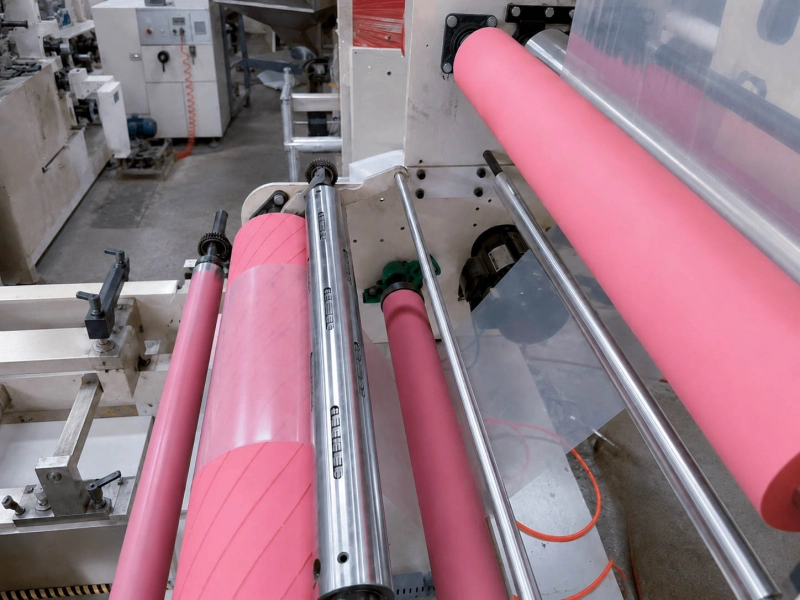
Spreader rollers, expander rollers, and anti-wrinkle rollers are used to improve how the web opens and runs before the next process.
In many production sites, bent rollers, curved rollers, and banana rollers are also discussed under this type of spreading or expanding position. These names usually describe the roller structure. Through a curved roller body, proper wrap angle, and installation direction, they help the web spread across its width during operation.
For continuous web materials such as Film Converting Rollers, Flexible Packaging Rollers or Slitting and Rewinding Line Rollers protective film, release film, packaging film, nonwoven, paper, fabric, or foil, the material does not always stay flat by itself during running. When the web is wide, thin, low-tension, high-speed, or unstable before slitting, rewinding, laminating, coating, or pressing, edge wrinkles, waves, trapped air, or uneven spreading may appear.
The role of a spreader roller is to adjust the web into a flatter, more open, and more stable condition before these key process sections, reducing the chance that wrinkles are carried into the next processing position.
| Field Symptom | What the Spreading Position Should Check |
|---|---|
| Edge wrinkles | Whether the web is spreading sufficiently across its width |
| Local waves on a wide web | Whether the spreader structure, wrap angle, and tension are matched |
| Uneven web before slitting or rewinding | Whether the web needs spreading before entering the key section |
| Air trapped between the web and roller surface | Whether the roller contact, wrap angle, and surface type are suitable |
| Uneven spreading from left to right | Whether bow direction, installation angle, and side tension are consistent |
| Wrinkles return after spreading | Whether downstream tension, guiding, nip contact, or rewinding contact is also affecting the result |
Whether the web is spreading sufficiently across its width
Whether the spreader structure, wrap angle, and tension are matched
Whether the web needs spreading before entering the key section
Whether the roller contact, wrap angle, and surface type are suitable
Whether bow direction, installation angle, and side tension are consistent
Whether downstream tension, guiding, nip contact, or rewinding contact is also affecting the result
A spreader position is usually worth checking first in these situations:
Before slitting, when edge wrinkles, local waves, or uneven web entry start affecting slit quality
Before rewinding, when the web looks acceptable in the span but loses shape at the winding point
Before coating or laminating, when the web must arrive flatter and more open for stable contact
Before a nip or pressing section, when a running wrinkle is likely to become a crease
On wide, thin, or soft webs that do not stay flat by themselves
On lines where the web opens for a short distance but does not stay spread until the next process
The value of the spreader is usually highest just before the next critical operation, not randomly somewhere in the line. If the roller is too far away, the web may recover, lose separation, or return to its wrinkled state before it reaches the section that actually needs protection.
A spreader roller can help, but it does not work alone. Before deciding that the roller design is the main problem, it is worth checking these points together:
Wrap angle
Bow direction and installation direction
Entry span and exit span
Web tension condition
Nearby roller alignment
Whether the web is already wandering before it reaches this position
Whether downstream nip, winding, or contact conditions are pulling the problem back into the line
This matters because many spreading problems are mixed problems. The roller structure, the web path, and the running condition often need to be reviewed together.
If the main issue is already related to web wandering or edge-position instability, a related review may also involve Guide Rollers. If the result changes a lot with speed, tension setting, or roll build, Tension Control Rollers may also need to be checked together.
Spreader rollers, bowed rollers, and banana rollers share the same basic goal: to help the web spread across its width during running.
In terms of naming, spreader roller is more of a functional term, emphasizing spreading, expanding, and wrinkle reduction. Bowed roller and banana roller are more structural terms, usually referring to curved or banana-shaped spreader roller designs.
They usually work through a combination of curved structure, wrap angle, bow direction, entry and exit span, and roller surface contact. For a spreader roller, the roller shape is only one part of the result. Web tension, installation direction, wrap angle, and the position of nearby guide rollers can also affect the final spreading performance.
Common influencing factors include:
Bow amount affects the cross-web spreading force
Wrap angle affects how firmly the web contacts the roller surface
Bow direction affects whether the web spreads evenly from left to right
Entry and exit span affect web stability as it enters and leaves the spreader roller
Surface material and hardness affect both spreading performance and surface protection
A spreader roller should not be judged only by diameter and face length. In actual projects, these points usually matter more than a simple size description:
Wider webs are more likely to show edge wrinkles, local waves, or unstable spreading across the width
Affects how strong the cross-web spreading action will be
Affects how firmly the web contacts the roller surface
Affects spreading direction and left-right uniformity
Affects how stable the web is before and after the spreader position
Affects running stability, dynamic behavior, and how sensitive the position becomes to roller condition
Affects contact stability and the risk of stretching or edge deformation
Overly smooth surfaces may spread weakly, while rougher surfaces may mark sensitive materials
Film, paper, nonwoven, foil, separator, or coated material may each need a different review priority
In real review work, these points should be checked together with the actual wrinkle location, the downstream section, and whether the problem becomes worse before slitting, rewinding, laminating, or another contact point.
For replacement projects, the old roller size, site photos, and installation position are often enough to start the first direction review.
Different spreading positions do not always need the same roller direction.
Usually reviewed for light spreading, basic web opening, or auxiliary contact where stronger cross-web action is not required.
Commonly used where the web path needs clearer cross-web spreading before the next process.
Often reviewed where wrinkle reduction needs to be stronger or where the web is harder to open evenly across its width.
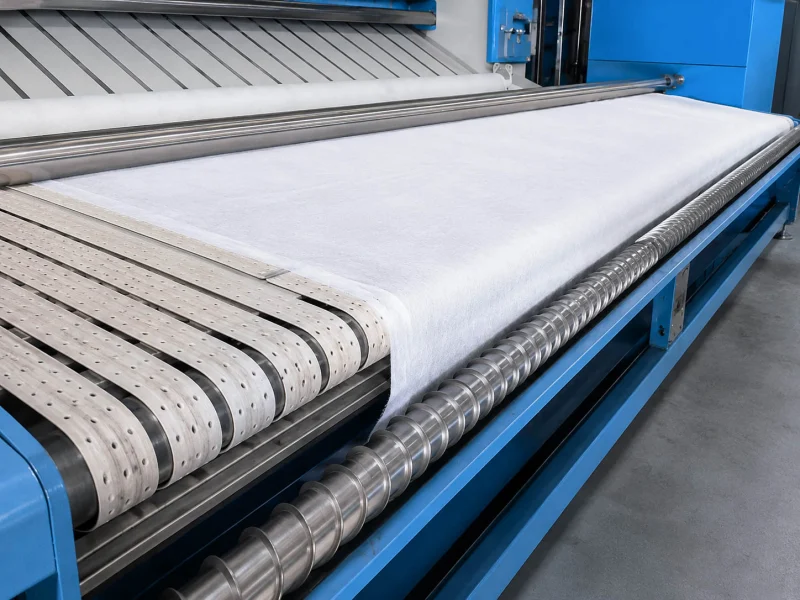
More suitable where the line handles different materials, changing widths, or positions that need adjustment during review.
Fine texture, special surface, or anti-slip direction may help air release and contact stability. For static-sensitive materials, a related review may also involve Anti-Static / Conductive Rubber Rollers. For wear-driven conditions, Polyurethane Rubber Rollers or Solid Silicone Rollers may also be relevant depending on the contact requirement.
The final structure direction should still be confirmed from the real position, not from the roller name alone.
The web looks acceptable on the span, but a wrinkle still reaches the slit point. In this case, the question is not only whether a spreader exists, but whether it is close enough to the slitting section and whether the spreading effect is still present when the web gets there.
The web becomes flatter for a short distance, but edge looseness, local waves, or trapped air return before the next process. This usually means the issue is not only “more spreader,” but also traction, tension transition, or what happens in the downstream section.
When one side opens better than the other, the review often needs to include bow direction, installation angle, span condition, side tension, and whether the line is already pulling the web off path.
Sometimes the line now runs a different material, width, speed, or tension range than before. In these projects, copying the old roller is not always enough. The better question is whether the original direction still matches the current running condition.
It is usually worth reviewing customization or replacement when:
The current roller improves the web only temporarily, and wrinkles return later
Wide material spreads unevenly from left to right
The roller surface is worn, glazed, hardened, damaged, or locally deformed
Spreading performance becomes worse after material, width, speed, or tension conditions change
The original equipment drawing is not usable and the new roller must be reviewed from the old one or from site dimensions
A standard rubber covered roller is no longer enough and a bowed or banana direction needs to be reviewed
The same wrinkle keeps entering the next section and starts affecting slitting, rewinding, laminating, or another downstream position
For these projects, the goal is not only to copy the old roller. The more useful question is whether the current structure direction still matches the running condition.
Often reviewed where wear resistance and running durability matter.
Solid Silicone RollersOften reviewed where surface protection and more controlled contact matter.
Anti-Static / Conductive Rubber RollersUseful for static-sensitive materials or cleaner running conditions.
NBR / Nitrile Rubber RollersUseful where general industrial rubber-covered direction is still part of the review.
Film Converting RollersFor broader thin-web transport, spreading, and downstream stability review.
Flexible Packaging RollersFor printing, laminating, slitting, and rewinding related web handling.
Slitting and Rewinding Line RollersWhen spreading quality starts affecting winding quality.
Lithium Battery Line RollersFor separator and other sensitive web positions.
Nonwoven Processing RollersFor softer webs where air, spread, and surface condition matter.
Guide RollersWhen web wandering and edge instability are also part of the issue.
Tension Control RollersWhen the spreading result changes with tension condition or roll build.
A reliable rubber roller depends on more than size matching. Compound formulation, hardness stability, cover thickness, surface finish, shaft structure, and running accuracy all affect how the roller performs on your line.
Wolorin supports both routine replacement roller projects and more demanding custom industrial rubber roller projects, with established manufacturing experience, production equipment, inspection equipment, available certificates, and documented quality checks. Our rubber compound formulation system can be matched to different operating requirements.
Before shipment, key items such as cover hardness, shaft details, surface condition, and running accuracy can be checked according to project requirements.
You can review our manufacturing scope, quality control process, and company background through the pages below.
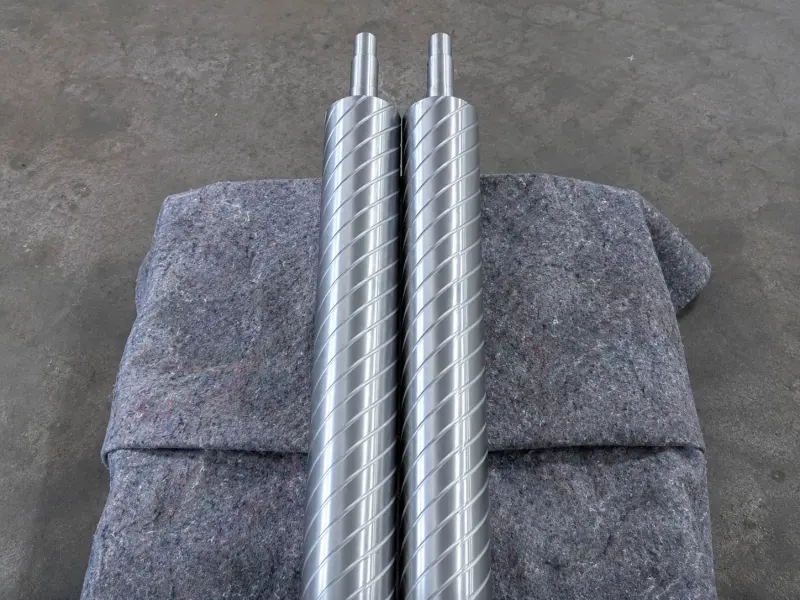
In many production sites, they are discussed within the same type of spreading position.
More accurately, spreader rollers, expander rollers, and anti-wrinkle rollers are more functional names. Bent rollers, curved rollers, and banana rollers are more structural names. They are commonly used to help the web spread across its width, reduce edge wrinkles, and improve spreading uniformity.
A spreader roller mainly works on web spreading, wrinkle reduction, and cross-web expansion.
A guide roller mainly works on web path control, edge position stability, and tracking.
They are more suitable for positions that require cross-web spreading, edge wrinkle reduction, or wide-web expansion.
If the material is wide, thin, low-tension, or if a standard rubber covered roller does not provide stable spreading, this type of structure is worth reviewing.
Yes.
You can first provide photos of the old roller, outside diameter, face length, shaft-end dimensions, installation position, material type, and the current problem. If an old roller or sample is available, it can also be used to confirm the replacement plan.
If you need to replace an existing spreader roller, bowed roller, or banana roller, or if your line has edge wrinkles, air entrapment, uneven spreading, or wrinkles returning after spreading, you can send us the existing roller parameters, photos, or drawings.
Wolorin can help confirm the suitable rubber covering material, hardness, surface, and structure direction based on the roller position, material type, web width, line speed, and current problem.