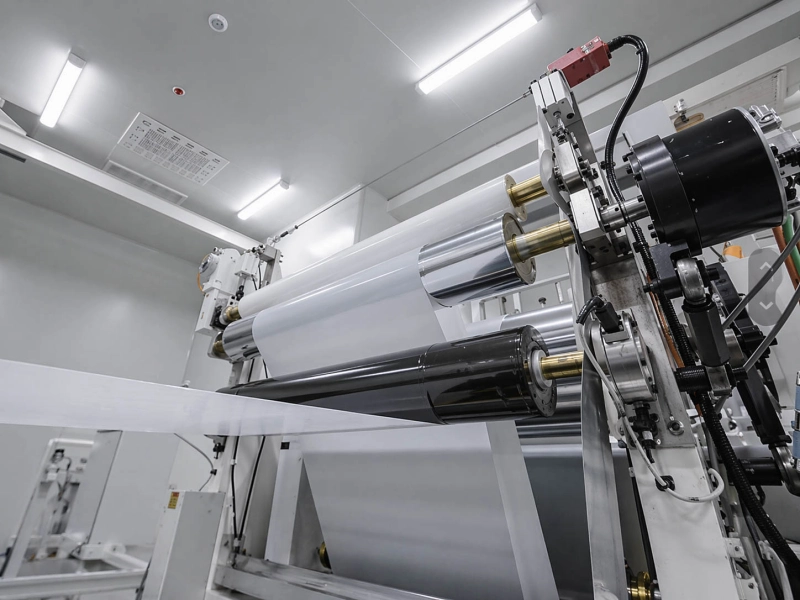
Lithium Battery Line Rollers

Rollers reviewed for coating support, drying-related transport, separator guiding, clean-contact transfer, foil handling, and winding positions on lithium battery lines.

On lithium battery production lines, roller problems are often recognized too late and judged too simply. A position may still run, but it no longer runs cleanly enough, steadily enough, or predictably enough for battery production.

That is why battery line roller review usually cannot stop at size alone. What matters is whether the roller build matches the actual contact condition at that position: coated or uncoated surface, separator or foil handling, heat exposure, guide stability, contamination sensitivity, and winding consistency.

You do not need everything ready before contacting us.

Industrial rubber rollers packed in wooden export crates

What This Industry Processes

Lithium battery lines may handle:

  • electrode coating webs
  • separator webs
  • coated current collector materials
  • foil-based battery materials
  • film-based battery web materials moving through coating, drying, guiding, slitting, winding, or rewinding sections

At these positions, the roller may do far more than transport. It may be supporting a coated surface, guiding a thin separator, stabilizing web path after a heated section, or helping maintain roll build during winding.

So the real question is usually not whether the roller can carry the web. It is whether it can do so without adding contamination risk, unstable guide behavior, drag variation, marking, or later roll inconsistency.

Why This Application Is More Sensitive Than It Looks

Lithium battery web handling may look similar to general converting, but the actual running requirements are usually more sensitive.

Separator materials and current collector foils are thin, and battery production is less tolerant of contamination, unstable tracking, drag variation, or surface marking. Once the web passes through coating-related, heated, or winding-related sections, even a roller that seems acceptable in a general line may no longer be suitable for that position.

That is why battery line roller review usually needs to look beyond size alone and focus on the actual contact condition, running stability, and sensitivity of the section.

Typical Line Sections and Roller Positions

Typical Line Sections and Roller Positions

Different sections of a lithium battery line place different demands on the roller, even when the web material looks similar from one section to the next.

Coating support and transfer-adjacent positions

These positions may not always be the main coating head itself, but they still influence what happens to the coated web afterward. Surface disturbance, unstable support, or unsuitable contact can make downstream quality harder to hold.
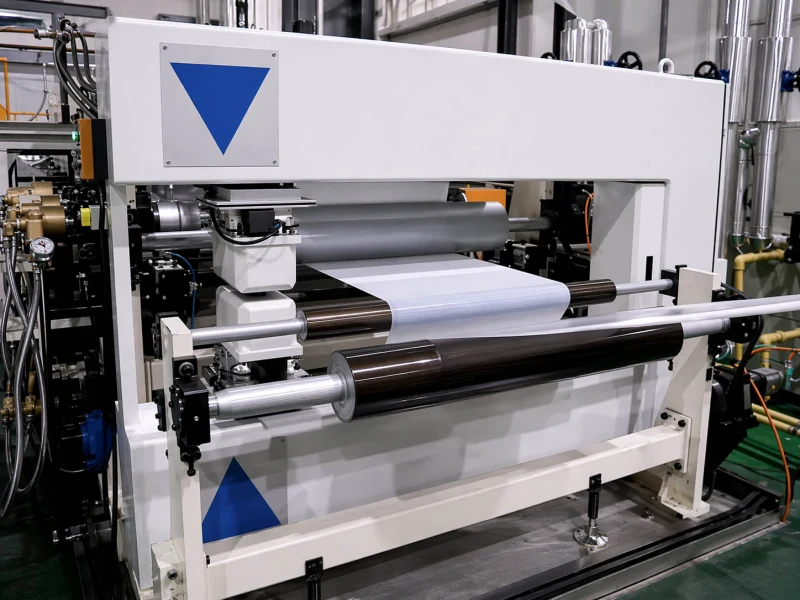
Drying-related transport positions

When the web moves through or around heated sections, the roller build has to remain stable after temperature exposure. If the surface behavior changes after heat, the line may become less predictable even when the basic transport path still looks normal.

Separator guide and transport positions

Separator handling often requires cleaner contact and more stable guide behavior because the web is thin, contamination-sensitive, and less tolerant of unstable tracking or drag variation.

Clean-contact-sensitive transition positions

At certain support, transfer, or guide points, the web is especially sensitive to particles, friction change, or marking. These are often the positions where a general replacement logic stops being reliable.

Winding and rewinding positions

When coated materials enter winding or rewinding stages, the roller has to help maintain path control, traction balance, and roll build consistency without creating surface influence that becomes visible later in the roll.

Foil-related guide and support positions

Where foil handling is involved, the roller may need to support transport and path control without adding scratch risk, unstable drag, or edge instability.

Common Problems

In many cases, the line is still running, but it is no longer running cleanly or steadily enough for reliable battery production.

You may first notice problems such as separator webs becoming harder to guide, coated materials showing intermittent marking or drag inconsistency, running becoming less stable after a heated section, foil transport becoming less predictable, guide positions starting to drift, or roll build becoming less consistent during winding or rewinding.

In actual production, these issues are not always described in technical terms. You may simply find that the line has become harder to hold, the separator is less stable than before, or the coated web becomes easier to mark after some running time.

What These Problems Usually Require from the Roller

On battery lines, same-size replacement is often only the starting point, not the answer.

A more suitable battery-line roller usually needs to control several things at once:

  • cleaner surface behavior at contamination-sensitive contact points
  • more stable guide behavior for separator and thin web positions
  • more predictable running after heat exposure
  • lower marking risk on coated current collector materials
  • more stable drag and contact behavior in foil-related handling
  • traction balance that supports winding consistency rather than excessive grip
  • shaft and profile stability across the working width
  • running behavior that stays controlled over time, not just when first installed
industrial rubber rollers on a metal rack

At some contamination-sensitive sections, cleaning & sticky rollers or anti-static / conductive rubber rollers may be closer to the real need than a general transport replacement.

At separator and path-control positions, the requirement often overlaps with what customers expect from guide rollers and tension control rollers.

Where the contact surface is more sensitive, or lower marking risk matters more, solid silicone rollers may deserve review.

At coating-to-drying transition areas, some requirements also overlap with Coating and Laminating Line Rollers.

Typical Review Scenarios

Scenario 1: The separator section still runs, but becomes harder to hold

The line is not stopped, but the separator becomes more sensitive to tracking variation after longer running. In this case, the real question is often not whether more grip is needed, but whether the roller surface behavior and guide stability still fit that position.

Scenario 2: The coated web looks acceptable at first, then marks appear later

The coated material still passes through the line, but after some running time the risk of marking or drag inconsistency becomes higher. Here the review often needs to focus on contact behavior, surface condition, and whether the roller changes after heat exposure.

Scenario 3: The replacement roller matches the size, but winding consistency gets worse

The nominal dimensions match the original roller, but roll build or path control becomes less stable. In this kind of case, the problem is often tied to traction balance, shaft/build stability, or actual running behavior rather than size alone.

Why Roller-Related Mismatch Becomes Expensive Faster on Battery Lines

On lithium battery lines, instability around coating, heated transport, contamination-sensitive handling, or winding is rarely a small issue.

When a roller is not well matched to the actual position, the result is often not limited to the roller itself. It may lead to repeated adjustment, more scrap, less stable transport after heat, harder control in sensitive sections, or lower winding consistency.

That is why, on battery lines, a roller mismatch often becomes more expensive faster than it does on a general converting line.

How We Usually Review a Battery Line Roller Position

When reviewing a lithium battery line roller, we usually want to know more than the size.

For coating-support-adjacent positions

  • Is the roller contacting a coated surface or only supporting transport nearby?
  • Is the problem marking, drag change, contact instability, or contamination concern?
  • Does the issue appear immediately or only after running time?

For drying-related transport positions

  • Is the position exposed to heat directly or indirectly?
  • Does the roller behavior change after temperature exposure?
  • Does the line become harder to control only after the heated section?

For separator guide positions

  • Is the separator drifting, edge-unstable, or more difficult to guide than before?
  • Is the concern mainly cleanliness, guide stability, or friction variation?
  • Does the issue appear at startup, after speed increase, or after longer running?

For foil-related positions

  • Is the concern scratch risk, unstable drag, or edge handling?
  • Is the position mainly guide-related, support-related, or transport-related?
  • Is the line sensitive to even small surface inconsistency at that point?

For winding and rewinding positions

  • Is the problem path control, traction balance, or roll build consistency?
  • Is the roller helping the winding logic, or disturbing it?
  • Does the inconsistency become visible only later in the roll?

Common Roller Types and Related Pages for This Application

Browse More Roller Categories

Frequently Asked Questions

Electrode coating lines commonly use rollers in coating support positions, drying-related transport sections, guide positions, and winding or rewinding stages. The suitable build depends on whether the roller is contacting a coated web, supporting transport after coating, or helping control roll formation later in the line.

Separator webs are usually less tolerant of unstable guiding, particle transfer, uncontrolled friction, or surface marking. That is why separator positions often require cleaner contact behavior and steadier guide performance than a general transport section.

Contamination risk can come from unsuitable surface condition, pickup and transfer, unstable contact behavior, or a cover direction that does not suit the actual heat or chemistry around the position. On clean-contact-sensitive sections, small surface problems can become line-level quality problems.

Winding inconsistency can be related to unstable traction, guide variation, surface influence on the coated web, or running behavior that changes during continuous production. In many cases, the roller is not the only factor, but the wrong roller build can make winding stability harder to maintain.

Useful details can include the web material, whether the web is coated, the roller position, temperature or chemical exposure, the current running issue, and any available drawing, dimensions, or sample. But if not everything is ready, customers can still contact first and discuss the application from the actual line position.

Custom Roller Manufacturing, Formulations, and Quality Control

A reliable rubber roller depends on more than size matching. Compound formulation, hardness stability, cover thickness, surface finish, shaft structure, and running accuracy all affect how the roller performs on your line.

Wolorin supports both routine replacement roller projects and more demanding custom industrial rubber roller projects, with established manufacturing experience, production equipment, inspection equipment, available certificates, and documented quality checks. Our rubber compound formulation system can be matched to different operating requirements.

Before shipment, key items such as cover hardness, shaft details, surface condition, and running accuracy can be checked according to project requirements.

You can review our manufacturing scope, quality control process, and company background through the pages below.

Request a Quote

If you are working on rollers for an electrode coating line, separator handling section, drying-related transport position, or winding station, feel free to contact us directly.

If you already have a drawing, sample, or existing roller dimensions, you can send them over and we can proceed from there. If not, you can still contact us first and discuss the application with us.