Custom Natural Rubber Rollers

Natural rubber rollers are mainly used in industrial projects that place greater emphasis on elasticity, rebound, and basic contact performance.

This material follows a more traditional rubber route, and in many applications, it is valued for the characteristics associated with high-resilience natural rubber.
Its strength is not in covering every complex operating condition, but in providing more direct elastic response, basic cushioning, and a more natural contact feel under suitable working conditions.

Send existing dimensions to evaluate your Natural Rubber rollers, or click below to confirm your high rebound and cushioning needs.

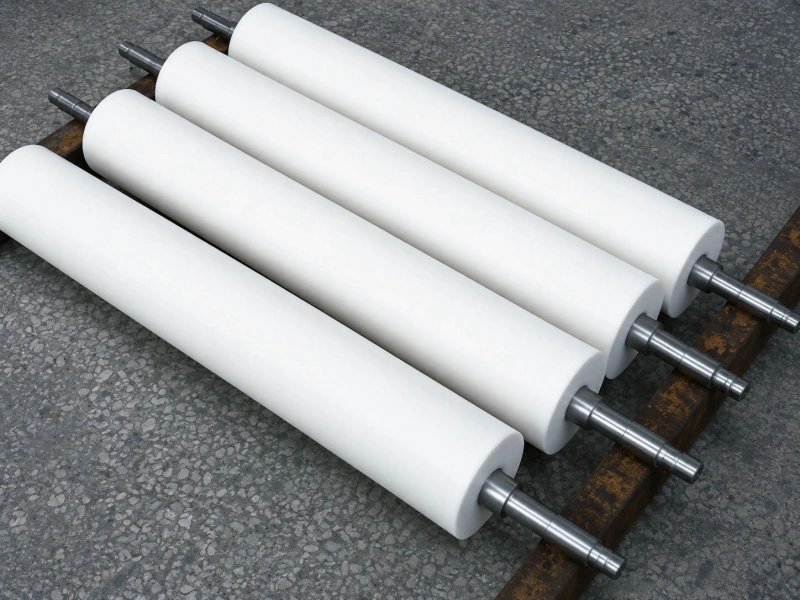
Industrial rubber rollers packed in wooden export crates

Material Characteristics of Natural Rubber Rollers

Natural rubber rollers are also commonly referred to as NR rollers.
The core characteristics of this material are mainly reflected in the following aspects.

1) Strong elasticity and rebound performance

Natural rubber itself belongs to a high-elasticity material route.
In positions where basic cushioning, softer contact, and natural rebound matter, these characteristics are often more valuable.
2) More direct basic contact performance

Some projects do not require the material to handle especially complex media or environmental demands.
What matters more is that:

  • the contact should not be too hard
  • the rebound should not feel too slow
  • the surface contact should feel softer
  • the basic cushioning and contact feedback should feel more natural

In these types of positions, natural rubber usually shows its material characteristics more directly.

3) A more traditional industrial rubber material option

Natural rubber is not the kind of material that tries to maximize every performance category.
It is better understood from the perspective of elasticity, basic contact performance, and more traditional rubber-use routes.

For projects that have long relied on traditional rubber solutions, natural rubber remains a very practical option.

Common Material Reference Data

Typical reference ranges for natural rubber rollers are roughly as follows:

  • Hardness: about 40–90 Shore A
  • Typical working temperature: about -50°C to +70°C
  • Elongation: usually high, with some compounds reaching about 200%–650%
  • Typical material characteristics: good rebound, tear resistance, and basic wear resistance
  • In oil and petroleum-based media environments: it is generally not the first material route considered

In actual projects, hardness, surface finish, temperature range, and service life still need to be confirmed based on the specific compound, construction, speed, pressure, and contact material.

Wolorin natural rubber rollers do not necessarily correspond to only one fixed approach.
Based on the actual operating conditions, we can adjust and strengthen the compound direction, including the use of blended natural rubber compounds when appropriate, so that the material performance better matches the specific application requirements.

Common Application Directions

Natural rubber rollers are usually best evaluated first from the following directions:

General industrial contact environments

When the operating environment is not especially extreme, and there are no very high requirements for high temperature, aggressive media, long-term ozone exposure, or heavy oil contamination, natural rubber can be included in the initial material evaluation.

Contact positions that place more value on elasticity and cushioning

If you care more about softer contact, basic cushioning, and rebound performance, natural rubber is usually worth considering first.
Traditional-solution continuation or replacement projects

If the project has long been using natural rubber or a similar traditional rubber route, it can still be a reasonable starting point for replacement, duplication, or routine optimization.

A better way to understand this material is not to limit it to only certain applications, but to evaluate it based on the actual operating conditions.

Frequently Asked Questions

It can be understood that way.
More accurately, it is a material route that places more emphasis on elasticity, rebound, and basic contact performance.

Many general industrial projects can include natural rubber in the initial evaluation.
Whether it is truly suitable in the end still depends on the specific contact material, environmental conditions, speed, pressure, and service life requirements.

Yes.
If you have an old roller, drawings, dimensions, photos, or samples, you can send them directly to us.
If your information is still incomplete, you can also start by sharing the current application situation.

Request a Quote

Have drawings ready? Send them over for review. If not, you can always contact our team to align on the details first.