Oil, grease, or lubricating media contact is clear
Standard NBR should usually enter the material review
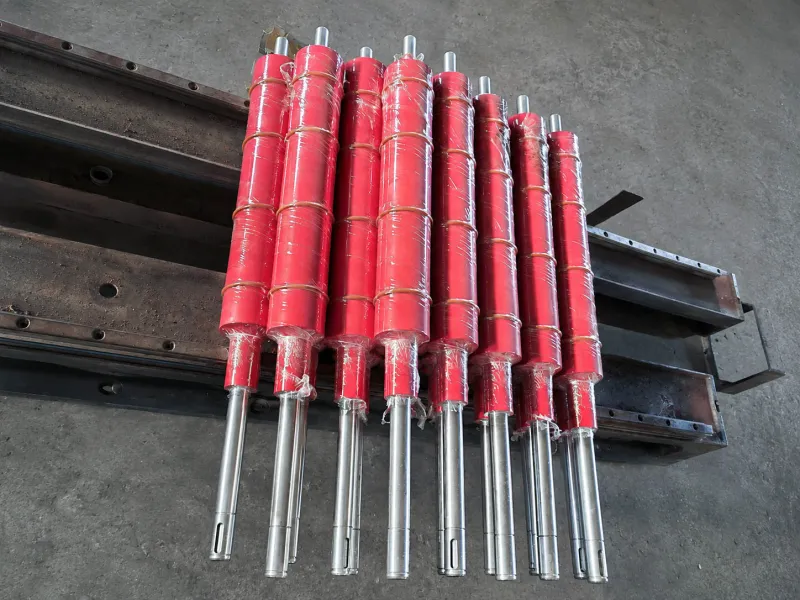
NBR / nitrile rubber rollers are commonly used in roller positions that contact mineral oil, lubricating oil, grease, certain inks, adhesives, and general industrial liquids.
NBR is also known as nitrile rubber, Buna-N rubber, or acrylonitrile butadiene rubber. In roller applications, the material should not be selected by name alone. The actual compound direction, hardness, cover thickness, surface finish, bonding, and contact media all affect the final running result.
This page helps review whether standard NBR is suitable, or whether a modified nitrile compound should be considered for heat, wear, ozone, media compatibility, or service-life requirements.
You do not need everything ready before contacting us.
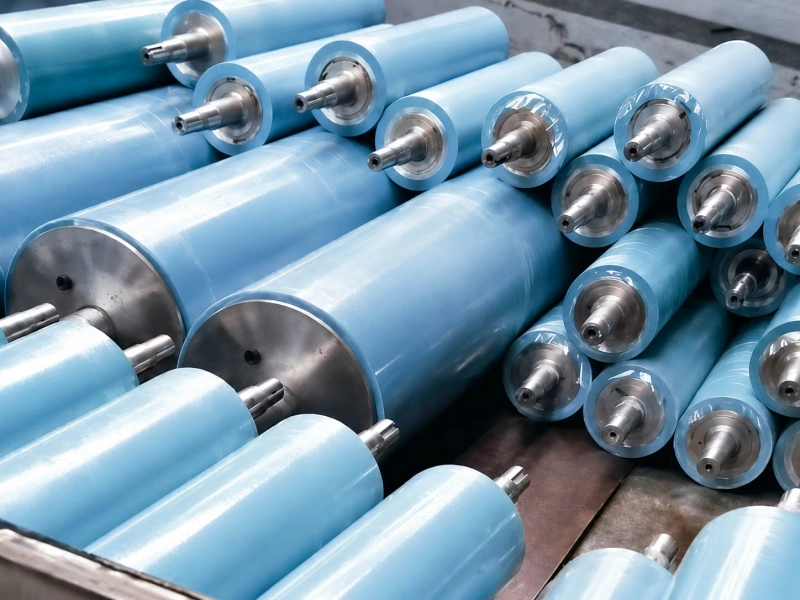
NBR is usually reviewed when the roller cover needs better oil resistance than many general-purpose rubber materials, while still keeping stable contact behavior on the line.
Common review directions include:
oil-contact guide or contact rollers
lubricating oil or grease-contact rollers
certain ink-contact rollers
certain adhesive or glue-contact rollers
general industrial liquid-contact rollers
replacement rollers where the original cover was NBR, nitrile, or Buna-N
In liquid-related sections, transfer rollers and metering rollers often need controlled surface behavior for ink, coating, adhesive, or similar media. In feeding or movement-control sections, traction rollers may use NBR when oil resistance and surface grip both matter.
NBR can also be reviewed for some Printing Industry Rollers and Coating and Laminating Line Rollers, but the actual ink, adhesive, coating liquid, cleaner, temperature, and contact pressure still need to be checked.
NBR is usually a good starting material direction when oil resistance is important and the working environment is not extremely aggressive.
| Working Condition | Review Direction |
|---|---|
| Oil, grease, or lubricating media contact is clear | Standard NBR should usually enter the material review |
| The roller works indoors under standard industrial conditions | NBR is often practical and cost-effective |
| The roller contacts certain inks, adhesives, or liquids | NBR can be reviewed together with the actual media details |
| The old roller was NBR, nitrile, or Buna-N and worked acceptably | The existing material direction can be used as a reference |
| The main issue is heavy wear or load, not oil contact | PU or another wear-resistant material may need comparison |
| The main issue is higher heat, aggressive media, or strong solvents | FKM, HNBR, or another compound may be safer |
| The main issue is ozone, UV, or outdoor exposure | EPDM, CR, CSM, or another weather-resistant material may be more suitable |
Standard NBR should usually enter the material review
NBR is often practical and cost-effective
NBR can be reviewed together with the actual media details
The existing material direction can be used as a reference
PU or another wear-resistant material may need comparison
FKM, HNBR, or another compound may be safer
EPDM, CR, CSM, or another weather-resistant material may be more suitable
The material direction should follow the real working condition, not only the old material name.
These points are useful when reviewing an NBR roller at the early stage. They are reference directions, not fixed limits for every project.
| Item | Common Review Direction | Practical Meaning |
|---|---|---|
| Material names | NBR, nitrile rubber, Buna-N, acrylonitrile butadiene rubber | These names usually refer to the same nitrile rubber material family |
| Common hardness | Often around 50–90 Shore A | Affects pressure, grip, deformation, roller marks, and wear behavior |
| Temperature direction | Often reviewed around -30°C to +100°C, depending on compound and operating condition | Continuous heat, media contact, and pressure should be checked together |
| ACN balance | Higher ACN usually gives stronger oil resistance but less low-temperature flexibility | Useful when balancing oil resistance, flexibility, and roller contact behavior |
| Surface direction | Smooth, ground, matte, grooved, crowned, traction-oriented, or transfer-oriented | Should match the roller position, media contact, and required surface behavior |
| Solvent and weather limits | Standard NBR is not the strongest choice for ozone, long outdoor exposure, or some aggressive solvents | Another rubber direction may be safer in these conditions |
When standard NBR is close but not enough, a modified nitrile direction can be reviewed.
| Nitrile-Based Option | Typical Reference Direction | When It May Be Considered |
|---|---|---|
| Standard NBR / Buna-N | Commonly used for oil-contact, grease-contact, selected ink-contact, adhesive-contact, and standard industrial liquid-contact positions | First review direction for many standard oil-contact rollers |
| High ACN NBR | Stronger oil resistance, with less low-temperature flexibility | When stronger oil resistance matters more than low-temperature flexibility |
| Low ACN NBR | Better low-temperature flexibility, with lower oil resistance than high-ACN grades | When flexibility at lower temperature matters and the oil-contact condition is not too aggressive |
| HNBR, hydrogenated nitrile rubber | Better heat, oxidation, ozone, and ageing resistance than standard NBR; often reviewed for higher-temperature nitrile applications, roughly around -30/-40°C to +150°C depending on compound | When nitrile-related oil resistance is still needed, but the roller also faces higher heat, ozone, or longer ageing requirements |
| XNBR, carboxylated nitrile rubber | Improved abrasion resistance, tear strength, and mechanical toughness; hardness can often be reviewed across roughly 50–95 Shore A depending on compound | When wear, tear, or mechanical stress is stronger than in a standard NBR roller position |
| NBR/PVC blend | Keeps the oil-resistance direction of NBR while improving ozone, weathering, and environmental exposure performance | When oil resistance is still needed, but ozone or open-environment exposure also matters |
| Custom modified NBR compound | Adjusted around media compatibility, hardness, surface behavior, wear, grip, and service life | When standard NBR is close, but the working condition needs a more specific balance |
Common Review Direction: NBR, nitrile rubber, Buna-N, acrylonitrile butadiene rubber
Practical Meaning: These names usually refer to the same nitrile rubber material family
Common Review Direction: Often around 50–90 Shore A
Practical Meaning: Affects pressure, grip, deformation, roller marks, and wear behavior
Common Review Direction: Often reviewed around -30°C to +100°C, depending on compound and operating condition
Practical Meaning: Continuous heat, media contact, and pressure should be checked together
Common Review Direction: Higher ACN usually gives stronger oil resistance but less low-temperature flexibility
Practical Meaning: Useful when balancing oil resistance, flexibility, and roller contact behavior
Common Review Direction: Smooth, ground, matte, grooved, crowned, traction-oriented, or transfer-oriented
Practical Meaning: Should match the roller position, media contact, and required surface behavior
Common Review Direction: Standard NBR is not the strongest choice for ozone, long outdoor exposure, or some aggressive solvents
Practical Meaning: Another rubber direction may be safer in these conditions
When standard NBR is close but not enough, a modified nitrile direction can be reviewed.
Typical Reference Direction: Commonly used for oil-contact, grease-contact, selected ink-contact, adhesive-contact, and standard industrial liquid-contact positions
When It May Be Considered: First review direction for many standard oil-contact rollers
Typical Reference Direction: Stronger oil resistance, with less low-temperature flexibility
When It May Be Considered: When stronger oil resistance matters more than low-temperature flexibility
Typical Reference Direction: Better low-temperature flexibility, with lower oil resistance than high-ACN grades
When It May Be Considered: When flexibility at lower temperature matters and the oil-contact condition is not too aggressive
Typical Reference Direction: Better heat, oxidation, ozone, and ageing resistance than standard NBR; often reviewed for higher-temperature nitrile applications, roughly around -30/-40°C to +150°C depending on compound
When It May Be Considered: When nitrile-related oil resistance is still needed, but the roller also faces higher heat, ozone, or longer ageing requirements
Typical Reference Direction: Improved abrasion resistance, tear strength, and mechanical toughness; hardness can often be reviewed across roughly 50–95 Shore A depending on compound
When It May Be Considered: When wear, tear, or mechanical stress is stronger than in a standard NBR roller position
Typical Reference Direction: Keeps the oil-resistance direction of NBR while improving ozone, weathering, and environmental exposure performance
When It May Be Considered: When oil resistance is still needed, but ozone or open-environment exposure also matters
Typical Reference Direction: Adjusted around media compatibility, hardness, surface behavior, wear, grip, and service life
When It May Be Considered: When standard NBR is close, but the working condition needs a more specific balance
The goal is to match the roller cover to the actual media, temperature, pressure, surface requirement, and expected service life.
In some projects, the issue is not that the roller cannot be installed at the beginning, nor that it cannot run at all.
A more common situation is that it works at first, but after a period of use it gradually shows softening, swelling, surface changes, short service life, or repeated rework without a stable long-term result.
These situations are commonly related to factors such as:
So even when the material is described as NBR / nitrile, actual results can still vary significantly.
A roller works with lubricating oil, and the old cover was already nitrile. It did not swell, but the surface became polished and grip decreased after running.
NBR may still be a reasonable direction. The review should focus on hardness, surface finish, cover thickness, contact pressure, and whether a more traction-oriented surface is needed.
A roller works near an ink or adhesive-contact section. It runs normally at first, but later shows softening, tackiness, residue build-up, or difficult cleaning.
The material should not be confirmed only because NBR is oil-resistant. Ink composition, adhesive type, solvent content, cleaner, temperature, and contact time should be checked.
A roller contacts oil near a warm section, or works in an environment with ozone, sunlight, or weather exposure. The old roller shows short service life, cracking, or hardening.
Standard NBR may not be enough. A modified nitrile compound or another rubber material may need comparison according to the actual condition.
For NBR rollers, material selection is only one part of the result. The final roller also depends on the compound, hardness, cover thickness, surface finish, bonding, core structure, and installation details.
Common customization and review points include:
In many cases, yes.
If the project mainly involves oils, lubricating media, or certain ink and adhesive contact conditions, NBR / nitrile is often one of the common material directions.
No.
Many standard oil-contact projects do not need to start with FKM.
A more suitable approach is to first confirm whether the project requires standard oil resistance or a higher level of temperature and chemical resistance.
Not in an absolute way.
If the temperature is higher, or if continuous operating conditions are more demanding, it is better to confirm the material direction together with the actual media and operating conditions.
Yes.
Photos of the existing roller, dimensions, contact media, operating temperature, and the current problem are often enough for an initial review.
Swelling or softening is often related to media mismatch, solvent exposure, cleaner contact, high temperature, or unsuitable compound selection.
Modified nitrile may be reviewed when standard NBR is close but not enough. For example, HNBR may be reviewed for better heat, ozone, and ageing resistance; XNBR may be reviewed for stronger wear and tear resistance; NBR/PVC may be reviewed when oil resistance and environmental exposure both matter.
A reliable rubber roller depends on more than size matching. Compound formulation, hardness stability, cover thickness, surface finish, shaft structure, and running accuracy all affect how the roller performs on your line.
Wolorin supports both routine replacement roller projects and more demanding custom industrial rubber roller projects, with established manufacturing experience, production equipment, inspection equipment, available certificates, and documented quality checks. Our rubber compound formulation system can be matched to different operating requirements.
Before shipment, key items such as cover hardness, shaft details, surface condition, and running accuracy can be checked according to project requirements.
You can review our manufacturing scope, quality control process, and company background through the pages below.
For ink, coating, adhesive, or liquid transfer positions.
Metering RollersFor controlled liquid amount, surface consistency, or coating-related contact.
Traction RollersFor feeding and gripping positions where oil resistance and surface grip may both matter.
Drive RollersFor drive-related contact positions where grip, oil exposure, and motion transfer need review.
Printing Industry RollersFor ink-contact, impression-related, and print-process roller applications.
Coating and Laminating Line RollersFor adhesive, coating, lamination, release, and liquid-contact web processing lines.
FKM Rubber RollersFor higher temperature or more demanding media conditions.
Polyurethane Rubber RollersFor projects that place stronger emphasis on wear resistance, load, grip, or longer service life.
Send the information you already have. It can be a drawing, old roller photo, basic size, contact media, or a short description of the current running problem.
If NBR is suitable, the roller can be reviewed around compound direction, hardness, cover thickness, surface finish, bonding, and roller position. If another material direction is safer, it is better to confirm that before production.