Washing and rinsing lines
Remove surface water or cleaning liquid before the next stage
Squeeze and dewatering rollers are used in continuous material processing lines after washing, rinsing, soaking, coating, pickling or other wet treatment stages. Their role is to remove excess water, cleaning liquid, dye liquor, treatment fluid, acid solution or other process media through controlled roller contact and nip pressure.
For film, foil, textile, nonwoven, metal strip, plastic sheet and other web or sheet materials, the key is not only to squeeze out liquid. The roller also needs to maintain stable contact, protect the material surface, reduce uneven moisture or liquid carryover, and remain stable under long-term exposure to water, cleaning agents, dye, weak acid, alkali or other process fluids.
These rollers may also be referred to as squeeze rollers, dewatering rollers, wringer rollers, squeeze rolls, dewatering rolls, water squeezing rollers, liquid removal rollers, wringer rolls, press rolls or acid squeezing rollers, depending on the process and industry.
You do not need everything ready before contacting us.
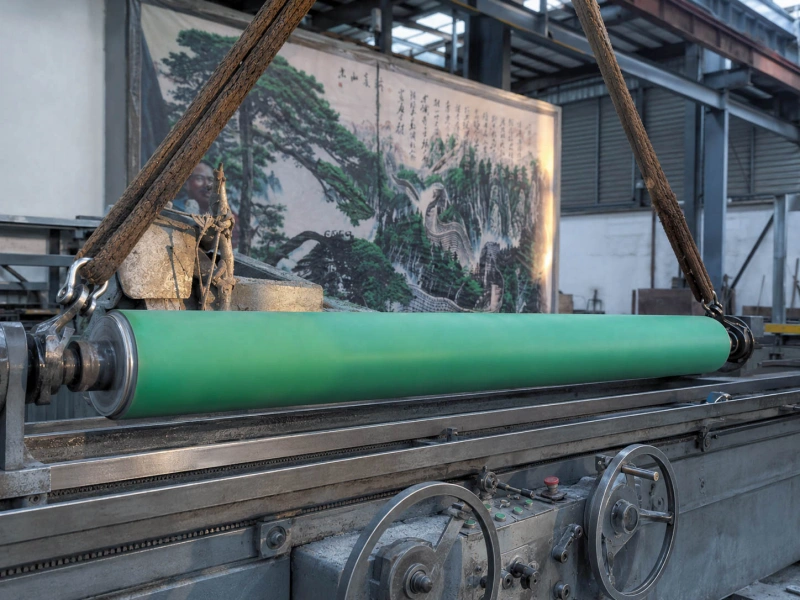
These rollers are usually installed after a wet process and before the next section where excess liquid starts to create trouble.
Typical positions include washing, rinsing, soaking, dyeing, pickling, liquid application or other wet-contact stages, followed by drying, rewinding, laminating, bonding, surface treatment or later handling.
The same line may have more than one wet-contact position, but the requirement is not always the same. One may focus more on liquid removal. Another may need more surface protection or better chemical resistance.
That is why this type of roller is usually reviewed by actual position, not only by name.
A suitable squeeze and dewatering roller usually needs to do several things at the same time:
remove excess liquid without leaving one side wetter than the other
reduce carryover into drying, winding or the next wet-sensitive section
keep the material condition more even across the width
lower the risk of pressure marks, stripes or surface damage
stay stable in continuous wet running instead of swelling, softening or losing surface condition too quickly
On wet paper lines, this position is often reviewed together with conditions seen on Paper Converting Rollers.
On washing, dyeing and finishing lines, it is often closely related to wet handling conditions seen on Textile Processing Rollers.
| Application Area | Roller Function |
|---|---|
| Washing and rinsing lines | Remove surface water or cleaning liquid before the next stage |
| Textile and dyeing lines | Squeeze water, dye liquor or treatment fluid after wet processing |
| Nonwoven processing | Control liquid carryover before drying, bonding or winding |
| Film and plastic sheet lines | Reduce surface liquid while protecting thin or sensitive materials |
| Foil and metal strip processing | Remove water, acid, alkali or cleaning liquid after surface treatment |
| Pickling and metal cleaning lines | Reduce acid, alkali or rinse water carryover |
| Coating or liquid application lines | Stabilize the material condition before or after liquid contact |
| Drying or rewinding sections | Reduce excess liquid before drying, winding or further handling |
Remove surface water or cleaning liquid before the next stage
Squeeze water, dye liquor or treatment fluid after wet processing
Control liquid carryover before drying, bonding or winding
Reduce surface liquid while protecting thin or sensitive materials
Remove water, acid, alkali or cleaning liquid after surface treatment
Reduce acid, alkali or rinse water carryover
Stabilize the material condition before or after liquid contact
Reduce excess liquid before drying, winding or further handling
For film, foil and thin sheet materials, the roller surface must be controlled carefully to avoid pressure marks, scratches or uneven contact.
For textiles and nonwovens, the roller often needs to balance water removal, fabric protection and long-term resistance to wet running conditions.
For metal strip, foil or pickling-related applications, chemical resistance becomes more important because the roller may contact acid, alkali, rinse water or cleaning fluid.
If your current cleaning roller has any of the following problems, it may not be enough to simply copy the old roller size:
For thin film, foil and sensitive sheet materials, the main risk is often not simply poor liquid removal. It is pressure marks, roller lines, scratches or unstable contact.
For textiles and nonwovens, the roller often needs to balance water removal, material protection and steady running over longer wet-contact time.
For metal strip, foil, pickling or chemical cleaning sections, the review usually shifts more toward media compatibility, swelling resistance and long-term dimensional stability.
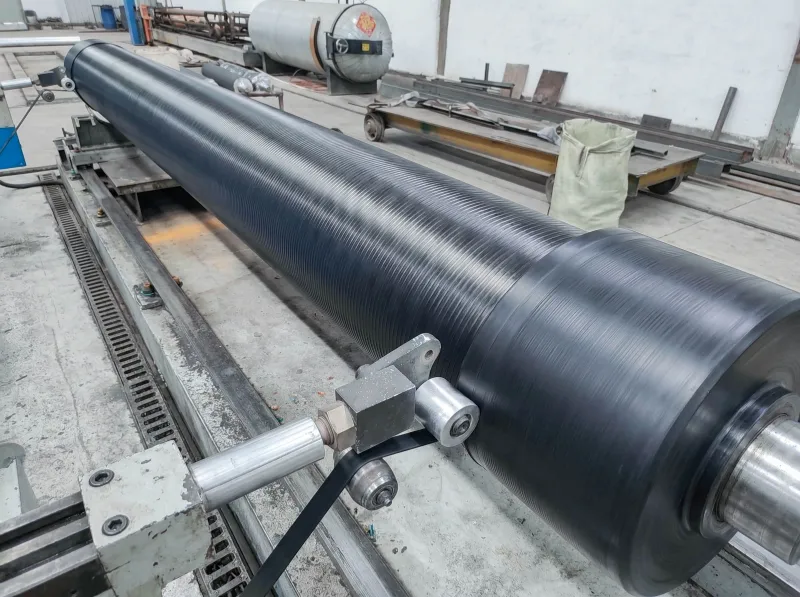
This is why a roller that works in plain water contact may still fail early when the line changes to alkaline wash, acidic media, higher temperature or longer contact time.
The main questions are usually these:
If pressure distribution is unstable, uneven dewatering usually shows up very quickly.
As a rough starting reference only, softer wet-contact positions may be reviewed around 45–70 Shore A, while stronger squeezing or heavier-duty wringer positions may be reviewed around 70–95 Shore A. Final hardness still depends on pressure, line speed, liquid type, surface sensitivity and failure history.
A surface that is too smooth, too worn, contaminated or locally damaged can reduce liquid control and make marks more visible.
Water is not the same as dye liquor, cleaning chemistry, alkaline wash or pickling-related liquid. Media compatibility often decides service life.
If the old roller already had uneven squeezing, swelling, fast wear or marking problems, copying it directly is often the wrong starting point.
Material selection here should follow the real wet-contact condition, not only the roller size.
These are starting directions, not fixed limits.
Copying the old dimensions may be reasonable when the previous roller ran stably and the line condition has not changed.
A deeper review is usually needed when:
the old roller already had uneven dewatering
the cover swelled, softened, cracked or became tacky
service life became shorter than expected
the line speed, pressure or liquid changed
the material surface became more sensitive
the width increased and cross-width consistency became harder to hold
In these cases, the better starting point is usually the real running condition, not just the old drawing.
If one side stays wetter, or the liquid level changes across the width, check pressure distribution, roller parallelism, cover wear, hardness drift and material tension.
If marks appear after squeezing, review hardness, pressure setting, local wear, surface contamination and whether the material is too sensitive for the current contact condition.
If the cover wears quickly, becomes glossy, sheds particles or loses dewatering effect over time, review wear resistance, liquid compatibility, pressure level and running duration.
If the cover changes noticeably after wet running, the compound may not match the real media, temperature or exposure time.
If drying, winding or later handling becomes less stable, the problem may be not only excess liquid, but also cross-width inconsistency or unstable contact coming out of the squeeze position.
These positions all involve pressure contact, but they are not judged in the same way.
If the main job is controlled contact, pressure transfer, bonding or laminating result, the review is usually closer to a nip or pressure position.
If the main job is water removal, liquid carryover reduction, wet-running stability and resistance to water or chemical media, it is closer to a squeeze and dewatering position.
This difference matters because a roller that looks acceptable in a dry pressure position may still fail early in a wet-contact dewatering position.
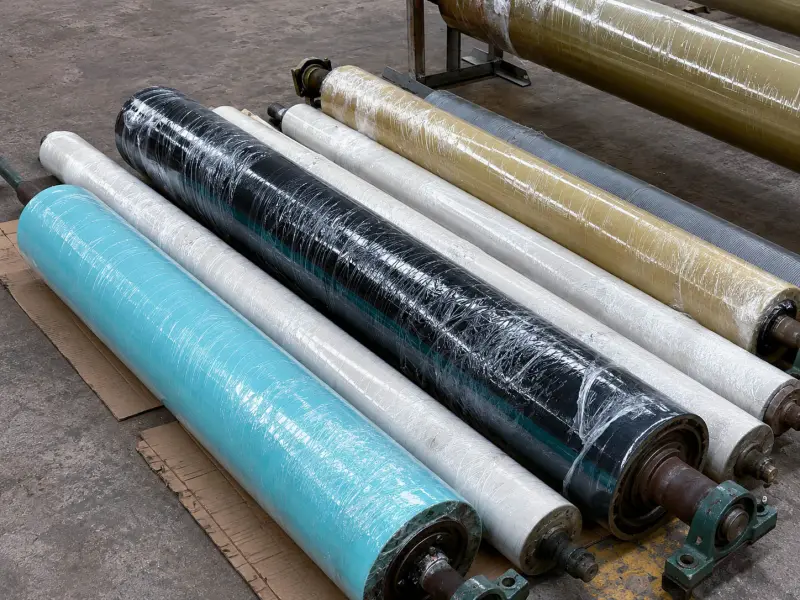
Often reviewed first for general water contact and humid service.
Natural Rubber RollersSometimes reviewed for softer, more traditional wet-contact positions.
Neoprene / CR Rubber RollersA balanced general industrial rubber direction for some wet-contact uses.
Butyl / IIR Rubber RollersReviewed in some special contact conditions.
Pressure RollersFor pressure-contact positions where liquid removal is not the only focus.
Paper Converting RollersWet paper handling and dewatering-related line conditions.
Textile Processing RollersWashing, dyeing, finishing and wet fabric handling.
Nonwoven Processing RollersLiquid carryover control before drying, bonding or winding.
A reliable rubber roller depends on more than size matching. Compound formulation, hardness stability, cover thickness, surface finish, shaft structure, and running accuracy all affect how the roller performs on your line.
Wolorin supports both routine replacement roller projects and more demanding custom industrial rubber roller projects, with established manufacturing experience, production equipment, inspection equipment, available certificates, and documented quality checks. Our rubber compound formulation system can be matched to different operating requirements.
Before shipment, key items such as cover hardness, shaft details, surface condition, and running accuracy can be checked according to project requirements.
You can review our manufacturing scope, quality control process, and company background through the pages below.
These names are often used for similar wet-contact roller positions. The key is whether the roller is used to squeeze out water, liquid, treatment fluid or process media after washing, rinsing, soaking, dyeing, pickling, coating or other wet processes.
Not always. The term “water squeezing roller” is often used in washing, rinsing, dyeing or drying-preparation sections, but the roller may also contact cleaning liquid, dye liquor, treatment fluid, acid solution, alkali solution or other industrial media.
When the liquid is not only water, material resistance becomes more important.
Usually yes. Acid squeezing or pickling-related rollers should be checked according to acid type, concentration, temperature, contact time, pressure and line speed. These conditions should not be treated the same as a normal water squeezing position.
No. Higher hardness may improve squeezing force, but it can also increase the risk of pressure marks, material damage and uneven contact. The hardness should match the material, pressure, liquid type, line speed and surface sensitivity.
EPDM is often considered for water, humidity and general environmental stability. NBR is often considered when oil or certain industrial fluids are involved. The final choice still depends on the process liquid, temperature, pressure and running time.
If the old roller has been working well, it can often be replaced based on the existing dimensions and material direction.
If the old roller has swelling, softening, fast wear, poor squeezing, cracking or tackiness, the material, hardness and surface should be reviewed before making the replacement.
If you are dealing with uneven dewatering, liquid carryover, pressure marks, fast wear, swelling, softening or unstable service life, you can start with whatever information is already available.
Old roller dimensions, photos, samples, processed material, liquid type, line speed, pressure condition or the problem seen on the line can already be enough for an initial review.
You do not need to prepare a full drawing before contacting us.