
Coated paper is often more sensitive in surface-contact zones and may show marking, drag, or gloss change more easily.
Paper Converting Rollers
Paper converting lines do not always fail all at once. More often, feeding becomes less steady, paper dust builds up, contact behavior shifts with moisture, or rewind quality starts to drift.
For paper converting projects, the useful review is usually simple: what paper is running, where the roller works, and what symptom is showing on the line. That is usually more helpful than judging the roller by size alone.
Wolorin supplies custom rollers for paper converting positions such as feeding, transport, support contact, gluing-related contact, and rewind sections. If you already have drawings or old roller data, you can send them directly. If not, you can still start with the paper grade, the roller position, and the running problem you want to improve.
What This Industry Processes
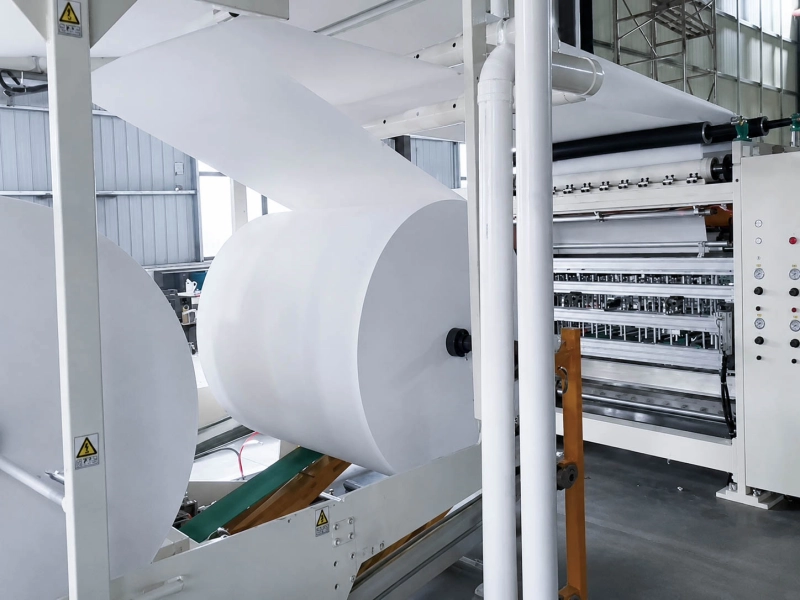
Paper converting covers a wide range of downstream operations after base paper production. Depending on the line, the roller may work in feeding, traction, embossing support, gluing support, rewinding, sheet handling, or other finishing-related sections.
The key point is simple: different paper grades behave differently on the line, and different sections place different demands on the roller.
Label stock usually needs stable traction and cleaner running in sections where release behavior and transport consistency both matter.
Packaging paper often needs durable handling over longer runs, with attention to dust loading, traction stability, and rewind consistency.
Release paper can place tighter demands on surface behavior, liner handling, and downstream winding control.
Tissue and soft paper structures need a gentler compression response because the sheet can deform more easily under contact.
Typical Line Sections and What Usually Matters
Feeding and entry sections
Stable entry usually matters more than aggressive grip. The roller should help the sheet enter and travel without slip, skew, edge disturbance, or unnecessary marking.
Transport sections
These positions usually need controlled traction rather than maximum bite. Too much traction can overstress the paper. Too little traction can make running less stable.
Embossing support or pressure-support sections
Load response and contact consistency matter more here. In some positions, the review logic is closer to pressure rollers than to a general transport roller.
Gluing-related sections
Surface condition, contamination tolerance, and contact consistency can affect line stability more than expected, especially when dust or paper variation is already present.
Rewind sections
Rewinding often shows whether upstream roller behavior stayed stable through the full run. If not, looseness, edge instability, or uneven roll build may appear at the end.
Common Problems
Many paper converting projects start from a running problem rather than from a request for one specific material.
Typical early signals may include:
- feeding becoming less stable after a grade change or humidity shift
- slight skew, inconsistent traction, or edge disturbance
- marking, drag, or gloss change in more sensitive contact zones
- roller behavior drifting as paper dust builds up on the surface
- softer paper grades showing compression or surface disturbance more easily
- rewind looseness, edge instability, or uneven roll build at the end of the run
What These Conditions Usually Require from the Roller
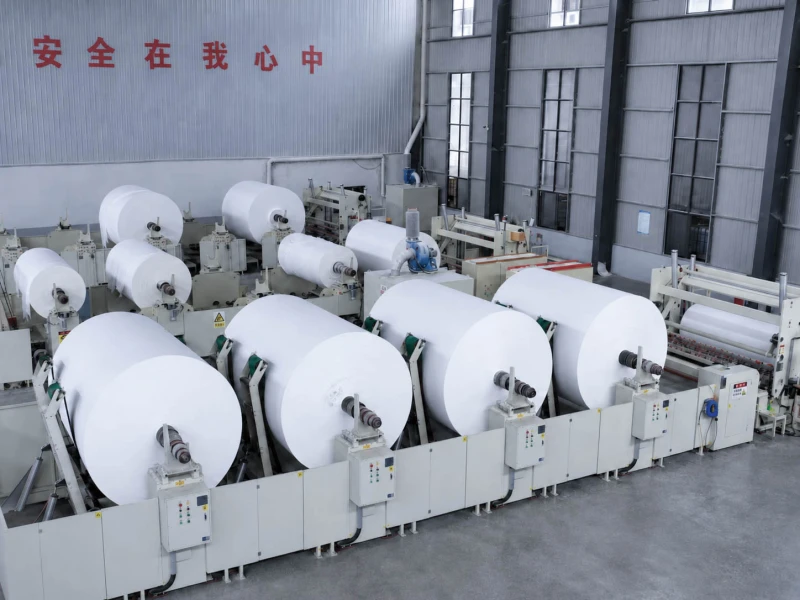
A suitable paper converting roller usually needs controlled traction rather than maximum grip. The surface has to move the sheet consistently while still protecting the grade being processed.
It also needs the right compression response for the section. Feeding, support contact, gluing-related contact, and rewinding do not ask the roller to behave in the same way.
Because paper dust is part of normal production, surface behavior should stay workable over time, not only when the roller is freshly cleaned.
Moisture variation also matters. The roller should keep practical contact behavior even when paper condition shifts during production.
For some paper converting positions, it is also useful to review whether a 🔗NBR / nitrile rubber rollers direction, an 🔗EPDM rubber rollers direction, or a more position-specific build is the better fit.
Common Build Directions in Paper Converting Projects
Different paper grades and line sections usually push the build in different directions.
For feeding and traction positions, the usual need is a surface that balances transport stability with paper protection.
For coated paper and label stock, cleaner surface behavior and stable traction are often more important than aggressive grip.
For tissue and soft paper structures, the focus often shifts toward gentler contact and a more suitable compression response.
For embossing support and gluing support positions, the build is often reviewed around contact consistency, load response, and surface behavior under actual production conditions.
For rewind positions, the useful build direction is usually the one that helps keep running and roll quality stable through the full run.
That is why many paper converting projects are best reviewed through a simple combination: paper grade + line section + current symptom.
In nearby sections, some projects may also overlap with Printing Industry Rollers or Coating and Laminating Line Rollers.
Common Roller Types and Materials for This Application
Traction Rollers
— for controlled paper transport where steady pull matters more than aggressive grip.
Pressure Rollers
— for support-contact positions where load response and contact consistency matter.
Guide Rollers
— for sections where path control and stable travel matter.
Transfer Rollers
— for nearby liquid, glue, or transfer-related positions.
NBR / Nitrile Rubber Rollers
— often reviewed for oil, ink, glue, and general industrial contact conditions.
EPDM Rubber Rollers
— often reviewed where moisture, weathering resistance, or general paper-related contact conditions matter.
Natural Rubber Rollers
— for more basic elastic contact directions in some paper-related positions.
Printing Industry Rollers
— for printing-related finishing that overlaps with paper converting.
Flexible Packaging Rollers
— for adjacent converting and finishing scenarios with some overlap.
Frequently Asked Questions
Common positions include feeding rollers, traction rollers, embossing-support rollers, gluing-support rollers, and rewind rollers. For coated paper or label stock, the build usually needs more careful control of surface contact and traction stability because these grades react more easily to marking, drag, dust, or release-related changes.
Paper dust gradually changes the roller surface condition. As it builds up, traction and contact behavior can become less predictable, and a roller that originally ran well may start to slip, mark, or drift.
Tissue and other soft paper structures compress more easily than firmer grades. That means the roller often needs a gentler and more controlled contact response to support handling without over-compressing the sheet.
Final roll quality depends on how consistently the paper has been handled before and during rewinding. If roller behavior drifts during the run, the roll may begin to show looseness, edge instability, or uneven build even when upstream running still looks acceptable.
Custom rollers reviewed against real working conditions
From straightforward replacement projects to more demanding paper converting positions, we review each project around the actual line section, contact condition, and running symptom. If you want to check manufacturing scope, inspection information, or company background, you can continue through the pages below.
Request a Quote
If you already have drawings or existing roller data, you can send them directly for custom production. If not, you can still contact us with the paper grade, roller position, and the running problem you want to improve.