Surface Marking
Thin foil can record local pressure variation, debris, vibration, or uneven support very quickly.
Custom rollers for aluminum foil, copper foil, and thin metal strip lines where surface protection, edge stability, and rewind consistency depend on cleaner, more controlled contact.
On these lines, a roller can look mechanically acceptable and still become the wrong fit once the substrate is thinner, narrower, easier to mark, or less tolerant of local contact error. That is why review usually needs to start from the actual running position, not from size alone.
Wolorin supplies custom rollers for foil and thin strip positions where stable running, controlled support across width, and lower contact disturbance need to work together. Typical positions include guide sections, tension-related positions, slit transport sections, critical support rollers between spans, and rewind-adjacent contact positions.
You do not need everything ready before contacting us.
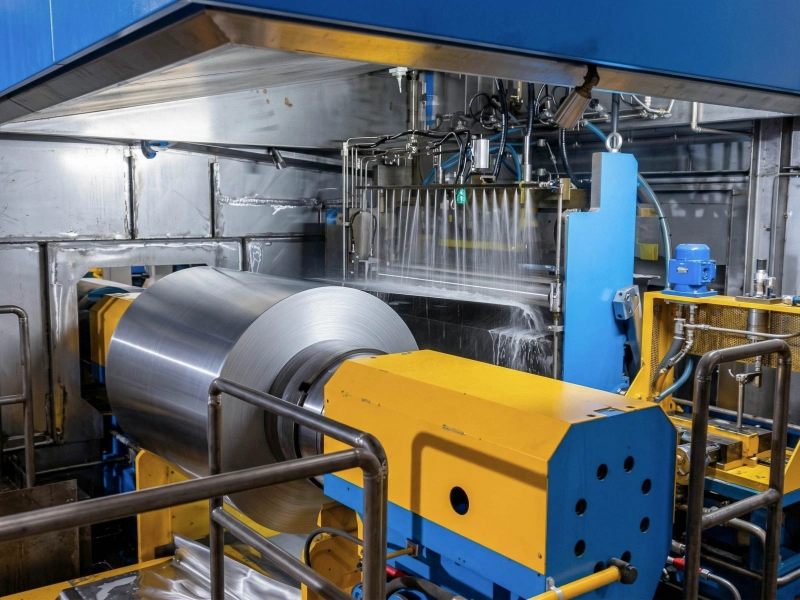
Foil and thin strip lines usually handle aluminum foil, copper foil, and other thin metal materials during conveying, guiding, slitting, and rewinding.
What makes these lines more demanding is not only the material itself, but how quickly the substrate records local contact error. A position that stays acceptable on a more forgiving web may start showing marking, scratching, edge movement, or rewind-related defects much earlier on thin foil or strip.
That is why roller review on these lines usually needs to look beyond nominal replacement size and focus on what the roller is actually required to control at that position.
At guide sections, the roller needs to keep the strip calm without adding light recording, unstable tracking, or extra edge movement.
In tension-related sections, the roller should support stable running without creating local overloading across width.
After slitting, narrow foil lanes and thin strip sections usually become less tolerant of weak support, running variation, and profile mismatch.
Some rollers do not look like the most sensitive positions at first, but they still decide whether the material stays stable between sections or starts accumulating low-level contact damage.
Near rewind, the material often becomes more sensitive to pressure recording, edge build irregularity, and shape inconsistency.
Thin foil can record local pressure variation, debris, vibration, or uneven support very quickly.
Scratching becomes more likely when the contact path is not clean or when the roller surface is not well matched to the substrate.
After slitting or across longer unsupported spans, weak support and running variation can make edge behavior less stable.
On sensitive foil or thin strip, uneven support across width can influence flatness and running behavior much earlier than on thicker materials.
Pressure recording, edge build irregularity, telescoping tendency, and roll shape inconsistency often begin before the winding section itself.
When foil or thin strip problems keep repeating, the review usually needs to move beyond “Is the size correct?” and into “What is this roller actually required to control at this position?”
If the line is showing path instability or edge movement without obvious damage, the position may need to be reviewed more like guide rollers.
If the main issue is widthwise loading, running balance, or rewind sensitivity, the position may need to be judged closer to tension control rollers or controlled-contact pressure rollers.
If static sensitivity, light dust pickup, or contamination transfer is part of the problem, the review may also need to include anti-static / conductive rubber rollers.
If the contact zone also sees heat, oil, solvent, or more aggressive media, material review may need to move toward FKM rubber rollers instead of treating the issue as surface finish alone.
Before confirming a roller for foil or thin strip service, review usually starts with the actual line position, then moves into the details most likely to change contact behavior:
substrate type and approximate thickness range
line section and what the roller is actually required to do
width, wrap, span, slit width, and tension behavior
whether the visible problem is marking, scratching, edge movement, deformation, or rewind-related
whether the contact zone is clean, dusty, static-sensitive, heated, oily, or solvent-exposed
whether the roller needs smooth support, controlled pressure, traction, or cleaner release
The first review point is usually not nominal diameter alone, but whether support across width, local pressure behavior, and running accuracy are still appropriate close to winding.
This often suggests that the strip has become less tolerant after slitting and the downstream position now needs cleaner support logic.
This often points to contamination carry-in, unstable contact condition, or a position that only becomes sensitive under certain running combinations.
On foil and metal strip processing lines, the roller usually needs to support movement without leaving a visible contact signature on the substrate.
Thin foil and strip can record small inconsistency quickly. Surface condition, finish, and support behavior need to match the real job of the position.
Local loading can turn into marking, shape influence, edge instability, or slit transport sensitivity.
If the build is too aggressive, the substrate may record contact or deform more easily. If it is too soft or unstable, support quality and tracking may fall off.
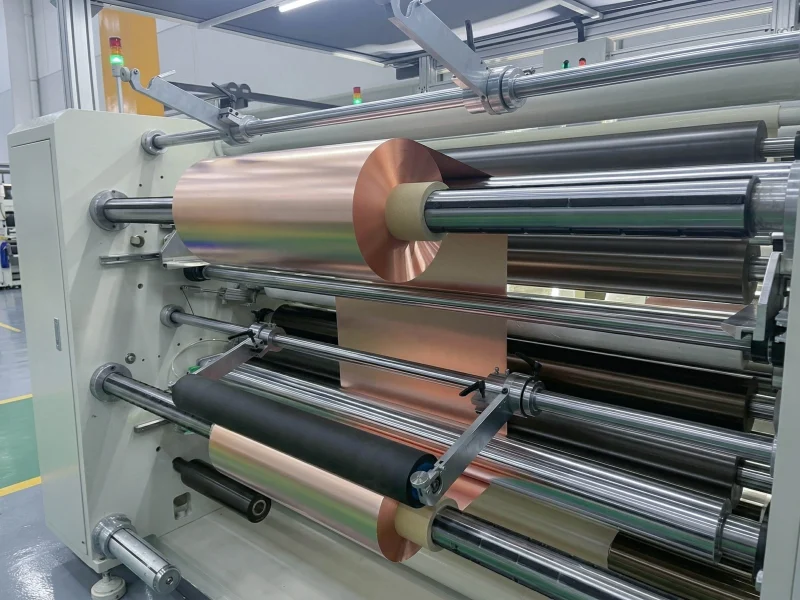
On wider foil widths, thin strip lines, and sensitive slit transport or rewind positions, crown or profile decisions can strongly affect running balance across width.
A roller may look acceptable by size but still deflect enough to change pressure distribution across the face. On wider or more sensitive foil applications, that can directly affect marking risk, running accuracy, and edge behavior.
The roller still needs to carry the material in a controlled way. A more protective surface is not automatically the right answer if support becomes less stable.
Marking or scratching on thin foil usually relates to contact smoothness, pressure concentration, surface contamination, running accuracy, and support across width. On aluminum foil and copper foil lines, even small local contact errors may become visible quickly.
Edge stability on thin strip lines is often affected by running accuracy, shaft rigidity, span condition, profile direction, and how evenly the substrate is supported through guide, transport, slit, and rewind positions.
The key factors usually include substrate thickness, width, surface sensitivity, contact role, pressure distribution across width, shaft rigidity, crown or profile logic, and whether the position is mainly guiding, supporting, slit transport, or rewind contact.
Yes. Rewind defects on thin foil are often linked to earlier contact behavior, not just the final winding step. Uneven pressure, unstable support, surface recording, or edge movement upstream can all contribute to finished-roll problems.
A reliable rubber roller depends on more than size matching. Compound formulation, hardness stability, cover thickness, surface finish, shaft structure, and running accuracy all affect how the roller performs on your line.
Wolorin supports both routine replacement roller projects and more demanding custom industrial rubber roller projects, with established manufacturing experience, production equipment, inspection equipment, available certificates, and documented quality checks. Our rubber compound formulation system can be matched to different operating requirements.
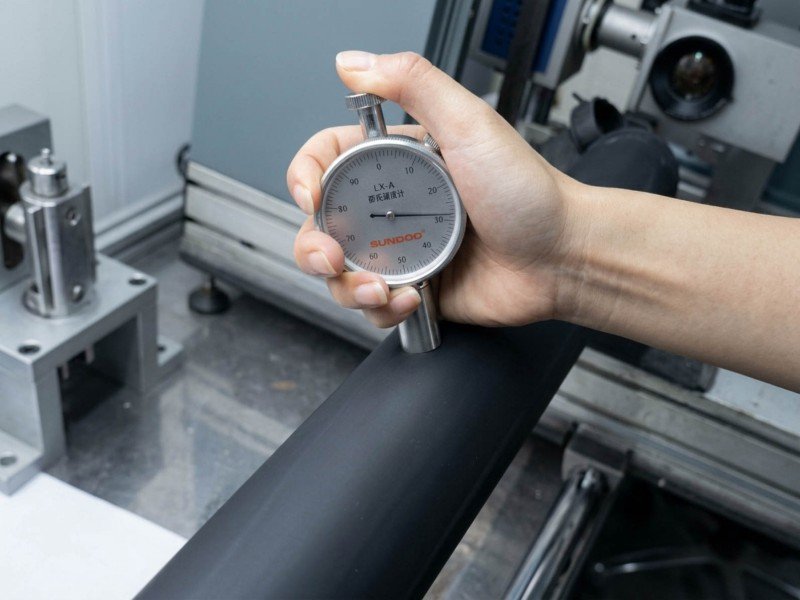
Before shipment, key items such as cover hardness, shaft details, surface condition, and running accuracy can be checked according to project requirements.
You can review our manufacturing scope, quality control process, and company background through the pages below.
If you are dealing with scratches, scuffing, edge instability, or winding defects on aluminum foil, copper foil, or thin metal strip lines, the most effective starting point is usually the actual running position. If you already have drawings or size data, you can send them directly for custom production. If not, we can still review the application based on the specific line position and the contact roller location.