Feed and pre-print transport
At the front of the line, the job is stable entry, repeatable transport, and controlled grip without introducing early tracking variation or unnecessary surface contamination.
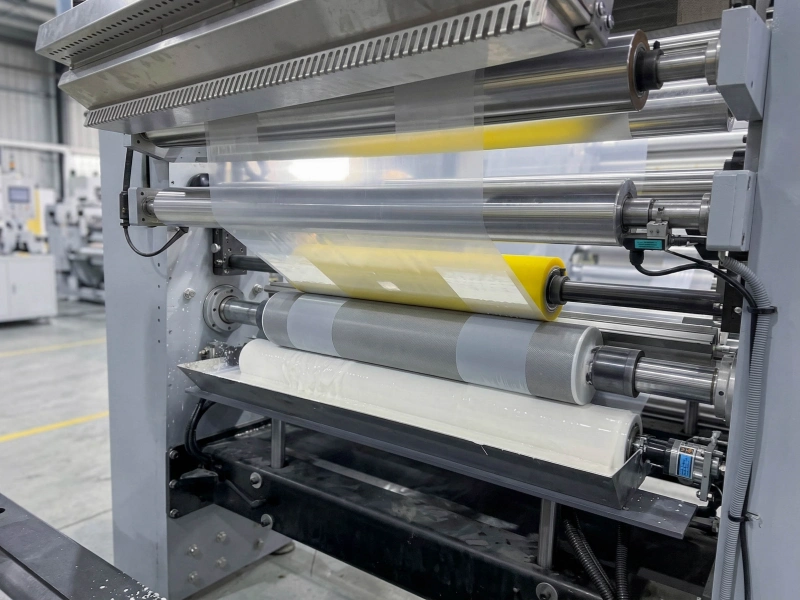
Rubber rollers used on printing-related lines often need to work differently before printing, around the print section, and after the web already carries ink, solvent residue, or a more contact-sensitive surface condition.
That is why a roller that seems acceptable at line entry may still cause marking, residue pickup, drift, or unstable downstream handling later in the process.
Wolorin supplies custom industrial rollers for printing-related applications such as printed film handling, printed paper transport, label processing, and other web lines where surface condition, contact cleanliness, and running stability become more critical after printing.
If you are not sure which roller position is causing the problem yet, you can still start with the material being processed, the roller position, and the running issue you are seeing on the line.
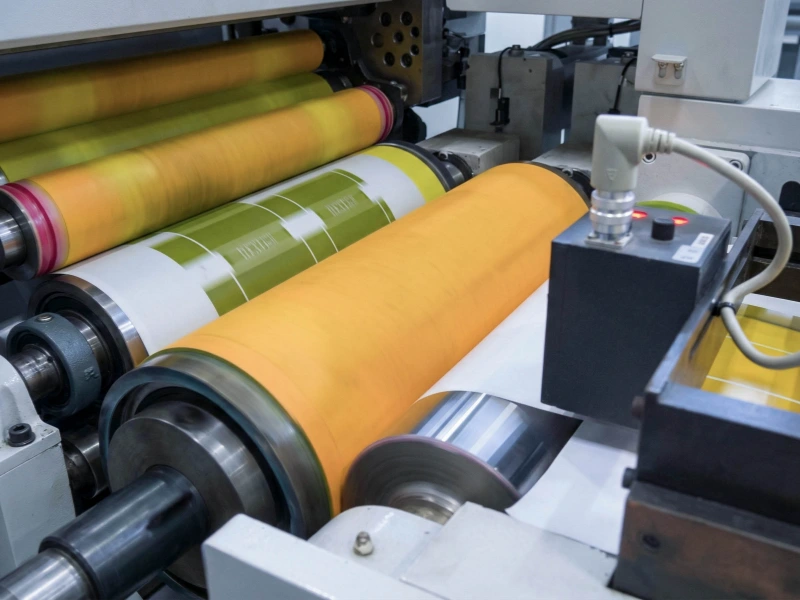
Printing-related lines often handle webs that become less forgiving after the print section, not only because ink has been applied, but because downstream contact may now involve residue, partial drying, surface disturbance, or more marking-sensitive handling.
Some lines run under relatively mild conditions. Others involve more solvent-aware exposure, repeated cleaning, longer production runs, or gradual residue buildup that changes how the roller surface behaves over time.
For that reason, printing rollers are usually judged less by appearance alone and more by whether they keep contact behavior, cleanliness, and running stability under control through real production.
At the front of the line, the job is stable entry, repeatable transport, and controlled grip without introducing early tracking variation or unnecessary surface contamination.
Near print-related contact zones, the roller may need to support pressure, transport, or repeated surface contact without gradually shifting toward swelling, softening, tack change, or residue pickup.
Guide positions on printing lines are sensitive because small running changes can become larger alignment, register, or correction instability later.
Once the substrate is printed, contact often becomes less forgiving. These rollers may need cleaner release, lower marking tendency, and more predictable surface behavior during longer runs.
At later sections, the result is often cumulative. Rewind defects, unstable roll build, or handling variation may begin well before the winding station itself.
Many printing-related roller issues begin as running complaints rather than obvious roller failure.
One common problem is surface behavior changing during production. In solvent-aware lines, a roller cover may not fail dramatically, but it can swell slightly, soften, become tackier, or lose its original release or traction balance after repeated exposure. Once that happens, transport consistency, guide response, and delivery contact often become less stable.
Another frequent issue is marking after printing. Printed webs can become more contact-sensitive once ink, solvent residue, or surface contamination is involved. If the roller finish is wrong for the position, if residue builds up too easily, or if the cover does not stay clean enough during the run, the result may appear as light marks, drag patterns, pickup, or visible surface disturbance after delivery contact.
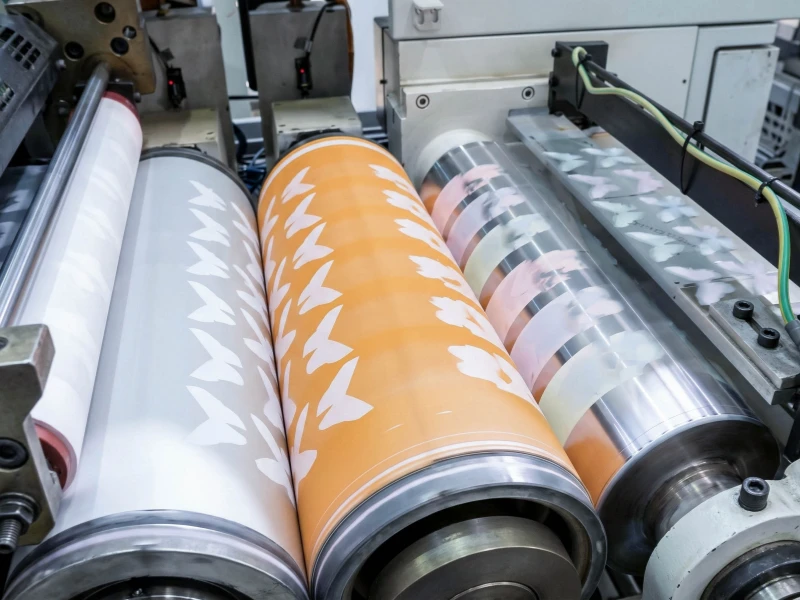
There are also cases where the line starts well but becomes harder to control over time. Tracking correction may increase, running may become less steady, or delivery and rewind behavior may drift during longer solvent-heavy production. In these situations, the problem is often gradual loss of predictable surface behavior rather than one isolated defect.
Downstream rewind complaints are also common. The finished roll may show uneven build, telescoping tendency, edge inconsistency, or handling instability even when rewind tension settings appear reasonable. In many cases, the source is earlier in the printing path, where contact, contamination pickup, or local running variation has already changed how the web behaves before it reaches rewind.
On printing-related lines, the roller usually needs to keep the web moving in a controlled way after surface sensitivity has increased.
First, it needs chemical resistance matched to the real environment. That may involve ink-related exposure, cleaning chemistry, intermittent solvent contact, or repeated operation in sections where the surface behavior can drift over longer runs if the material choice is wrong.
Second, it needs stable surface behavior under repeated exposure. A roller used around printed webs should not quickly shift toward unwanted tack, drag, swelling, softening, or residue retention that makes contact less clean or makes guide and transport behavior less predictable.
Third, it needs clean contact in sensitive sections. After printing, the web surface may tolerate less disturbance than it did at line entry. Depending on the position, the roller may need lower marking tendency, better release, easier cleaning, or a more controlled grip level to avoid pickup and visible contact damage.
Fourth, it needs running consistency through guide, delivery, and rewind sections. This includes predictable traction or release, stable tracking response, and reduced variation that can affect downstream roll build.
Finally, it usually needs a position-specific build rather than a generic printing roller approach. In practice, that can mean reviewing cover compound, hardness range, thickness, surface finish, shaft details, and construction logic according to the actual line section, substrate type, speed, temperature, and solvent condition.
Typical material directions may include NBR / nitrile rubber rollers, FKM rubber rollers, solid silicone rollers, or other industrial compounds depending on what the roller actually sees during operation.
This page is mainly for printing-related line conditions where roller performance is affected by printed-surface contact, ink or solvent-related exposure, delivery handling, and downstream running stability.
If your main concern is broader packaging converting rather than printing-related handling itself, you may also review flexible packaging rollers.
If the main issue is liquid transfer, coating amount, or controlled application behavior, transfer rollers and metering rollers may be more relevant.
If the problem is mainly pressure contact or nip behavior, pressure rollers may be the better next step.
For ink, coating, or controlled media transfer positions.
Metering RollersFor coating amount and surface consistency control.
Pressure RollersFor controlled contact, nip behavior, and pressure distribution.
Traction RollersFor steady web movement and repeatable transport grip.
NBR / Nitrile Rubber RollersOften reviewed for ink, oil, and general industrial contact conditions.
FKM Rubber RollersOften reviewed for more demanding solvent and chemical exposure.
Polyurethane Rubber RollersOften reviewed where wear resistance and traction stability matter.
Flexible Packaging RollersFor broader packaging-print and downstream converting conditions.
It depends on the actual solvent system, temperature, cleaning chemistry, contact pattern, and line position. On printing-related lines, material choice is usually driven by practical chemical resistance and surface stability over time, not by one universal rule. Silicone, EPDM, NBR, FKM, polyurethane, and other compounds may all be used depending on what the roller actually sees during operation.
Marking after delivery contact usually comes from a mismatch between surface condition and position duty. The roller may hold residue too easily, the surface finish may create too much local contact effect, or the cover may become less stable after exposure to ink, solvent, or cleaning chemistry. Printed webs are often more contact-sensitive after printing, so even light surface inconsistency can become visible.
A roller can behave differently after extended exposure even when startup running looks acceptable. Slight swelling, softening, tack change, contamination buildup, or reduced release can gradually affect transport consistency, guide response, and contact behavior. The result is often more correction, less predictable running, and greater variation later in the run.
Because rewind quality often reflects the whole path the printed web has already traveled. If earlier sections introduce light marking, unstable transport, contamination pickup, or inconsistent contact, the substrate may reach rewind in a less repeatable condition. That can lead to roll build variation, edge instability, or downstream handling problems even when the rewind section itself is not the first cause.
A reliable printing-line roller usually depends on more than size matching alone. Cover compound selection, hardness control, surface finish, shaft details, and running accuracy can all affect how the roller performs in actual printing-related conditions.
Wolorin supports both regular replacement projects and more demanding custom industrial roller applications, with manufacturing review based on drawings, samples, existing rollers, or working conditions.
A useful starting point is usually the substrate type, the printing condition, the solvent or cleaning environment, the roller position, and the problem showing up during production.
If you already have drawings, dimensions, or an existing roller sample, you can send them directly. If not, the running issue, contact duty, and current line condition are usually enough to begin the review.