Custom Steel & Metallurgy Rubber Rollers
Wolorin manufactures custom rubber-covered rollers for steel processing and metallurgy lines, especially for positions where the strip needs stable traction, guided running, surface protection, or controlled contact.
These rollers are commonly used in cleaning lines, pickling after-treatment, galvanizing, color coating, slitting, recoiling, inspection, conveying, and other auxiliary strip-handling sections.
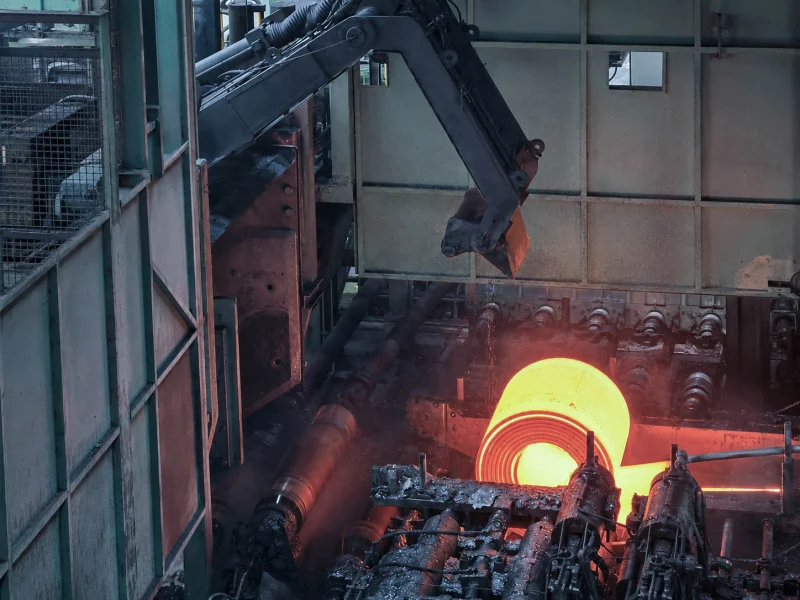
Steel lines are different from ordinary web handling lines. The strip is heavier, the edges are harder, and the surface may carry oil, water, cleaning liquid, oxide scale, zinc dust, or fine metal particles. In these conditions, the roller is not only expected to rotate. It also needs to maintain stable contact, reduce slipping, protect the strip surface, and keep working under repeated load and contamination.
You do not need everything ready before contacting us.
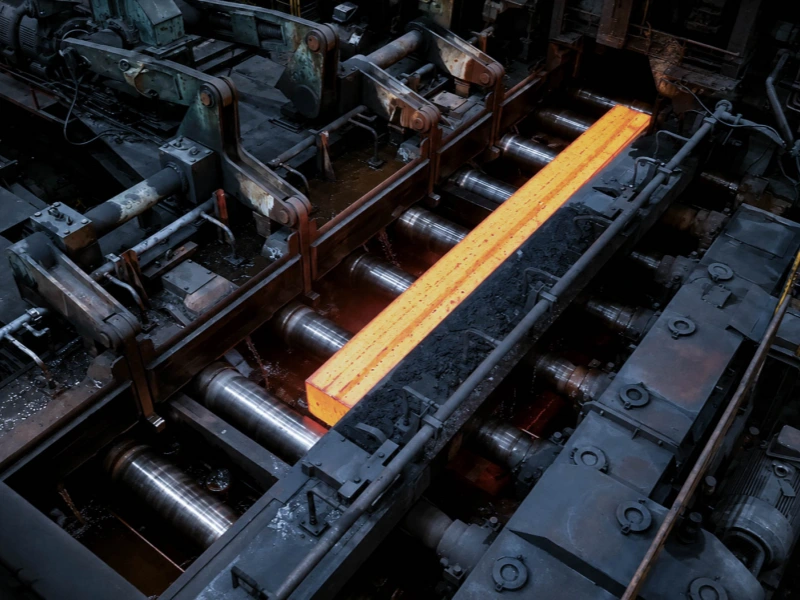
Where Rubber Rollers Are Used in Steel Processing Lines
Rubber-covered rollers are often used after the main rolling process, especially in contact positions where the strip needs to be moved, guided, cleaned, supported, or protected.
Common applications include:
Steel strip cleaning lines
Pickling, degreasing, and rinsing sections
Galvanizing line entry, exit, and after-treatment sections
Color coating and painted steel sheet lines
Protective film lamination positions
Slitting, recoiling, and inspection lines
Auxiliary conveying and support positions for galvanized sheet, color-coated sheet, stainless steel sheet, and cold-rolled strip
In these areas, the roller is not only expected to rotate. It must keep stable contact with the strip, reduce slipping, protect the surface, and withstand oil, dust, edge impact, and repeated running.
What Steel Line Rollers Usually Need to Handle
Stable Traction on Heavy Strip
Bridle rolls, pinch rolls, traction rolls, and tension-related contact positions need enough grip to move the strip without slipping or speed mismatch.
For many steel strip traction and pinch positions, hardness is often confirmed from around 70–95 Shore A, depending on strip weight, line speed, contact pressure, and wear conditions. Heavier or more abrasive positions may require a harder and more wear-resistant cover.
Oil, Water, and Cleaning Liquid
Steel strip may carry rolling oil, rust-prevention oil, emulsion, cleaning liquid, or water.
If the cover material is not suitable, the roller may swell, soften, become sticky, lose grip, or wear faster. For these positions, the actual contact medium should be checked before selecting NBR, PU, FKM, or a modified rubber compound.
Oxide Scale, Metal Dust, and Edge Burrs
Oxide scale, zinc dust, metal powder, and hard particles can accelerate surface wear. Strip edges can also cut or damage the roller cover, especially when the strip tracks to one side or has burrs.
For these cases, the cover thickness, hardness, edge design, surface structure, and grinding allowance should be reviewed together. Simply choosing a harder material may not solve all edge damage problems.
Surface Protection for Finished Strip
Galvanized sheet, color-coated sheet, stainless steel sheet, and finished metal surfaces need stable contact without obvious marks, scratches, contamination, or pressure lines.
These positions often require a more controlled surface finish, proper hardness, clean cover material, and even contact pressure across the roller face.
Typical Application Scenarios
1. Cleaning Line Exit: Wet or Oily Strip Slips on the Roller
After cleaning, degreasing, or rinsing, the strip surface may still carry water, oil film, cleaning liquid, or fine particles. A smooth or unsuitable roller surface may cause slipping, unstable liquid carryout, surface stickiness, or fast cover wear.
For this type of position, the roller design may need:
Better traction under wet or oily contact
Rough-ground, textured, or grooved surface
Material resistance to water, oil, and cleaning chemicals
Suitable hardness for the pressure and strip weight
A surface that is easy to clean and does not contaminate the strip
2. Galvanized or Color-Coated Strip: Traction Is Needed, but the Surface Must Be Protected
In galvanizing, color coating, and after-treatment sections, the roller may need to guide or drive the strip while protecting the finished surface. If the surface is too aggressive, it may leave marks. If it is too smooth or too soft, the strip may slip or run unstably.
For this type of application, the key points are:
Whether the roller contacts a finished or semi-finished surface
Whether oil, water, zinc dust, or coating residue is present
Whether the roller needs more traction or more surface protection
Whether the surface roughness should be fine, rough-ground, textured, or release-oriented
3. Slitting, Recoiling, and Inspection Lines: Strip Edges Damage the Cover
In slitting, recoiling, and inspection sections, strip edge condition directly affects roller life. Burrs, uneven edge trimming, side tracking, and concentrated pressure can cause edge cutting, chipping, or local wear on the roller cover.
For this type of problem, the roller may need:
Better cut resistance and wear resistance
Proper roller face width and edge chamfer
Enough cover thickness and future grinding allowance
A surface design suitable for the actual strip width and running path
Review of whether the strip keeps running against the same side of the roller
Common Roller Functions in Steel and Metal Coil Lines
Different steel line sections may use different roller functions. In practice, customers often need to confirm the roller position first before deciding on cover material or surface direction.
Typical examples include:
drive rollers for strip movement and speed transfer
pressure rollers for controlled contact and load distribution
guide rollers for strip path stability
support positions where surface durability and strip protection both matter
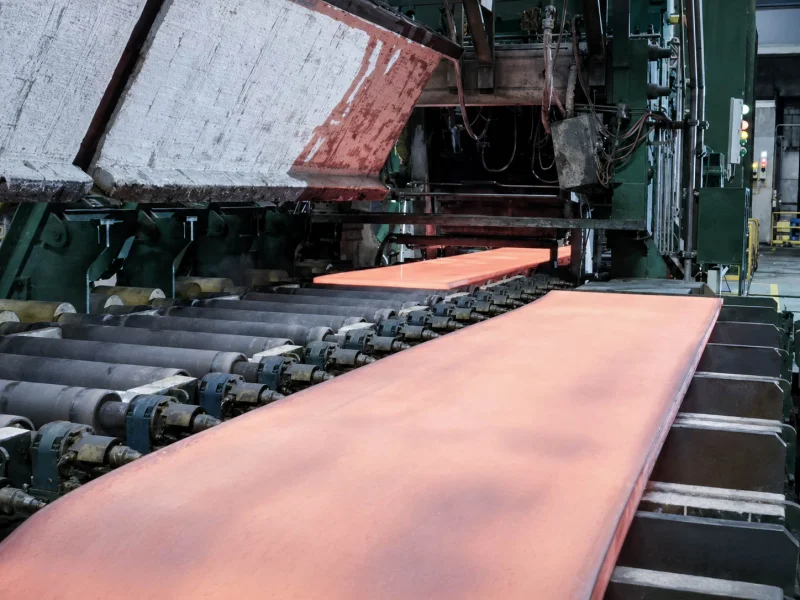
If the exact roller type is not fully confirmed yet, the line position and current running problem are usually enough to start the review.
Typical Design Points for Steel Processing Rubber Rollers
Different steel lines have different strip thickness, width, speed, tension, temperature, and surface requirements. The following points are usually reviewed before production.
| Design Point | Common Direction for Steel / Metal Coil Lines |
|---|---|
| Hardness | Often reviewed from 65–95 Shore A; bridle, traction, pinch, and guide positions commonly fall around 70–95 Shore A |
| Cover Thickness | Often reviewed from around 10–25 mm, depending on load, roller structure, contact pressure, and future grinding allowance |
| Temperature | Cleaning, galvanizing after-treatment, color coating, or nearby hot sections may involve continuous contact around 80–125°C; higher temperature or complex media require separate material review |
| Surface Roughness | Wet, oily, or traction-focused positions may use rough-ground or textured surfaces; some traction surfaces can reference Ra 3–10 μm depending on strip condition |
| Surface Profile | Smooth ground, rough ground, traction texture, spiral groove, diamond groove, herringbone groove, or drainage groove can be selected according to grip, liquid removal, and anti-slip needs |
| Material Direction | PU, NBR, EPDM, FKM, silicone, or modified rubber compounds can be selected based on oil, temperature, wear, surface protection, and chemical exposure |
These are not fixed values for every steel line. The final design should match the actual roller position, strip condition, contact pressure, working temperature, and current failure mode.
Material Direction Should Follow the Actual Working Condition
Material choice should start from the roller job on the line, not from the material name alone.
In steel and metallurgy projects, common review directions may include:
Polyurethane rubber rollers when wear resistance, traction, and service life are important
FKM rubber rollers when higher temperature, oil, or more complex media are involved
EPDM rubber rollers when moisture, water, or general open-environment resistance matters
modified compounds when cut resistance, contamination control, or a more specific surface behavior is needed
The final direction should still match the actual roller position, strip condition, temperature range, contact media, and current failure mode.
Common Roller Types and Materials for This Application
For related roller directions, you can also check:
Custom Roller Manufacturing, Formulations, and Quality Control
A reliable rubber roller depends on more than size matching. Compound formulation, hardness stability, cover thickness, surface finish, shaft structure, and running accuracy all affect how the roller performs on your line.
Wolorin supports both routine replacement roller projects and more demanding custom industrial rubber roller projects, with established manufacturing experience, production equipment, inspection equipment, available certificates, and documented quality checks. Our rubber compound formulation system can be matched to different operating requirements.
Before shipment, key items such as cover hardness, shaft details, surface condition, and running accuracy can be checked according to project requirements.
You can review our manufacturing scope, quality control process, and company background through the pages below.
Request a Quote
If you already have drawings and dimensions, you can send them directly for custom production.
If the information is not complete yet, you can send the roller position, photos, and current issue first. We can confirm the suitable material, hardness, surface, and structure direction based on the actual working condition.