Metal Packaging & Decorating Rubber Rollers
Wolorin manufactures custom rubber-covered rollers for beverage can decorating, metal sheet printing and coating, and selected basecoat and overvarnish applications. We supply complete new rollers and replacements for existing equipment, from routine orders to projects requiring a revised rubber covering.
Can inker rolls, varnish applicators, and metal sheet coating rollers work with different inks, coatings, and contact arrangements. Each replacement is specified around the actual roller position, covering material, finished surface, and machine fit.
An existing roller photo, equipment model, drawing, or known dimensions is enough to start. A complete drawing is not required for an initial inquiry.
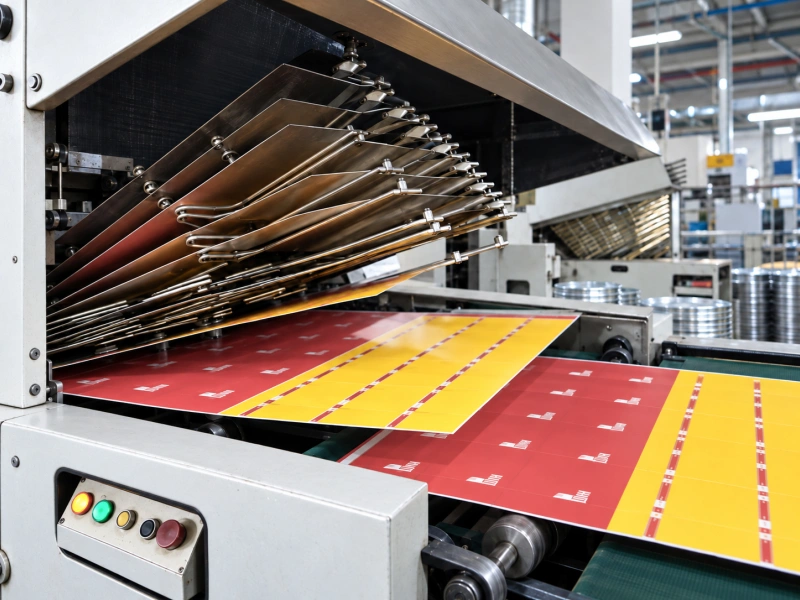
Rubber Rollers in Can Decorating and Metal Sheet Printing
Metal packaging uses two main printing arrangements: decorating formed cans and printing or coating flat metal sheets before forming. The roller requirements depend on the process and equipment.
Two-Piece Beverage Can Decorating
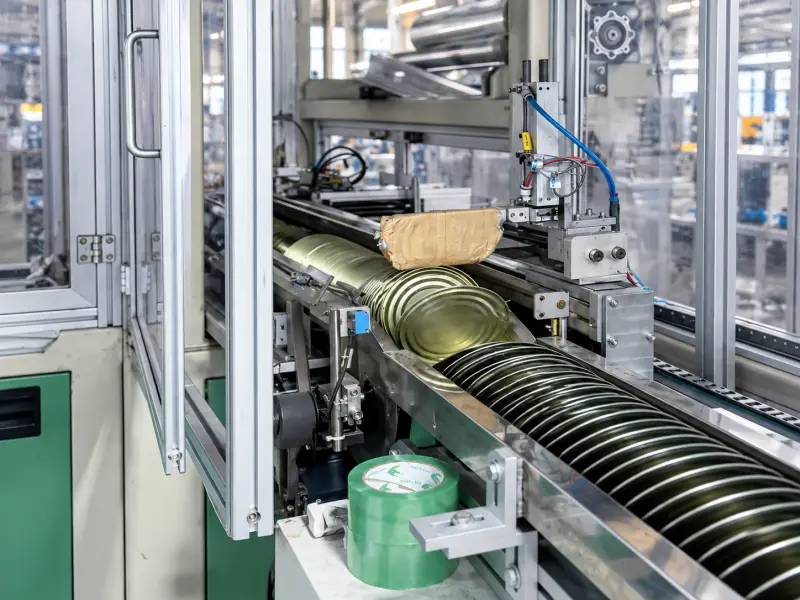
On typical drawn-and-ironed (DWI) beverage can lines, the can body is formed, trimmed, and washed before exterior decoration.
Rubber-covered inker rolls distribute ink through the decorator's ink train. Form rolls deliver ink to the printing plates, which transfer the image through a blanket to the rotating can. An exterior overvarnish is then applied. Where an opaque background is required, a separate basecoater may apply the coating before printing.
The inking and coating units use different roller arrangements. An inker roll works within the ink train, while an overvarnish or basecoater roll operates in its own coating unit.
Some drawn two-piece cans are produced from pre-coated and pre-printed metal sheets. Their printing and coating operations take place before forming, using the sheet-processing route.
Three-Piece Can Sheet Printing and Coating
Three-piece can bodies are commonly made from metal sheets that are coated and printed before cutting, forming, and side-seam joining.
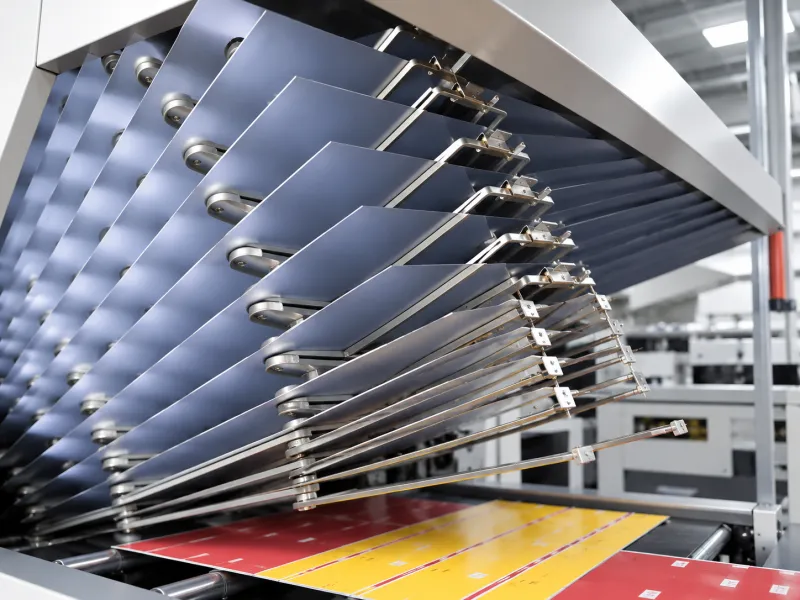
Depending on the product, the sheets may receive protective coatings, an exterior basecoat, decorative printing, and overprint varnish. Rubber-covered coating rolls apply or transfer coatings across the flat metal surface.
The printing and coating equipment have separate roller arrangements. A sheet-coating applicator needs suitable contact across its working face, while rubber-covered inking rollers serve the printing unit.
For film, paper, and other flexible-substrate printing, see Printing Industry Rollers.
Roller Positions in Can Decorating and Coating
The main rubber-covered roller applications are found in the ink and coating sections. Their construction varies by equipment, particularly where special hubs or sleeve assemblies are used.
| Roller position | Function | Replacement requirements |
|---|---|---|
| Can inker rolls | Transfer and distribute ink through the decorator's ink train. Form rolls deliver ink to the printing plate. | Ink compatibility, wear resistance, stable contact, and correct roller geometry. |
| Overvarnish rolls | Apply protective exterior varnish to decorated cans. | Varnish compatibility, suitable surface finish, finished diameter, and mounting fit. |
| Basecoater rolls | Apply an opaque background coating before printing on applicable lines. | Coating compatibility, applicator surface, and contact geometry. |
| Metal sheet coating rolls | Apply or transfer coatings to flat metal packaging sheets. | Surface consistency across the working face, dimensional stability, and coating compatibility. |
The original assembly determines the replacement construction. Printing plates, forming tools, and spray equipment are separate components and are not included in these rubber-covered roller categories.
Related roller functions are covered under Transfer Rollers and Metering Rollers.
Why Can Inker Rolls Swell or Wear Prematurely
Can decorators depend on consistent ink transfer through several contacting rollers. Stolle's Concord decorator, for example, has eight ink stations and a published maximum speed of 2,200 cans per minute in its 36-mandrel configuration. Changes in roller contact during production can affect a substantial number of printed cans.
A Documented Inker Roll Problem
In a June 2025 technical bulletin covering its Concord and Rutherford decorators, Stolle reported customer feedback involving swelling and wear on rubber ink-station rolls, particularly the form rolls.
The manufacturer also described wear associated with printing plates containing sharp corners or small features. It introduced an improved rubber compound for several ink-station positions in response.
The damage pattern helps distinguish the possible causes.
Form rolls contact the printing plate directly. Wear concentrated around the plate-contact area may be associated with mechanical contact. Swelling across the covering, particularly after an ink or cleaning change, warrants closer examination of chemical exposure.
For a worn roller, compare its current diameter with the original specification and check where the damage is concentrated. The operating history matters as well: did the problem begin after a change in ink or cleaner, or develop gradually during production?
Changes During a Production Run
A swollen cover can increase the roller's effective diameter and alter contact within the ink train. Temperature can also affect ink viscosity and the dimensions of the rubber and other machine components.
If print density or fine image detail changes as the press warms up, check ink condition, temperature, and roller contact together. A printing defect alone does not establish that the rubber has failed.
Repeated damage at the same position may justify reviewing the covering specification. For ordinary wear on a roller that previously performed well, reproducing the original specification may be sufficient.
How Coating Roll Surfaces Affect Printed Metal
The working surface of a coating roll influences how varnish or basecoat is applied. Formed-can applicators and flat-sheet coaters have different contact arrangements.
Overvarnish and Basecoating
Overvarnish forms a protective exterior coating over the printed decoration. A basecoat provides an opaque background before printing where the process requires one.
Cuts, dried coating residue, or uneven wear on an applicator can disturb coating transfer. If the finished appearance changes, inspect the roller surface together with the coating supply and contact settings.
For a replacement, the original finished diameter, surface profile, and mounting arrangement are important references.
Metal Sheet Coating
A metal sheet coating roller works across the width of a flat, rigid substrate. Local damage or contamination on its working face can affect the same area on successive sheets.
For example, if a streak repeatedly appears at the same position across the sheet width, compare its location with the corresponding area of the roller. A pattern associated with roller rotation provides further reason to inspect the applicator.
Coating viscosity, supply, metering components, and machine alignment can produce similar defects. These conditions should also be checked before replacing the roll.
Some sheet-coating applications require specific coated and uncoated areas, including margins reserved for subsequent can-body fabrication. Where a rubber-covered applicator has a patterned surface, its original coating layout must be reproduced from a verified specification.
The finished surface should follow the coating process. Finer grinding is not automatically better; a different surface profile may change coating pickup and transfer.
Matching Rubber Covers to Inks, Coatings and Cleaning Products
Metal decorating rollers may contact different chemicals during production and cleaning. Both exposures need to be considered when selecting the rubber covering.
Conventional and UV-Curable Inks
Conventional oil-based and UV-curable inks can have different formulations and cleaning requirements. A rubber compound that works with one ink may behave differently after an ink change.
For UV-curable inks, compatibility depends on the actual uncured formulation and wash-up products. Heat resistance alone does not establish whether a covering is suitable.
If an existing inker roll has performed well, its compound and service history provide useful references. A change in ink formulation should be checked against the original covering before the replacement specification is confirmed.
Varnishes, Basecoats and Wash-Up Chemicals
Varnishes and basecoats may expose the covering to different ingredients. Cleaning adds another source of chemical contact, particularly where rollers are washed frequently.
A covering may perform normally during production but swell, soften, or become persistently tacky after repeated cleaning.
When this occurs, record the cleaning product, dilution where applicable, contact time, and frequency. Compare the cover before cleaning and after it has had time to recover.
NBR / Nitrile Rubber Rollers and FKM Rubber Rollers are among the material options that may be considered. The actual compound must match the specific chemicals, temperature, exposure conditions, and mechanical requirements.
For unfamiliar formulations or repeated chemical damage, additional compatibility confirmation may be needed before selecting a new covering.
Replacing an Existing Metal Decorating Roller
A replacement roller must fit the existing machine and reproduce the working characteristics required at its position.
Dimensions and Mounting
The finished outside diameter, face length, shaft ends, bearing seats, and mounting features must match the original assembly.
Finished diameter affects contact with mating rollers. Shaft and bearing dimensions affect installation and running fit. Special sleeves, hubs, and mounting components require separate confirmation.
For more information about controlled contact between mating rollers, see Pressure Rollers.
Rubber Cover and Surface Finish
When the original roller has performed satisfactorily, its compound, hardness, cover thickness, and surface finish provide useful manufacturing references.
A roller that repeatedly swells or wears prematurely may need a different covering specification. The observed damage, contact medium, and roller position should guide that decision.
Special profiles, coating patterns, and grinding requirements must be established from the original specification or a reliable reference.
New Rollers and Re-Covering
Wolorin supplies complete replacement rollers manufactured from confirmed drawings, dimensions, or existing assemblies. Re-covering may also be considered when the original core is suitable for reuse.
The core, journals, and mounting features should be checked before re-covering. If the old covering is severely worn, the machine's parts documentation or an unworn reference roller may be needed to establish its original dimensions.
Frequently Asked Questions
How can I identify a can inker roll without its original part number?
Provide the decorator model and a photo showing the roller's position in the ink station. Photos of the complete roller and both shaft ends help identify its construction. The machine's parts documentation may be needed to confirm the exact specification.
Does switching to UV ink mean every inker roll must be replaced?
Not necessarily. Check the new ink and cleaning system against the existing rubber compounds. Identify any positions showing incompatibility or unacceptable performance before deciding which rollers require replacement.
Can a worn roller be reproduced without its original drawing?
An identifiable existing roller, available measurements, and equipment information can be used to begin the replacement review. If wear has changed the original dimensions, an OEM specification or reliable reference roller may be needed. Essential dimensions and mounting details must be confirmed before manufacturing.
Common Roller Types and Materials for This Application
| Related page | Application |
|---|---|
| Transfer Rollers | Ink and coating transfer between contacting surfaces. |
| Metering Rollers | Coating quantity control in suitable roller arrangements. |
| Pressure Rollers | Controlled contact and pressure distribution. |
| NBR / Nitrile Rubber Rollers | Material options for suitable ink and chemical-contact conditions. |
| FKM Rubber Rollers | Compound options for specific chemical-exposure requirements. |
| Printing Industry Rollers | Rubber rollers for film, paper, and other flexible-substrate printing. |
| Coating and Laminating Line Rollers | Roller applications in general web coating and laminating processes. |
Explore More Roller Categories
More About Wolorin
Learn more about our custom roller manufacturing services, quality control, and company background.
Need a Replacement Roller for Can Decorating or Metal Sheet Coating?
Looking for replacement can inker rolls, overvarnish rolls, basecoater rolls, or metal sheet coating rollers?
Send us your drawing or available dimensions, along with the equipment model and roller position. Photos of the complete roller, both shaft ends, and worn or damaged areas are particularly useful.
Include the ink, varnish, coating, or cleaning products the roller contacts. If the existing covering has swollen, worn prematurely, or developed surface damage, describe what happened and when the problem first appeared.
You can start with the information already available. Any missing dimensions, mounting details, or covering requirements can be confirmed before manufacturing.