Steel & Metallurgy Rubber Rollers
Rubber rollers for metal strip contact, heavy industrial conveying, pressure, support, and surface protection positions.
A stainless steel strip pickling line needed replacement transport rollers for the spray pickling section inside the acid tanks.
These were not ordinary conveyor rollers. The rollers worked inside the pickling tank, supported stainless steel strip, and stayed exposed to mixed acid, acid mist, rinse water, wet strip contact, and repeated pressure from the moving strip.
The site condition included approximately 40% nitric acid and 10% hydrofluoric acid exposure. Around 80 rollers were involved. The original roller source was no longer available, so the plant needed a replacement direction that could match the existing equipment layout without changing the tank structure or roller mounting arrangement.
The roller structure was also important. It was not a continuous full-face rubber cover. The working surface was divided into repeated segmented bands across the roller face, with each band supporting the strip and the spaces between sections allowing acid and rinse liquid to move through the tank area.
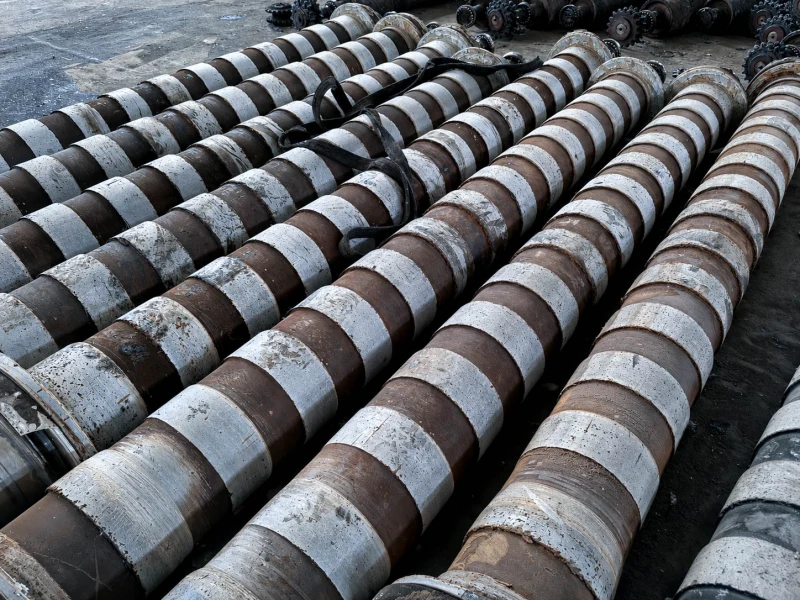
The replacement rollers were made around the original stainless steel strip pickling line layout.
The size had to stay close to the original roller because the installation space, tank layout, and strip path were already fixed. The real work was in the cover construction: each segmented band created side edges, and those edges had to be protected against acid penetration.
The segmented cover was kept because it matched the way the roller worked inside the pickling tank.
A full continuous rubber surface would create a larger contact area against the stainless steel strip. In a wet acid tank, that can increase liquid retention, surface drag, and full-face chemical exposure. The segmented layout gives the strip repeated support points while leaving space between sections for acid and rinse liquid movement.
For this roller, the segmented structure helped keep the replacement close to the original line design. It also made each working band more controllable during finishing. The difficult part was that every segment created two side faces. If those side faces were left as simple cut edges, acid could enter from the side and reach the bonding layer.
So the segmented cover was not treated as a visual shape only. The rubber compound, side-face protection, edge transition, and bonding system had to work together.
The replacement direction used a proprietary chemical-resistant rubber compound selected for nitric acid and hydrofluoric acid exposure. It was not handled as standard EPDM, standard CSM, Hypalon, or a general-purpose rubber cover.
The working surface had to support wet stainless steel strip, so the rubber cover still needed suitable hardness and surface stability. At the same time, the side faces and end faces needed protection because acid splash and wet carryover can attack areas outside the main running surface.
For acid tank rollers, failure does not always start from the center of the roller face. It can start from a segment edge, an end face, or a rubber-to-core transition area. Once acid reaches the bonding layer, the cover may begin to lift, soften near the edge, or lose adhesion over time.
That is why the roller was handled as a complete chemical-contact structure, not just a rubber material change. The cover, edges, end faces, and bonding preparation were all part of the same specification.
For a 3.2 m segmented roller used in this environment, repeatability mattered. The project involved around 80 rollers, so the cover layout, segment spacing, edge treatment, and finished diameter had to stay consistent from roller to roller.
The manufacturing focus was on the steel core condition, surface preparation before bonding, rubber build-up across the covered face, segment edge control, and finished surface condition. The side faces could not be left as open, rough edges where acid could collect. The exposed transition areas also needed to avoid unnecessary liquid traps.
This kind of roller may look like a transport roller, but it cannot be manufactured like a normal dry-contact conveyor roller. In the acid tank, every exposed edge can become part of the working condition.
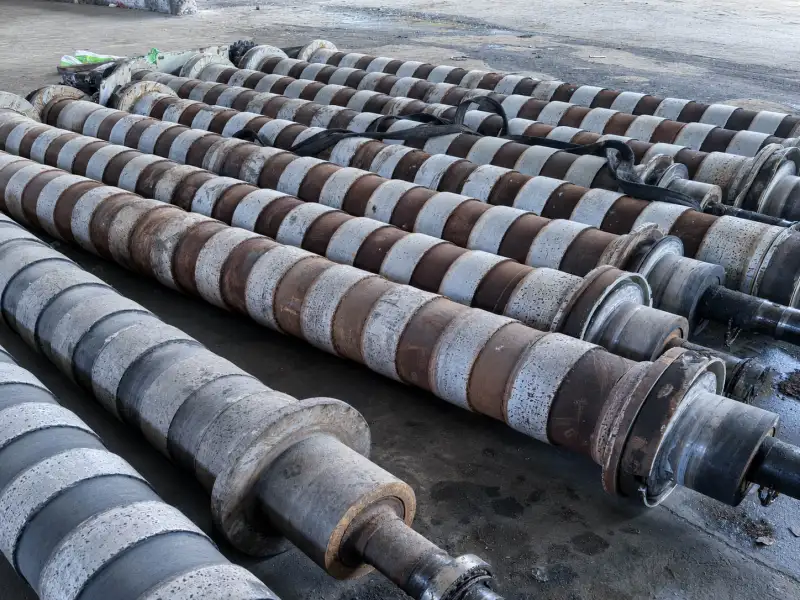
For stainless steel pickling lines, replacement rollers should not be judged only by diameter, length, and a rubber material name.
The important details are often the ones around the cover: whether the segmented structure matches the strip path, whether acid can move between sections, whether the side faces are protected, whether the end faces are sealed, and whether the bonding system can handle wet acid exposure.
A roller that fits the machine may still fail if the acid tank environment is not considered. For this type of application, the replacement has to be treated as a segmented chemical-contact transport roller.
For similar pickling line roller projects, the first discussion does not need to start with complete drawings. Useful information includes:
For segmented pickling line rollers, photos of the segment edges and end faces are especially useful.
Rubber rollers for metal strip contact, heavy industrial conveying, pressure, support, and surface protection positions.
Roller directions for metal strip and foil processing lines where surface contact, wet running, and dimensional stability matter.
A material page for rubber roller projects involving complex media, high temperature, oil, solvent, or chemical-contact directions.
A problem-focused article for understanding rubber cover changes under chemical, heat, moisture, and aging-related conditions.
If your stainless steel strip line needs replacement rubber rollers for acid tank, spray pickling, rinse, or wet conveying positions, you can send us old roller photos, dimensions, segment layout, roller position, acid contact direction, and quantity.
If drawings or complete specifications are not ready yet, the project can still start from the roller position, contact medium, photos, and the replacement problem you need to solve.