EPDM
Better Starting Point When: The main concern is ozone, weathering, moisture, or normal outdoor exposure.
Main Limitation: Not the first choice for oil or stronger chemical contact.
Hypalon / CSM rollers are used when a rubber roller cover needs stronger resistance to outdoor exposure, ozone, sunlight, weathering, or selected chemical-contact conditions.
CSM is not usually the first choice for general indoor roller positions. It becomes more useful when the working environment gives a clear reason for stronger aging stability, such as long-term exposure, acid or alkali contact, or repeated surface cracking on previous rollers.
If the specification is not complete, you can start with the roller position, exposure condition, old roller problem, or existing roller size.
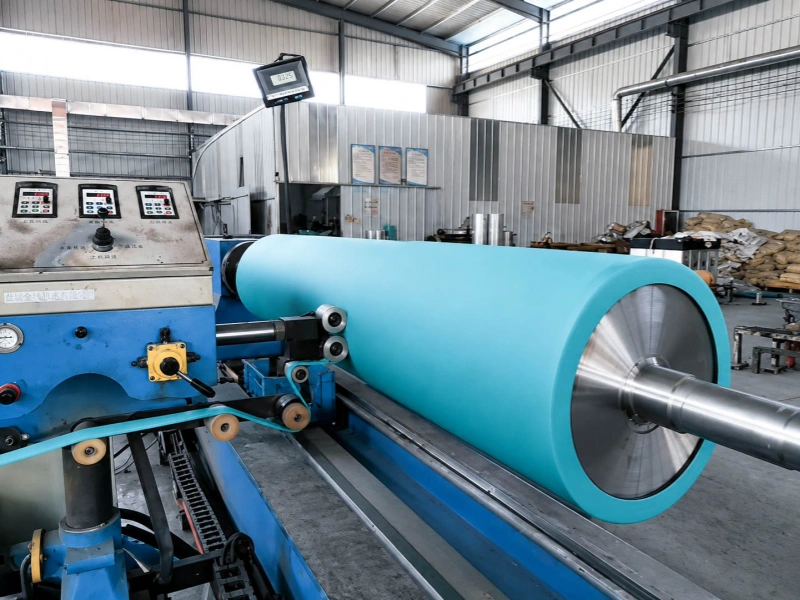
Hypalon / CSM rollers are rubber-covered rollers made with a CSM / CSPE compound, commonly known as chlorosulfonated polyethylene rubber.
In industrial roller applications, CSM is better understood as a specialized cover material, not a broad general-purpose rubber. It is usually reviewed when normal rubber covers do not provide enough stability under environmental exposure or certain chemical-contact conditions.
CSM rollers are usually reviewed for roller positions with clear exposure or aging pressure, such as:
If the roller works in a normal indoor position without these risks, a more common rubber material may be enough.
The main points that make Hypalon / CSM rollers worth attention are concentrated in the following areas:
Resistance to high-concentration hydrochloric acid
Resistance to sulfuric acid and strong alkaline solutions
Ozone resistance
Sunlight resistance
Weathering and aging resistance
Material stability under long-term environmental exposure
This is also one of the main ways it differs from more common industrial rubber material routes.
In addition to environmental stability, this material is also considered in some projects where media contact conditions are more demanding. For example, under certain acid or alkaline conditions, or in some vegetable oil and animal oil contact conditions, Hypalon / CSM may also be considered as one of the candidate materials. For inorganic acids, concentrated alkalis, and animal and vegetable oil exposure, CSM is often regarded as a usable material option.
CSM is usually compared with EPDM, Neoprene / CR, and FKM when the roller position involves environmental exposure or chemical contact.
| Material Direction | Better Starting Point When... | Main Limitation |
|---|---|---|
| EPDM | The main concern is ozone, weathering, moisture, or normal outdoor exposure. | Not the first choice for oil or stronger chemical contact. |
| Neoprene / CR | A balanced basic industrial rubber cover is needed. | Less focused than CSM for stronger exposure or aging conditions. |
| CSM / Hypalon | Exposure, aging risk, and certain acid or alkali contact need to be considered together. | Not necessary for many normal indoor roller positions. |
| FKM | Heat, oil, solvent, or more demanding chemical contact is the main issue. | Usually reviewed when the chemical or temperature demand is clearly higher. |
Better Starting Point When: The main concern is ozone, weathering, moisture, or normal outdoor exposure.
Main Limitation: Not the first choice for oil or stronger chemical contact.
Better Starting Point When: A balanced basic industrial rubber cover is needed.
Main Limitation: Less focused than CSM for stronger exposure or aging conditions.
Better Starting Point When: Exposure, aging risk, and certain acid or alkali contact need to be considered together.
Main Limitation: Not necessary for many normal indoor roller positions.
Better Starting Point When: Heat, oil, solvent, or more demanding chemical contact is the main issue.
Main Limitation: Usually reviewed when the chemical or temperature demand is clearly higher.
For exposed pressure rollers, guide rollers, or drive rollers, CSM may be considered when surface aging or cracking becomes the main problem.
CSM should not be selected only because it is a more specialized material.
It may not be the first choice when:
In these cases, EPDM, Neoprene / CR, NBR, PU, silicone, or FKM may be reviewed first.
CSM rollers may also be reviewed in some Steel & Metallurgy Rubber Rollers and Foil and Metal Strip Processing Rollers where exposure and surface stability need to be checked together.
Hypalon / CSM rollers usually need to be confirmed based on the specific compound and the actual operating conditions.
From a common material reference perspective, the typical ranges may include:
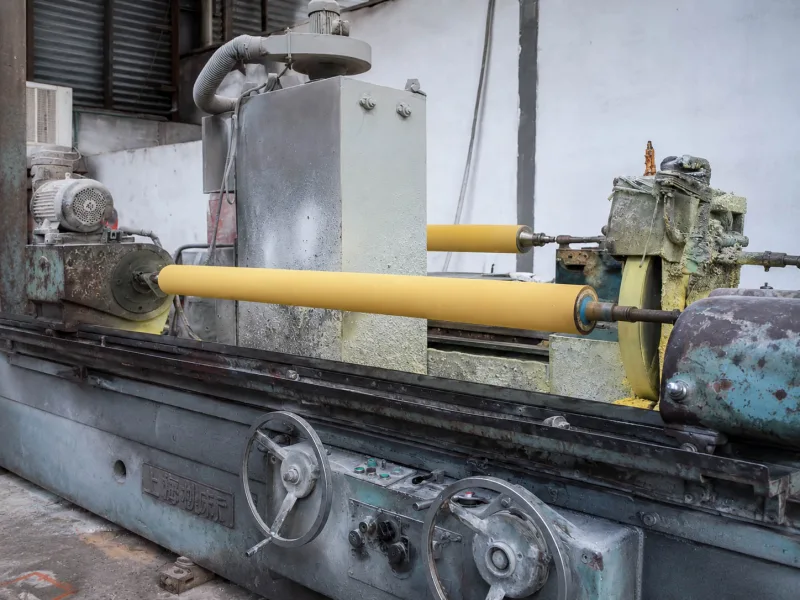
A reliable rubber roller depends on more than size matching. Compound formulation, hardness stability, cover thickness, surface finish, shaft structure, and running accuracy all affect how the roller performs on your line.
Wolorin supports both routine replacement roller projects and more demanding custom industrial rubber roller projects, with established manufacturing experience, production equipment, inspection equipment, available certificates, and documented quality checks. Our rubber compound formulation system can be matched to different operating requirements.
Before shipment, key items such as cover hardness, shaft details, surface condition, and running accuracy can be checked according to project requirements.
You can review our manufacturing scope, quality control process, and company background through the pages below.
For contact positions where cover stability and surface aging need to be reviewed together.
Guide RollersFor path-control positions where surface condition and running stability matter.
Drive RollersFor driven contact positions where surface aging may affect traction or contact behavior.
Steel & Metallurgy Rubber RollersFor heavier industrial environments involving exposure, contact pressure, or surface durability.
Foil and Metal Strip Processing RollersFor metal strip or foil handling positions where surface protection and environmental stability may both matter.
EPDM Rubber RollersFor more conventional ozone, weathering, moisture, and outdoor exposure requirements.
FKM Rubber RollersFor high-temperature, oil, solvent, or more demanding chemical-contact conditions.
Have drawings? Send them directly. If you don’t have complete data yet, feel free to contact us.