Film, protective film, and release film processors
Pressure marks, surface marks, low-tension web protection, stable nip contact
Pressure rollers are used where the line needs controlled nip contact, more even pressure distribution, and better surface protection.
In many pressure roller projects, the main question is not whether a roller can press. It is whether the roller can create the right contact condition without leaving marks, causing edge-to-center difference, weakening bonding consistency, or becoming unstable as speed, heat, or substrate condition changes.
A pressure roller is often reviewed when the line shows pressure marks, bright marks, unstable contact, local cover wear, uneven bonding, or when an existing roller needs a different hardness, crown, surface finish, cover material, or shaft structure.
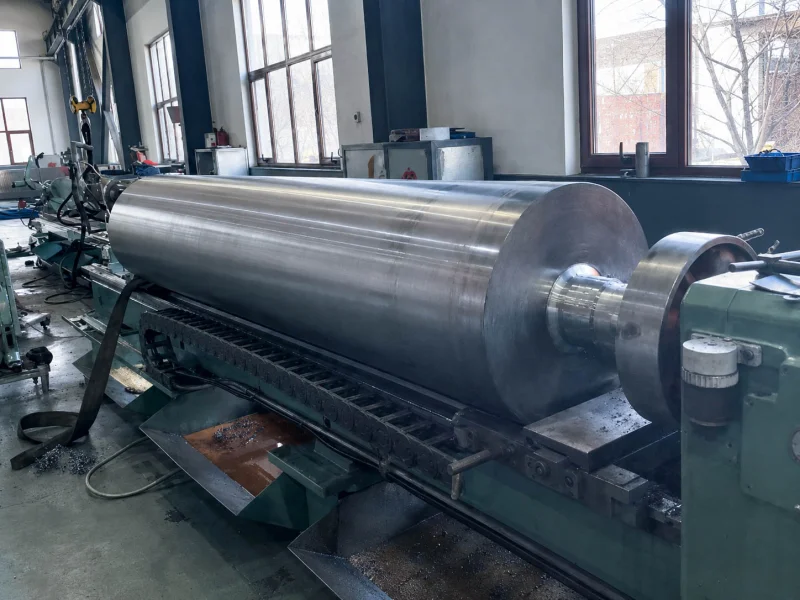
You do not need a complete drawing to start. An old roller photo, roller position, processed material, and the problem you are seeing are usually enough for an initial review.
Pressure rollers are commonly used in production lines where stable contact, uniform pressure, and surface protection are important.
| Line Type | Common Concerns |
|---|---|
| Film, protective film, and release film processors | Pressure marks, surface marks, low-tension web protection, stable nip contact |
| Flexible packaging and laminating lines | Laminating pressure rollers, compound pressure rollers, bonding consistency |
| Printing and post-processing lines | Bright marks, streaks, ink or coating contact stability |
| Slitting, rewinding, and high-speed converting lines | High-speed slitting machine pressure rollers, contact stability, local wear |
| Casting film and MDO stretching lines | Casting pressure rollers, MDO stretching pressure rollers, heat and surface sensitivity |
| Wood panel, decorative panel, and plastic sheet lines | Wide-width pressure uniformity, surface protection, edge-to-center pressure difference |
Pressure marks, surface marks, low-tension web protection, stable nip contact
Laminating pressure rollers, compound pressure rollers, bonding consistency
Bright marks, streaks, ink or coating contact stability
High-speed slitting machine pressure rollers, contact stability, local wear
Casting pressure rollers, MDO stretching pressure rollers, heat and surface sensitivity
Wide-width pressure uniformity, surface protection, edge-to-center pressure difference
If the roller is used to press, bond, hold, support contact, or form a controlled nip area, it can usually be reviewed as a pressure roller application.
If the issue is mainly about liquid control rather than pressure contact, metering rollers or transfer rollers may also need to be reviewed. For broader coating or laminating sections, Coating and Laminating Line Rollers may be the more complete next page.
A pressure roller does more than add force. It helps define how contact is formed, how load is distributed across the width, and how stable that contact remains while the line is running.
In practical terms, a pressure roller often influences:
nip width
contact smoothness
pressure balance from edge to edge
marking risk at the contact zone
release behavior
sensitivity to speed change
sensitivity to heat
stability against a steel, heated, chill, or rubber-covered counter roller
That is why a pressure roller should not be judged by diameter and rubber name alone. In many positions, the final result is shaped by the combined effect of hardness, cover thickness, surface finish, crown, TIR / runout, shaft support, machine alignment, line pressure, and the real condition of the counter roller.
In shop-floor discussions, “pressure roller” and pinch rollers may sometimes be used close to each other, but the review focus is not always the same. A pressure roller review usually goes deeper into pressure distribution, marking control, contact stability, and surface protection.
Changing hardness is often the first reaction when a pressure roller starts leaving marks or running unevenly. Sometimes that is correct. But in many pressure positions, hardness is only one part of the contact system.
A harder cover may reduce deformation but increase marking risk.
A softer cover may increase contact width but also increase heat build-up or reduce stability at speed.
A roller that used to run acceptably may become unstable after another station changes upstream or downstream.
That is why pressure roller problems should not be judged too quickly as “wrong rubber” or “wrong hardness” only. In many cases, the real issue is how the whole nip system is loading and running.
A pressure roller should not be selected only by diameter, face length, and material name. The more important question is how the roller forms the nip area and how evenly it transfers pressure.
| Parameter | Why It Matters |
|---|---|
| Hardness | Common pressure roller hardness can often be reviewed in the 50–90 Shore A range. For low-marking, laminating, heat-contact, or wide-width applications, hardness should be matched to pressure, substrate sensitivity, and counter roller condition. |
| Nip Pressure / Line Pressure | Affects bonding strength, contact stability, and marking risk. Too little pressure may cause poor contact; too much pressure may damage the material. |
| Crowned Profile | Wide pressure rollers may require crown compensation to reduce edge-to-center pressure difference. |
| TIR / Runout | In high-speed or surface-sensitive applications, runout may cause periodic marks, bright lines, or pressure fluctuation. |
| Surface Finish | Affects release, surface protection, adhesive build-up, and contact stability. |
| Working Temperature | Heat-contact, casting, and MDO-related stations require attention to hardness retention, aging, and surface stability. |
| Counter Roller Type | Steel rollers, heated rollers, chill rollers, and rubber-covered rollers all create different nip behavior. |
| Material Sensitivity | Films, foils, coated papers, and decorative panels can have very different tolerance for pressure marks and surface impressions. |
Common pressure roller hardness can often be reviewed in the 50–90 Shore A range. For low-marking, laminating, heat-contact, or wide-width applications, hardness should be matched to pressure, substrate sensitivity, and counter roller condition.
Affects bonding strength, contact stability, and marking risk. Too little pressure may cause poor contact; too much pressure may damage the material.
Wide pressure rollers may require crown compensation to reduce edge-to-center pressure difference.
In high-speed or surface-sensitive applications, runout may cause periodic marks, bright lines, or pressure fluctuation.
Affects release, surface protection, adhesive build-up, and contact stability.
Heat-contact, casting, and MDO-related stations require attention to hardness retention, aging, and surface stability.
Steel rollers, heated rollers, chill rollers, and rubber-covered rollers all create different nip behavior.
Films, foils, coated papers, and decorative panels can have very different tolerance for pressure marks and surface impressions.
If the material shows pressure marks, bright marks, streaks, or surface impressions after passing through the pressure roller, common causes may include:
Hardness too high for the substrate
Local pressure overload
Adhesive residue, contamination, or surface damage
Unsuitable surface roughness
Runout or concentricity issues
Unstable counter roller condition
Substrate surface sensitivity
If the marks appear at a fixed repeat distance, the roller surface, TIR / runout, and counter roller contact should be checked first.
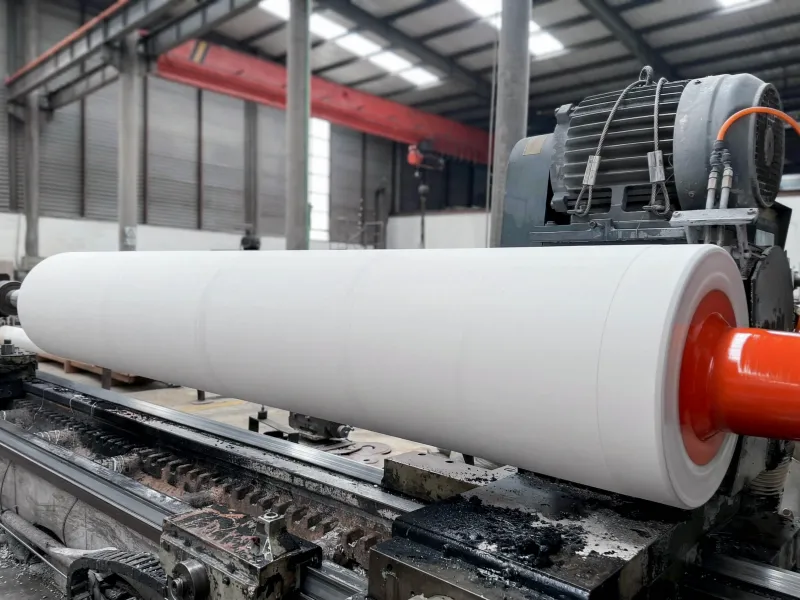
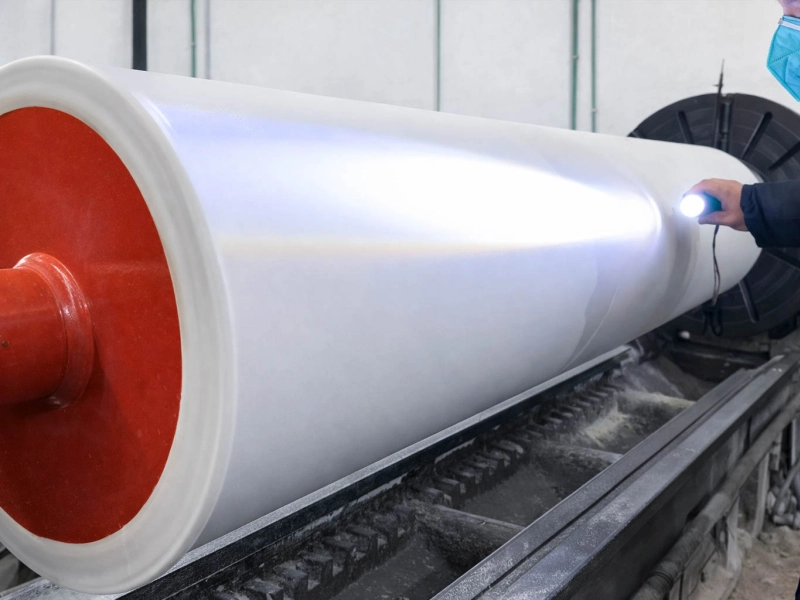
Uneven pressure is common in wide-width, high-pressure, or surface-sensitive applications.
Typical signs include:
One side is pressed harder than the other
The center bonds well but the edges are weak
The edges show pressure marks while the center is under-pressed
Laminating or bonding results differ from left to right
Bright marks appear unevenly across the width
In wide-web pressure applications, hardness, crown, shaft support, machine alignment, and actual pressure distribution should be reviewed together.
Fast pressure roller wear may come from:
Excessive pressure
Abrasive substrate surface
Unsuitable hardness or compound
Heat or chemical exposure
Adhesive, dust, coating residue, or other build-up
Unstable running condition causing local wear
For local wear, pressure distribution, mounting condition, and counter roller contact should be checked before changing material alone.
Often reviewed for low-marking, release, and heat-contact conditions.
Polyurethane Rubber RollersOften reviewed where wear resistance and load support matter.
NBR / Nitrile Rubber RollersOften reviewed for general industrial pressure contact involving oils, inks, and adhesives.
FKM Rubber RollersOften reviewed for hotter or more chemically demanding pressure positions.
Pinch RollersUseful when feed nip behavior and pressure-contact boundaries also need to be compared.
Coating and Laminating Line RollersBroader review for coating, laminating, and bonding sections with pressure-related issues.
Film Converting RollersBroader review for converting lines where contact stability and surface protection matter together.
Flexible Packaging RollersRelated packaging-line review for printing, laminating, slitting, and rewinding sections.
A reliable rubber roller depends on more than size matching. Compound formulation, hardness stability, cover thickness, surface finish, shaft structure, and running accuracy all affect how the roller performs on your line.
Wolorin supports both routine replacement roller projects and more demanding custom industrial rubber roller projects, with established manufacturing experience, production equipment, inspection equipment, available certificates, and documented quality checks. Our rubber compound formulation system can be matched to different operating requirements.
Before shipment, key items such as cover hardness, shaft details, surface condition, and running accuracy can be checked according to project requirements.
You can review our manufacturing scope, quality control process, and company background through the pages below.
Common reasons include excessive hardness, too much pressure, surface contamination, roller damage, runout issues, or a substrate that is sensitive to pressure. If marks repeat at a fixed interval, roller surface condition and running accuracy should be checked.
Pressure rollers are commonly used in laminating, bonding, pressing, post-printing, slitting, rewinding, casting film, MDO stretching, and other stations where stable contact pressure is required.
A pressure roller focuses on controlled pressure, nip uniformity, and surface result.
A nip roller or pinch roller often focuses more on holding, feeding, or pulling material through a nip point. In real machines, the roles may overlap, but the design focus can be different.
Hardness should be selected based on substrate surface sensitivity, contact pressure, counter roller type, line speed, temperature, and marking tolerance. There is no single hardness that fits every pressure roller station.
If you already have drawings and dimensions, you can send them directly for custom production.
If your current roller has pressure marks, uneven bonding, edge-to-center difference, surface marks, or fast wear, you can also send the roller position, material, line speed, working temperature, and roller photos or application photos. We can review a suitable pressure roller direction based on the actual application.