Services
Custom rubber roller manufacturing, replacement, re-covering review, and production confirmation.
Most rubber roller problems start small. A little adhesive is left on the edge after shutdown. A solvent wipe is used every shift because it “cleans faster.” A spare roller sits on its rubber surface for months. A pressure roller stays closed over the weekend. At first, the roller still runs. Later, the surface becomes shiny, sticky, swollen, cracked, or starts leaving repeat marks on the product.
Good rubber roller maintenance is mostly about stopping these small habits from becoming roller damage. The goal is simple: keep the rubber surface clean, dry, relaxed, and close to its original working condition.
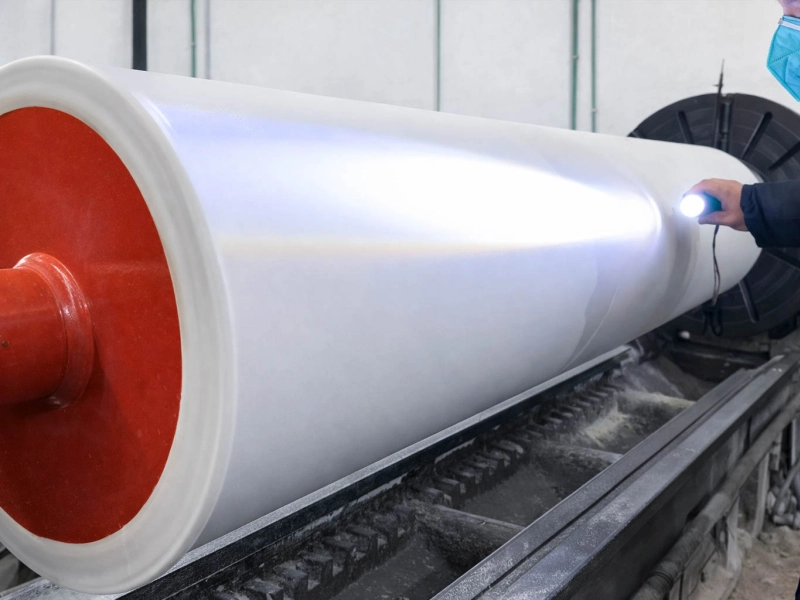
Fresh residue is usually easier to remove than old residue. This sounds simple, but it is one of the most useful maintenance habits.
Adhesive, coating liquid, ink, paper dust, fiber, powder, oil, and release residue behave differently after they dry or collect pressure. A soft adhesive line near the edge may wipe off during a short stop. Leave it until the next shift, and it may turn into a hard raised band. Once that happens, cleaning takes more force, the roller surface can be scratched, and the raised band may start marking the product.
Use a gentle method first. Remove loose dust or particles before wiping the surface. If hard particles are dragged across the rubber face, they can cut fine lines into the cover. For sensitive film, foil, coated paper, or clean-surface products, those small lines may later show up as surface marks.
A good daily habit is to clean small residue early, especially near roller edges, nip contact areas, and zones where adhesive or coating tends to collect. Do not wait until build-up becomes part of the roller surface.
A dry guide roller and a coating-contact roller do not need the same cleaning method. A traction roller, pressure roller, cleaning roller, transfer roller, and release roller also have different surface requirements.
For a lightly loaded dry web roller, dust removal and surface inspection may be enough. For a roller that touches adhesive, ink, oil, coating liquid, or cleaning solvent, the surface should be checked more carefully after every cleaning. Look for tackiness, swelling, soft spots, gloss change, or unusual smell from cleaner residue. In coating or adhesive-contact positions, the cleaning method should be matched with the real contact condition, especially on coating and laminating line rollers where residue can quickly affect release, transfer, and surface marks.
Avoid making solvent the first answer to every problem. A strong cleaner may remove residue quickly, but repeated use can slowly change the rubber surface. The roller may become shiny, lose grip, feel sticky, or swell slightly. In some lines, the roller is blamed for slipping or sticking, but the real turning point was a change in cleaning liquid or cleaning frequency.
After wiping, dry the roller surface. Do not leave liquid sitting on the face or around the edges. Edge areas are easy to ignore, but liquid that stays there can lead to swelling, edge lifting, or bonding problems. When solvent, oil, ink, or aggressive cleaning liquid is part of the working condition, the rubber direction may need closer review, such as NBR / Nitrile Rubber Rollers for many oil or general liquid-contact cases, or FKM Rubber Rollers for more demanding chemical-contact positions.
A simple maintenance note is enough: what cleaner was used, how often, whether the roller was hot, and whether the surface changed after cleaning. These details help a lot when the same problem starts to repeat.
Maintenance is not only about making the roller look clean. The surface still has to do its job.
A traction roller needs grip. A release roller needs clean separation. A pressure roller needs even contact. A cleaning roller needs to pick up particles without transferring dirt back to the web. If the surface is polished too much, scratched by hard wiping, softened by solvent, or covered with cleaner residue, the roller may look clean but run worse.
For example, a film traction roller may lose grip after operators start wiping it aggressively several times per shift. The surface becomes glossy. At low speed it still works, but at higher speed the web begins to slip. In film converting rollers, this kind of surface change can quickly show up as slipping, tracking instability, repeat marks, or unstable winding. In this case, the maintenance method is already changing the roller’s working surface.
Another common example is a sticky or cleaning roller. If it is washed with the wrong liquid, the surface may either lose its controlled tack or become too sticky. Then it starts picking up more dust than before, or it transfers contamination instead of removing it. For these positions, the cleaning method should protect the designed surface behavior, not simply remove dirt as fast as possible.
For clean-contact or particle-control positions, Cleaning & Sticky Rollers is a useful related page. If dust attraction is linked with static, Anti-Static / Conductive Rubber Rollers may also be relevant. For release-focused surfaces where clean separation matters, Solid Silicone Rollers and Liquid Silicone Rollers can also be useful reference pages depending on the roller position and contact requirement.
Rubber does not like being squeezed in the same place for too long. If a pressure roller, nip roller, laminating roller, or soft-covered roller stays closed during a long shutdown, the cover may develop a flat spot or pressure band.
Sometimes this mark looks minor before startup. Once the line runs, it appears as a repeat mark, vibration, unstable pressure, or a light band on the product. The roller may recover after some running, but repeated long shutdown pressure will shorten service life.
When the machine allows it, open the nip during long stops. For weekend shutdowns, holidays, maintenance stops, or long waiting time between production runs, this is a simple way to protect the rubber cover. If the roller must stay in contact, rotating it from time to time is better than leaving the same area compressed for days.
This matters more for softer covers, wide rollers, heavy nip pressure, and positions where the product surface is sensitive. A small storage or shutdown habit can decide whether the roller starts the next run cleanly or begins with a pressure mark.
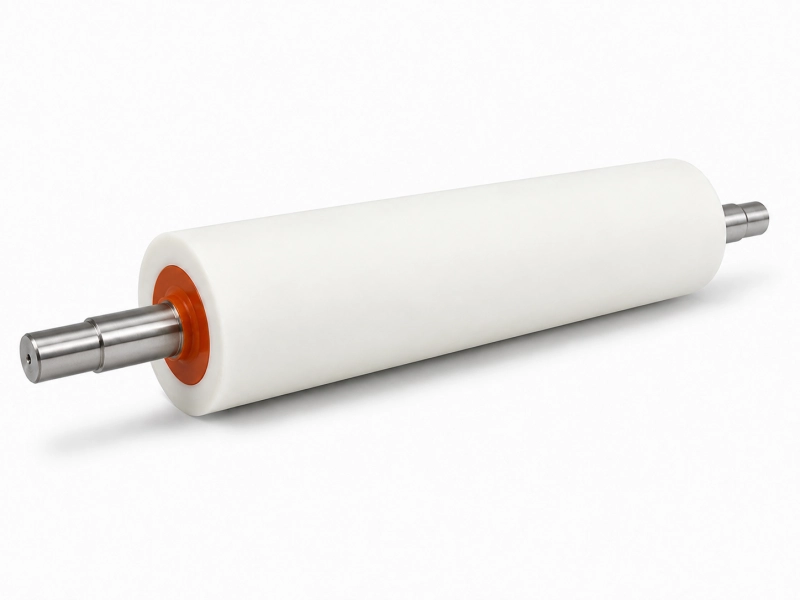
Maintenance can extend roller life when the rubber cover is still basically stable. In these cases, the problem is often surface residue, light glazing, poor shutdown habit, cleaning residue, or storage pressure.
A roller can often keep running if the diameter is stable, hardness has not changed much, the surface is not deeply cracked, and the product is still acceptable after cleaning. Small color changes, old appearance, or light surface polishing alone do not always mean the roller must be replaced.
Maintenance may still help when:
A roller that has worked well for years does not always need a complicated review. If the job is standard and the problem is only normal contamination, better cleaning timing, cleaner wiping, pressure release, and proper storage may already extend its life.
Sometimes the maintenance team keeps cleaning the same roller because it still looks like a cleaning problem. But if the rubber has already changed, more cleaning will not solve it.
The warning signs are usually clear. The roller swells after contact with liquid. The surface stays sticky after drying. Shore A hardness is much higher or lower than before. Fine cracks keep growing. The edge starts lifting. The diameter changes. The same mark comes back after cleaning or light regrinding.
At that point, the roller needs a different decision. It may need regrinding if the problem is still shallow and the cover has enough thickness. It may need re-covering if the core is usable but the rubber cover is no longer stable. It may need replacement if the core, shaft, bonding, or roller geometry is also questionable.
For deeper failure patterns, use Rubber Roller Failure Signs. For fast wear, see Why a Rubber Roller Wears Out Too Fast. For the repair or replacement decision, see Re-Cover or Replace a Rubber Roller?.
When asking for a replacement, re-covering, or maintenance-related review, send the information that shows how the roller is actually used. This helps more than only sending a material name.
Useful details include roller photos before and after cleaning, basic dimensions, roller position, contact medium, cleaning liquid, cleaning frequency, storage method, shutdown condition, hardness if known, and the current production issue.
For a standard replacement, drawings, dimensions, hardness, roller position, and old roller photos may be enough to start. For repeated sticking, swelling, cracking, fast wear, or marks that return after cleaning, send more detail about cleaning method, contact liquid, pressure, temperature, and where the issue appears on the roller.
For custom manufacturing, replacement, re-covering review, or production confirmation, Wolorin’s Services page is the main support page.
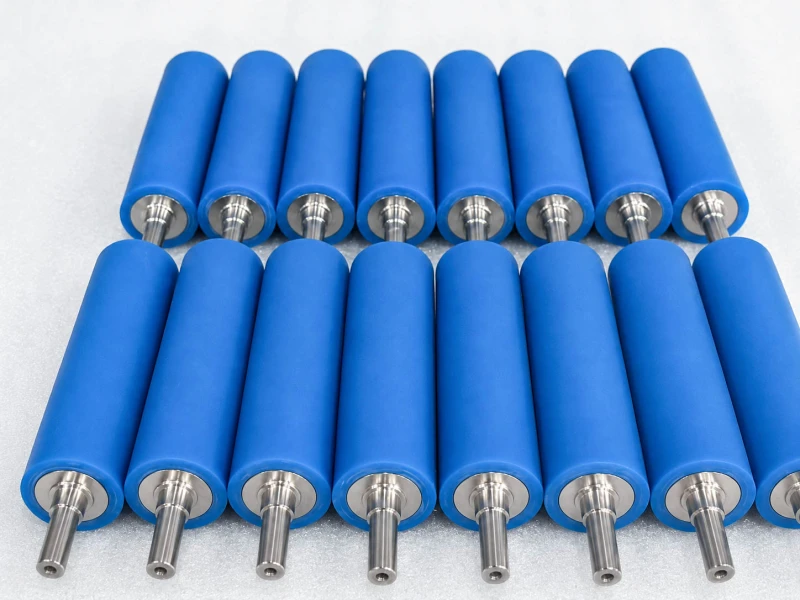
Custom rubber roller manufacturing, replacement, re-covering review, and production confirmation.
Hardness, dimensions, surface condition, runout, and inspection support.
For clean contact, particle removal, sticky roller, and contamination-control positions.
For dust attraction, static-sensitive contact, and cleaner web handling.
For adhesive, coating, nip, transfer, and release-related roller positions.
For film traction, web handling, surface marks, static, and winding-related roller issues.
If you already have drawings, sizes, samples, or a clear specification, send them to Wolorin directly. We can proceed with custom manufacturing, quotation, or production confirmation based on your documents.
If the information is not complete yet, start with old roller photos, basic dimensions, roller position, contact medium, cleaning liquid, storage condition, shutdown condition, and the current problem you want to solve.