Why Do Web Materials Slip on Rubber Rollers?
When film, paper, foil, fabric, nonwoven, coated web, or laminated material starts slipping near a traction, drive, nip, or rewinding position, the first thing to check is where the slip appears and what changed before it started.
The cause may be on the roller surface. It may also come from low contact pressure, poor nip setup, surface contamination, unsuitable hardness, unstable tension, speed mismatch, or the way the old roller was copied.
For an initial check, you do not need every drawing or parameter ready. Roller photos, the roller position, the material being processed, and a short description of the slipping problem are already useful.
Where Slipping Happens
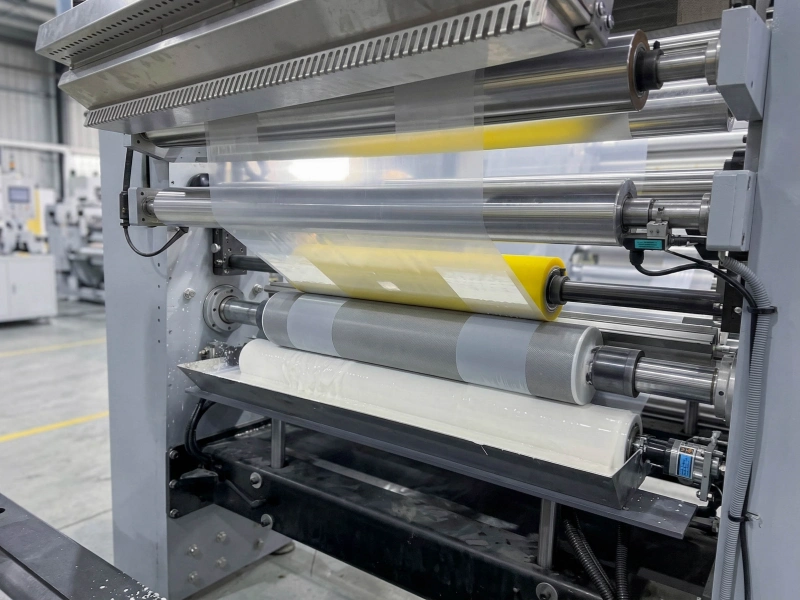
Web slipping usually shows up around the roller position that is supposed to pull, hold, drive, or control the material. That position matters because the same slipping symptom can point to different checks.
| Where the Slip Appears | What It Usually Points To | What to Check First |
|---|---|---|
| Around a traction point | Poor grip or unstable pulling | Roller surface, hardness, contact pressure, and material surface |
| Around a drive roller | Speed difference or poor surface drive | Drive speed, roller cover, surface finish, and web contact |
| Around a nip or pinch point | Weak or uneven contact | Nip pressure, roller parallelism, cover deformation, and web thickness |
| Before rewinding | Tension or contact instability | Tension change, roll diameter change, pressure direction, and web path |
| After changing material thickness or surface | Contact condition mismatch | Pressure, wrap angle, hardness, and material surface |
| After cleaning, coating, printing, or adhesive contact | Surface contamination or rubber compatibility | Oil, ink, adhesive, solvent, powder, release agent, and cleaning condition |
If the slip appears around a pulling or speed-control position, traction rollers are the main page to compare against. If the issue is closer to surface drive or power transfer, drive rollers may also be relevant.
Surface Contamination and Cleaning Condition
A roller may have the right basic cover but still lose grip when the surface is no longer clean or usable.
Slipping can begin after the roller surface picks up oil, ink, adhesive, coating residue, powder, dust, release agent, cleaning liquid, or process contamination. In some lines, the surface does not look dirty at first glance, but it becomes too smooth, too shiny, slightly sticky, or uneven across the working face.
Common signs include:
- the roller surface looks polished or glazed;
- slipping becomes worse after cleaning or after contact with liquid media;
- adhesive or coating residue builds up on one area;
- the material slips more on one side than the other;
- the roller works at the beginning of a run but slips after the surface becomes warm or contaminated.
Cleaning may help if the issue is only loose dust or simple surface residue. If the surface quickly becomes shiny, sticky, swollen, hardened, or uneven again, the rubber cover and contact condition should be checked more carefully.
Contact Pressure and Nip Setup
Even a good roller surface cannot grip the web if the material does not have enough stable contact with the roller.
This often happens when nip pressure is too low, the roller and mating roller are not parallel, the web has too little wrap angle, or one side of the roller contacts harder than the other. A roller with runout, core deformation, uneven grinding, or unstable loading can also create local slipping.
This is why a line may run normally with thicker material but slip after switching to thinner film, lighter web, coated material, or a smoother surface. The roller did not suddenly become wrong. The contact condition changed.
For nip and contact positions, check:
- whether the web contacts the roller evenly across the full width;
- whether pressure is enough for the material thickness and surface;
- whether one side is overloaded while the other side is light;
- whether the roller surface shows uneven wear;
- whether the mating roller, shaft, bearing, or loading method changes the contact.
For film and other sensitive web materials, poor contact can also create wrinkles, pressure marks, and tracking instability. In those cases, the roller surface and nip setup should be reviewed together instead of looking only at the rubber type. Film Converting Rollers are a useful reference when slipping appears together with wrinkles, surface marks, or web instability.
Hardness and Surface Finish
Hardness affects how the roller touches the material. If the cover is too hard, the contact area may be too small to hold the web steadily. If the cover is too soft, the roller may deform too much, heat up, wear faster, or create unstable contact.
Surface finish is just as important. A surface that is too smooth may not provide enough usable grip. A surface that is too rough may mark sensitive material or collect contamination. A surface that has become polished after long running may behave differently from the original roller condition.
Hardness and surface finish should be checked together with:
- roller position;
- material thickness and surface sensitivity;
- nip pressure or loading method;
- line speed;
- whether the roller needs grip, release, cushioning, or surface protection;
- whether the old roller shows glazing, cracking, swelling, uneven wear, or repeated slipping.
For a standard replacement, the original hardness and surface finish can be a useful starting point if the old roller worked well for a long time. If the old roller failed early or slipped repeatedly, copying the same hardness and finish can repeat the same problem.
Tension, Speed, and Synchronization
Some web materials slip only when the line speed changes. Some slip when roll diameter changes. Some slip when the material moves from one driven section to another. These problems are often closer to web tension and synchronization than to the roller cover alone.
Check whether slipping appears when:
- the line starts or stops;
- speed increases;
- roll diameter changes;
- tension setting changes;
- the web passes between two driven sections;
- material thickness or surface changes;
- upstream and downstream rollers are not synchronized.
In slitting, rewinding, film converting, coating, laminating, and packaging lines, slipping can appear together with wrinkles, edge movement, repeat marks, or winding instability. A traction or drive roller may still be part of the problem, but the running condition shows where the check should begin.
For positions close to rewinding or roll diameter change, Slitting and Rewinding Line Rollers may also be useful for understanding related tension and contact problems.
Material Direction Such as PU or NBR Is Only a Review Direction
Changing the rubber direction can help when the current cover no longer matches the working condition. But web slipping should not be judged by rubber name alone.
Polyurethane rubber rollers are often reviewed for traction, wear resistance, and stable grip in many industrial contact positions. NBR / nitrile rubber rollers are often reviewed when oil, ink, general adhesive contact, or common industrial liquid contact is involved.
These are review directions,a roller may slip because the rubber direction is not suitable. It may also slip because the surface has become polished, the hardness no longer matches the pressure, the cover is contaminated, the old roller has changed after long service, or the line contact condition has changed.
For more demanding positions, compound behavior, bonding, surface processing, grinding accuracy, cover thickness, core condition, and actual contact media may all affect the result. The same rubber family can perform differently when pressure, speed, temperature, surface finish, and contamination are different.
What Information to Send
Many standard replacement rollers can start from mature rubber directions once the size, position, hardness, and working condition are clear. Not every project needs to be made complicated.
A closer review is usually needed when slipping repeats, the line runs at higher speed, the roller touches adhesive or solvent, the section is heated, the material surface is sensitive, or the old roller also shows swelling, cracking, fast wear, de-bonding, uneven surface change, or repeated failure.
Useful information includes:
- roller position on the line;
- processed material, such as film, paper, foil, fabric, nonwoven, sheet, coated web, or laminated material;
- photos of the old roller and roller surface;
- current slipping behavior;
- whether slipping happens after speed change, material change, heating, cleaning, or tension adjustment;
- known hardness, cover thickness, roller size, and surface finish;
- line speed, tension, pressure, temperature, and wrap angle, if available;
- contact medium, such as oil, ink, adhesive, solvent, powder, water, release agent, or cleaning liquid;
- whether the roller also has marks, swelling, cracking, fast wear, or de-bonding.
If you already have drawings, dimensions, samples, or clear specifications, you can send them directly. We can use them for customization, quotation, or production confirmation.
If the details are not complete, you can still start with what you have. The point is to avoid choosing a roller only by rubber name or old roller size when the real problem comes from contact condition, contamination, pressure, tension, or running behavior.
Short Takeaway
Web slipping on rubber rollers usually becomes clearer after three checks: where the slip appears, what the roller surface looks like, and what changed in pressure, tension, speed, material, or cleaning condition.
For standard replacement rollers, photos, dimensions, and the current slipping problem are often enough to start. For repeated slipping or demanding web-handling positions, the roller should be matched to the real working condition instead of copied blindly.
Related Pages
Traction Rollers
For rollers used to pull, grip, and keep web or sheet material moving at a controlled speed.
Polyurethane Rubber Rollers
For traction and wear-focused positions where PU may be a suitable rubber direction.
Film Converting Rollers
For film lines where slipping, wrinkles, tension instability, static, and surface marks often appear together.
Tension Control Rollers
For web-handling positions where roll diameter, line speed, and tension changes affect material stability.
Drive Rollers
For positions where roller surface contact helps transfer motion or drive the material forward.
NBR / Nitrile Rubber Rollers
For oil, ink, adhesive, and general industrial liquid contact conditions.
Custom Roller Manufacturing and Quality Control
A reliable rubber roller is not only about size. Compound direction, hardness stability, cover thickness, surface finish, shaft structure, and running accuracy all affect how the roller performs on the line.
Wolorin supports both routine replacement rollers and more demanding custom roller projects, with manufacturing, inspection, and documented quality checks matched to the project requirements. You can review our service scope, quality control process, and company background below.
Need Help Checking Web Slipping on Rubber Rollers?
If you already have drawings, dimensions, samples, or clear specifications, send them directly. We can use them for customization, quotation, or production confirmation.
If the details are not complete, you can also start with old roller photos, roller position, product type, contact medium, and the current slipping problem.