Custom Corona Treatment Rollers
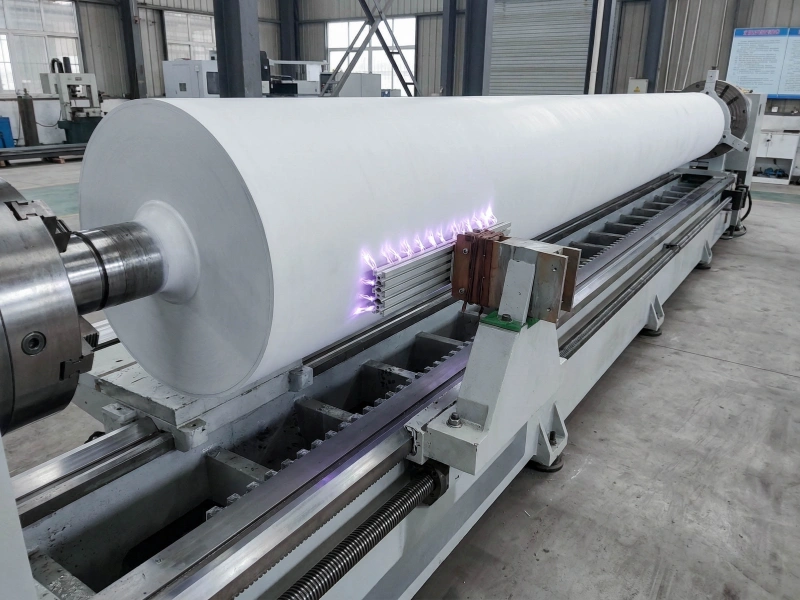
Corona treatment rollers are used in corona treating stations for film, paper, foil, and other web materials. They are commonly found before printing, coating, laminating, bonding, or other surface-sensitive processes.
The main role of a corona treatment roller is to help the web pass through the high-voltage corona area in a stable way, while the roller surface provides the required insulation, cleanliness, ozone resistance, corona discharge resistance, and surface stability.
These rollers may also be called corona rollers, corona treatment rollers, corona rubber covered rollers, or dielectric covered rollers, depending on the equipment design and roller position.
If you already have drawings, old rollers,or confirmed specifications, you can send them directly. If not, you can still start with the roller position, web material, and the problem you are seeing.
Suitable Lines and Applications
Corona treatment rollers are used on lines that need reliable surface treatment before the next process step.
Typical applications include:
BOPP, PET, PE, CPP, and similar packaging film treating lines
release film, protective film, functional film, and label material production
pre-treatment sections before printing, coating, laminating, or bonding
paper, coated paper, aluminum foil, copper foil, and other web surface treatment lines
replacement projects for aged, damaged, contaminated, or marked corona rollers
If you are also reviewing broader web-handling conditions on the same line, pages such as Film Converting Rollers or some clean-process Lithium Battery Line Rollers may also help you narrow the issue faster.
What a Corona Treatment Roller Does
A corona treatment roller usually has to do three things at the same time:
Keep the web stable through the treating area so the material can pass the station with more repeatable running
Provide the right dielectric surface for a high-voltage discharge environment instead of acting like a general-purpose cover
Keep the contact surface clean and stable so contamination points, marks, or uneven treatment are less likely to build up
Unlike ordinary guide rollers that mainly handle web path control, a corona treatment roller has to meet both running requirements and electrical requirements at the same time.
Why This Position Needs a Special Cover
The corona area is harder on a roller cover than many normal web-contact positions.
What usually matters here:
- dielectric stability near the discharge area
- ozone resistance so the surface does not crack, harden, or age too quickly
- cover thickness matched to the station requirement and roller structure
- surface cleanliness so dust, oil, residue, or local defects do not disturb treatment
- running accuracy so the web can pass the station more steadily
- surface consistency so local marks or discharge-related damage are less likely to build up over time
For related material or charge-control conditions, this position is often reviewed together with solid silicone rollers or nearby anti-static / conductive rubber rollers. Even so, the corona roller itself still needs to be matched to its own electrical environment, surface condition, and running requirements.
When We Usually Start Reviewing This Roller
We usually start reviewing the corona treatment roller when one or more of these signs appear:
- treatment results become less consistent than before
- downstream printing, coating, laminating, or bonding becomes less stable
- arcing marks, local burning, or pinholes appear on the cover
- contamination or residue builds up faster near the station
- marks start to show on sensitive web surfaces
In many cases, the line is still running, but no longer running cleanly or steadily enough for reliable production.
What We Usually Need to Confirm for Replacement
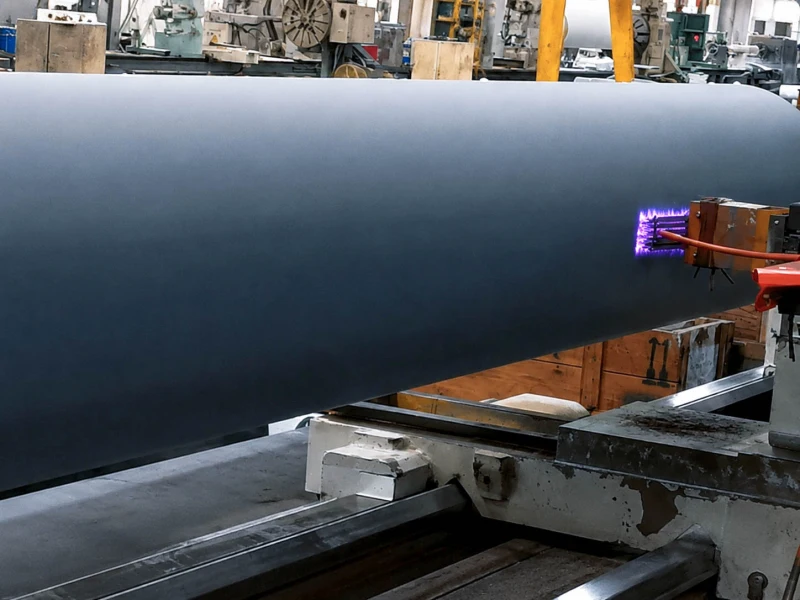
For a replacement corona treatment roller, the most useful inputs are usually:
the roller position in the machine
web material and web width
old roller drawing, photos, or sample
face length, diameter, and shaft details
the current problem, such as arcing, pinholes, contamination, or unstable treatment
line speed or station information, if available
whether the issue developed over time or started after replacement
If the original specifications are incomplete, that is still enough to begin the review in many projects.
Common Materials, Hardness, and Technical Direction
Corona treatment rollers commonly use silicone, dielectric rubber covers, insulating rubber, corona-resistant materials, or other cover materials based on the machine design.
The final selection depends on the equipment voltage, roller position, roller diameter, face length, web width, line speed, original roller structure, and current failure mode.
| Item | Common Direction |
|---|---|
| Cover material | Silicone, dielectric rubber, insulating rubber, corona-resistant cover material |
| Hardness | Common silicone sleeve and cover directions are often around 60–80 Shore A, depending on the equipment and contact condition |
| Cover thickness | Common cover or sleeve thickness can be around 2–4 mm, with custom thickness available according to the original roller structure |
| Dielectric strength | Some corona silicone sleeve directions are commonly specified around 18–22 kV/mm, 20 kV/mm, or similar equivalent electrical units |
| Temperature direction | Silicone is often used where heat, electrical environment, and elastic stability are all considered |
| Surface finish | Fine ground, low-marking, low-contamination, stable roundness, and good concentricity are usually important |
| Common risks | Breakdown, pinholes, arcing, ozone aging, surface contamination, and uneven treatment |
For corona treatment rollers, the material name alone is not enough. The roller position, dielectric requirement, cover thickness, surface condition, and actual operating problem all need to match the corona treating station.
Common Problems
If the cover material, cover thickness, surface condition, or running accuracy is not suitable, a corona treatment roller may cause or contribute to problems such as:
Roller cover breakdown or discharge damage
Pinholes, local burning, or arcing marks on the cover
Cover aging, cracking, hardening, chalking, or surface degradation
Dust, oil, adhesive residue, or build-up on the roller surface
Fine marks, indentation, or contamination points on the web
Unstable adhesion after printing, coating, laminating, or bonding
Different treatment results after replacing the old roller
Web vibration or unstable running near the corona treating area
If static-related contamination is also part of the problem, nearby anti-static / conductive rubber rollers may need review together with the corona roller itself.
Related Materials and Applications
You may also want to review:
Browse More Roller Categories
Custom Roller Manufacturing, Formulations, and Quality Control
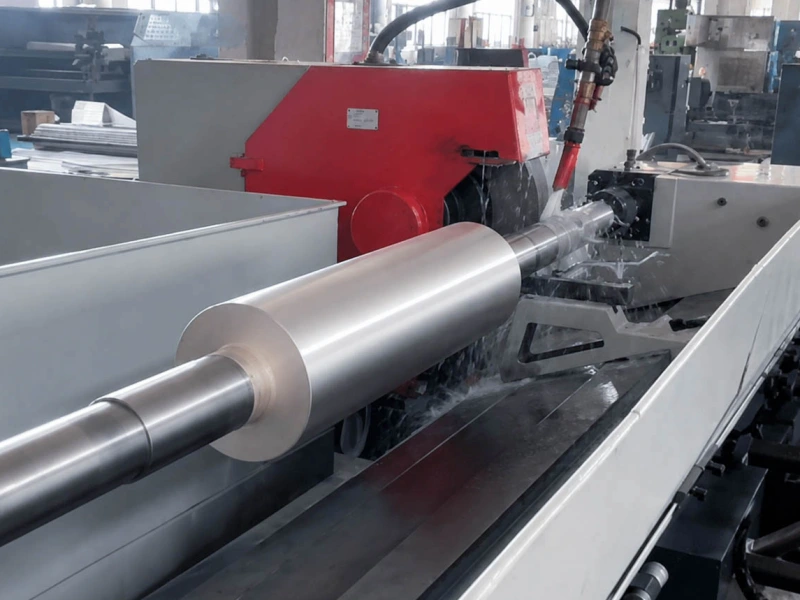
A reliable rubber roller depends on more than size matching. Compound formulation, hardness stability, cover thickness, surface finish, shaft structure, and running accuracy all affect how the roller performs on your line.
Wolorin supports both routine replacement roller projects and more demanding custom industrial rubber roller projects, with established manufacturing experience, production equipment, inspection equipment, available certificates, and documented quality checks. Our rubber compound formulation system can be matched to different operating requirements.
Before shipment, key items such as cover hardness, shaft details, surface condition, and running accuracy can be checked according to project requirements.
You can review our manufacturing scope, quality control process, and company background through the pages below.
Frequently Asked Questions
Common directions include silicone, dielectric rubber covers, insulating rubber, and corona-resistant cover materials. The right material depends on the equipment voltage, roller position, line speed, web surface requirement, cover thickness, and original roller structure.
The corona treating area involves high-voltage discharge. If the cover does not have suitable dielectric performance, the roller may face breakdown, discharge damage, pinholes, or unstable treatment results.
Not always. Some roller positions need an insulating or dielectric cover, while other positions may require anti-static or conductive properties. The correct direction depends on the roller’s position in the corona treating unit and the equipment requirement.
Not always. Marks may come from roller contamination, unsuitable hardness, surface defects, runout, another nip position, or a sensitive web material. If the marks appear around the corona treating section, the corona roller cover, surface condition, concentricity, and contact condition should be checked first.
Yes. If a complete drawing is not available, you can send old roller photos, roller diameter, face length, shaft dimensions, roller position, and the current problem. If hardness, cover thickness, machine model, or original roller data is available later, it can help confirm the replacement direction more accurately.
Request a Quote
If your corona station is showing breakdown, pinholes, contamination, unstable treatment, surface marks, or different results after replacement, send us the roller position, web material, old roller photos, drawing, sample, or the problem you are seeing now.
If the information is incomplete, that is still enough to start.
We can help review the cover direction, surface condition, replacement basis, and the practical next step for this roller position.