Why Does Thin Film Wrinkle Before Rewinding?
Thin film wrinkles before rewinding usually show up as diagonal creases, edge folds, center wrinkles, or light cross-web lines just before the web enters the winding zone. On BOPP, PET, PE, protective film, or release film, the wrinkle may only become visible after roll build-up starts, but the first change often begins earlier: around a tension transition, spreader roller, guide roller, traction point, or lay-on contact area.
Start with the position. A wrinkle before rewinding is easier to judge when you know whether it starts before the spreader, after the spreader, near a guide roller, after traction contact, or at the winding nip. The location usually tells more than the finished roll alone.
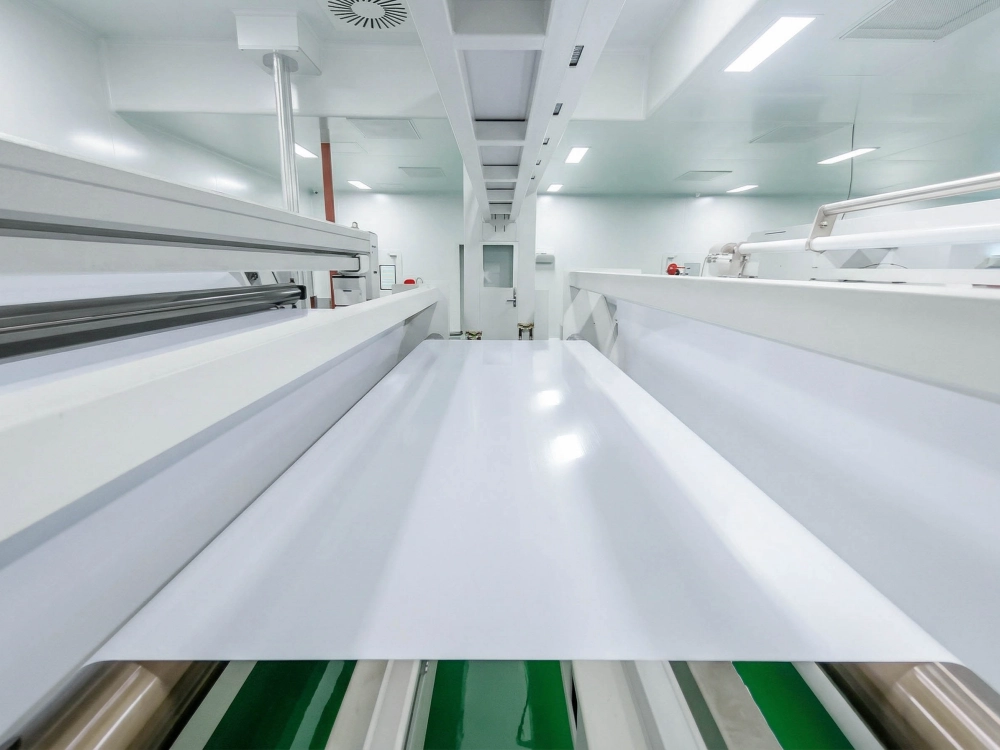
Start with Where the Wrinkle First Appears
Do not begin with the finished roll only. Walk back from the rewind section and find the first visible wrinkle.
If the film is flat before the last guide roller but wrinkles after it, the guide position, roller alignment, surface condition, and edge stability need attention. If the wrinkle starts before the spreader roller and only becomes more visible after spreading, the web may already have cross-width tension variation or a loose edge. If the wrinkle appears only when the film enters the winding contact area, rewind pressure, lay-on roller condition, and roll diameter change become more important.
For thin film, a small wrinkle can travel downstream and become a much larger winding defect. The practical check is to mark the machine position where the first crease appears, not only where the finished roll looks bad.
First-Check Table for Wrinkles Before Rewinding
| What to Check | Why It Matters Before Rewinding |
|---|---|
| Where the wrinkle first appears | Separates upstream web handling issues from winding contact issues |
| Film thickness | Thinner film shows tension, static, and contact changes more quickly |
| Web width and slit width | Wide webs and narrow lanes can react differently to guide, spreader, and edge conditions |
| Tension setting and taper | Sudden tension change before winding can make slack zones or tight lanes more visible |
| Rewind diameter when the wrinkle begins | Problems that appear only at larger diameter may point to winding pressure or taper change |
| Lay-on / contact roller pressure | Too much, too little, or uneven contact can start wrinkles near the winding nip |
| Spreader roller position and wrap | Poor spreading, wrong contact, or unstable entry can leave wrinkles before the rewind |
| Guide roller surface and alignment | Film may drift, skew, or enter the winding zone unevenly |
| Static and dust behavior | Static can make thin film cling, attract particles, or lose clean separation |
Check the Tension Change Before Winding
Wrinkles before rewinding often become worse when tension changes quickly near the end of the line. The film may look acceptable through earlier rollers, then start to form a loose lane, tight lane, edge fold, or diagonal wrinkle as it approaches winding.
Check whether the wrinkle changes with starting tension, running tension, taper tension, acceleration, deceleration, or roll diameter. A wrinkle that appears only after the roll reaches a certain diameter may not come from the film grade alone. It may come from how the line changes tension and contact pressure as the roll builds.
For thin film converting lines, Tension Control Rollers are worth checking when the wrinkle changes with speed, taper, diameter, or tension adjustment. The roller may not be the only cause, but its surface, running accuracy, and contact stability can affect how smoothly the web passes through the last tension zone.
Guide Rollers Can Start Small Edge Wrinkles
Before rewinding, the film often passes several guide or idler positions. A small alignment problem, uneven roller surface, contaminated surface, worn bearing, or edge contact can start a wrinkle that only becomes obvious later.
Thin PET, BOPP, protective film, and release film can be sensitive to small path changes. If one edge repeatedly folds before rewinding, do not only increase tension. Check whether the edge is already moving before the rewind. Also check whether the film is entering the last guide roller squarely.
Guide Rollers become a useful review point when the wrinkle is linked to edge movement, uneven entry, side drift, or repeated folding near the same guide position. In these cases, roller runout, surface finish, shaft condition, and installation accuracy can all affect the web path.
Traction Contact and Surface Grip Before Rewinding
Some wrinkles begin after traction contact. The film may slip slightly, stretch unevenly, or release from the roller at different times across the width. On the line, this may look like diagonal wrinkles, light tension bands, edge movement, or unstable entry into the rewind section.
Check the surface grip of the traction roller. A glazed, hardened, contaminated, swollen, sticky, or unevenly worn roller surface can change how the film moves. Too little grip can allow slip. Too much grip can hold the film too strongly and make tension variation more visible.
For positions where film movement, speed synchronization, or slip appears before winding, Traction Rollers should be checked together with tension setting and surface condition. The useful question is simple: does the wrinkle change when pressure, speed, cleaning, or roller surface condition changes?
Rewind Diameter, Lay-On Pressure, and Edge Condition
A wrinkle that starts before rewinding can still be driven by the rewind section. As the roll diameter grows, the winding contact condition changes. Lay-on pressure, taper tension, air entrapment, roll hardness, and edge build-up can all make a small incoming wrinkle become visible.
Check the diameter when the wrinkle starts. If the first few meters are good but wrinkles appear after the roll grows, look at winding pressure and taper change. If one edge becomes loose, raised, or wavy, check slit edge quality, lane tension, and whether the finished roll is building evenly.
For broader rewind-section checks, Slitting and Rewinding Line Rollers are the stronger support page. For thin film lines where multiple roller positions affect wrinkle, static, traction, and surface sensitivity, Film Converting Rollers is the main application page to connect the problem with roller selection.
Static Makes Thin Film Wrinkles More Unstable
Static can make thin film cling to rollers, attract dust, hold air unevenly, or separate poorly from a contact surface. This is why a film may run well at one speed or humidity level, then wrinkle more after speed increases, cleaning changes, or the workshop becomes drier.
Static-related wrinkles often appear together with dust pickup, light sticking, edge flutter, or unstable film release. The roller surface may look clean, but the film behavior changes when the line speed, humidity, grounding, or cleaning method changes.
In these cases, do not look at static separately from roller contact. Check whether the film clings near a guide, spreader, traction, or winding contact roller. The contact surface, grounding condition, surface finish, and roller material direction can all become part of the review.
When the Roller Is Worth Checking
The roller becomes worth checking when the wrinkle repeats near the same position, changes with pressure adjustment, appears after roller replacement or grinding, or becomes worse after cleaning only helps for a short time.
Look closely at the old roller surface. Glazing, swelling, softening, hardening, cracks, uneven wear, dents, cuts, contamination, or edge wear can change how thin film enters the rewind section. A roller can have the same nominal material as before, but still run differently because of compound direction, bonding, curing, grinding, surface finish, runout, or crown.
For a normal replacement roller that has worked well for a long time, drawings, dimensions, hardness, roller position, and photos may be enough to move forward. If the wrinkle keeps returning after adjustment, cleaning, or replacement, the review should include the contact point, surface finish, roller accuracy, and the actual production condition.
What to Send Wolorin
If thin film wrinkles before rewinding and the roller position may be involved, send the most useful information first:
- Film type, such as BOPP, PET, PE, protective film, release film, or laminated film
- Film thickness, web width, slit width, and line speed
- Where the wrinkle first appears before rewinding
- Tension setting, taper setting, and rewind diameter when the wrinkle starts
- Photos or short videos of the wrinkle path
- Roller position, roller dimensions, hardness, surface finish, and old roller photos
- Whether the problem changed after cleaning, pressure adjustment, roller replacement, grinding, material change, or speed increase
You do not need every item ready before starting. A clear photo of the wrinkle, the roller position, and the current running condition can already help narrow the roller-related direction.
Related Pages
- Film Converting Rollers — For thin film lines where wrinkles, static, surface sensitivity, and web path stability matter.
- Slitting and Rewinding Line Rollers — For rewind contact, tension transition, roll build-up, and edge stability checks.
- Spreader Rollers — For web opening, wrinkle reduction, and spreading before slitting or rewinding.
- Tension Control Rollers — For tension-sensitive film running, taper changes, and diameter-related behavior.
- Guide Rollers — For edge stability, web path control, and uneven entry before rewinding.
Custom Roller Manufacturing and Quality Control
A reliable rubber roller is not only about size. Compound direction, hardness stability, cover thickness, surface finish, shaft structure, and running accuracy all affect how the roller performs on the line.
Wolorin supports both routine replacement rollers and more demanding custom roller projects, with manufacturing, inspection, and documented quality checks matched to the project requirements. You can review our service scope, quality control process, and company background below.
Request a Quote
If you already have drawings, roller dimensions, old roller photos, samples, or clear specifications, you can send them to Wolorin directly. We can proceed with custom manufacturing, quotation, or production confirmation based on your documents.
If the information is not complete yet, start with the roller position, film type, wrinkle location, rewind diameter when the wrinkle begins, and photos or videos of the current problem. From there, Wolorin can help confirm the roller-related direction for custom film converting or rewinding roller requirements.