Wide-Belt Sanding Contact Roll Covers: Selection Guide
Replacing a wide belt sander contact roll starts with the sanding head’s job. Thickness calibration needs firm support for material removal. Pre-sanding prepares the board for the next stage, while lacquer finishing requires more controlled contact. These operations may use steel drums, rubber-covered drums, or platens.
If the original rubber drum has worked well and the sanding duty is unchanged, its confirmed specifications provide a straightforward replacement basis.
When the board material, abrasive belt, or finishing requirements change, check how the belt contacts the drum before choosing a new cover. The rubber hardness, surface profile, and condition of the old drum can affect both cutting action and visible sanding marks.
Identify the Sanding Head Before Choosing the Cover
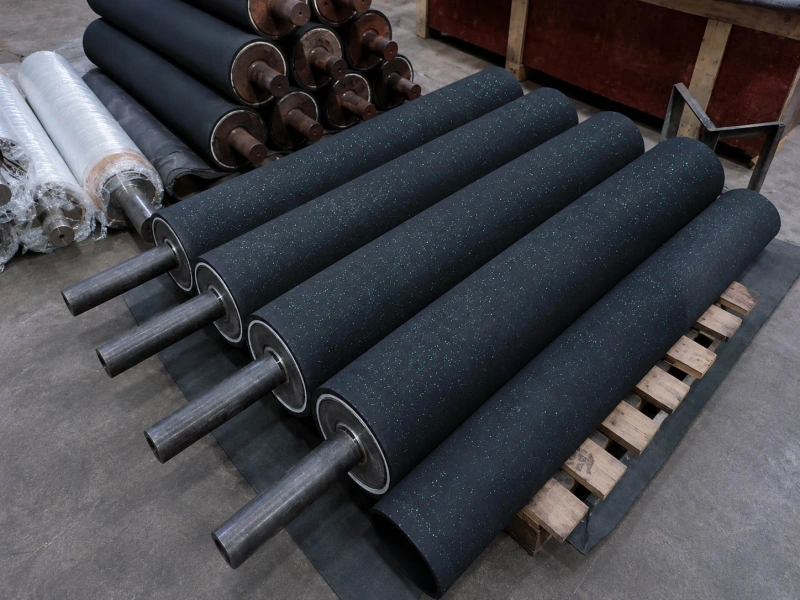
A contact drum supports the abrasive belt from its backing side, holding the abrasive against the board during sanding.
Confirm the original head construction first. A bare steel drum, rubber-covered drum, and sanding platen are different components. Their specifications cannot be used interchangeably.
For a rubber contact drum, the sanding stage helps establish the required contact behavior.
Contact Drum Requirements by Sanding Stage
Calibration / Heavy Stock Removal
Steel drums or relatively firm rubber contact drums may be used for thickness calibration. Firm support helps the abrasive remove material while controlling board thickness.
Confirm the original drum construction and hardness before specifying a replacement.
Pre-Sanding / Surface Preparation
Where a rubber drum is fitted, the cover needs enough firmness for the required cut while helping reduce marks left by the preceding sanding stage.
Check the existing hardness and the surface quality required before finishing.
Fine Sanding / Lacquer Finishing
Softer rubber drums or platens may be used for sensitive finishing, depending on the machine design. The contact arrangement must suit the required surface quality and limited material removal.
Confirm whether the head actually uses a rubber drum and whether the existing contact leaves visible marks.
How Rubber Hardness and Belt Joints Affect Sanding
The abrasive belt runs between the contact drum and the board. Its backing rests against the drum, while the abrasive grains cut the workpiece.
A harder rubber cover provides firm support for material removal. It also transfers local changes in belt thickness more directly to the board.
The belt joint is a typical example.
If the splice is thicker or stiffer than the surrounding belt, contact changes briefly as it passes over the drum. On a hard drum, the abrasive may cut slightly deeper at that point, leaving a mark across the board.
A softer cover can absorb some of this variation. However, excessive softness allows the abrasive to follow an uneven board surface more closely, which can reduce the flattening action required for thickness calibration.
For finishing, a more compliant contact may help reduce joint marks. The cover still needs enough support to produce the required sanding result.
The belt backing also matters. Two belts with similar abrasive grit can behave differently if their backing thickness, flexibility, or splice construction differs.
Changing rubber hardness should follow the actual sanding requirement. A harder cover is useful for some stock-removal duties, while a softer cover may suit more sensitive contact. Neither direction is suitable for every sanding head.
Check the Belt Before Replacing the Drum
Consider a sanding head that normally produces an acceptable board surface. After a belt change, transverse marks begin appearing.
The new belt may have a different splice thickness, backing stiffness, or wear condition. Even when the drum remains unchanged, these differences can alter contact.
Compare the previous belt with the replacement. If a known-good belt removes the marks, investigate the abrasive belt first. The change in sanding results alone does not establish a rubber-cover defect.
If suitable belts produce the same marks, inspect the drum and its running condition.
Visible cuts, flat spots, or local damage on the rubber surface make the drum worth examining. Measured runout can provide further evidence of a roller-side problem.
Bearings, mounting, and drive vibration may also contribute to sanding marks. These machine-related conditions need to be distinguished from defects in the drum itself.
These checks help establish whether a replacement rubber contact drum is needed. A belt or machine fault should be addressed at its source.
What to Look for on the Old Rubber Drum
The old drum provides useful information about both the cover specification and its service condition.
Uneven wear across the drum face deserves attention. For example, if the rubber near one end is noticeably more worn, the working diameter and surface profile may have changed. Check the original design dimensions and establish whether the wear is related to the drum or its installed contact conditions.
Surface grooves need a separate look.
Some sanding contact drums use intentional spiral grooves or serrated rubber surfaces. These patterns can influence abrasive-belt support and cutting behavior. Replacing a specified grooved cover with a smooth one changes the contact arrangement.
Keep the original pattern when it has performed well. Random scratches, worn channels, and damaged groove edges should be distinguished from the intended design.
Also inspect the rubber-to-core bond. Visible lifting or separation requires attention to the cover and core condition before deciding on the replacement construction.
If the old drum has worked satisfactorily without unusual damage, its confirmed material, hardness, cover thickness, and surface profile provide a practical replacement specification.
Repeated cover failure or a change in sanding duty calls for reviewing the affected specification rather than automatically reproducing the same construction.
Confirm the Finished Dimensions and Fit
Once the cover specification is clear, check the finished drum dimensions against the original drawing.
The main dimensions are the finished outside diameter, face length, shaft ends, and mounting details. For a rubber-covered drum, the specified outside diameter refers to the completed roller after covering and surface finishing.
A heavily worn drum may measure smaller than its original design size. Use the confirmed drawing rather than copying the worn diameter.
The drawing should also identify any specified surface profile, crown, or groove pattern. These details affect the finished working surface and should be retained where required.
For an ordinary contact drum replacement, existing drawings, dimensions, and confirmed specifications can support direct quotation and manufacturing confirmation.
If the original specification is incomplete or the application has changed, the sanding-head position, processed board, abrasive belt, and condition of the old drum provide a useful starting point for confirming the rubber-cover direction.
For related information on rubber-covered rollers used in controlled-contact applications, see Wolorin’s Pressure Rollers page.
Related Pages
Rubber-covered roller selection for controlled contact, pressure distribution, and surface requirements.
Have drawings, dimensions, or confirmed contact-drum specifications? Send them to Wolorin for quotation or manufacturing confirmation. Otherwise, start with the roller position, old-drum photos, known sizes, belt backing, and the current roller-related issue.