Services
Custom rubber roller manufacturing and quotation review.

Some rubber rollers look almost the same from the basic information. The size is close. The hardness is close. The rubber type written in the quote also looks similar.
After installation, the result may be very different.
One roller runs smoothly. Another one starts slipping, wearing fast, leaving marks, sticking to material, or needing frequent adjustment. From the outside, it may be hard to see why the prices were different in the first place.
A rubber roller is not just a size and a rubber type. The compound direction, bonding, curing, grinding, surface finish, and roller position all affect how it runs on the line. For a simple position, a standard build may be enough. For a more demanding position, these details can decide whether the roller runs steadily or keeps causing small problems.
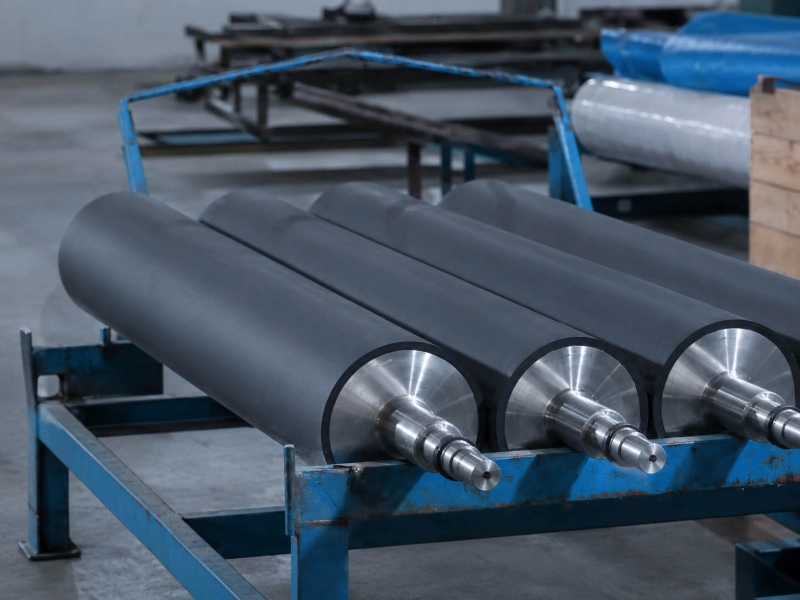
The same rubber type can be made in different directions.
PU can be made more toward wear resistance, or more toward grip. Silicone can be used for release, heat, or low-marking contact. NBR can work well in many oil- or ink-related positions, but the actual liquid, cleaner, pressure, and temperature still matter.
So when two quotes both say PU, silicone, NBR, or another rubber type, they may still be talking about different builds.
This difference usually shows up after the roller starts running. The roller may slip under load, wear faster than expected, leave fine marks, become sticky, swell after contact with liquid, or lose stable contact across the width.
That is why two rubber rollers can look similar on paper and still have different prices.
Some price factors are obvious. Bigger size, thicker rubber cover, special shaft details, repaired core, or tighter tolerance will change the cost.
Other parts are less obvious.
A roller may need better rubber-to-core bonding, more stable curing, more careful grinding, a cleaner surface finish, or better control of runout and balance. These details are not always visible in a short quote, but they affect how the roller runs. For projects that need this level of review, custom rubber roller manufacturing should be based on the roller position and contact condition, not only the size.
For a guide roller or simple support roller, this may not matter much. For a traction roller, pressure roller, coating roller, laminating roller, winding roller, or a roller touching a sensitive surface, it matters much more.
A good quote should keep the build practical. It should not add work the roller does not need. It should also not leave out the work that the position actually requires.
A lower-priced roller can be completely reasonable.
Many standard replacement rollers do not need complicated review. If the old roller has worked well for years, the speed is low, the product surface is not sensitive, and replacement can be done during normal maintenance, a standard replacement is often enough.
This kind of project does not need to be made complicated. Clear size, hardness, roller position, and old roller photos can usually support a workable quote.
Low price becomes a problem when the roller is used in a position that needs more than a basic build. If the roller controls traction, pressure, coating contact, release, winding stability, or product surface quality, a simple fixed compound may not be close enough to the real working condition.
Some quotes are based on a basic replacement method: confirm the size, match the hardness, use a common rubber direction, and keep the build simple.
For many simple rollers, this is fine.
The risk appears when the same method is used for coating contact, adhesive contact, solvent exposure, heat, high pressure, sensitive surfaces, or stable traction. The roller may look correct from the quote, but the line may still show slipping, marks, swelling, sticking, or short life.
This does not make every low quote wrong. It only means the buyer should check what kind of roller is being quoted: a general replacement, or a roller matched to the actual working position.
The purchase price is the first cost. The line cost comes later.
If a roller fails too soon, the plant may need extra stops, cleaning, adjustment, test running, rejected material, and early replacement. Changing rollers is part of maintenance, but avoidable stops still cost money.
A smoother-running roller helps the line stay stable for longer. It reduces repeated setup work and lowers the chance of stopping the machine more often than needed. This matters even more in production areas such as film converting lines and slitting and rewinding lines, where repeated adjustment can quickly affect output.
This is easy to miss during purchasing. A roller may look cheaper at the quotation stage, then cost more through downtime and repeated adjustment.
A more expensive roller is not always the better roller.
A harder cover may hurt a sensitive surface. A softer cover may deform too much under pressure. A higher-grade rubber may still fail if it is not right for the liquid, temperature, pressure, speed, or surface requirement.
Good roller selection is practical. Simple positions should not be overbuilt. Difficult positions should not be treated like simple replacements.
The best roller is the one that fits the position, runs steadily, and does not create extra problems on the line.
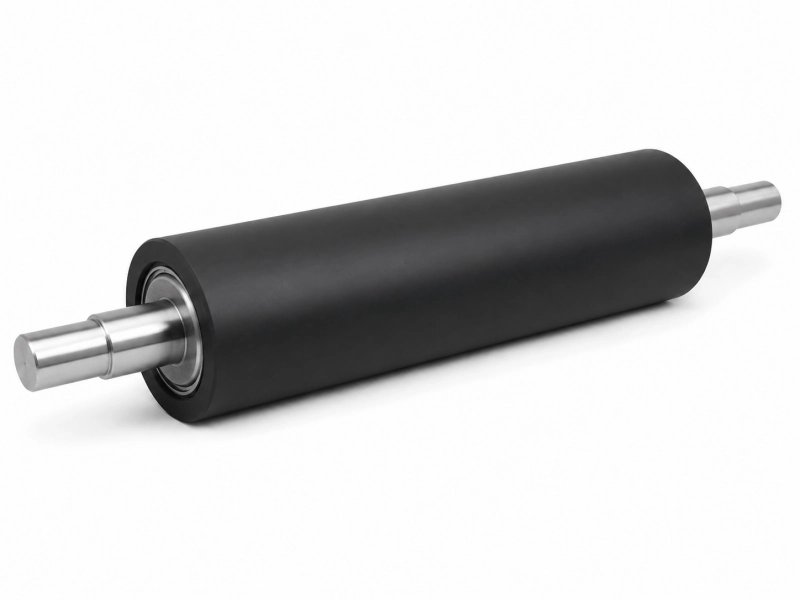
A useful quote does not need to be long. It should make the main basis clear. If tolerance, balance, surface finish, or outgoing inspection is part of the price difference, the Quality Control process can also help explain what is being checked.
| What to Check | Why It Matters |
|---|---|
| Rubber direction | The same rubber type can be made for different results. |
| Roller position | Guide, traction, pressure, coating, and winding rollers do different jobs. |
| Surface finish | Grip, release, cleaning, and marking risk can change with the surface. |
| Working condition | Speed, pressure, temperature, liquid contact, adhesive, and product sensitivity affect the choice. |
| Current problem | Slipping, marks, swelling, sticking, fast wear, or vibration may change the roller direction. |
If a quote only shows size, hardness, and rubber type, it may not show the full difference. The clearer quote is the one that shows whether the roller is just a basic replacement or a build matched to the job. You can also use By Function to think through which roller position the quote is really supporting.
Custom rubber roller manufacturing and quotation review.
Inspection and quality confirmation for roller manufacturing.
Common rubber compound directions for different working conditions.
Roller positions such as traction, pressure, guide, and coating rollers.
Useful for wear, grip, and demanding industrial contact positions.
Relevant when pressure contact, surface marks, and contact stability affect roller choice.
If you already have drawings, sizes, old roller photos, samples, or a current quote, you can send them to Wolorin.
For a simple replacement, we can quote from clear basic information. For rollers with slipping, marks, swelling, short life, vibration, or repeated adjustment, we can help check whether the roller direction should be changed.