Offset Roller Diameter Change After Washing

An offset press may run normally before washup, then show a different nip stripe, unstable ink transfer, or a roller that feels softer or harder afterward. If that happens, measure the roller before changing the pressure. Check diameter and hardness while the roller is stable, immediately after washing, and again after it has recovered under a similar temperature condition.

The pattern matters more than one reading. A roller that grows after washing and later returns close to its old size is behaving differently from one whose recovered diameter keeps getting smaller or whose hardness slowly drifts. If the roller readings remain stable while the printing problem continues, the next checks belong on the press and process side rather than the rubber cover.

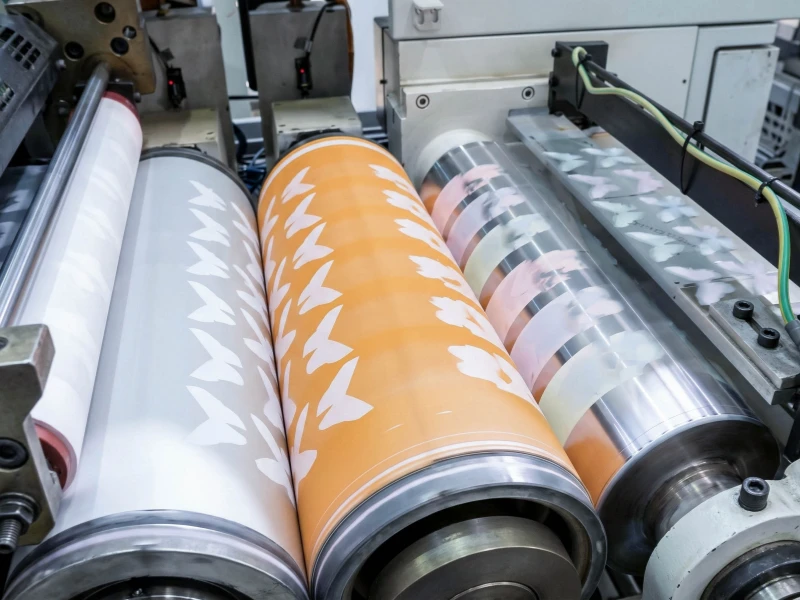
Printed film passing through industrial printing rollers

Start With What Changed Around the Wash Cycle

The roller rarely sees washup solution alone. Depending on its position, it may also contact ink, fountain solution, additives, residual cleaner, and chemistry transferred through neighboring roller contacts.

Look at the timing. Did the diameter problem begin after a new washup product was introduced? Was the ink or fountain system changed? Did automatic washing become more frequent? Is the press now being cleaned while the rollers are still warm? Has the contact time with cleaner become longer?

These details are worth recording because two plants can both say they use “offset roller cleaner” while the actual products and wash routines are quite different. For a recurring problem, keep the product name and SDS or technical sheet if available.

Roller position also changes the exposure. An inking roller and a dampening roller do different work and see different combinations of chemistry and contact. The Printing Industry Rollers page gives a broader view of printing roller positions and their working conditions.

Why the Roller Can Grow, Shrink, or Change Hardness

Part of a washup liquid, ink vehicle, or other contact medium can enter the rubber network. The cover then takes up liquid and increases in volume. The outside diameter rises, and the hardness reading may also move lower while that liquid remains in the rubber.

If the absorbed medium later leaves the rubber, much of that change may disappear. On the press, a roller can measure slightly larger and softer shortly after cleaning, then move back toward its earlier readings after resting.

Long-term shrinkage follows a different pattern. Repeated chemical exposure can extract soluble components from the rubber system. The recovered roller may gradually lose diameter, become harder, or stop returning to the baseline that was normal earlier in its service life.

An ageing cover can show both effects. It swells after every wash and partly recovers, but the diameter it returns to is gradually changing. Looking only at the measurement taken immediately after washing would show the temporary swelling and miss the slower change underneath.

Hardness should be read the same way. One unusual reading after washup tells little by itself. A repeated shift in the recovered hardness is much more useful when judging whether the cover is ageing or changing under chemical exposure.

Why the Nip Moves Even When the Setting Has Not

The nip is formed by the actual geometry of the rollers in contact. When the rubber-covered diameter changes, that geometry changes with it.

A swollen roller reaches farther into the contact zone than it did at its stable diameter. A roller that has lost diameter moves in the opposite direction. The change can appear as a different nip stripe, altered ink transfer, or an ink-and-water condition that suddenly becomes harder to hold.

A typical sequence is easy to miss. The roller is temporarily larger immediately after washup, so the nip is adjusted to suit that condition. Later, the rubber releases part of the absorbed medium and the diameter comes back down. The new nip setting was made for a roller size that was only temporary.

When production allows, record the stripe before making that adjustment. Here the stripe is evidence that the contact has moved. Detailed stripe shape, pressure distribution, and nip-setting practice belong to a separate nip-setting check.

For positions that pick up and carry ink or another medium through a contact point, changes in roller contact can also affect pickup and release. The Transfer Rollers page covers that roller function in more detail.

Three Measurements Usually Show the Direction

Measure the same roller with the same instrument, method, and positions each time. For diameter, use consistent points across the face so local wear is not mistaken for an overall size change. Record roller temperature when practical; a hot roller straight off the press is a poor comparison with a fully cooled roller.

When to Measure What to Record What It Tells You
Before washing, while the roller is in a known stable condition Diameter at consistent positions, hardness, roller temperature, surface condition, and current nip reference Establishes the working baseline for this roller
Immediately after the normal wash cycle Repeat diameter and hardness measurements; note temperature and whether the cover is still wet Shows the immediate response to the actual wash exposure
After recovery under a similar condition Repeat the same measurements before changing the reference nip where practical Shows whether the change recovered or became a new baseline

There is no useful universal recovery time for every offset roller. Compound, cover age, temperature, chemical mixture, and exposure time all affect how quickly the readings settle. For plant records, consistency is more useful: compare the same roller after similar rest periods and at similar temperatures whenever possible.

A few patterns are especially useful:

  • The diameter rises after washing, then returns close to the old baseline. This points toward a largely reversible short-term response. Check how much the nip changes before the roller recovers.
  • The recovered diameter or hardness settles at a new level. Repeated chemical exposure, extraction, or ageing becomes more relevant, especially when the same trend continues through several normal wash cycles.
  • Only one roller changes while neighboring rollers stay stable. Start with that roller’s age, re-covering or grinding history, material specification, and local exposure.
  • Several rollers move in the same direction after the same chemical or cleaning change. The shared washup chemistry and cleaning routine become the stronger lead.

When the Roller Cover Needs Another Look

If diameter and hardness remain repeatable before and after washing, there is little reason to change the cover just because the nip or printing condition is unstable. Press settings, roller alignment, ink and dampening conditions, temperature, and other operating changes still need to be checked on their own side of the process.

The cover deserves closer attention when its diameter or hardness repeatedly follows the wash cycle, does not return to its earlier baseline, or continues drifting after a previous replacement or re-covering.

A straightforward replacement can stay straightforward. If the old roller ran well for a long time, drawings, dimensions, hardness, roller position, and clear old-roller photos are often enough to start manufacturing or quotation.

A recurring problem needs a better record of the real chemical exposure. Keep the washup product, ink system, fountain solution, and additives; product names and SDS or technical sheets are useful when available. Add the cleaning frequency, approximate contact time, whether the roller is warm during washing, and the before/after/recovery diameter and hardness readings.

Also keep the old roller history: service time, previous re-covering or grinding, and whether the same problem appeared before. A roller that has already been re-covered several times gives different clues from a first replacement that has run reliably for years.

The nominal material family is only one part of the specification. NBR / Nitrile Rubber Rollers are one common direction for selected ink, oil, and industrial liquid-contact positions. FKM Rubber Rollers may enter the discussion for selected heat, oil, solvent, or more demanding chemical exposure.

For a roller whose diameter keeps drifting, the replacement specification should also consider compound direction, hardness, cover thickness, final diameter, bonding, grinding, and surface finish as they relate to that actual roller position. The material name alone does not describe all of those variables.

Related Printing Roller Resources

Printing Industry Rollers — Printing roller positions, contact conditions, and common rubber-covered roller requirements.

NBR / Nitrile Rubber Rollers — Material information for selected ink, oil, and industrial liquid-contact roller applications.

FKM Rubber Rollers — Material information for selected heat, oil, solvent, and demanding chemical-contact conditions.

Transfer Rollers — Roller positions where stable pickup, carrying, and release of ink or other media are required.

If you already have drawings, dimensions, samples, or a clear specification, send them directly for custom manufacturing, quotation, or production confirmation.

If the information is incomplete, start with old roller photos, basic dimensions, roller position, contact media, and the current roller-related problem.