Services
For custom rubber roller manufacturing, replacement, re-covering, and production confirmation.
When an industrial rubber roller wears out sooner than expected, the concern is usually practical: is this still normal for this roller position, or has something gone wrong?
A shorter service life is not automatically a failure. A roller working under high pressure, strong friction, adhesive contact, solvent exposure, abrasive dust, heat, or frequent cleaning may reach its replacement point faster than a light guide roller. That difference is normal.
At the same time, a rubber roller that fails far earlier than the previous one, loses stable contact, becomes sticky, swollen, cracked, hardened, unevenly worn, or starts causing marks and slipping should not be ignored. In that situation, replacing the roller is often the right step. The important part is to understand whether the next roller can follow the old direction or needs adjustment for the real working condition.
Industrial rubber rollers do not have one universal lifespan. Their life depends on position, load, speed, media contact, cleaning, surface finish, bonding, rubber direction, and the condition of the old roller.
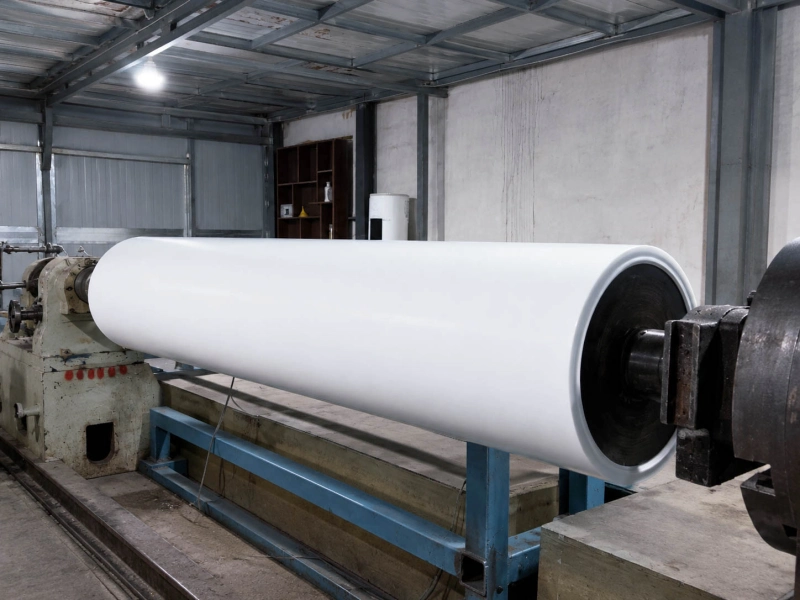
A fixed replacement interval can help a maintenance team plan downtime, but it cannot describe every industrial rubber roller.
One roller may only guide material with light contact. Another may pull web material under friction, press product through a nip, transfer coating, squeeze liquid, or work near solvent, oil, adhesive, powder, heat, or cleaning chemicals. These rollers are not doing the same job.
The same material name also does not guarantee the same service life. Two rollers may both be described as PU, NBR, EPDM, silicone, or FKM, but their actual life can still differ because of compound direction, hardness, bonding, cover thickness, grinding, surface finish, roller accuracy, and operating condition.
A more useful question is not “how many months should a rubber roller last?” The better question is: is the service life reasonable for this roller position?
A low-load guide roller usually has an easier job. If alignment is good, the surface stays clean, and the roller does not touch aggressive media, its service life is often relatively long.
A traction roller works harder. It needs enough grip to move material without slipping, so surface finish, hardness, pressure, speed, and wear all matter.
A pressure roller or nip roller carries load. The rubber cover is compressed during operation. Uneven pressure, excessive nip force, heat, or poor contact width can shorten useful life.
A coating, laminating, printing, adhesive, oil, solvent, or cleaning-contact roller faces both mechanical contact and media contact. In coating and laminating line rollers, the rubber cover must handle pressure and surface contact while also resisting the effect of the material it touches.
A sensitive-surface position may reach its replacement point before the roller looks badly worn. Light marks, gloss change, poor release, or repeat lines can decide replacement earlier than diameter loss, especially in web handling positions such as slitting and rewinding line rollers.
Some rubber rollers are used in naturally consuming positions. A shorter service life can still be normal when the roller is doing a harder job every hour it runs.
This is common when the roller:
In these cases, the roller life should be judged by stability. If the wear is gradual, the pattern is repeatable, the line runs normally, and the replacement interval is consistent with previous rollers in the same position, the service life may be acceptable even if it is not very long.
For rollers where wear resistance is the main concern, polyurethane rubber rollers may be one direction to review, but the final choice still needs to match the roller position, pressure, surface requirement, and actual contact condition.
A rubber roller should not stay in service just because the rubber cover is still on the core. Once it can no longer provide stable contact, it has reached the end of useful life for that position.
Replacement becomes reasonable when the roller:
For a normally worn roller, replacement can be straightforward. For a roller that failed much earlier than expected, the next replacement should not simply copy the old roller without checking why it failed. If the question is whether to re-cover the old roller or make a new one, the decision can be reviewed through the condition of the old core, cover, bonding, and failure pattern in Re-Cover or Replace a Rubber Roller?.
When a rubber roller does not reach a reasonable service life for its position, the old roller surface often shows where to start.
| What You See on the Old Roller | What It May Point To |
|---|---|
| One side wears faster | Pressure imbalance, alignment issue, shaft problem, bearing issue, or uneven contact |
| Diameter loss is fast and concentrated | High friction, abrasive contact, excessive pressure, or unsuitable wear direction |
| Surface becomes sticky | Adhesive build-up, solvent effect, cleaning residue, heat, or surface change |
| Rubber swells or softens | Oil, solvent, acid, cleaning liquid, coating media, or other contact media may be involved |
| Rubber hardens or cracks early | Heat, ozone, storage, aging, cleaning chemical, or wrong rubber direction may be involved |
| Product marks appear after replacement | Surface finish, hardness, runout, pressure, contamination, or roller circumference should be checked |
| Cleaning helps only briefly | Build-up source, surface finish, and contact media should be checked together |
| Cover lifts or separates | Bonding, core condition, load, heat, or media attack may be involved |
These signs do not prove that the rubber material is wrong. They show that the next roller should be reviewed against the real working condition.
If the main problem is fast diameter loss or rapid surface wear, the issue may need a closer wear-focused review. The related guide Why a Rubber Roller Wears Out Too Fast goes deeper into pressure, friction, surface condition, and uneven wear.
Material matters, but material name is only the starting point.
A roller marked as PU, NBR, EPDM, silicone, or FKM still needs the right compound direction, hardness, bonding, cover thickness, surface finish, grinding, and production control. The same material family can be adjusted for wear resistance, grip, release, oil contact, heat stability, chemical contact, or low marking.
For oil, ink, adhesive, or general industrial liquid contact, NBR / nitrile rubber rollers may be one direction to check. For heat, oil, solvent, or more demanding media contact, FKM rubber rollers may be reviewed when the working condition requires it.
For many standard replacement rollers, the review can stay simple. If the old roller worked well for a long time, drawings, dimensions, hardness, roller position, and old roller photos may be enough to start.
For high-load, high-speed, chemical-contact, adhesive-contact, abrasive-contact, or sensitive-surface positions, the review should be more careful. These are the situations where roller life can change a lot even when the material name looks the same.
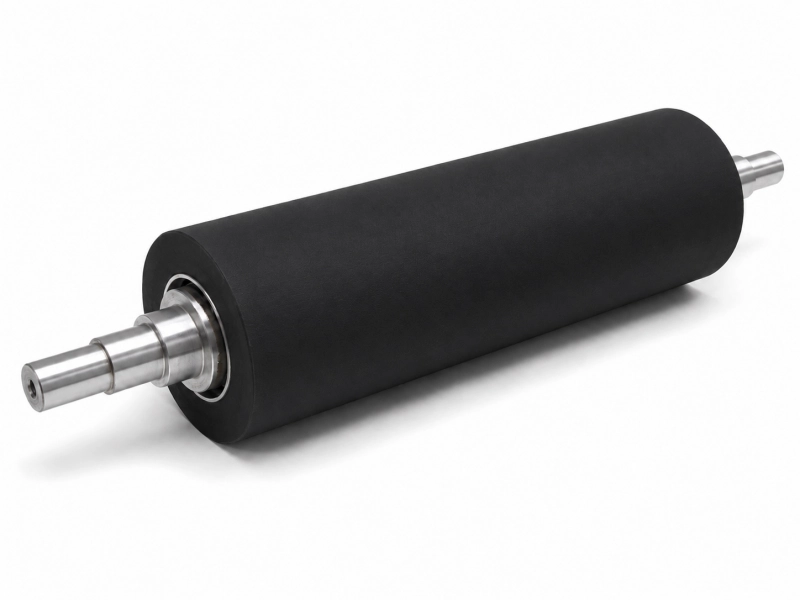
The old roller is often more useful than a verbal description. It shows how the roller actually failed in production.
Before cleaning away all surface traces, take photos from several angles. Check whether the wear is even or one-sided. Measure the diameter at the center and both ends. Look for sticky areas, swelling, cracks, hard spots, glazing, edge wear, exposed bonding, and local marks.
Also compare the old roller with the line history:
If the old roller reached gradual wear, replacement can usually follow the existing direction. If the old roller failed early, the reason should be checked before the same specification is repeated.
When the issue involves repeat defects, bonding failure, unusual surface change, or production risk, inspection and manufacturing control also matter. Wolorin’s Quality Control page explains how production confirmation and inspection can support more stable roller manufacturing.
Wolorin does not treat short rubber roller life as one simple material problem. The first step is to judge whether the service life is reasonable for the roller position, or whether the roller is showing early failure.
For straightforward replacement, we can work from drawings, samples, dimensions, hardness, and the existing roller position. If the old roller worked well for a long time, the direction can often stay simple.
For shorter-than-expected life, repeated failure, swelling, sticking, cracking, fast wear, bonding problems, or product marks, the review can include rubber direction, bonding, surface finish, hardness, cover thickness, roller accuracy, and actual working condition.
For custom manufacturing, replacement, re-covering, and production confirmation, Wolorin’s Services page gives the main path for starting a roller project.
The goal is practical: help you decide whether the current service life is normal, whether the replacement can follow the old direction, or whether the next roller needs adjustment.
For custom rubber roller manufacturing, replacement, re-covering, and production confirmation.
For wear resistance, load support, and grip in suitable roller positions.
For rubber rollers working under nip pressure, compression, and stable contact requirements.
For rollers exposed to coating media, adhesive contact, solvent, pressure, and surface quality requirements.
For deeper checks on fast wear, pressure, friction, and surface condition.
For deciding whether the old roller core and cover are still suitable for re-covering.
If you already have drawings, sizes, samples, or a clear specification, you can send them to Wolorin directly for custom manufacturing, quotation, or production confirmation.
If the roller life feels too short, old roller photos and basic working conditions can help us understand whether the next roller should follow the old direction or be adjusted.