
Common Lithium Battery Material Line Problems
Particles on separator film, static attraction around foil, faint marks on coated web, and tension drift often start as small changes around one section of the line. Dust collects after a contact area. The web edge begins to wander at higher speed. A light line appears after heated contact. Material leaves one roller face with uneven release.
Start with the pattern. Find the first point where the material changes, the condition that makes the problem worse, and the roller group closest to that change. If the same sign returns near one roller position, check the roller surface, contact pressure, grounding path, guiding accuracy, contamination behavior, and cover material direction together.
For the full battery-line roller background, Wolorin’s Lithium Battery Line Rollers page covers separator, foil, coating, clean-contact transfer, drying-related transport, and winding roller positions. The following checks stay closer to the problems seen on separator, foil, coated web, and other sensitive battery materials.
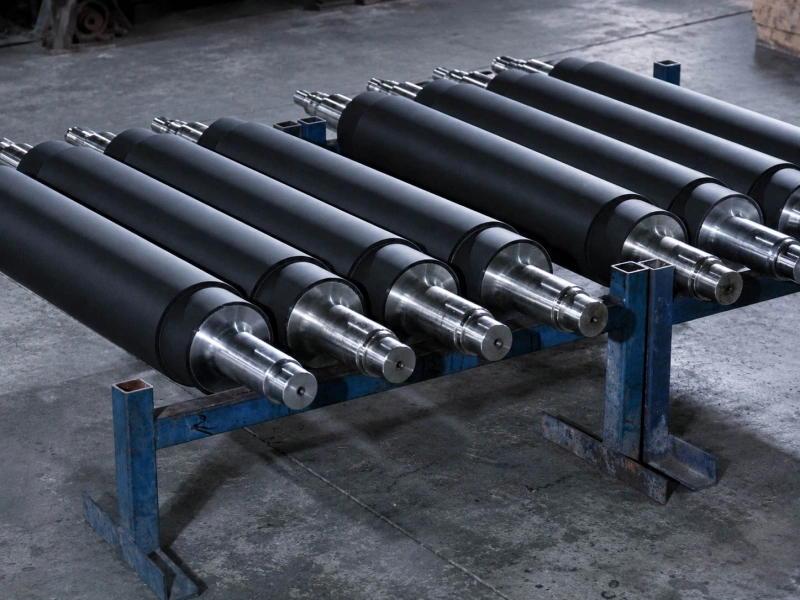
Clean Contact Starts with Where Particles Return
Clean contact should be checked by location and timing. Where do particles collect? How fast do they return after cleaning? Do they follow the same contact area, edge, or roller face?
Separator films are often handled in thin micron-level ranges. In this kind of web path, a small particle, local pressure point, or residue line can become visible around sensitive contact positions. The problem becomes easier to judge when the same particle pattern returns near one roller, one edge, or one contact zone.
If particles appear across the whole web, check upstream material, air flow, slitting dust, handling, room condition, and transport exposure. If particles collect near one roller, return soon after cleaning, or increase after speed changes, focus on that contact point.
Roller-related signs include a glazed surface, sticky surface, local wear band, residue line, uneven grinding pattern, or dirt that gathers near the same edge. A roller may look clean during stop time and still carry particles back under speed, pressure, wrap angle, or heat.
For particle pickup and cleaner surface contact positions, Cleaning & Sticky Rollers may be one direction to review. If dust returns together with static attraction, check cleaning behavior and anti-static behavior in the same review.
Static Problems Need a Real Discharge Path
Static problems often show up as dust attraction, web sticking, uneven release, light discharge, edge flutter, or sudden handling change after unwinding, drying, heating, or contact separation.
Mark the first place where the behavior changes. If dust pickup begins after one unwinding point, one guide section, or one separation area, the source may be local. If the material clings to the roller, lifts unevenly, or pulls fine particles back after cleaning, check surface resistance direction and grounding path along the actual web path.
For anti-static roller review, surface resistance is a useful starting value. Dissipative directions are often discussed in ranges such as 10⁴ to below 10¹¹ ohms, while more conductive directions may require a different target. The number has to work with the machine path. Rubber direction, roller surface, shaft, bearing, machine frame, and grounding condition all affect the result.
A surface resistance target should be sent together with the roller position and contact material. Without a usable discharge path, the value alone cannot describe how the roller will behave during running.
For static-sensitive contact, Anti-Static / Conductive Rubber Rollers should be reviewed with resistance target, material contact, guide position, cleaning method, shaft condition, and grounding condition. If the customer has a required resistance range, previous measurement, or machine specification, send it with the roller details.
Foil and Coated Webs Need Stable Contact
Foil and coated battery materials respond strongly to small contact changes. Foil may show fine scratches, dents, edge stress, flutter, or tension waves. Coated web may show gloss change, pressure trace, residue transfer, coating disturbance, or marks that become clear after drying, calendaring, winding, or inspection.
Current collector foil may be only a few to tens of microns thick. On this kind of material, small pressure differences, particles, runout, or hard contact points can affect the handling result. A roller that runs acceptably on a less sensitive web may leave visible signs on foil or coated battery material.
Mark shape gives useful clues:
| Mark behavior | What to check |
|---|---|
| Straight faint line after one contact point | Fixed surface feature, pressure band, residue line |
| Repeated dot or repeat mark | Roller circumference, surface defect, local pickup |
| Edge pressure trace | Alignment, crown, side pressure, shaft deflection |
| Gloss change after heated contact | Cover heat response, release behavior, coating sensitivity |
| Mark changes after pressure adjustment | Nip condition, hardness, cover thickness, roller geometry |
Stable contact needs controlled pressure, surface condition, and running accuracy. Too little contact can bring slip, flutter, poor guiding, and unstable release. Too much contact can bring pressure marks, coating disturbance, surface transfer, and edge stress.
For heat, release, low marking, or surface protection around sensitive contact, Solid Silicone Rollers may be one direction to check. The final direction should still follow roller position, coating condition, contact pressure, temperature, cleaning liquid, surface finish, and old roller behavior.
Surface Finish, Ra, and Running Accuracy
Surface finish should be checked early on sensitive material lines. A roller that looks smooth by eye can still behave differently during contact. Fine grinding, matte finish, release-oriented finish, traction-oriented finish, and sticky surface direction all create different web behavior.
Ra can help describe roughness, but it has to be connected to the measurement method and the job of the roller surface. Filter setting, evaluation length, grinding direction, rubber compound, contact pressure, and cleaning method can all change how the surface behaves on the material.
For roller projects, a Ra target should answer a practical question. Is the surface meant to reduce visible marks? Support release? Increase traction? Pick up particles? Avoid coating transfer? The same Ra value can behave differently with different rubber compounds, pressure, speed, cleaning liquid, and material surface.
Runout and dynamic balance matter when the line runs fast, the web is thin, or the mark repeats at a fixed distance. A small geometry or balance issue may show up as vibration, flutter, tension drift, repeated marks, or unstable contact near one roller group.
If the problem is a faint line, residue transfer, repeat mark, vibration mark, or gloss change, the old roller surface is useful evidence. Side-light photos, close-up photos of worn bands, and any previous grinding, Ra, runout, or balance requirement can help decide whether to repeat the old finish, adjust the finish, or review compound and surface together.
Guide and Tension Problems After Speed, Width, or Heat Changes
Guide and tension issues often appear during speed change, width change, roll diameter change, heat exposure, or material batch change. Typical signs include edge wandering, light wrinkles, local slip, web flutter, tight-and-loose running, uneven winding, or tracking changes before slitting or winding.
On separator and foil lines, small changes in width or thickness can change how the material sits on the roller face. Heat can change the web, coating layer, and roller cover surface at the same time. The line may look stable at low speed and become unstable after acceleration.
A guide problem often starts as side-to-side movement. A tension-control problem often appears as flutter, tension drift, unstable winding, or running change during acceleration and deceleration. In real production, these signs can overlap around the same roller group.
For path-control positions, Guide Rollers should be reviewed by web width, edge behavior, surface contact, alignment, bearing condition, and local wear. For speed transitions, roll diameter changes, flutter, and winding stability, Tension Control Rollers should be reviewed by diameter, face length, cover hardness, surface finish, runout, dynamic balancing, shaft rigidity, and wrap angle.
Practical checks:
| Field sign | Roller-related check |
|---|---|
| Stable at low speed, unstable after acceleration | Balance, bearing condition, shaft rigidity, surface grip |
| Edge moves toward the same side | Alignment, crown, roller face wear, guide response |
| Tension drifts after heat exposure | Cover hardness change, surface friction, wrap angle |
| Web flutters near one roller group | Runout, balance, air movement, contact pressure |
| Narrow web runs worse than wide web | Contact width, edge loading, roller face condition |
Coating Contact Marks Need a Time Clue
Coating contact marks are easier to judge when the mark shape is connected with the time it appears. A mark seen immediately after contact often points to pressure, residue, contamination, or surface finish. A mark that becomes clear after drying may involve heat response, coating sensitivity, residue transfer, or pressure memory. A mark seen after winding may come from earlier contact and become visible under roll pressure.
Check these signs before repeating the same roller specification:
| Mark behavior | What it may indicate | Roller-related check |
|---|---|---|
| Straight faint line after one contact point | Fixed surface feature, residue line, pressure band | Surface finish, local contamination, grinding mark, pressure distribution |
| Repeated dot or repeat mark | Roller circumference, surface defect, local pickup | Circumference comparison, old roller surface, runout, residue pattern |
| Edge pressure trace | Edge loading, misalignment, crown, shaft deflection | Alignment, crown, bearing condition, edge wear |
| Gloss change after heated contact | Cover heat response, release behavior, coating sensitivity | Cover material direction, hardness, surface finish, cleaning method |
| Mark changes after pressure adjustment | Contact pressure is involved | Nip condition, hardness, cover thickness, roller geometry |
The old roller condition can narrow the review quickly. Hardening, glazing, swelling, softening, contamination, edge wear, uneven grinding, and residue pickup all change the contact result. If the same mark returns after cleaning, grinding, or replacement, review bonding, cover thickness, curing stability, grinding quality, runout, crown, and contact pressure together.
When to Check Each Roller Direction
The roller direction should follow the field signal.
Check Anti-Static / Conductive Rubber Rollers when dust attraction, sticking, discharge, uneven release, or charge-related handling changes appear near a contact point. Review surface resistance target, grounding path, shaft condition, bearing condition, and contact material.
Check Cleaning & Sticky Rollers when particles return after cleaning, loose dust needs controlled pickup, or the same roller face keeps collecting contamination. Review particle behavior, cleaning method, surface tack direction, and static condition.
Check Solid Silicone Rollers when heat stability, release, low marking, or surface protection is part of the contact requirement. Review pressure, temperature, surface finish, cleaning liquid, coating behavior, and old roller surface.
Check Guide Rollers when edge movement, tracking instability, local wandering, or web path sensitivity becomes the main issue. Review alignment, web width, roller face condition, runout, bearing condition, and edge wear.
Check Tension Control Rollers when the web becomes unstable with speed, roll diameter, width change, heat exposure, acceleration, or winding pressure. Review wrap angle, surface contact, runout, balance, shaft rigidity, cover hardness, and tension range.
What to Measure Before Deciding the Roller Direction
A useful review connects the visible problem with measurable line details. These values help narrow the direction before manufacturing, quotation, or production confirmation.
| Field information | Why it matters | Useful detail to send |
|---|---|---|
| Separator, foil, coated web, or composite material | Different surfaces react differently to pressure, static, heat, and finish | Material type, thickness, coating side, surface sensitivity |
| Web width and roller face length | Width changes edge behavior and contact distribution | Web width, active contact width, edge wandering position |
| Tension setting or tension range | Contact force affects slip, wrinkle, marks, and winding | Normal tension, low-speed tension, acceleration condition |
| Line speed | Speed changes static, slip, flutter, heating, and balance effect | Normal speed, defect speed, acceleration stage |
| Temperature or heat exposure | Heat changes web behavior and rubber surface behavior | Roller area temperature, drying section, heated nip condition |
| Surface resistance target | Needed for anti-static or conductive direction | Required range, measurement method, grounding condition |
| Surface finish or Ra | Needed for low marking, grip, release, or clean contact | Existing finish, Ra target if specified, side-light photo |
| Runout and balance requirement | Running accuracy affects marks, tension, and high-speed stability | Existing tolerance, machine speed, vibration or repeat mark history |
| Old roller failure | Old surface shows the real working condition | Wear, swelling, glazing, cracks, sticky areas, edge bands |
For common replacement rollers, drawings, dimensions, hardness, roller position, and old roller photos can be enough to start. Repeated defects, clean-contact positions, static-sensitive contact, low-marking surfaces, heat exposure, thin separator, and foil handling need more detail. The review may include compound direction, bonding, cover thickness, surface finish, runout, crown, and contact stability.
Related Pages
- Lithium Battery Line Rollers — Main application page for separator, foil, coating, clean-contact, and winding-related roller positions.
- Anti-Static / Conductive Rubber Rollers — For static control, dust attraction, grounding path, and resistance-direction review.
- Cleaning & Sticky Rollers — For particle pickup, dust removal, cleaner contact, and contamination-return checks.
- Guide Rollers — For path control, edge stability, tracking changes, and alignment-sensitive web handling.
- Tension Control Rollers — For tension drift, flutter, speed transitions, width changes, and winding stability.
- Solid Silicone Rollers — For heat stability, release behavior, lower marking, and sensitive surface contact.
Custom Roller Manufacturing and Quality Control
A reliable rubber roller is not only about size. Compound direction, hardness stability, cover thickness, surface finish, shaft structure, and running accuracy all affect how the roller performs on the line.
Wolorin supports both routine replacement rollers and more demanding custom roller projects, with manufacturing, inspection, and documented quality checks matched to the project requirements. You can review our service scope, quality control process, and company background below.
Request a Quote
If you already have drawings, sizes, samples, or a clear specification, you can send them to us directly. We can proceed with custom manufacturing, quotation, or production confirmation based on your documents.
If the information is not complete yet, start with the roller position, contact material, visible problem, old roller photos, and any known requirements for static control, surface finish, runout, or tension stability.