
Common Foil and Metal Strip Processing Problems
Foil and thin metal strip problems often show up as very light surface lines, scratches, pressure marks, edge drift, or sudden tension changes. On bright, soft, coated, or surface-sensitive metal, a small contact issue can become visible quickly. The mark may look minor under normal light, but it can affect surface grade, downstream coating, lamination, stamping, or customer acceptance.
The first check is usually the pattern. Does the line run in the machine direction? Does the scratch start after one guide point? Does the pressure mark repeat at a fixed interval? Does edge drift become worse after speed increase or tension adjustment? These signals help separate incoming material issues, process instability, and roller-contact problems.
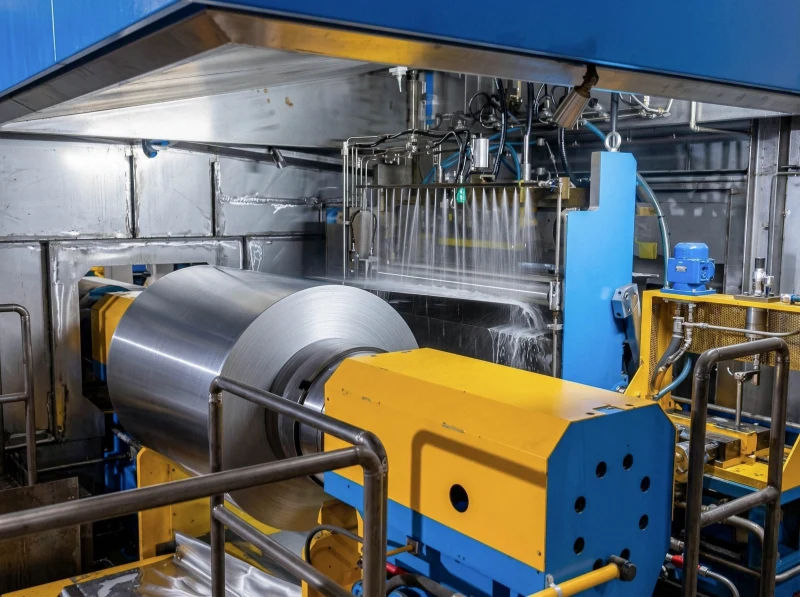
Fine Surface Lines on Foil or Metal Strip
Fine surface lines are common on aluminum foil, copper foil, stainless strip, coated metal strip, and other bright or thin metal webs. They may come from incoming coil surface condition, dust, metal particles, guide contact, slitting debris, or a surface that is too sensitive for the existing contact path.
When the line is continuous in the running direction, start by checking where the strip first touches a guide, support, pressure, or tension-related roller. If cleaning the area removes the line only for a short time, contamination, roller surface finish, or contact pressure should be checked together.
For foil and metal strip lines, the contact surface matters more than many teams expect. A hard or rough contact point can create a visible line even when the roller is not damaged. For thin foil positions, Wolorin usually reviews roller position, foil or strip thickness, surface protection requirement, required Ra direction, hardness range, and whether the line appears before or after a specific contact point. For application-level roller selection, see Foil and Metal Strip Processing Rollers.
Scratches After Guide or Support Contact
Scratches are different from fine process lines. They often have a sharper edge, irregular start point, or visible depth under angled light. In foil and strip handling, scratches may come from metal burrs, trapped particles, dirty guide contact, damaged bearings, misaligned side guides, poor strip edge condition, or a roller surface that has become contaminated or worn.
A useful field check is to mark the strip path and compare where the scratch begins. If the scratch appears only after one contact point, that position deserves attention. If the scratch moves with edge drift, guide alignment and strip tracking should be checked before changing the roller direction.
Guide Rollers used around foil and thin strip should support path control without creating a hard rubbing point. The roller surface, bearing condition, alignment, runout, and edge contact should all be checked when scratches repeat near the same guide section.
Pressure Marks and Contact Impressions
Pressure marks on foil and thin strip can appear as dull bands, light dents, repeating impressions, gloss change, or local surface deformation. They often become clearer after rewinding, stacking, coating, laminating, or later inspection.
The first questions are practical:
| Field Signal | What It May Indicate | What to Check |
|---|---|---|
| Mark repeats at a fixed distance | Related rotating part may be involved | Roller circumference, surface damage, runout, bearing condition |
| Mark changes after nip adjustment | Contact pressure is part of the pattern | Nip pressure, roller hardness Shore A, crown, cover thickness |
| Mark appears across part of the width | Uneven contact or strip support | Alignment, crown, TIR, roller face condition |
| Mark is stronger near the edge | Edge pressure or tracking effect | Guide contact, edge condition, side load, strip tension |
| Mark appears after roller replacement | Surface or accuracy mismatch | Hardness, surface finish, runout, balance for high speed |
Pressure Rollers used near foil and strip surfaces need controlled contact. A roller that is acceptable for a less sensitive web may still leave marks on bright metal or thin foil. For high-speed or high-precision positions, hardness, surface roughness, TIR, crown, and balance grade may need to be confirmed with the drawing or machine requirement.
Tracking Instability and Edge Drift
Tracking instability can show as edge drift, hunting, side movement before slitting, unstable winding edge, or strip walking toward one side. On foil and metal strip lines, this is often connected with tension distribution, coil edge condition, guide roller alignment, roller level, side guide contact, or uneven friction across the width.
Do not start by changing every roller. Watch where the strip begins to move. If the strip is stable before a guide section but starts drifting after it, the guide roller level, bearing condition, surface contact, and machine alignment deserve attention. If the drift becomes worse when tension changes, the issue may be closer to tension control or upstream support.
A soft-contact roller is useful only when it matches the job. If the roller surface is too soft, too hard, too tacky, or too smooth for the actual strip condition, it can reduce path stability. For strip path and edge stability, Wolorin often checks the relationship between guide position, strip width, line speed, roller runout, and surface finish.
Tension Fluctuation Around Foil and Strip Rollers
Tension fluctuation may appear as strip vibration, edge wave, intermittent slip, unstable winding tightness, or pressure marks that come and go. Thin foil and narrow metal strip can react quickly to small changes in contact pressure, speed synchronization, bearing drag, or surface friction.
Around Tension Control Rollers, the review should include more than the tension value shown on the panel. Check whether the roller turns freely, whether the surface is clean, whether the strip slips during acceleration, and whether tension fluctuation appears only at certain speeds.
For high-speed positions, roller balance and runout become more important. A roller with poor rotation stability can create tension variation even when the control system is correct. If the roller has been reground, re-covered, or replaced recently, compare the old and new roller hardness, surface finish, diameter, and shaft details before changing machine settings again.
Surface Protection Failure
Surface protection failure is often seen as a group of problems rather than one defect: fine lines, dull areas, particle marks, static-related dust pickup, local sticking, or damage after contact. In foil and metal strip processing, the surface may already be sensitive before the roller contact. The roller then becomes the place where the problem becomes visible.
For clean or surface-sensitive positions, contact pressure, rubber compound direction, surface finish, and contamination control should work together. Anti-Static / Conductive Rubber Rollers may be relevant when static attraction, particle pickup, or discharge risk is part of the problem. FKM Rubber Rollers may be reviewed when heat, oil, solvent, cleaning agent, or demanding media contact affects roller surface stability.
Two rollers may both be called rubber-covered guide rollers, but their behavior can still differ because of compound direction, bonding, curing, grinding, surface finish, hardness, and the real line condition. For standard replacement, existing drawings, dimensions, hardness, and old roller photos may be enough to start. For repeated surface damage, the old roller failure pattern should be checked before copying the same specification.
What to Check Before Blaming the Roller
A roller-related check is useful when the problem has a contact pattern. It is less useful when the defect already exists before the strip reaches the roller section.
Use this early check to narrow the direction:
| Problem Seen on Line | First Field Check | Roller-Related Check |
|---|---|---|
| Fine continuous line | Where the line first appears | Surface finish, contamination, contact pressure |
| Sharp scratch | Whether it starts after one guide/contact point | Guide alignment, roller surface damage, trapped particles |
| Pressure mark | Whether it repeats by distance or width position | Hardness, runout/TIR, crown, nip pressure |
| Edge drift | Where the strip begins to move | Guide roller level, bearing drag, surface friction |
| Tension fluctuation | Whether it changes with speed or acceleration | Roller rotation, balance, surface grip, shaft condition |
| Surface protection failure | Whether cleaning helps only briefly | Compound direction, static control, surface finish, media contact |
When the roller is part of the check, Quality Control items such as hardness, surface condition, surface roughness, key dimensions, cover thickness, and runout can help confirm whether the roller matches the intended contact condition.
What to Send for Roller Review or Replacement
For straightforward replacement, send the drawing, roller diameter, face length, shaft details, hardness, cover material if known, and old roller photos. If the existing roller has worked well for a long time, these details may be enough to move into custom manufacturing, quotation, or production confirmation.
For repeated foil or strip problems, add the line issue and working condition. Useful details include foil or strip thickness, surface requirement, coating or oil condition, line speed, tension range, contact medium, roller position, mark photos, and whether the problem changes after cleaning, pressure adjustment, or speed change.
Wolorin supports custom rollers for foil and metal strip positions through Services, from drawing-based replacement to more demanding contact-condition review. The practical starting point is simple: send what you already have, then narrow the roller direction based on the actual surface and running problem.
Related Pages
- Foil and Metal Strip Processing Rollers — Roller directions for foil, thin strip, guide, tension, support, and surface-sensitive contact positions.
- Guide Rollers — For strip path control, edge stability, and guide-contact review.
- Tension Control Rollers — For tension-related contact positions where stable running and rotation behavior matter.
- Pressure Rollers — For controlled nip contact, pressure distribution, and surface protection.
- Anti-Static / Conductive Rubber Rollers — For static-sensitive contact, dust attraction, and surface protection conditions.
- FKM Rubber Rollers — For higher heat, solvent, oil, cleaning-agent, or demanding media-contact conditions.
Custom Roller Manufacturing and Quality Control
A reliable rubber roller is not only about size. Compound direction, hardness stability, cover thickness, surface finish, shaft structure, and running accuracy all affect how the roller performs on the line.
Wolorin supports both routine replacement rollers and more demanding custom roller projects, with manufacturing, inspection, and documented quality checks matched to the project requirements. You can review our service scope, quality control process, and company background below.
Request a Quote
If you already have drawings, sizes, samples, or a clear specification, you can send them to us directly. Wolorin can proceed with custom manufacturing, quotation, or production confirmation based on your documents.
If the information is not complete yet, you can still start with the roller position, foil or strip material, surface problem, line speed, tension condition, and old roller photos.