
Common Plastic Sheet and Board Processing Problems
Plastic sheet and board problems often become visible after the material leaves the cooling, polishing, haul-off, or downstream support area. The sheet may still move through the line, but the surface begins to show fine lines, pressure imprints, gloss bands, drag marks, or unstable traction.
For thicker sheet and board, the contact condition is less forgiving than on light web materials. Sheet thickness, surface temperature after cooling or polishing, roller hardness, surface finish, line speed, and contact pressure can all change how the material reacts at the roller surface. A useful first check is to follow the mark backwards: where was the sheet still clean, which roller touched it next, and did the problem change when pressure, speed, or temperature changed?
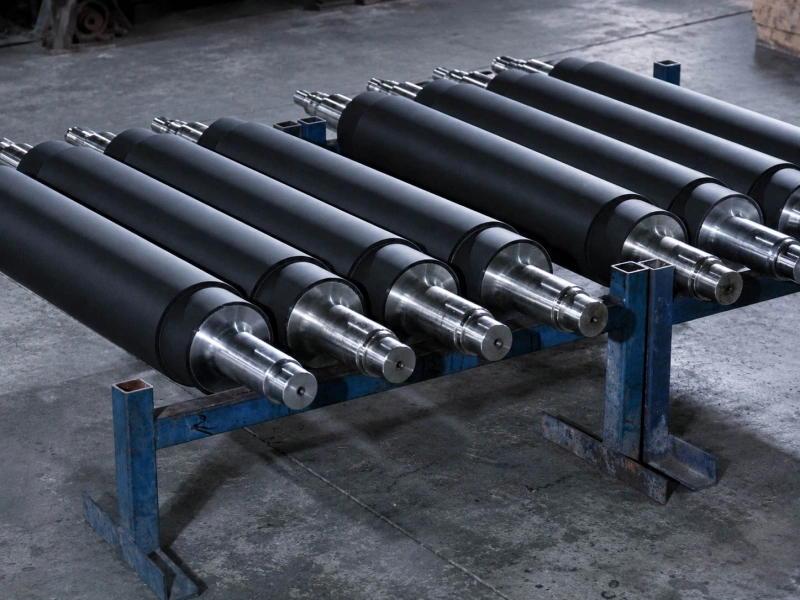
Fine Lines After Cooling or Polishing Contact
Fine lines on plastic sheet may appear as straight roller lines, light scratches, narrow gloss changes, or repeated contact traces. They are easier to see on polished, transparent, glossy, or decorative surfaces.
The timing matters. If the sheet looks acceptable before cooling or polishing contact and shows lines immediately after that area, the roller surface should be checked before changing unrelated process settings. Look at the roller face under light, check whether dust or resin build-up is present, and compare the line direction with the roller contact path.
Warm sheet surfaces are more sensitive to contact. A roller that does not mark a fully cooled product may still leave visible lines when the sheet surface is warmer, softer, or held longer at the contact point. Surface finish also matters. A cover that is too rough, unevenly ground, glazed, or locally contaminated can transfer a line pattern onto the sheet.
For sheet and board positions where roller contact directly affects surface appearance, Wolorin’s Plastic Sheet and Board Processing Rollers page can be used as the main application reference.
When the Sheet Slips Even After Pressure Adjustment
Traction problems often show up as start-up slip, uneven pulling, short hesitation, speed mismatch, or drag marks after the haul-off area. On thicker sheet, the roller must move more mass and keep contact stable without crushing the surface.
Raising pressure may improve grip for a short time. If the sheet then starts showing pressure marks or gloss bands, the contact is still not balanced. The better check is to look at grip, hardness, surface finish, wrap or contact condition, and whether the roller is driven.
If the issue is mainly feeding, pulling, or speed synchronization, the Traction Rollers direction is usually relevant. If the roller receives power and transfers motion through its surface, the Drive Rollers direction may also need to be checked.
For higher-load sheet positions, Polyurethane Rubber Rollers are often reviewed because traction, wear resistance, and load support may need to work together. The material direction still has to follow the actual roller position, sheet temperature, pressure, and surface requirement.
Pressure Imprints on Warm or Heavy Sheet
Pressure imprints may look like shallow dents, compression bands, flat marks, or lines across the sheet. They are common when a heavy or warm sheet passes through a contact area that is too concentrated.
A useful field check is to compare the mark with pressure changes. If lowering pressure reduces the imprint but makes traction worse, the line is asking for a better contact condition, not simply more or less pressure. Check the contact width, roller hardness in Shore A, cover thickness, and whether the paired roller or metal roll has local wear.
For warm sheet, temperature at the contact point matters. A pressure setting that works after full cooling may leave marks when the surface is still soft. Line speed also changes dwell time. At slower speed, the sheet stays in contact longer. At higher speed, vibration or surface friction may become more visible.
When the main concern is controlled nip contact, pressure balance, or surface protection, Pressure Rollers are the more relevant roller direction to review.
Left-to-Right Contact Difference Across Wide Board
Wide sheet and board can expose contact problems that are easy to miss on narrow material. One side may pull harder. One edge may show marks. The center may look different from both sides. In some cases, the sheet surface changes gloss only across part of the width.
Start by comparing the left, center, and right side after the same roller. If the defect is stronger on one side, check pressure balance, roller parallelism, bearing condition, shaft support, and whether the cover has uneven wear. If the mark is stronger in the center or near both edges, crown, cover deflection, and support condition may need attention.
Old roller photos help here. A worn edge, shiny working band, local flat spot, or uneven surface color can show how the contact has been running. If the same width-related mark returns after regrinding or replacement, the review should include runout, crown direction, face length, mounting condition, and the actual sheet width used on the line.
Gloss Bands, Haze, or Shine After Polish Rolls
Polish roll marks are not always deep marks. Many times, they appear as gloss bands, haze changes, slight shine difference, or visible lines under angled light. Operators may first suspect material quality or polishing setup, but the contact surface should also be checked when the change appears right after a roller.
For polished plastic sheet, small differences in roller surface finish can become visible. If the rubber surface has become glazed, locally hardened, swollen, contaminated, or uneven after cleaning, it can change the way light reflects from the sheet surface. If the issue becomes clearer after several hours of running, heat, friction, and surface build-up may be involved.
Surface finish should be discussed in practical terms. If the drawing has an Ra requirement, use it. If not, photos of the old roller surface and the sheet defect are often more useful than a generic surface description. For basic contact positions, SBR Rubber Rollers may be considered in some general industrial conditions, while higher-load or higher-wear positions may need another compound direction.
Handling Marks on Protected or Visible Surfaces
Some sheet and board products leave the main process looking acceptable, then pick up marks during support, transfer, inspection, stacking preparation, or downstream movement. This is common on protected surfaces, decorative boards, glossy sheet, transparent sheet, and products where the final visible side touches several rollers.
The first check is to locate the point where the surface becomes sensitive. After that point, every repeated contact should be treated as a possible marking position. Look for local drag, edge scuffing, contact shine, dust carried on the roller surface, and marks that return after cleaning.
For protected or visible surfaces, the roller should support movement without turning support contact into a surface defect. Hardness, surface finish, cover cleanliness, pressure, and the local contact angle all matter. Two rollers with the same rubber name may behave differently because of compound direction, bonding, curing, grinding, and actual running load.
Quick Checks Before Replacing the Roller
Before replacing a roller, match the visible problem with the first useful check. This helps avoid changing the same roller again without solving the contact condition.
| What you see on the sheet | First useful check | Roller detail worth confirming |
|---|---|---|
| Fine lines after cooling contact | Does the line start after one roller? | Surface finish, contamination, grinding direction |
| Slip after pressure adjustment | Does more pressure create marks? | Hardness, grip, driven condition, contact width |
| Warm-surface pressure imprint | Does the mark change with sheet temperature? | Shore A hardness, cover thickness, pressure balance |
| One-side marking on wide board | Is one edge heavier than the other? | Parallelism, wear pattern, runout, crown |
| Gloss band after polish roll | Does the band appear under angled light? | Ra requirement, glazing, build-up, roller cleanliness |
| Protected surface scuffing | Does the mark return after cleaning? | Surface finish, contact angle, local pressure |
For higher-demand projects, Wolorin’s Quality Control page can be used to understand inspection items such as hardness, key dimensions, surface condition, surface roughness, and runout.
Related Pages
- Plastic Sheet and Board Processing Rollers — Main application page for plastic sheet and board roller positions.
- Traction Rollers — For stable grip, pulling, feeding, and speed synchronization.
- Drive Rollers — For powered roller positions where motion transfer matters.
- Pressure Rollers — For controlled nip contact, pressure balance, and surface protection.
- Polyurethane Rubber Rollers — Often reviewed where grip, wear resistance, and load support are important.
- SBR Rubber Rollers — A common material direction for some basic industrial contact positions.
Custom Roller Manufacturing and Quality Control
A reliable rubber roller is not only about size. Compound direction, hardness stability, cover thickness, surface finish, shaft structure, and running accuracy all affect how the roller performs on the line.
Wolorin supports both routine replacement rollers and more demanding custom roller projects, with manufacturing, inspection, and documented quality checks matched to the project requirements. You can review our service scope, quality control process, and company background below.
Request a Quote
If you already have drawings, sizes, samples, or a clear specification, you can send them to us directly. We can proceed with custom manufacturing, quotation, or production confirmation based on your documents.
If the information is not complete yet, you can still start with the roller position, sheet or board material, thickness, surface temperature after cooling or polishing, line speed, and the issue you want to solve.