
Common Slitting and Rewinding Problems
When a slitting and rewinding line starts showing wrinkles before rewinding, repeat marks, unstable edges, loose or hard roll areas, slipping, or tension swings, the defect often becomes visible near the rewind section. The cause may have started earlier. After the web is slit, each strip has less width to stabilize itself, the edge condition changes, and small differences in guiding, traction, nip pressure, static, or surface friction can show up as finished roll problems.
The scope here stays with roll quality and web handling around slitting and rewinding: roller contact, tension change, pressure distribution, edge stability, surface condition, contamination, and rewind contact. Blade setup, slitter design, and full machine control are separate topics. The practical starting point is simple: find where the problem first appears, then compare it with the closest roller contact, tension zone, pressure point, and rewind position.
If the problem appears near the rewind, traction, guide, pressure, or tension area, the related roller positions are covered in Slitting and Rewinding Line Rollers.
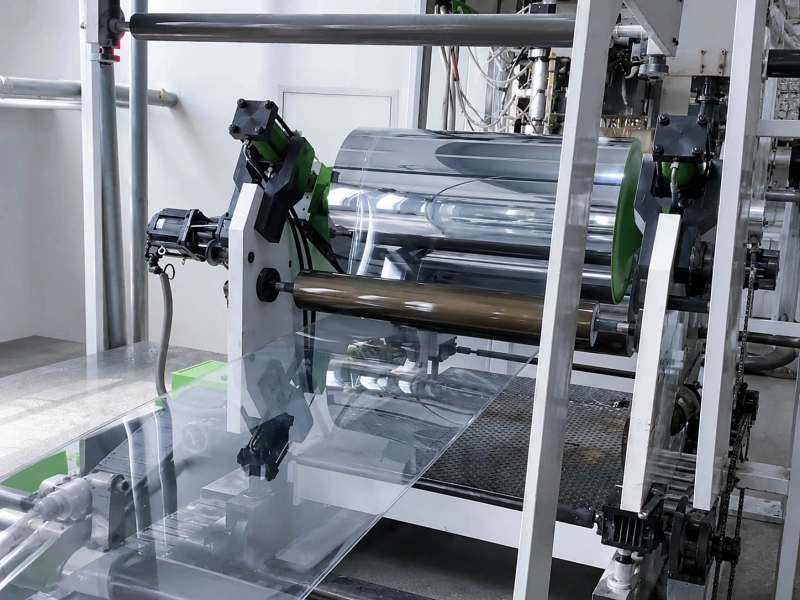
Wrinkles before rewinding
Wrinkles before rewinding usually start before the finished roll is formed. The web may look acceptable after slitting, then begin to fold, wave, or tighten unevenly as it enters the rewind section. Thin film, release film, protective film, flexible packaging web, foil, and coated materials are especially sensitive because small changes in tension or friction can quickly show on the surface or edge.
Start with the wrinkle path. If it stays close to one edge, look at edge guiding, slit edge quality, one-side pressure, and roller alignment. If it moves across the width, check tension stability, web spreading, static, and surface friction. If it appears only after speed increases, the line may be reaching a stability limit around traction, air entrainment, wrap angle, or rewind contact.
Around guide and tension zones, the first checks are roller alignment, surface cleanliness, bearing condition, runout, and whether one side of the roller is carrying more contact than the other. If the wrinkle begins near a tension-sensitive position, Tension Control Rollers should be reviewed together with the surrounding guide and traction rollers.
The old roller can often give useful signs. Uneven dust lines, adhesive build-up, a polished band, one-side wear, surface hardening, cuts, dents, or a clear contact difference across the face can explain why the web starts to fold before it reaches the rewind roll.
Repeat marks on the roll
Repeat marks on the roll should be checked by spacing first. If the distance between marks is close to the circumference of a nearby roller, contact roll, lay-on roll, core, or rewind position, the mark is usually linked to a repeating contact point rather than a random surface issue.
A simple shop-floor check is useful here: roller circumference is about π × diameter. A 100 mm roller gives one full turn at about 314 mm. A 150 mm roller gives one full turn at about 471 mm. A 200 mm roller gives one full turn at about 628 mm. If the repeat mark spacing is close to one of these values, that roller position should be inspected early.
Common roller-side causes include a dirty spot, flat area, nick, dent, local hardness change, surface build-up, poor grinding finish, runout, or pressure point that repeats once per revolution. In slitting and rewinding, some marks are made before the roll is finished, then become more obvious as more layers are wound. The finished roll can amplify small contact marks, especially on glossy film, coated web, thin paper, foil, and flexible packaging materials.
Check three things together: repeat distance, mark direction, and where the mark first becomes visible. If the mark appears after a lay-on or pressure contact, Pressure Rollers should be checked for roundness, surface condition, hardness stability, pressure balance, and contamination. If the mark repeats at the same interval after cleaning, roller replacement, grinding, or re-covering, the issue may be deeper than surface dirt. The roller cover direction, grinding accuracy, bonding condition, or pressure setting may need a closer look.
Uneven winding pressure
Uneven winding pressure usually shows as hard and soft zones, loose layers, crushed edges, telescoping, one side building tighter than the other, or a roll that changes shape after handling. This type of problem is often linked to the way tension, nip pressure, roll diameter growth, air removal, and layer-to-layer friction work together during rewinding.
Do not look only at the final roll. The important question is how the roll was built. If one side of the contact roller leaves heavier marks, or the finished roll is always tighter on the same side, the roller contact condition should be checked before changing only tension settings. If the problem becomes worse as roll diameter increases, the lay-on contact, pressure balance, and wound-in tension should be reviewed together.
If the winder records tension or taper, send those numbers with the problem. We do not need them to judge the whole control system; we use them to see when the roll starts to change. For example, a record showing starting tension, ending tension, taper percentage such as 10%, 25%, or 40%, and the roll diameter when the defect begins can help connect the roll shape to contact pressure and roller behavior.
The roller check should focus on contact balance across the face. A surface that is too hard can create pressure marks or crushed edges. A surface that is too soft may deform under load and make the roll structure unstable. Uneven wear, poor roundness, shaft or bearing problems, surface contamination, and inconsistent rubber hardness can also create pressure changes as the roll grows.
For standard rewinding work, mature rubber directions are often enough once the size, position, hardness, and material contact are clear. For sensitive film, coated web, adhesive web, high-speed rewinding, or repeated roll quality problems, the roller cover, grinding accuracy, surface finish, and pressure contact need to match the actual line condition more closely.
Tracking or edge instability
Tracking or edge instability usually appears as edge wandering, uneven roll edges, poor slit strip alignment, side-to-side movement, or one lane building differently from another. After slitting, the web strips are narrower and less forgiving. A small alignment difference, surface friction change, static effect, or tension imbalance can move the edge enough to affect the finished roll.
Start from the first unstable point. If the edge is already unstable immediately after slitting, slit edge condition and web tension should be checked. If the edge starts moving around a guide section, Guide Rollers should be checked for alignment, bearing condition, runout, surface cleanliness, and one-side build-up. If the edge movement becomes stronger near rewinding, look at lay-on contact, pressure balance, roll diameter growth, and whether the web is slipping before it reaches the rewind roll.
Thin film, release film, protective film, laminated film, and flexible packaging web can react quickly to small friction differences. Related line conditions can be compared with Film Converting Rollers and Flexible Packaging Rollers when the material is surface-sensitive or tension-sensitive.
A guide roller with build-up on one side, uneven surface wear, poor roundness, wrong surface finish, or bearing resistance can pull the web slightly. That small pull may not look serious before slitting, but after the web is divided into narrower lanes, it can become visible as edge instability or poor roll edge build-up.
Web slipping
Web slipping in slitting and rewinding often appears as unstable speed, poor tension response, edge shift, polished contact bands, scratched surfaces, loose winding, or a roll that cannot build evenly. It often happens around traction, drive, nip, or rewind contact positions, but the visible defect may show up later on the finished roll.
The first check is the contact point where the web should be moving together with the roller. If the web slips there, look at surface contamination, worn or polished rubber, pressure setting, wrap angle, roller hardness, surface finish, and whether the roller speed and web speed are actually matching. A rough wrap angle record helps. A web touching a roller at about 30°, 90°, or 180° does not create the same grip condition. If the same material runs well at low speed but starts slipping after speed, roll diameter, or load increases, the grip margin is probably too small.
For dry traction, repeated friction, high load, or short service life positions, Traction Rollers and the cover material should be checked early. If the old cover is worn smooth, losing diameter, shedding particles, or losing grip under load, Polyurethane Rubber Rollers are often a practical direction to review.
PU is most useful when the job is mainly grip, wear resistance, and load. When the same roller also touches adhesive, oil, solvent, heat, wet media, or a very mark-sensitive product surface, the answer may move toward another rubber compound or a different surface finish. In those cases, the roller must balance grip with release, chemical contact, heat behavior, cleanliness, and surface protection.
Tension fluctuation
Tension fluctuation is one of the most common reasons behind slitting and rewinding problems. The line may show wrinkles, edge movement, slipping, uneven roll hardness, loose layers, or sudden changes when speed increases. The problem often becomes clearer as the roll diameter grows, because winding contact and wound-in tension are changing during the run.
Check where the tension change starts. If it is already unstable before slitting, the issue may come from the upstream web, unwind, or process tension. If it appears after slitting, look at strip width, lane-to-lane tension difference, guide contact, friction, and whether one strip is pulling differently from the others. If it becomes obvious near rewinding, check lay-on pressure, contact roller behavior, roll diameter growth, air removal, and slipping between layers.
If the line has tension records, do not only send the final setting. The useful information is the change: starting tension, ending tension, taper percentage if available, roll diameter when the problem begins, and the line speed at that moment. Even when Wolorin is only reviewing the roller side, these numbers help connect the defect to roller contact, grip, pressure, and surface behavior.
A stable roller cannot fix every tension problem by itself. But poor roller contact can make a small tension issue much worse. Uneven surface grip, local contamination, bearing resistance, poor roundness, old rubber hardening, or a cover that no longer matches the web can turn minor tension movement into visible roll quality problems.
Quick Review Table
| Problem seen on the line | What the pattern often suggests | Roller-related check |
|---|
| Wrinkles before rewinding | Edge instability, tension change, static, spreading issue, early contact difference | Guide/tension zone, roller alignment, build-up, one-side pressure, uneven surface contact |
| Repeat marks on the roll | Repeating contact point, roller circumference, runout, local surface defect | Measure mark spacing; compare with roller circumference such as 314 mm for Ø100 mm or 471 mm for Ø150 mm |
| Uneven winding pressure | Poor roll build, nip imbalance, wound-in tension change, air or layer movement | Lay-on/contact pressure, roller hardness, roundness, surface deformation, left/right pressure balance |
| Tracking or edge instability | Guide alignment, slit strip instability, friction difference, one-lane tension change | Guide roller alignment, bearing condition, runout, surface cleanliness, one-side build-up |
| Web slipping | Low grip margin, contamination, pressure loss, wrong surface condition, speed mismatch | Traction point, surface wear, wrap angle, pressure, hardness, PU or other compound direction |
| Tension fluctuation | Diameter growth effect, drag, slip, unstable contact, lane-to-lane tension difference | Tension/contact rollers, surface friction, bearing resistance, roundness, grip consistency |
What to Send for a Slitting and Rewinding Problem Review
- Web material: film, paper, foil, nonwoven, flexible packaging web, coated web, adhesive web, or another roll material
- Where the problem first appears: before slitting, after slitting, guide section, traction point, pressure contact, or rewind section
- Photos or short video showing the starting point of the wrinkle, mark, slip, edge movement, or tension change
- Repeat mark spacing if marks appear at a fixed interval, such as 314 mm, 471 mm, 628 mm, or another measured distance
- Roller position, diameter, face length, hardness if available, surface finish, and whether the roller is rubber-covered, PU-covered, or metal
- Approximate wrap angle around the slipping or traction roller if available, such as about 30°, 90°, or 180°
- Whether the issue changes with speed, tension, pressure, roll diameter, web width, material thickness, temperature, or product grade
- Starting tension, ending tension, taper percentage, line speed, and roll diameter when the problem begins, if your line records these values
- Old roller photos showing wear, contamination, adhesive build-up, dents, cuts, surface polishing, edge wear, or uneven contact marks
- Whether the problem appeared after cleaning, roller replacement, grinding, re-covering, machine adjustment, material change, or width change
Related Pages
- Slitting and Rewinding Line Rollers — Roller requirements for traction, guiding, pressure contact, tension control, and rewind quality in slitting and rewinding lines.
- Tension Control Rollers — For web tension stability, roll diameter changes, edge movement, and unstable rewinding behavior.
- Guide Rollers — For web path control, edge stability, tracking problems, and guide-section contact.
- Pressure Rollers — For pressure contact, repeat marks, winding pressure, contact balance, and surface protection.
- Traction Rollers — For web grip, slipping, speed synchronization, and stable material movement.
- Polyurethane Rubber Rollers — For dry abrasion, grip, load, and repeated friction positions.
Custom Roller Manufacturing and Quality Control
A reliable rubber roller is not only about size. Compound direction, hardness stability, cover thickness, surface finish, shaft structure, and running accuracy all affect how the roller performs on the line.
Wolorin supports both routine replacement rollers and more demanding custom roller projects, with manufacturing, inspection, and documented quality checks matched to the project requirements. You can review our service scope, quality control process, and company background below.
Request a Quote
If you already have drawings, dimensions, samples, or clear specifications, you can send them directly to us. We can use them for customization, quotation, or production confirmation.
If the information is not complete, you can also start with old roller photos, roller position, web material, contact media, and the current slitting or rewinding problem. For wrinkles, repeat marks, slipping, edge instability, or tension fluctuation, photos and a short video of where the problem first