Why Does Material Stick to Rubber Roller Surfaces?
When film, foil, paper, nonwoven, coated stock, adhesive layer, ink, or residue starts picking up at one contact point, the line usually shows it quickly: dirty transfer, drag marks, uneven coating, web pull, or repeated cleaning stops. The first useful checks are simple. Look at what is building up, where it first appears, what the roller touches, and whether the problem changes with pressure, speed, temperature, or cleaning.
The practical boundary is narrow: focus on cases where roller contact, surface condition, web tension, pressure, contamination, media contact, temperature, or cleaning method changes the sticking behavior. For coating, laminating, transfer, and metering positions, the problem often needs to be checked together with the roller surface and the process material.
What is sticking or building up
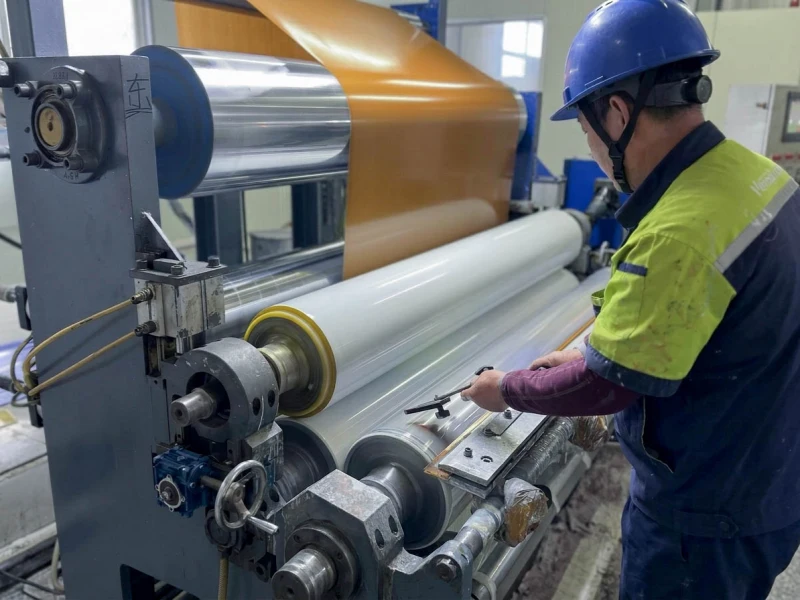
Start with the material on the roller surface. Different build-up points to different checks.
Wet adhesive, soft coating, ink, paper dust, plastic film residue, release agent, cleaning residue, and powder contamination behave differently on the line. Some materials smear and spread. Some collect at the roller edge. Some only appear after heat, pressure, drying, or repeated contact.
The location matters. Build-up near a transfer point points toward media transfer and surface release. Build-up after a nip area points toward contact pressure, temperature, or a softened layer. Build-up that repeats across the roller face can point toward surface finish, contamination, roller runout, or uneven contact.
Adhesive, ink, coating, or residue contact
Adhesive and coating contact should be checked before changing the roller material. A roller may look “too sticky,” while the real trigger is a change in adhesive viscosity, coating solids, drying condition, release layer, cleaning interval, or line temperature.
On Transfer Rollers, the roller surface often contacts liquid, coating, glue, ink, or another process medium. If the material transfers too much, releases poorly, or leaves a film on the surface, check the medium first: viscosity, tack, solvent content, curing state, and whether the roller is touching the material at the right stage.
For metering or coating-control positions, build-up can also affect coating weight and streaks. A dirty or poorly releasing surface can change the contact zone, even if the roller is still round and running. In these cases, the issue is usually clearer after checking the roller position, contact pressure, process material, and the pattern of build-up together.
Surface finish and release behavior
Surface finish often decides whether a material releases cleanly or starts to hold on. A surface that is too rough can trap coating, adhesive, fiber, or powder. A surface that is too smooth for the job can create suction, smearing, or poor separation under pressure.
Release behavior is not only about the rubber name. The same general rubber type can behave differently after grinding, polishing, matte finishing, surface aging, swelling, or repeated cleaning. For sensitive films, coated materials, and adhesive contact, the surface needs to match the way the web separates from the roller.
When sticking appears after a new roller, re-grinding, re-covering, or a cleaning change, check the finish first. For release-oriented contact, Solid Silicone Rollers are often one direction to review, especially where heat resistance, surface protection, and lower sticking tendency are important.
Cleaning liquid and temperature
Cleaning can solve build-up, but it can also create it. A cleaner that leaves residue, attacks the rubber surface, softens the cover, or changes surface energy can make the next run stick faster.
Temperature makes the problem more visible. Adhesive can become tackier. Coating can soften. Ink or residue can smear. Some rubber covers also change surface feel after repeated contact with heat, solvent, oil, or cleaning liquid.
Useful checks include:
- What cleaning liquid is used
- Whether the roller feels tacky after cleaning
- Whether the sticking starts immediately or after the line warms up
- Whether the build-up is worse near heated, dried, laminated, or high-pressure sections
- Whether the old roller surface has swelling, softening, cracking, glazing, or color change
If solvent, oil, heat, or aggressive cleaning is involved, FKM Rubber Rollers may need to be reviewed. For general oil, ink, adhesive, and common industrial liquid contact, NBR / Nitrile Rubber Rollers are often part of the early screening direction.
Roller material direction: LSR, solid silicone, NBR, FKM
The rubber direction should follow the contact condition, not only the material name on the old roller. A standard replacement can often start from a mature material direction once size, position, hardness, surface finish, and contact media are clear. More demanding positions need closer matching of compound direction, bonding, surface processing, and roller accuracy.
LSR can be considered where clean contact, fine surface behavior, and lower residue risk are important. Liquid Silicone Rollers are more relevant when the project needs a cleaner surface direction, lower transfer risk, or a more controlled release surface.
NBR is commonly checked for oil, ink, adhesive, and general liquid contact. FKM becomes more relevant when heat, solvent, oil, or more aggressive media are present.
The old roller still matters. If two rollers both say “NBR” or “silicone” but one sticks faster, check surface finish, hardness, grinding quality, aging, swelling, contact pressure, and cleaning history.
When this is a roller issue vs process/cleaning issue
A sticking problem deserves closer roller review when it repeats around the same roller position, starts after a roller change, becomes worse after grinding or cleaning, follows the same contact width, or changes clearly with pressure, speed, temperature, or web tension.
Process and cleaning should stay in the review when the build-up changes with adhesive batch, coating viscosity, drying condition, cleaning liquid, line temperature, product surface, or release film. In real production, both sides often interact. A process material with higher tack may expose a roller surface problem that was not obvious before. A roller surface that is already aged, swollen, glazed, or contaminated may make a normal coating material stick more easily.
The best starting point is usually the failed surface itself: old roller photos, build-up location, material type, cleaning liquid, temperature zone, and where the sticking first appears on the line.
Troubleshooting Table / Checklist Module
| What You See on the Line | Common Direction to Check | Roller-Side Check |
|---|---|---|
| Adhesive builds up on one contact roller | Tack, viscosity, drying stage, pressure | Surface finish, release behavior, cleaning residue |
| Ink or coating smears on the roller | Transfer condition, wet film behavior, line speed | Surface roughness, contamination, rubber compatibility |
| Build-up appears after cleaning | Cleaner residue or rubber surface attack | Tacky feel, swelling, softening, glazing |
| Material sticks after heating or drying | Temperature, softened coating, adhesive behavior | Heat resistance, surface aging, rubber direction |
| Build-up repeats across the roller face | Uneven contact, surface condition, pressure pattern | Runout, grinding quality, finish consistency |
| Sticking starts after a new roller or re-grinding | Changed surface finish or hardness | Finish, hardness, surface energy, contact pressure |
| Sticking only appears with one product type | Material surface, release layer, coating chemistry | Whether the roller direction matches that product |
Related Pages
- Coating and Laminating Line Rollers — Roller contact, adhesive transfer, lamination pressure, release behavior, and coating-related roller issues.
- Transfer Rollers — For liquid, adhesive, coating, ink, and process-media transfer positions.
- Metering Rollers — For coating amount, surface consistency, and build-up that affects metering or film thickness.
- Solid Silicone Rollers — For heat, release, anti-sticking direction, and surface protection needs.
- Liquid Silicone Rollers — For cleaner contact, lower residue risk, and controlled surface release direction.
Custom Roller Manufacturing and Quality Control
A reliable rubber roller is not only about size. Compound direction, hardness stability, cover thickness, surface finish, shaft structure, and running accuracy all affect how the roller performs on the line.
Wolorin supports both routine replacement rollers and more demanding custom roller projects, with manufacturing, inspection, and documented quality checks matched to the project requirements. You can review our service scope, quality control process, and company background below.
Request a Quote
If you already have drawings, dimensions, samples, or clear specifications, you can send them directly to us. We can use the information for custom manufacturing, quotation, or production confirmation.
If the information is not complete, you can also start with old roller photos, roller position, product type, contact media, cleaning liquid, temperature zone, and the current sticking problem.