Cover becomes harder after running
Possible cause: Heat aging or media-related material change
Why FKM may be reviewed: FKM may provide better heat and media stability
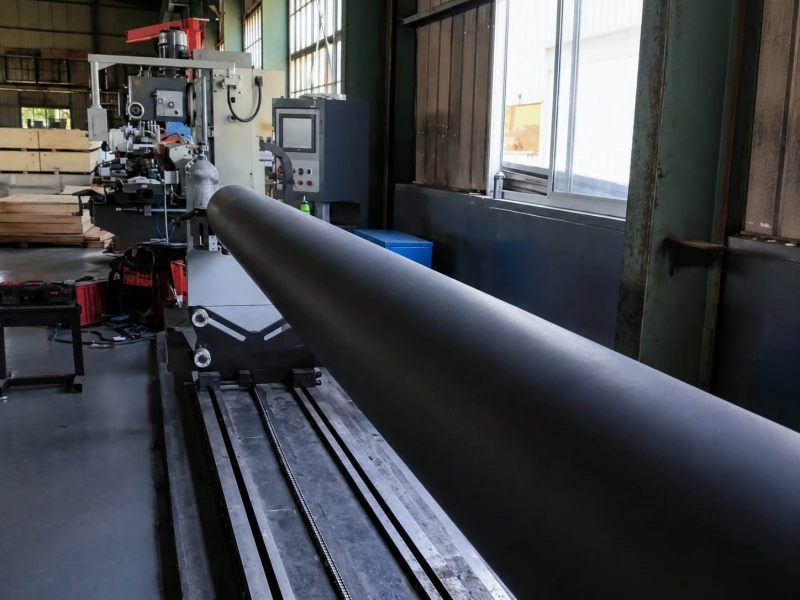
FKM rubber rollers are used when heat, oil, fuel, solvent, or demanding media contact makes standard rubber less stable over time.
In many applications, the roller does not fail immediately after installation. The difference appears after heat, media contact, pressure, and production time begin to change the cover surface.
Common FKM roller application directions include:
continuous higher-temperature operation or long-term heat exposure
contact with oils, fuels, aromatic hydrocarbons, selected solvents, or complex industrial media
roller positions where standard rubber shows swelling, hardening, softening, cracking, or unstable service life
coating, printing, transfer, metering, metal, foil, or heat-affected process positions
Also searched as fluororubber rollers, fluoroelastomer rollers, fluorocarbon rubber rollers, FPM rubber rollers, or Viton equivalent rollers, this material direction is usually reviewed for roller positions where ordinary rubber may age, swell, harden, soften, crack, or lose stable service life too quickly.
You do not need everything ready before contacting us.
FKM should be reviewed earlier when the roller position has already moved beyond normal general-purpose rubber conditions.
If the roller works near a drying section, heated coating area, hot oil, heated material, or another heat-affected position, standard rubber may age faster over time.
The first sign may not be complete failure. It may be a harder cover feel, reduced elasticity, cracking, unstable pressure, or shorter replacement cycle.
FKM becomes more relevant when the roller surface has repeated contact with oils, fuels, aromatic hydrocarbons, selected solvents, ink, coating liquid, resin-related media, cleaning chemicals, or other process fluids.
The key question is not whether the rubber can touch the media once. It is whether the cover can keep its size, hardness, surface condition, and bonding stability after repeated exposure.
If a replacement roller works at first but the same problem comes back after several weeks or months, the issue may not be the dimension alone.
The material may be changing after heat and media exposure. If swelling, hardening, softening, cracking, or short service life appears together with heat or complex media, FKM should be reviewed before copying the old material again.
FKM is worth reviewing when the roller problem looks like material change after heat or media exposure, not only normal mechanical wear.
| Existing roller symptom | Possible cause | Why FKM may be reviewed |
|---|---|---|
| Cover becomes harder after running | Heat aging or media-related material change | FKM may provide better heat and media stability |
| Rubber swells after oil, fuel, or solvent contact | Media enters the rubber and changes its volume | FKM may reduce swelling in suitable media conditions |
| Surface softens or becomes sticky | Material compatibility may be wrong | FKM can be checked against the actual fluid or coating media |
| Cracks appear earlier than expected | Heat, chemical exposure, or mechanical stress may be involved | FKM may help if heat and media are the main causes |
| Roller works at first but becomes unstable later | Long-term exposure changes hardness, size, or surface behavior | FKM should be reviewed before repeating the same material |
| Service life varies from batch to batch | Compound, bonding, or operating-condition match may be unstable | Material direction and production control need closer review |
Possible cause: Heat aging or media-related material change
Why FKM may be reviewed: FKM may provide better heat and media stability
Possible cause: Media enters the rubber and changes its volume
Why FKM may be reviewed: FKM may reduce swelling in suitable media conditions
Possible cause: Material compatibility may be wrong
Why FKM may be reviewed: FKM can be checked against the actual fluid or coating media
Possible cause: Heat, chemical exposure, or mechanical stress may be involved
Why FKM may be reviewed: FKM may help if heat and media are the main causes
Possible cause: Long-term exposure changes hardness, size, or surface behavior
Why FKM may be reviewed: FKM should be reviewed before repeating the same material
Possible cause: Compound, bonding, or operating-condition match may be unstable
Why FKM may be reviewed: Material direction and production control need closer review
These symptoms should be checked together with temperature, media type, pressure, line speed, cover thickness, paired roller condition, and cleaning method.
FKM is a fluoroelastomer material family used when a roller cover needs better resistance to heat, oil, fuel, selected solvents, or demanding media contact.
In roller projects, FKM should be treated as a material direction. The final result still depends on the compound, hardness, cover thickness, bonding, surface finish, operating temperature, and actual contact media.
This material may also appear in drawings or old specifications as FPM, fluororubber, fluoroelastomer, fluorocarbon rubber, Viton-type rubber, or Viton equivalent. These names help with communication, but the working condition still needs to be checked before confirming the compound.
The figures below are reference directions for FKM roller review. They should not be treated as fixed promises for every roller project.
| Review item | Common reference direction | What it means for roller projects |
|---|---|---|
| Cover hardness | commonly around 55–90 Shore A | Used for medium-to-high hardness covers where contact stability and media resistance matter |
| Typical service temperature direction | around -20°C to 200°C; some compounds around 204°C | Useful as a starting point, but not enough to confirm a roller alone |
| Higher-temperature compound direction | some projects may review around 225°C–270°C | Must be checked by exposure time, media contact, pressure, bonding, and safety margin |
| Common media direction | oils, fuels, aromatic hydrocarbons, selected solvents, and complex industrial media | Often the main reason FKM is reviewed instead of standard rubber |
| Limitation direction | hot water, steam, ketones, esters, amines, alkaline fluids, or some polar solvents may need separate review | FKM should not be treated as universal chemical-resistant rubber |
| Low-temperature behavior | standard FKM may not be the best direction when low-temperature flexibility is the priority | A special compound or another material direction may be needed |
Common reference direction: commonly around 55–90 Shore A
What it means for roller projects: Used for medium-to-high hardness covers where contact stability and media resistance matter
Common reference direction: around -20°C to 200°C; some compounds around 204°C
What it means for roller projects: Useful as a starting point, but not enough to confirm a roller alone
Common reference direction: some projects may review around 225°C–270°C
What it means for roller projects: Must be checked by exposure time, media contact, pressure, bonding, and safety margin
Common reference direction: oils, fuels, aromatic hydrocarbons, selected solvents, and complex industrial media
What it means for roller projects: Often the main reason FKM is reviewed instead of standard rubber
Common reference direction: hot water, steam, ketones, esters, amines, alkaline fluids, or some polar solvents may need separate review
What it means for roller projects: FKM should not be treated as universal chemical-resistant rubber
Common reference direction: standard FKM may not be the best direction when low-temperature flexibility is the priority
What it means for roller projects: A special compound or another material direction may be needed
For rubber rollers, temperature data alone is not enough. Exposure time, cover thickness, bonding stress, surface requirement, and actual media contact usually decide whether the selected compound can stay stable in production.
FKM should not be treated as a universal upgrade. The practical question is whether the roller position needs FKM, or whether another material direction is more suitable.
| Material direction | More suitable when the main issue is | Be careful when |
|---|---|---|
| FKM | heat, oil, fuel, selected solvent, and complex media stability | steam, hot water, ketones, esters, amines, or low-temperature flexibility are the main concern |
| NBR / nitrile rubber rollers | general oil, ink, adhesive, and ordinary industrial media contact | temperature or media exposure is clearly beyond standard oil-resistance conditions |
| solid silicone rollers | heat, release, anti-stick behavior, soft contact, and surface protection | oil, fuel, or aggressive media resistance is the main concern |
| PU | wear resistance, load, grip, traction, and mechanical life | solvent, oil, or high-temperature media stability is more important than wear |
| EPDM | ozone, weathering, moisture, hot water, steam, and some general chemical environments | oil, fuel, or hydrocarbon contact is the main concern |
More suitable when the main issue is: heat, oil, fuel, selected solvent, and complex media stability
Be careful when: steam, hot water, ketones, esters, amines, or low-temperature flexibility are the main concern
More suitable when the main issue is: general oil, ink, adhesive, and ordinary industrial media contact
Be careful when: temperature or media exposure is clearly beyond standard oil-resistance conditions
More suitable when the main issue is: heat, release, anti-stick behavior, soft contact, and surface protection
Be careful when: oil, fuel, or aggressive media resistance is the main concern
More suitable when the main issue is: wear resistance, load, grip, traction, and mechanical life
Be careful when: solvent, oil, or high-temperature media stability is more important than wear
More suitable when the main issue is: ozone, weathering, moisture, hot water, steam, and some general chemical environments
Be careful when: oil, fuel, or hydrocarbon contact is the main concern
If a roller is slipping because the surface finish and pressure are wrong, FKM will not automatically fix the grip. If roller marks come from hardness, crown, or pressure distribution, FKM alone will not solve the pressure problem.
Material direction matters, but roller design and operating condition still need to match.
The examples below show how FKM is usually reviewed in real roller conditions. They are not fixed formulas, but they help narrow down the material direction.
A roller works close to a drying section or heated coating area. The old roller can run at first, but after a period of production, the cover becomes harder, the surface loses stability, and coating contact becomes less consistent.
In this type of position, FKM may be reviewed if heat exposure and coating media are both involved. The review should include working temperature, exposure time, coating liquid, cover hardness, cover thickness, bonding condition, and surface finish.
Related review pages: Coating and Laminating Line Rollers, metering rollers, transfer rollers.
A roller works with ink, solvent-related media, or cleaning chemicals. The surface begins to swell, soften, glaze, or lose stable contact after repeated operation.
If the media is beyond ordinary oil or ink contact, FKM may be more suitable than a standard NBR direction. If the main issue is only basic oil resistance, NBR may still be the more practical first review.
Related review pages: Printing Industry Rollers, NBR / nitrile rubber rollers.
A roller works near metal strip, foil, oil film, process lubricant, or heat-affected contact. The old cover shows hardening, cracking, surface wear, or short service life.
If the main issue is wear and load, PU may be reviewed earlier. If the main issue is heat plus oil or media exposure, FKM becomes more relevant.
Related review page: Foil and Metal Strip Processing Rollers.
Different FKM roller descriptions usually come from different working conditions. The wording may change, but the review should still return to the real roller position.
| Common description | Usually points to | What should be checked |
|---|---|---|
| High-temperature FKM roller | Heat-affected roller position | Temperature, exposure time, cover thickness, bonding, surface stability |
| Oil-resistant FKM roller | Oil, lubricant, or hydrocarbon contact | Media type, exposure time, swelling risk, hardness change |
| Fuel-resistant FKM roller | Fuel or fuel-related media contact | Fuel type, contact pattern, safety margin, cover stability |
| Solvent-resistant FKM roller | Selected solvent or solvent-based media contact | Solvent type, concentration, cleaning method, surface change |
| Chemical-resistant FKM roller | More complex media exposure | Exact media, concentration, temperature, compatibility review |
| FKM transfer roller | Ink, coating liquid, adhesive, or media transfer | Transfer stability, surface finish, hardness, media resistance |
| FKM metering roller | Controlled coating or liquid amount | Surface consistency, hardness, runout, media compatibility |
| Viton equivalent roller | FKM-type material direction requested by name | Actual compound, operating condition, and whether brand-specific material is required |
Usually points to: Heat-affected roller position
What should be checked: Temperature, exposure time, cover thickness, bonding, surface stability
Usually points to: Oil, lubricant, or hydrocarbon contact
What should be checked: Media type, exposure time, swelling risk, hardness change
Usually points to: Fuel or fuel-related media contact
What should be checked: Fuel type, contact pattern, safety margin, cover stability
Usually points to: Selected solvent or solvent-based media contact
What should be checked: Solvent type, concentration, cleaning method, surface change
Usually points to: More complex media exposure
What should be checked: Exact media, concentration, temperature, compatibility review
Usually points to: Ink, coating liquid, adhesive, or media transfer
What should be checked: Transfer stability, surface finish, hardness, media resistance
Usually points to: Controlled coating or liquid amount
What should be checked: Surface consistency, hardness, runout, media compatibility
Usually points to: FKM-type material direction requested by name
What should be checked: Actual compound, operating condition, and whether brand-specific material is required
This table is only a starting point. A real FKM roller should still be confirmed by drawings, old roller details, or operating conditions.
Before production, the review should not stop at “make it with FKM.” The working condition should be checked first.
Useful information includes:
roller diameter and face length
shaft end and mounting structure
old roller material, hardness, and cover thickness if available
current working temperature and heat exposure time
contact media name, concentration, and cleaning method if known
whether the roller contacts oil, fuel, solvent, ink, adhesive, coating liquid, resin, or process lubricant
surface requirement, such as smooth, matte, ground, release-oriented, or traction-oriented
current failure symptoms, such as swelling, hardening, softening, cracking, sticking, glazing, debonding, or short service life
whether the roller is used as a metering roller, transfer roller, pressure roller, drive roller, guide roller, or another process roller
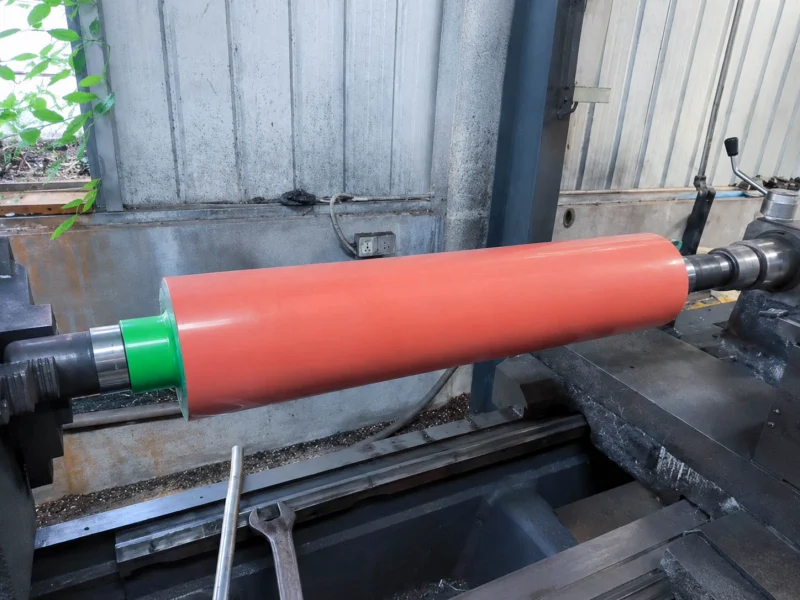
If only partial information is available, the project can still begin from the most basic details: roller position, temperature, contact media, and current problem.
These pages are useful when the FKM material direction needs to be checked together with roller position or application environment.
For ink, coating liquid, adhesive, oil, or process media transfer.
Metering RollersFor controlled coating amount, liquid film behavior, and surface consistency.
Pressure RollersFor nip contact, pressure behavior, surface protection, and heat-affected contact.
Coating and Laminating Line RollersFor coating media, drying sections, adhesive transfer, laminating contact, and release-related review.
Printing Industry RollersFor ink contact, solvent-related media, transfer behavior, and media resistance.
Foil and Metal Strip Processing RollersFor foil, metal strip, oil film, surface protection, and heat- or media-related contact.
NBR / Nitrile Rubber RollersFor more common oil, ink, adhesive, and general industrial media contact.
Solid Silicone RollersFor heat, release, anti-stick behavior, and surface protection where FKM is not the first direction.
You can continue by material category, roller function, or application type.
Viton is often used as a familiar search or specification term for FKM-type rubber materials. For production, it is better to confirm whether the project requires a specific brand material or only a Viton-equivalent FKM material direction.
FKM should be reviewed when the roller position goes beyond ordinary oil resistance and involves higher temperature, fuels, aromatic hydrocarbons, selected solvents, or more complex media. For standard oil, ink, or general industrial media contact, NBR may still be the more practical first review.
No. FKM is useful for many oil, fuel, solvent, and hydrocarbon-related conditions, but it is not universal. Steam, hot water, ketones, esters, amines, alkaline fluids, or some polar solvents may need separate material review.
A reliable rubber roller depends on more than size matching. Compound formulation, hardness stability, cover thickness, surface finish, shaft structure, and running accuracy all affect how the roller performs on your line.
Wolorin supports both routine replacement roller projects and more demanding custom industrial rubber roller projects, with established manufacturing experience, production equipment, inspection equipment, available certificates, and documented quality checks. Our rubber compound formulation system can be matched to different operating requirements.
Before shipment, key items such as cover hardness, shaft details, surface condition, and running accuracy can be checked according to project requirements.
You can review our manufacturing scope, quality control process, and company background through the pages below.
If you already have drawings, samples, an existing roller, or current specifications, you can send them directly to us for quotation.
If your information is not yet complete, you can also start by sharing the roller position, working temperature, contact media, and current problem. The project can also begin from this basic information.