Custom Nonwoven Processing Rollers
Nonwoven processing lines may include guiding, traction, spreading, pressing, laminating, slitting, rewinding, and other continuous web handling positions. Roller requirements depend not only on speed and width, but also on whether the material is light, bulky, fibrous, static-sensitive, easy to mark, or sensitive to winding tension.
When the roller is not well matched to the actual position, customers may start to see tracking instability, wrinkles, fiber dust buildup, sticking, pressure marks, slippage, or uneven winding.
Wolorin custom manufactures industrial rubber rollers for nonwoven production and converting lines, based on the material type, roller position, web width, line speed, contact condition, and the issue you are trying to solve.
You do not need to prepare a full drawing first. You can start with the roller position, material type, web width, current problem, or old roller photos.
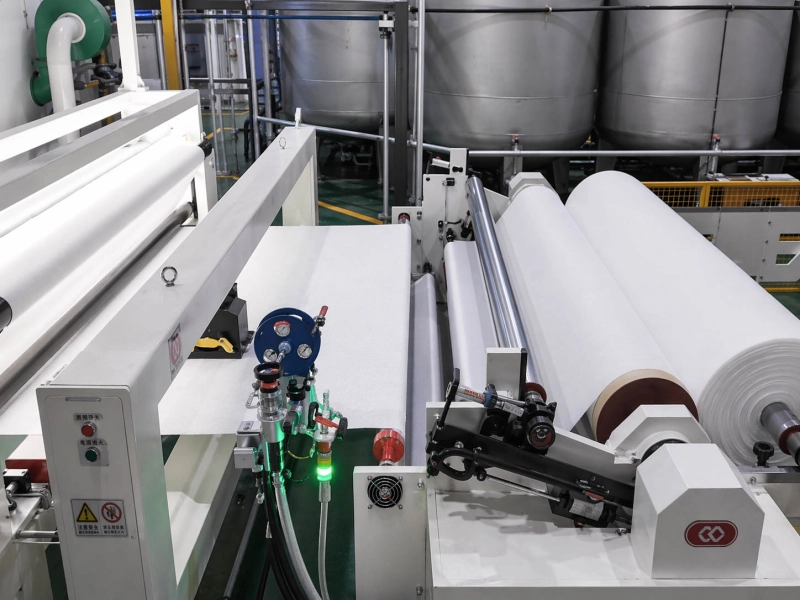
Rollers for Nonwoven Web Handling and Processing Lines
Nonwoven lines may process spunbond, meltblown, spunlace, needle-punched, air-through, filtration, hygiene, wiping, composite, and other technical fibrous web materials.
These lines commonly include:
Unwinding and continuous web transport
Guiding and alignment positions
Spreading and wrinkle control
Thermal bonding, calendering, laminating, or surface treatment
Slitting, rewinding, and final winding
Although some of these positions may look similar to film, paper, or flexible packaging converting, nonwoven materials usually behave differently. Fiber structure, dust, static attraction, bulk compression, edge stability, and winding tension can all affect roller selection.
Depending on the actual position, customers may also need to review guide rollers, tension control rollers, pressure rollers, or anti-static / conductive rubber rollers.
Common Problems on Nonwoven Lines
| Line Issue | What You May See on Site | Roller Review Focus |
|---|---|---|
| Tracking instability / edge movement | Wide web does not stay centered, or edge position keeps changing | Surface consistency, shaft fit, guiding stability |
| Static attraction | Web sticks to the roller, attracts dust, or does not release smoothly | Anti-static or static-dissipative rubber, surface resistance, grounding condition |
| Wrinkles / cross-web unevenness | Wrinkles appear before laminating, slitting, or winding | Spreading method, surface friction, web tension balance |
| Fiber dust buildup | Fiber, lint, or dust collects on the roller surface | Surface finish, cleanability, lower adhesion tendency |
| Slippage / unstable feeding | Web speed is not synchronized, or the material becomes loose or stretched | Grip level, hardness, wear resistance, contact pressure |
| Pressure marks / thickness change | Bulky nonwoven is locally compressed or visibly marked | Rubber hardness, elasticity, pressure uniformity |
| Uneven winding | Roll edge is unstable, roll tightness varies, or wrinkles appear in the wound roll | Stable contact before winding, friction consistency, tension support |
For mature and stable positions, a proven compound and surface finish may continue to work well. For high-speed, wide-width, bulky, hygiene, filtration, or static-sensitive nonwoven lines, the roller should usually be reviewed according to its actual position on the line.
Common Roller Positions on Nonwoven Lines
Different roller positions require different rubber, surface, and structural choices.
Guide roller positions
Used for web direction control, edge stability, and smooth tracking through the line.
Traction / feed roller positions
Used where the roller needs enough grip to move the web without slipping or pulling it unevenly.
Spreader roller positions
Used to reduce cross-web wrinkles before laminating, slitting, rewinding, or other downstream processes.
Pressing / laminating positions
Used where pressure uniformity, suitable elasticity, and surface protection are important.
Anti-static roller positions
Used where static attraction, dust adhesion, web sticking, or unstable release affects production.
Pre-winding contact positions
Used to help the web enter winding more smoothly and reduce uneven roll tightness.
Hygiene and Wiping Materials: Static and Dust Control
Hygiene nonwovens, wiping substrates, and wet wipe base materials are often light, soft, and sensitive to surface cleanliness.
If the roller surface attracts dust, builds up static, or causes the web to stick, it may affect feeding, slitting, folding, or winding.
For these positions, the roller review may include:
Anti-static or static-dissipative rubber
A cleaner, lower-adhesion surface
Stable contact pressure for lightweight web
Consistent surface friction and finish
Spunlace and Needle-Punched Nonwovens: Bulk and Mark Control
Spunlace, needle-punched, and thicker nonwoven materials may be more bulky or compressible.
When these materials pass through contact or pressure positions, the roller should help reduce local compression, pressure marks, and thickness variation.
For these positions, the roller may need:
Softer or more elastic rubber compounds
Suitable rebound for bulky web
More uniform pressure distribution
A surface finish that does not leave visible marks
Filtration Media and Composite Nonwovens: Stable Handling and Bonding
Filtration materials, laminated nonwovens, and technical nonwoven webs often require better dimensional stability, layer consistency, surface protection, and winding quality.
For these positions, the roller may need:
Stable guiding to reduce edge movement
Uniform pressure in laminating or bonding positions
Rubber materials suitable for heat, adhesive, or coating contact
Stable friction before winding to reduce uneven roll tightness
Key Parameters for Custom Nonwoven Rollers
These are the main points we usually review when customizing rollers for nonwoven lines.
| Parameter | Common Direction for Nonwoven Applications |
|---|---|
| Hardness | Softer contact or pressure-mark-sensitive positions may use approximately 30–60 Shore A. Traction, wear-resistant, or stable feeding positions may use approximately 60–85 Shore A. Final hardness depends on web weight, bulk, pressure, and speed. |
| Surface resistance | For static-sensitive positions, anti-static or static-dissipative rubber may be considered. A common discussion range can be around 105–109 Ω/sq, depending on the line, grounding condition, and material requirement. |
| Surface finish | Smooth, fine-ground, matte, textured, grooved, release-oriented, or traction-oriented surfaces can be selected according to grip, cleanability, release, and web protection needs. |
| Running accuracy | Wide, faster, or pre-winding positions may require closer control of roundness, runout, dynamic balance, and surface consistency. |
| Roller structure | Roller diameter, face length, cover thickness, shaft design, mounting method, and load condition should match the actual line position. |
| Pressure distribution | Pressing, calendering, laminating, and pre-winding contact positions should be reviewed for pressure uniformity to reduce marks, uneven bonding, or winding instability. |
Nonwoven Applications We Can Support
Wolorin can custom manufacture rubber rollers for different nonwoven processing and converting applications, including:
Spunbond nonwoven processing lines
Meltblown nonwoven post-treatment lines
Needle-punched nonwoven lines
Hygiene material nonwoven converting
Wiping cloth and wet wipe substrate processing
Filtration media and technical nonwoven processing
Nonwoven laminating, slitting, rewinding, and winding lines
If your material is a fibrous, bulky, static-sensitive, or tension-sensitive continuous web, we can also review the roller requirement based on the actual working condition.
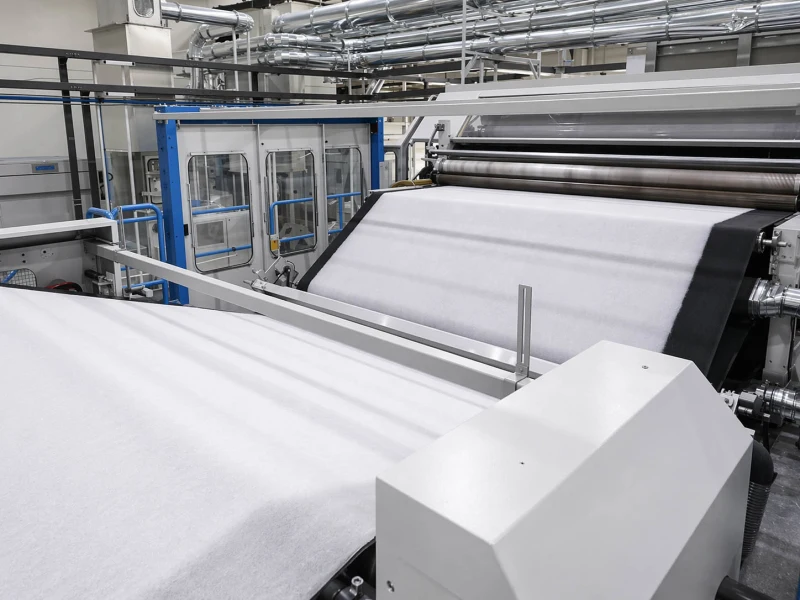
Common Roller Types and Materials for This Application
If your review is focused on a more specific roller function or material direction, these related pages may help:
Custom Roller Manufacturing, Formulations, and Quality Control
A reliable rubber roller depends on more than size matching. Compound formulation, hardness stability, cover thickness, surface finish, shaft structure, and running accuracy all affect how the roller performs on your line.
Wolorin supports both routine replacement roller projects and more demanding custom industrial rubber roller projects, with established manufacturing experience, production equipment, inspection equipment, available certificates, and documented quality checks. Our rubber compound formulation system can be matched to different operating requirements.
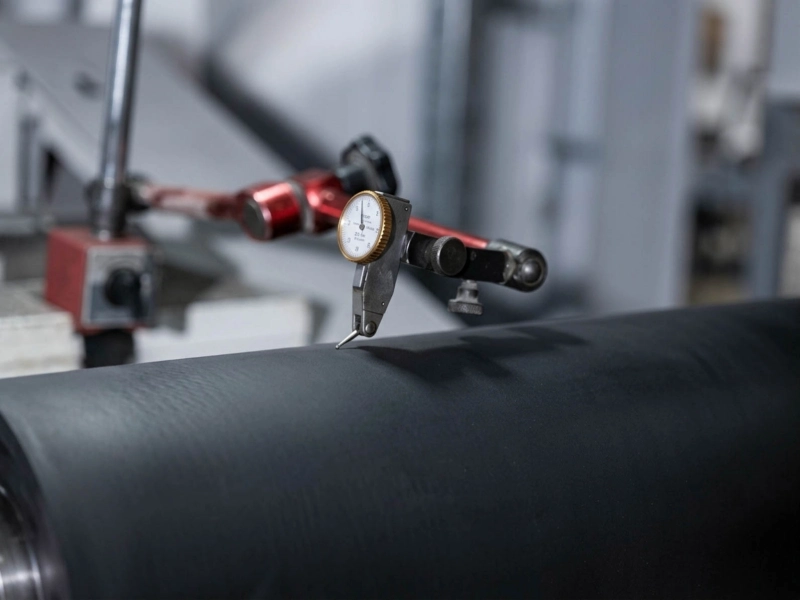
Before shipment, key items such as cover hardness, shaft details, surface condition, and running accuracy can be checked according to project requirements.
You can review our manufacturing scope, quality control process, and company background through the pages below.
Contact Us About Your Nonwoven Roller Requirement
If your nonwoven line is dealing with tracking problems, static attraction, fiber dust buildup, pressure marks, slippage, or uneven winding, you can start with the roller position and current production issue.
Drawings and dimensions can also be sent directly for custom production.