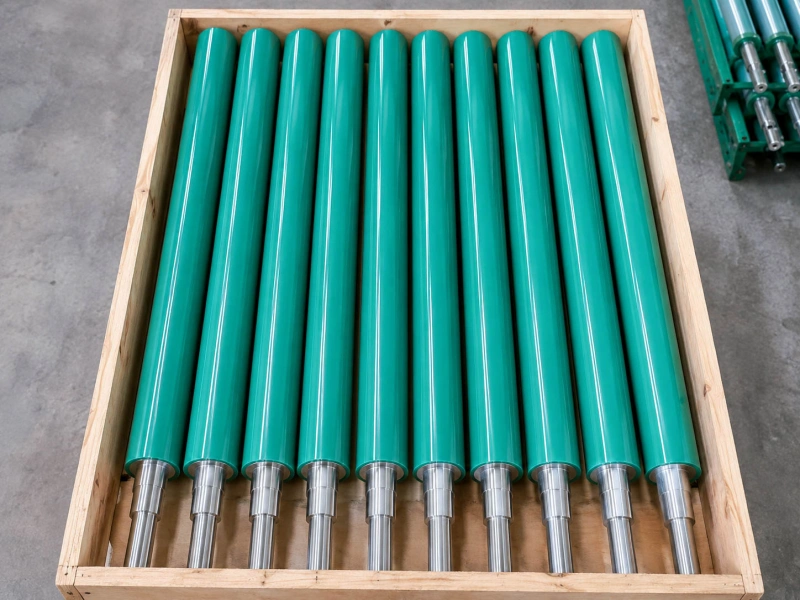
Custom Cleaning and Sticky Rollers
Cleaning rollers, dust removal rollers, and sticky rollers are used to remove dust, fibers, powder, fine particles, and loose contaminants from the surface of films, sheets, paper, nonwovens, foil, and other web materials.
They are commonly installed before coating, laminating, printing, slitting, rewinding, casting, or other surface-sensitive processes. A properly selected cleaning roller helps reduce coating spots, trapped particles, bubbles, surface marks, and contamination inside the finished roll.
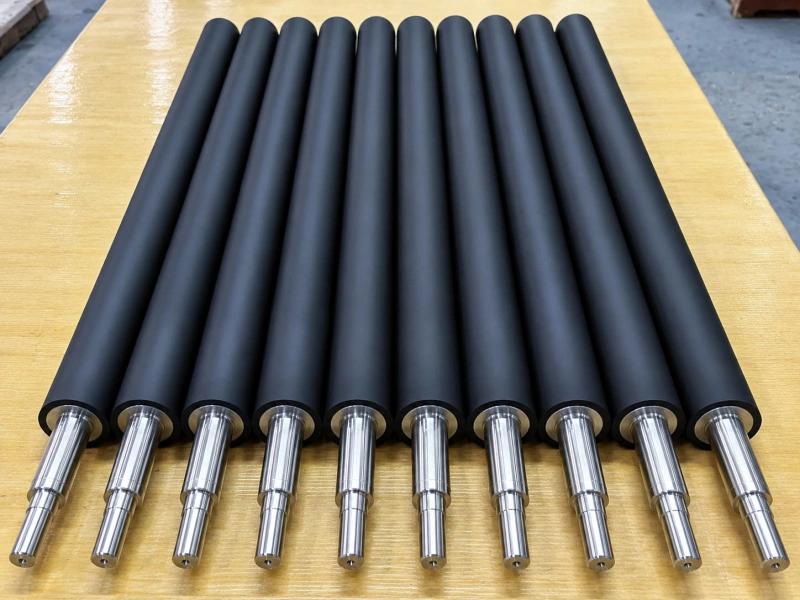
Wolorin can customize cleaning rollers, sticky rollers, cleaner rollers, and cleaning rubber rollers based on your existing roller, drawing, sample, installation space, or actual production condition.
Where These Rollers Are Used
| Customer or Line Type | Common Surface Issue | How the Roller Helps |
|---|---|---|
| Film processing lines | Dust or fine particles before coating, laminating, slitting, or rewinding | Removes loose particles before they affect the next process |
| Protective film and release film lines | Small contaminants trapped during lamination or winding | Helps control surface cleanliness before contact-sensitive steps |
| Coating and laminating lines | Particles causing coating spots, bubbles, or raised defects | Reduces loose contamination before coating or lamination |
| Printing and label lines | Paper dust, fibers, or particles affecting ink transfer | Cleans the web before it enters the printing contact area |
| Nonwoven processing lines | Fibers, powder, dust, and loose attachments | Helps remove loose surface contamination through contact cleaning |
| Paper and board converting lines | Paper dust, edge dust, and loose surface contaminants | Reduces dust before printing, coating, converting, or winding |
| Foil and plastic sheet lines | Particles or foreign matter before surface treatment or rewinding | Lowers the risk of scratches, trapped particles, or roll contamination |
These rollers are most useful when the material surface is already sensitive and the next process can turn small particles into visible defects.
What Affects the Cleaning Result
The result does not depend only on how sticky the roller surface is. In most cases, the key factors are contamination type, material surface, contact pressure, line speed, and how the collected contamination is removed from the roller.
Contamination Type
Loose dry particles, dust, fibers, paper dust, powder, and static-attracted particles may require different surface directions.
If the problem is adhesive residue, ink residue, resin buildup, glazing, or film-like contamination on the roller, it should be reviewed as a surface condition or release problem, not only as dust removal.
Material Surface Sensitivity
Film, optical film, release film, protective film, foil, nonwoven, paper, and coated materials react differently to tackiness and pressure.
The roller needs enough contact to pick up contaminants, but not so much that it creates marks, dents, pulling, scratches, or adhesive transfer.
Tackiness, Hardness, and Pressure
Too little tackiness may leave particles on the material.
Too much tackiness may pull the web, pick up material, leave marks, or make the roller dirty too quickly.
Contact pressure should also be controlled. Too little pressure may cause unstable contact; too much pressure may press particles into the material surface.
Contamination Transfer and Maintenance
Many contact cleaning systems use an elastomer cleaning roller together with an adhesive roll, adhesive paper, cleaning pad, or contamination trap roll.
If the collected contamination stays on the roller surface, it may be transferred back to the material later and cause secondary contamination.
Reference Parameters for Cleaning Roller Selection
Exact specifications should be confirmed according to the actual roller position, but these parameters are useful starting points.
| Parameter | Common Reference Direction |
|---|---|
| Hardness | Contact cleaning elastomers may use around 55 Shore A as a reference; other positions may require adjustment |
| Particle Control | Often used for dust, fibers, powder, and loose particles; some contact cleaning rollers are designed for unattached particles around 1 μm level |
| Line Speed | Public contact web cleaning systems often show reference speeds around 250–400 m/min |
| Cleaning Width | Customized according to web width and installation space; public system references include 250–650 mm, 700–1300 mm, and up to 2500 mm |
| Cleaning Method | Elastomer contact roller, sticky roller, adhesive roll, adhesive paper, cleaning pad, or similar structure |
| Surface Requirement | Low shedding, non-scratching, stable contact, controlled tackiness, and reduced secondary transfer risk |
These are not fixed standards. For a real project, the roller should be reviewed together with the material surface, contamination type, line speed, installation space, and maintenance method.
Common Material and Surface Directions
| Requirement | Common Material / Surface Direction |
|---|---|
| Gentle surface cleaning | Silicone, soft elastomer, or low-damage contact surface |
| Sticky dust and particle pickup | Elastomer surface with controlled tackiness |
| High-speed film cleaning | Low-shedding surface with stable contact consistency |
| Nonwoven dust and fibers | Consider tackiness, static control, and cleaning frequency |
| Static-attracted dust | Anti-static or conductive material direction may be needed |
| Existing roller replacement | Review old roller hardness, size, surface condition, and current problem |
The material should be selected according to what the roller must do in that position, not by material name alone.
When the Roller Should Be Reviewed Again
If your current cleaning roller has any of the following problems, it may not be enough to simply copy the old roller size:
- Dust or particles remain on the material after cleaning
- The roller surface quickly collects dust, buildup, glazing, or film-like residue
- New marks, pressure points, or scratches appear after the material passes the roller
- The roller transfers contamination back to the material
- Cleaning performance drops after line speed increases
- Static attraction is obvious and a normal sticky roller does not work consistently
In these cases, the final solution may still follow the old roller, or it may require adjustment in material, hardness, tackiness, or surface design.
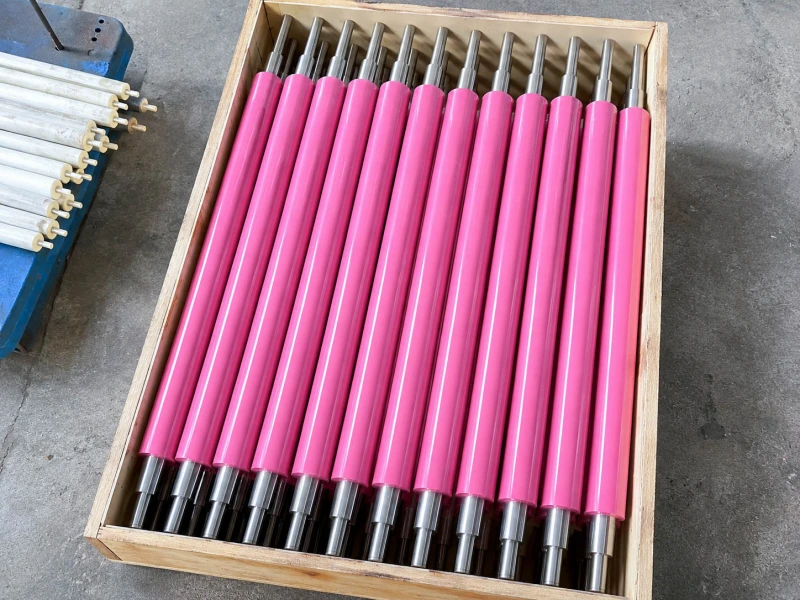
If the Problem Is Not Only Surface Contamination
| What You See | Better Direction to Review |
|---|---|
| Repeated dust attraction or obvious static | Anti-static rollers |
| Contamination, insulation, or discharge issues around corona treatment | Corona rollers |
| Web tracking, wandering, or unstable edge position | Guide rollers |
| Uneven coating or coating transfer problems | Coating rollers / Coating and Laminating Line Rollers |
| Poor release, adhesive pickup, or material sticking | Sticking / release problem review |
| Roller surface glazing, buildup, or film-like contamination | Roller surface condition review |
This helps identify whether the issue belongs to the cleaning roller position or another roller function.
Frequently Asked Questions
No. If the roller is not tacky enough, particles may remain on the material. If it is too tacky, it may pull the material, pick up the web, leave marks, or become dirty too quickly. Tackiness, hardness, pressure, material surface, and maintenance method should be considered together.
Yes, if the old roller has been working well. You can send the old roller size, hardness, surface condition, and shaft details for replacement.
If the old roller already has poor cleaning performance, secondary transfer, buildup, marks, or short service life, it is better to review the working condition before deciding whether to adjust the material, hardness, tackiness, or surface direction.
Request a Quote
If you need custom cleaning rollers, dust removal rollers, or sticky rollers, send us the old roller size, drawings, photos, and current contamination problem.
If the information is not complete, you can still start with the roller position, contact material, contamination type, and site photos.