Main focus
Drive Roller
Active power transmission and surface driving
Traction Roller
Stable pulling, feeding, and material movement
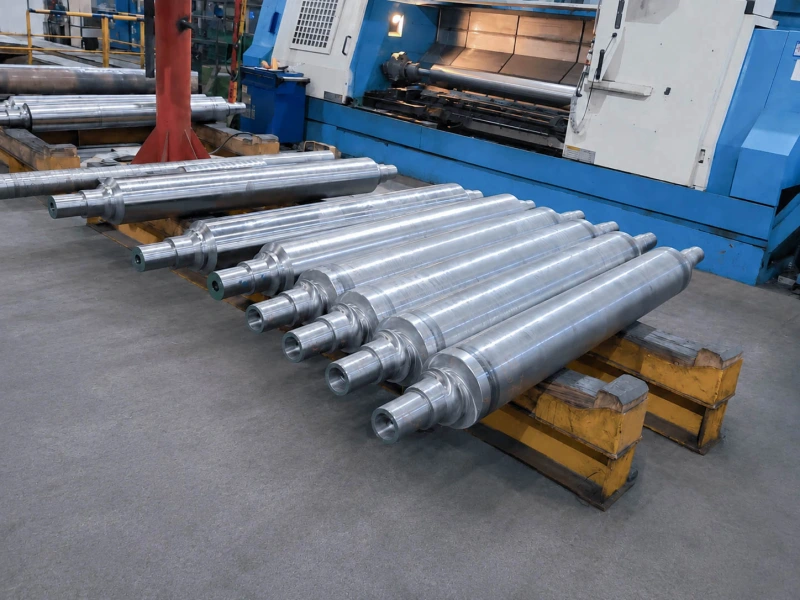
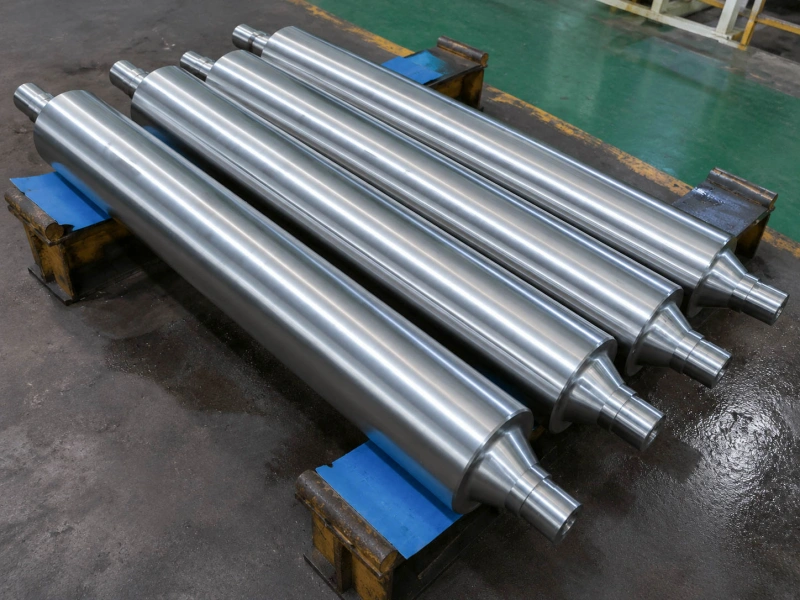
Drive rollers are used in positions where the roller is expected to do more than rotate with the machine. It actively receives power and transfers motion through surface contact to the material, belt, or mating roller.
In these positions, the main question is not only whether the roller can turn. The real question is whether it can keep transmitting motion reliably under actual torque, contact pressure, line speed, and long operating time.
Drive rollers may be referred to as driving rollers, powered rollers, or transmission rollers in some equipment contexts, but the real review point is still the same: how the roller receives power, how the surface transfers that motion, and whether grip and synchronization remain stable in actual production.
Wolorin reviews custom rubber-covered drive rollers based on drawings, old rollers, shaft structure, contact material, drive method, and actual running conditions.
You do not need everything ready before contacting us.
A drive roller is usually used where motion must be transferred through the roller surface in a controlled and repeatable way.
Depending on the equipment, it may be used to:
actively move a material, belt, or mating roller
transfer motion through surface friction
reduce slipping, idle rotation, and speed mismatch
carry repeated torque, friction, and contact pressure
maintain more stable grip over time instead of losing drive too quickly
The key point is not only that the roller turns. The key point is whether it can keep driving force, surface behavior, and motion transfer stable enough for actual production.
Drive rollers and traction rollers are closely related, but the main question is not exactly the same.
| Item | Drive Roller | Traction Roller |
|---|---|---|
| Main focus | Active power transmission and surface driving | Stable pulling, feeding, and material movement |
| Core question | How is motion delivered through the roller surface? | Can the material be pulled forward steadily without slipping? |
| More attention on | Drive source, torque, surface friction, rubber cover loading, synchronization | Grip, contact pressure, feeding stability, speed consistency, web handling |
| Common concerns | Slipping under load, idle rotation, cover wear, speed mismatch | Weak traction, unstable feeding, inconsistent movement, tracking influence |
Active power transmission and surface driving
Stable pulling, feeding, and material movement
How is motion delivered through the roller surface?
Can the material be pulled forward steadily without slipping?
Drive source, torque, surface friction, rubber cover loading, synchronization
Grip, contact pressure, feeding stability, speed consistency, web handling
Slipping under load, idle rotation, cover wear, speed mismatch
Weak traction, unstable feeding, inconsistent movement, tracking influence
If the roller is actively powered and expected to transfer motion through its surface, it is usually closer to a drive roller.
If the main concern is steady pulling, feeding, and traction at the contact position, it is usually closer to a traction roller.
For some continuous web lines, drive-related problems may also need to be reviewed together with traction rollers, tension control rollers, or guide rollers, especially when the instability is not limited to one position.
In many projects, the old roller size is the starting point. That is useful, but it is not always enough for a drive position.
A drive roller usually needs deeper review when:
In these cases, the better question is not only whether the same roller can be made again. The better question is which parts of the old design should be kept, and which parts should be reviewed before replacement.
Compared with ordinary idler rollers, drive rollers require more attention to rubber cover friction, wear resistance, shear resistance, and bonding stability with the metal core.
| Item | What to Confirm |
|---|---|
| Drive method | Shaft-end drive, sprocket, timing belt, gear, coupling, or other drive structure |
| Contact object | Film, paper, foil, fabric, nonwoven, sheet material, belt, or mating roller |
| Typical hardness range | Drive roller covers are commonly selected within 60–95 Shore A; wear-resistant and high-grip directions are often around 70–90 Shore A |
| Softer-contact applications | For materials that are easy to mark or require softer contact, 40–70 Shore A may also be considered |
| Rubber cover requirements | Grip, wear resistance, shear resistance, tear resistance, cover bonding, and long-term friction stability |
| Surface options | Smooth, ground, matte, traction-oriented, grooved, or crowned surface |
| Structural details | Metal core, shaft end, keyway, bearing fit, concentricity, dynamic balance, and rubber cover thickness |
Shaft-end drive, sprocket, timing belt, gear, coupling, or other drive structure
Film, paper, foil, fabric, nonwoven, sheet material, belt, or mating roller
Drive roller covers are commonly selected within 60–95 Shore A; wear-resistant and high-grip directions are often around 70–90 Shore A
For materials that are easy to mark or require softer contact, 40–70 Shore A may also be considered
Grip, wear resistance, shear resistance, tear resistance, cover bonding, and long-term friction stability
Smooth, ground, matte, traction-oriented, grooved, or crowned surface
Metal core, shaft end, keyway, bearing fit, concentricity, dynamic balance, and rubber cover thickness
Higher numbers are not always better.
Hardness, line speed, load, friction coefficient, and contact pressure all need to be confirmed according to the equipment and material. A suitable drive roller is usually a balance between grip, wear resistance, surface protection, and structural stability.
Material choice for a drive roller usually depends on four practical questions:
How much grip is needed?
How much wear will the surface see?
What media may contact the roller?
How stable must the friction behavior remain over time?
Common directions include:
Polyurethane Rubber Rollers — often reviewed where wear resistance, load support, and stronger traction matter
NBR / Nitrile Rubber Rollers — often reviewed for oils, some adhesives, inks, and general industrial media
Neoprene / CR — often used for more general industrial drive positions
EPDM Rubber Rollers — often considered for moisture, ozone, or more open environments
Silicone or other special compounds — reviewed when release behavior, temperature, static control, or product protection also matter
Surface choice also changes the result. Depending on the position, a drive roller may use a smooth ground surface, matte friction surface, traction-oriented finish, grooved surface, or crowned profile.
A drive roller does not automatically become better because the surface is rougher. In many projects, stronger surface texture may improve grip but also increase wear, marking risk, or contamination sensitivity.
In many cases, the first problem is not that the roller stops turning. The roller is still running, but the drive position no longer runs as steadily as it should.
Typical signs include:
the roller turns, but the material or belt does not move as expected
surface grip becomes less stable after some running time
the line works at low speed, but becomes less stable at higher speed
wear, glazing, or local edge damage appears earlier than expected
motion transfer becomes inconsistent between process sections
the same replacement direction keeps leading to the same result
These signs often suggest more than a simple material issue. In many drive positions, the real cause may involve drive load, contact condition, surface behavior, and running accuracy together.
Some drive positions look simple, but they are often more sensitive than they appear.
That is usually because drive performance is not determined by rubber material alone. It may also change with wrap condition, contact pressure, surface wear, running load, and roller accuracy.
In actual production, a drive position may become unstable even when the basic size still looks correct. In many cases, the problem is not whether the roller can turn, but whether motion can still be transferred steadily enough under the real running condition.
This is also why repeating the same replacement by size does not always solve the same drive problem.
Slipping may come from insufficient surface friction, but it may also be related to pressure, wrap angle, surface contamination, cover wear, or load increase over time.
If the motor runs normally but the material, belt, or mating roller is not being driven properly, the first check is usually the real contact condition at the roller surface.
Fast wear does not always mean the rubber is too soft. It may also mean the contact load is too high, the surface form is not well matched, repeated slip is happening, or the actual drive duty is heavier than expected.
Drive rollers are exposed to repeated torque and shear. If the compound direction, cover thickness, metal core preparation, or bonding method is not suitable, delamination, blistering, edge cracking, or local cover failure may appear later.
Micro-slip, wear-driven diameter change, runout, or unstable surface behavior may gradually create speed mismatch between process sections. This may later affect slitting, rewinding, laminating, or feeding stability.
Often reviewed for wear-resistant and higher-traction drive positions.
NBR / Nitrile Rubber RollersOften reviewed for oil-related or general industrial drive contact.
Traction RollersFor positions focused more on pulling and feeding.
Tension Control RollersFor lines where speed stability and controlled running also matter.
Film Converting RollersFor drive-related positions in continuous film lines.
Flexible Packaging RollersFor packaging lines where grip, stability, and product protection must work together.
Slitting and Rewinding Line RollersFor drive-related instability that later affects winding or feeding sections.
In many projects, the terms are used interchangeably.
Generally, a drive roller emphasizes active driving and friction-based surface movement, while a transmission roller emphasizes power transfer. The final judgment depends on whether the roller actively drives something in the equipment.
No.
Polyurethane is often used where wear resistance, grip, and load capacity are important. However, if the application involves oils, ozone, moisture, high temperature, or surface protection requirements, NBR, EPDM, CR, silicone, or other materials may also need to be considered.
No.
Slipping may be related to material selection, but it may also come from hardness, pressure, wrap angle, surface contamination, roller wear, or the drive structure. Changing only the material may not solve the whole problem.
If the old roller has performed well over time, reproducing the same diameter, hardness, surface, and shaft-end structure is usually a direct option.
If the old roller already has slipping, fast wear, or delamination, the replacement should also review the material and surface direction.
A reliable rubber roller depends on more than size matching. Compound formulation, hardness stability, cover thickness, surface finish, shaft structure, and running accuracy all affect how the roller performs on your line.
Wolorin supports both routine replacement roller projects and more demanding custom industrial rubber roller projects, with established manufacturing experience, production equipment, inspection equipment, available certificates, and documented quality checks. Our rubber compound formulation system can be matched to different operating requirements.
Before shipment, key items such as cover hardness, shaft details, surface condition, and running accuracy can be checked according to project requirements.
You can review our manufacturing scope, quality control process, and company background through the pages below.
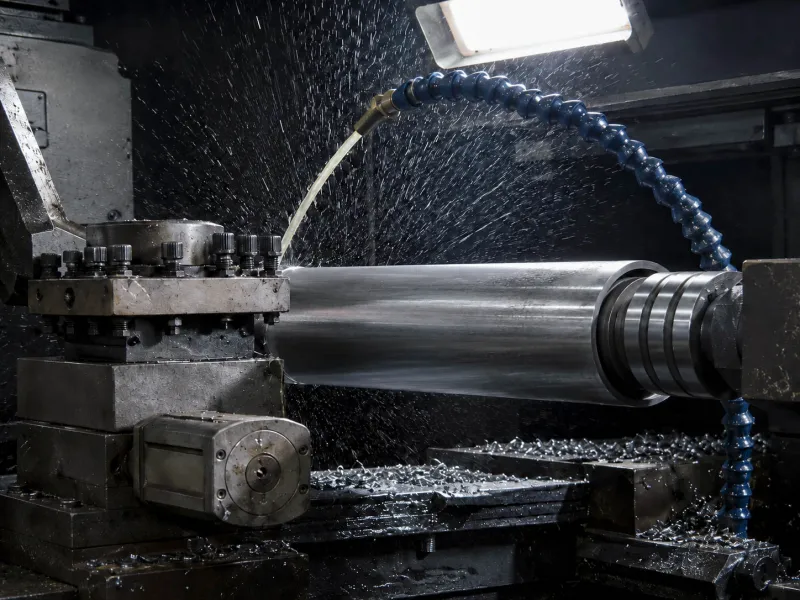
Wolorin can customize rubber-covered drive rollers for drive positions based on existing rollers, drawings, samples, or actual operating conditions.