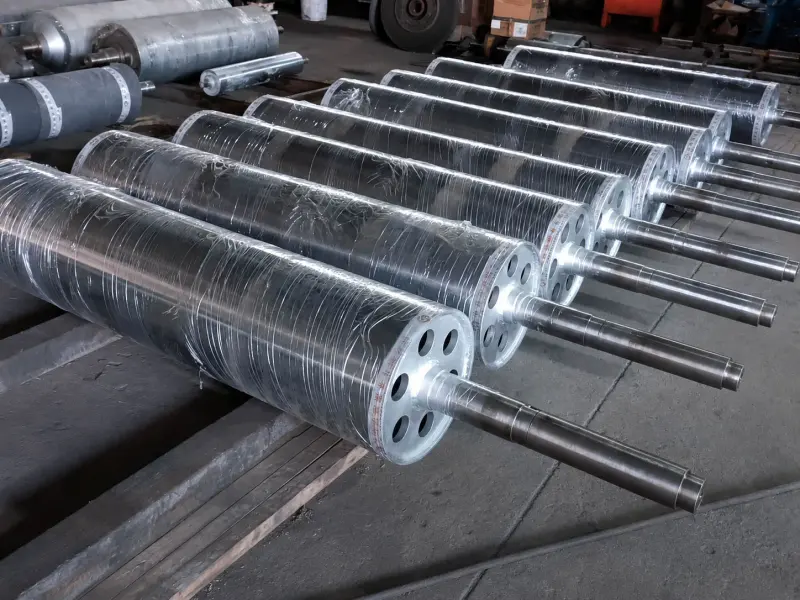
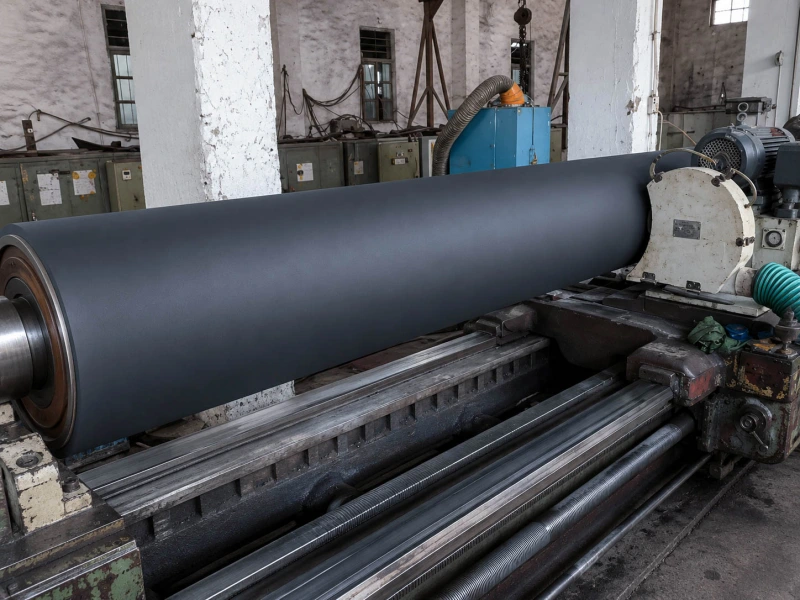
Custom Rubber Traction Rollers
Traction rollers are used in continuous web handling positions. Through controlled contact friction between the roller surface and the material, they help move film, paper, foil, nonwoven, fabric, or other web materials steadily through a specific section of the production line.
The key question is not simply whether the roller can rotate. The real question is whether it can hold the material steadily under the right combination of pressure, hardness, surface finish, and cover material while keeping the web speed synchronized.
Although a traction roller may look like a simple feeding contact point, it can directly affect web stability, tension fluctuation, surface protection, and downstream product quality.
Traction rollers are also commonly referred to as feed rollers, web feeding rollers, pull rollers, or draw rollers. In general, when a roller is responsible for material traction, stable feeding, or speed synchronization, it should be evaluated as a traction roller.
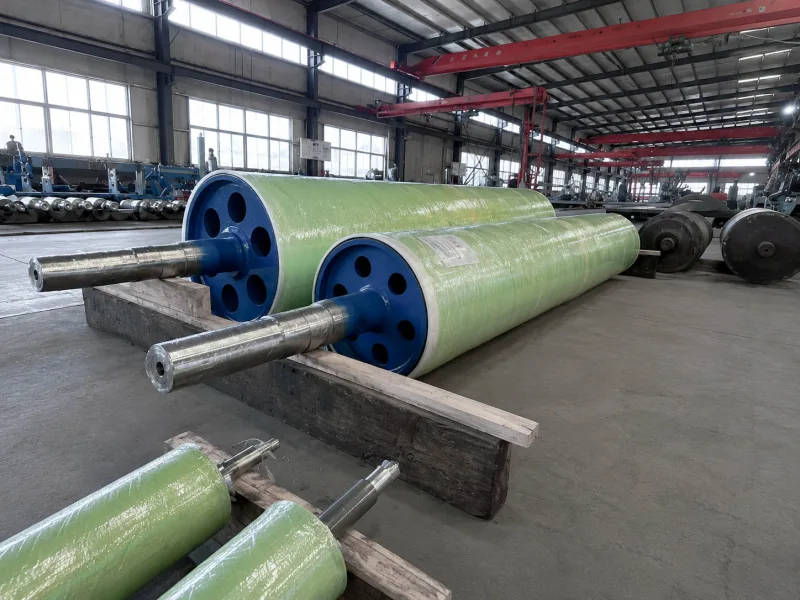
Wolorin can customize industrial traction rollers based on drawings, existing roller specifications, samples, or the actual operating requirements of the roller position.
What Does a Traction Roller Do in a Production Line?
The core function of a traction roller is to provide stable traction — in practical terms, reliable grip between the roller surface and the moving material.
In a production line, it usually helps to:
- Move the material steadily into the next process section
- Reduce slippage between the material and the roller surface
- Synchronize web speed with upstream and downstream sections
- Reduce the effect of tension fluctuation on downstream processes
- Provide enough friction without crushing, scratching, or marking the material
When traction is insufficient, the material may slip, move unevenly, or become unstable before downstream slitting, guiding, or rewinding sections.
Excessive traction is not always better. If the roller surface is too aggressive, the pressure is too high, or the hardness is not suitable, the material may suffer from indentation, abrasion, local stretching, or faster roller surface wear.
A suitable traction roller is not about maximizing friction. It is about maintaining a stable balance between holding the material securely and protecting the material surface.
Key Parameters for Traction Roller Selection
The performance of a traction roller is usually determined by hardness, surface finish, contact pressure, wrap angle, line speed, and the surface condition of the material being handled.
| Parameter | Impact on Traction Performance |
|---|---|
| Hardness | Traction rollers are commonly evaluated in the range of approximately 50–90 Shore A. Softer covers help improve contact conformity, while harder covers offer better shape stability and wear resistance. The final hardness should be confirmed based on pressure, material surface, and indentation risk. |
| Surface Finish | Smooth, matte, traction-oriented, grooved, crowned, or other custom surfaces can affect grip, air or liquid release, material protection, and running stability. |
| Contact Pressure | Insufficient pressure can lead to slipping. Excessive pressure may damage the material surface or accelerate roller wear. |
| Wrap Angle | A smaller wrap angle means less effective contact between the material and the roller surface, which increases the demand for reliable grip. |
| Line Speed and Start-Stop Conditions | High-speed operation, frequent stopping, starting, or acceleration can make slippage and speed synchronization problems more obvious. |
| Material Surface | Smooth film, paper, nonwoven, foil, and fabric all have different requirements for friction, indentation control, and surface protection. |
| Condition of the Existing Roller | If the old roller surface has become glossy, worn, hardened, or locally damaged, its original hardness and surface condition may no longer represent the actual requirement. |
Common Problems
Traction Roller Slipping
Slipping is one of the most common traction roller problems.
Common signs include:
- The material slides on the roller surface
- The roller cannot hold the material during start-up or acceleration
- Motor speed appears normal, but actual web movement is unstable
- Downstream tension fluctuation, tracking issues, unstable slitting, or rewinding problems appear
Common causes include an overly smooth roller surface, surface contamination, unsuitable hardness, insufficient contact pressure, limited wrap angle, or mismatch between the rubber cover and the material being handled.
How to Identify Where the Traction Problem Comes From
A traction roller can directly influence the problems mentioned above, but both roller contact and machine conditions should be checked.
If the roller surface has become glossy, worn, or contaminated, or if the hardness, surface finish, contact pressure, or wrap angle is not suitable, the issue is more likely related to the traction roller.
If the tension control, drive condition, installation accuracy, or material surface has changed, similar symptoms may also occur.
When the issue mainly comes from roller surface grip and contact condition, adjusting the traction roller is usually more effective. If the problem comes from the machine or tension system, it should be evaluated together with the overall line condition.
Roller Wear and Speed Synchronization Issues
Traction rollers work under continuous frictional contact, so wear is a normal operating risk.
However, if the roller surface becomes worn, glossy, contaminated, or locally damaged too quickly, grip will decrease. This can lead to slipping, unstable web movement, and speed synchronization problems.
In this case, material selection, hardness, surface roughness, contact pressure, wrap angle, and roller diameter changes should be reviewed together.
If the existing roller has been used for a long time, copying only the outside diameter and cover material is often not enough. The current operating problem should also be considered before confirming the replacement design.
Common Material and Surface Options
Common traction roller material options include:
- Polyurethane traction rollers: commonly used where wear resistance, grip, load capacity, and service life are important.
- NBR traction rollers: suitable for some oil-contact, printing, adhesive, or general industrial contact environments.
- EPDM traction rollers: suitable for certain weather-resistant, ozone-resistant, humid, or open-air contact positions.
- Silicone traction rollers: suitable where heat resistance, release behavior, surface protection, or special contact performance is required.
Common surface options include:
- Smooth surface: more focused on surface protection
- Matte / traction-oriented surface: more focused on improving grip
- Grooved surface: used for air release, liquid drainage, or improved contact behavior
- Crowned surface: used for contact compensation in some wide-web applications
The options above are common material and surface directions for traction rollers.
If the roller position involves higher temperature, solvents, chemical media, or other more complex operating conditions, FKM, Neoprene, Hypalon / CSM, or other industrial rubber compounds can also be customized according to the actual application, together with the appropriate surface finish.
View Recommended Materials
Difference Between Traction Rollers and Related Functional Rollers
| Functional Roller | Main Role | Difference from a Traction Roller |
|---|---|---|
| Drive Roller | Power input and rotation | A drive roller focuses on powered rotation. A traction roller focuses on whether the roller surface can move the material steadily. |
| Guide Roller | Web path control and edge stability | A guide roller focuses on whether the material tracks correctly. A traction roller focuses on whether the material is pulled or fed steadily. |
| Slitting Roller | Support and web stability during slitting | A slitting roller is evaluated around the knife area, cut edge, and slitting stability. A traction roller focuses on grip and feeding synchronization. |
| Rewinding Roller | Winding contact and roll formation | A rewinding roller focuses on roll shape, lay-on contact, and winding stability. A traction roller affects the web condition before entering the rewinding section. |
Frequently Asked Questions
In many cases, they can be understood in a similar way.
“Feed roller” usually refers to a roller that feeds material into or out of a section. “Traction roller” places more emphasis on grip, stable feeding, and speed synchronization.
If the main issue is slipping, poor grip, or unstable web speed, it is better to evaluate the roller as a traction roller.
No.
A softer rubber cover can conform better to the material, but it may also cause deformation, heat build-up, faster wear, or unstable speed response.
A harder cover is usually more stable and wear-resistant, but if the contact condition is not suitable, it may provide insufficient grip or create indentation risks.
Hardness should be confirmed based on the material surface, pressure, wrap angle, line speed, and indentation requirements.
No.
Polyurethane is common in traction positions where wear resistance, grip, load capacity, and service life are important. However, it is not the fixed answer for every traction roller.
If the application involves heat, oil, weather exposure, release requirements, or surface protection concerns, NBR, EPDM, silicone, or other compound options may be more suitable.
If the old roller has been running stably, replacement based on the existing specifications is usually workable.
If the old roller already shows slipping, fast wear, glossy surface, hardening, indentation, or speed synchronization problems, the material, hardness, and surface finish should be reviewed together with the current operating issue.
Request a Quote
If you already have drawings, dimensions, or existing roller details, you can send them directly for customization.
If the information is not complete, you can also start by sending the operating position, contact material, and current problem. Wolorin will help confirm a suitable material, hardness, surface finish, and structure based on the actual role of the roller in your production line.