Unwinding and web entry
Static-Related Concern: Charge generation, dust attraction, unstable release from the roll
Roller Review Focus: Surface finish, contact pressure, web material, grounding path
Anti-static and conductive rubber rollers are mainly used for charge control, contamination reduction, surface protection, and stable running in electrostatic-sensitive operating conditions.
They are commonly used in contact positions involving films, separators, foils, nonwovens, and other materials that are prone to static buildup, dust attraction, sticking, poor release, or surface damage.
In many projects, the visible problems are dust attraction, sticking, material pickup, localized contamination, surface scratching, or unstable guiding. In many cases, these issues are closely related to static control.
The point is not simply whether the roller is conductive, but whether the roller surface is built for the actual static-control needs of that line position and material.
If you already have drawings or current dimensions, you can send them to us directly.
If not, you can also send us the roller position and the current problem first, and we can help you evaluate the direction.
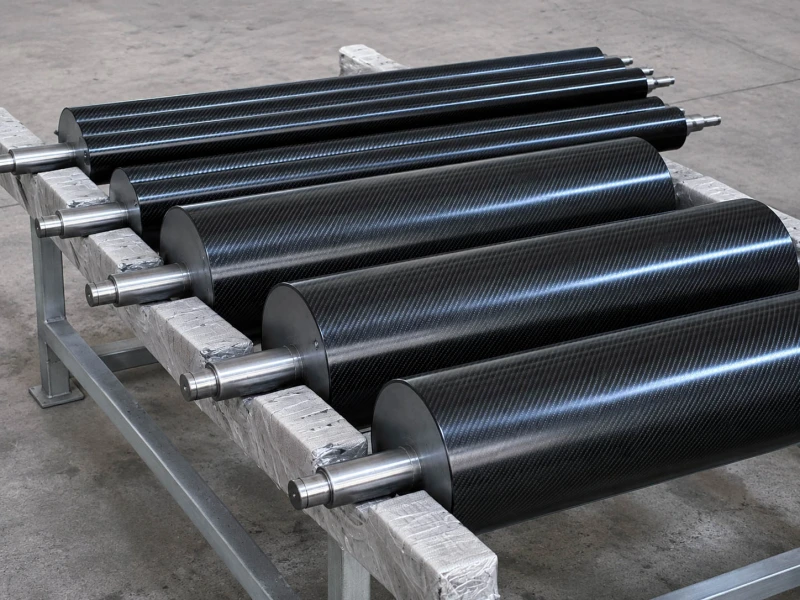
Anti-static or conductive rubber rollers are usually reviewed when static-related behavior starts to create visible production problems.
| Visible Problem on the Line | What It May Indicate |
|---|---|
| Dust is repeatedly attracted to the web or roller surface | Static buildup, surface contamination, or unsuitable contact condition |
| Film, foil, separator, paper, or nonwoven material tends to cling to the roller | Poor charge dissipation, unsuitable release behavior, or excessive contact attraction |
| Particles move with the material and create defects downstream | Static attraction combined with insufficient cleaning or unstable contact |
| Surface marks appear after repeated roller contact | Surface finish, hardness, charge behavior, or local pressure may be mismatched |
| Web movement becomes unstable near guide, tension, cleaning, or rewinding positions | Static buildup may be affecting web path, edge stability, or release behavior |
| The roller works at low speed but becomes unstable at higher speed | Charge generation, friction, pressure, and line speed need to be reviewed together |
| Static problems become worse in dry seasons or dry-room conditions | Lower humidity may make charge control more difficult and resistance behavior less stable |
The first step is not to choose a material name. The first step is to identify where the static-related problem appears and what result it is causing on the line.
This roller type may appear under different names, such as anti-static rubber rollers, conductive rubber rollers, static-dissipative rollers, ESD rubber rollers, static-control rollers, anti-static idler rollers, or conductive web contact rollers.
The name may change, but the review focus is similar: the roller surface needs to control static-related behavior while still matching the material surface, contact condition, resistance target, and grounding path.
Some positions only need to reduce static buildup and dust attraction. Others need more controlled charge dissipation through the rubber cover, shaft, bearing, or machine structure.
Anti-static is more focused on reducing static buildup and lowering the impact caused by static. It is more commonly used in applications where the goal is to reduce dust attraction, sticking, surface contamination, marks, and unstable running.
Conductive is more focused on dissipating electrical charges more quickly. If your roller position has a clear requirement for charge dissipation, this direction is usually more worth considering.
Static-dissipative usually sits between the two. It is not fully insulating, and it is not simply about stronger conductivity. Instead, it helps keep the roller surface in a more balanced static-control condition.
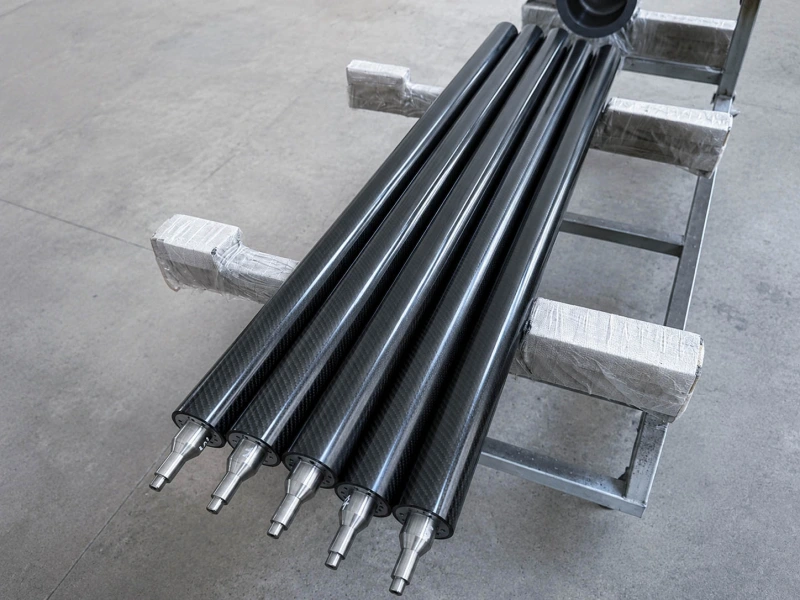
When selecting this type of roller, the first thing to look at is usually not the name itself, but whether you need:
reduced static buildup
faster charge dissipation
more stable static dissipation
Anti-static and conductive roller design should be reviewed by roller position. The same compound may behave differently in different parts of the line.
| Line Position or Application | Static-Related Concern | Roller Review Focus |
|---|---|---|
| Unwinding and web entry | Charge generation, dust attraction, unstable release from the roll | Surface finish, contact pressure, web material, grounding path |
| Idler and support roller positions | Static buildup during web travel and repeated roller contact | Resistance direction, surface condition, bearing path, installation structure |
| Guide and path-control positions | Tracking instability, edge movement, floating web behavior | Surface resistance, roller balance, shaft grounding, surface cleanliness |
| Cleaning and sticky roller positions | Particle pickup, secondary contamination, static-attracted dust | Clean contact, controlled tackiness, anti-static behavior, low shedding |
| Corona treatment area | Static charge after treatment, ozone exposure, discharge-area influence | Correct roller role, surface condition, ozone resistance, insulation or dissipation requirement |
| Coating and laminating lines | Dust in coating, sticking, poor release, surface marks | Material compatibility, release behavior, hardness, cleanliness |
| Slitting and rewinding lines | Charge buildup during separation and rewinding, poor roll quality | Static control near slitting/rewind, surface protection, tension stability |
| Battery separator and foil handling | Sensitive surfaces, particle risk, dry-room static, damage risk | Clean-contact compound, controlled surface, low contamination, stable dissipation |
| Nonwoven and paper processing | Dust, fibers, sheet attraction, web instability | Surface finish, charge behavior, wear resistance, cleaning method |
Static-Related Concern: Charge generation, dust attraction, unstable release from the roll
Roller Review Focus: Surface finish, contact pressure, web material, grounding path
Static-Related Concern: Static buildup during web travel and repeated roller contact
Roller Review Focus: Resistance direction, surface condition, bearing path, installation structure
Static-Related Concern: Tracking instability, edge movement, floating web behavior
Roller Review Focus: Surface resistance, roller balance, shaft grounding, surface cleanliness
Static-Related Concern: Particle pickup, secondary contamination, static-attracted dust
Roller Review Focus: Clean contact, controlled tackiness, anti-static behavior, low shedding
Static-Related Concern: Static charge after treatment, ozone exposure, discharge-area influence
Roller Review Focus: Correct roller role, surface condition, ozone resistance, insulation or dissipation requirement
Static-Related Concern: Dust in coating, sticking, poor release, surface marks
Roller Review Focus: Material compatibility, release behavior, hardness, cleanliness
Static-Related Concern: Charge buildup during separation and rewinding, poor roll quality
Roller Review Focus: Static control near slitting/rewind, surface protection, tension stability
Static-Related Concern: Sensitive surfaces, particle risk, dry-room static, damage risk
Roller Review Focus: Clean-contact compound, controlled surface, low contamination, stable dissipation
Static-Related Concern: Dust, fibers, sheet attraction, web instability
Roller Review Focus: Surface finish, charge behavior, wear resistance, cleaning method
In web handling lines, this may include anti-static idler rollers, conductive guide rollers, static-dissipative support rollers, cleaning contact rollers, and other web-contact rollers where static buildup affects dust attraction, sticking, release, or tracking stability.
Anti-static and conductive rollers are not based on one single rubber material. In most projects, the electrical behavior is built into a suitable base compound through conductive or dissipative formulation design.
| Material Route | Common Use Direction | Reference Electrical Direction | Typical Reference |
|---|---|---|---|
| Conductive / Anti-Static Silicone Rollers | Static control with surface protection, heat stability, cleaner contact, and gentle release | Standard options may be developed around 106–107 Ω; upgraded conductive versions may target around 105 Ω | Around 65 Shore A; approx. -40°C to +200°C, with higher-grade options around -54°C to +260°C |
| Conductive / Anti-Static Polyurethane Rollers | Static control with stronger wear resistance, support, and continuous running stability | Standard options may be developed around 107–108 Ω; reinforced versions may target around 105 Ω | Around 82 Shore A, approx. -30°C to +80°C |
| Conductive / Anti-Static NBR Rollers | Static control together with oil, ink, adhesive, or general industrial contact resistance | Standard options may be developed around 106–107 Ω; upgraded versions may target around 105 Ω | Around 70 Shore A; approx. -30°C to +100°C |
| Conductive / Anti-Static EPDM Rollers | Static control with better environmental stability, ozone resistance, and long-term aging resistance | Standard options may be developed around 106–107 Ω; upgraded versions may target around 105 Ω | Around 65 Shore A |
| Modified or Composite Conductive Rubber Rollers | Static control combined with heat resistance, wear resistance, clean contact, or environmental stability | Confirmed according to target resistance and working condition | Confirmed by compound design and project requirement |
Common Use Direction: Static control with surface protection, heat stability, cleaner contact, and gentle release
Reference Electrical Direction: Standard options may be developed around 106–107 Ω; upgraded conductive versions may target around 105 Ω
Typical Reference: Around 65 Shore A; approx. -40°C to +200°C, with higher-grade options around -54°C to +260°C
Common Use Direction: Static control with stronger wear resistance, support, and continuous running stability
Reference Electrical Direction: Standard options may be developed around 107–108 Ω; reinforced versions may target around 105 Ω
Typical Reference: Around 82 Shore A, approx. -30°C to +80°C
Common Use Direction: Static control together with oil, ink, adhesive, or general industrial contact resistance
Reference Electrical Direction: Standard options may be developed around 106–107 Ω; upgraded versions may target around 105 Ω
Typical Reference: Around 70 Shore A; approx. -30°C to +100°C
Common Use Direction: Static control with better environmental stability, ozone resistance, and long-term aging resistance
Reference Electrical Direction: Standard options may be developed around 106–107 Ω; upgraded versions may target around 105 Ω
Typical Reference: Around 65 Shore A
Common Use Direction: Static control combined with heat resistance, wear resistance, clean contact, or environmental stability
Reference Electrical Direction: Confirmed according to target resistance and working condition
Typical Reference: Confirmed by compound design and project requirement
The material route should not be selected by electrical value alone. A conductive silicone roller, conductive polyurethane roller, conductive NBR roller, and conductive EPDM roller may all control static, but they behave differently in heat resistance, wear resistance, oil contact, release behavior, surface protection, and long-term aging.
Resistance value is important, but it does not decide the full roller performance by itself.
A static-control roller may still fail to work properly if:
the cover has the right resistance, but the shaft, bearing, or installation path does not support effective grounding
the surface finish attracts particles or transfers contamination
the compound becomes too hard, too abrasive, or too aggressive for sensitive materials
the roller needs release performance, but the surface creates sticking or material pickup
the resistance reading changes under different humidity, surface cleanliness, or test voltage conditions
the roller position requires controlled dissipation rather than the lowest possible resistance
conductive filler improves electrical behavior but changes hardness, flexibility, wear behavior, or surface feel
the actual problem is caused by web separation, corona treatment, dry-room conditions, or nearby process equipment rather than the roller alone
For many web handling and clean-contact positions, the better direction is a balanced design: suitable electrical behavior, stable surface condition, controlled hardness, proper grounding, and a material route that does not create new running problems.
In film slitting and rewinding, static can build up during unwinding, web separation, roller contact, and rewinding. The visible result may be dust attraction, layer sticking, edge instability, or poor roll quality.
For this type of position, the roller should be reviewed together with web material, line speed, tension, contact pressure, surface finish, and whether static control is also needed near slitting or rewinding.
A polyurethane-based route may be reviewed when wear resistance and support are important. A silicone-based route may be reviewed when surface protection, release, or cleaner contact is more important.
Battery separator film and coated foil positions usually require more careful surface control. Static may attract fine particles, and surface damage or contamination can become more serious than in general web handling.
For this type of application, the roller should not be selected only by conductivity. Clean contact, low marking risk, stable surface finish, controlled hardness, and resistance behavior under dry-room conditions should be reviewed together.
A silicone-based or specially modified compound may be considered when surface protection and cleanliness are more important. A polyurethane-based route may be reviewed when mechanical support and running stability are more important.
In cleaning or sticky roller positions, static may increase dust attraction and make particle control less stable. However, if the roller surface is too aggressive, it may create secondary transfer, surface marks, or material pickup.
For this type of position, the key is controlled contact. The roller surface should help particle control without damaging the material or transferring contamination back to the web.
The review should include surface tackiness, surface resistance, shedding risk, contact pressure, and whether the cleaning method uses adhesive rolls, elastomer contact, pads, or other structures.
Corona treatment areas need special attention because not every roller near this position should be made conductive. Some treater rollers rely on dielectric behavior, while nearby guide, support, or discharge-adjacent rollers may need separate static-control review.
For this type of position, the first step is to confirm the roller’s role: dielectric support, web guiding, post-treatment static control, ozone-resistant contact, or general transport.
The material route should be reviewed together with ozone exposure, heat, surface condition, treatment side, grounding condition, and whether the roller is inside or near the discharge area.
Foils and coated materials can be sensitive to scratches, dents, particles, and local pressure. Static-related dust attraction or unstable release can create visible surface defects.
For this type of position, the roller should be reviewed for surface smoothness, hardness, resistance target, grounding path, and whether the contact needs more release, more grip, or more surface protection.
A lower resistance value alone does not solve surface defects if the roller surface, pressure, or material compatibility is not correct.
Most rubber compounds are naturally insulating, so anti-static, static-dissipative, or conductive behavior usually needs to be built through conductive fillers and controlled formulation design.
This can affect more than resistance value. It may also influence hardness, flexibility, wear resistance, surface smoothness, release or grip behavior, contamination risk, aging resistance, and resistance stability after running.
For this reason, conductive rubber roller design should be balanced as a compound system, not treated only as an electrical specification.
The first things to check are usually:
surface resistance
volume resistivity
whether the target is anti-static, conductive, or static-dissipative
whether grounding needs to be used together with the roller
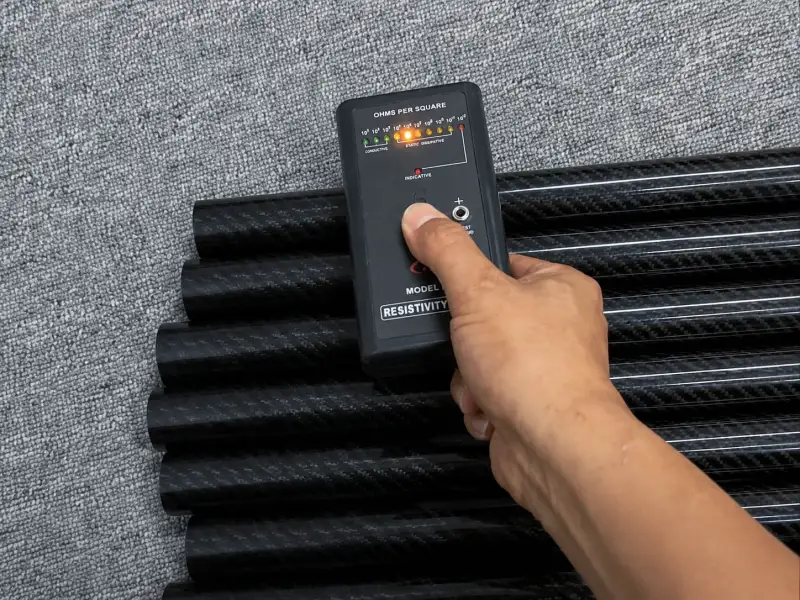
If you already have a target resistance value, you can communicate with us directly based on that target. Different test methods, test voltages, humidity conditions, and surface states can all affect the final resistance reading.
Surface condition also affects actual performance, for example:
whether dust is easily attracted
whether the material tends to stick
whether separation is affected
whether surface marks are more likely to appear
These usually also need to be checked together:
line speed
tension condition
contact material
temperature and humidity environment
whether cleanliness is critical
whether surface protection is highly important
Standard anti-static or conductive compounds are suitable for many electrostatic-sensitive positions. For more demanding applications, the compound may need to be modified or reinforced.
This is usually considered when the roller needs to combine static control with:
tighter electrical-performance control
stronger wear resistance
higher or more stable heat resistance
better ozone or aging resistance
cleaner contact and lower contamination risk
better release or lower material pickup
improved long-term consistency under continuous running
more stable resistance behavior after wear or surface polishing
The purpose is not to make the roller more complicated. The purpose is to keep the electrical behavior, surface condition, and mechanical performance stable in the actual working position.
anti-static, conductive, static-dissipative, silicone, polyurethane, NBR, EPDM, or composite compound route
anti-static, conductive, static-dissipative, silicone, polyurethane, NBR, EPDM, or composite compound route
adjusted according to pressure, support, grip, release, and surface protection requirements
smooth, precision-ground, matte, satin, release-oriented, traction-oriented, clean-contact, or application-specific finish
roller diameter, face length, cover thickness, shaft design, shaft-end details, bearing fit, and installation requirements
shaft, bearing, mounting structure, and whether the roller can form a practical discharge path
drawings, old rollers, samples, dimensions, photos, target parameters, or actual running conditions
For particle control, dust pickup, surface cleaning, and clean-contact positions.
Corona Treatment RollersFor roller positions near corona treatment sections where discharge-area stability, ozone exposure, and surface condition matter.
Guide RollersFor web path control, edge stability, tracking, and static-sensitive guiding positions.
Tension Control RollersFor applications where static behavior, web tension, and running stability need to be reviewed together.
Film Converting RollersFor film handling, slitting, rewinding, coating, laminating, and surface-sensitive web processes.
Lithium Battery Line RollersFor separator, foil, coating, and clean-contact positions with higher surface and static-control requirements.
Nonwoven Processing RollersFor nonwoven web handling, dust control, static-sensitive contact, and surface protection.
Solid Silicone RollersFor heat stability, release behavior, surface protection, and silicone-based static-control options.
A reliable rubber roller depends on more than size matching. Compound formulation, hardness stability, cover thickness, surface finish, shaft structure, and running accuracy all affect how the roller performs on your line.
Wolorin supports both routine replacement roller projects and more demanding custom industrial rubber roller projects, with established manufacturing experience, production equipment, inspection equipment, available certificates, and documented quality checks. Our rubber compound formulation system can be matched to different operating requirements.
Before shipment, key items such as cover hardness, shaft details, surface condition, and running accuracy can be checked according to project requirements.
You can review our manufacturing scope, quality control process, and company background through the pages below.
Not exactly.
Anti-static is more focused on suppressing static buildup and reducing its impact, while conductive is more focused on dissipating electrical charges.
Common routes include conductive / anti-static silicone, polyurethane, NBR, EPDM, and certain special compound materials.
Usually, the first things to check are the target surface resistance or volume resistivity, then the base material system, hardness, temperature range, surface condition, and operating conditions.
No.
They are also commonly used in nonwovens, foils, films, and other electrostatic-sensitive web-processing applications.
Yes.
You can first send us the roller position, contact material, and current problem, or send photos, dimensions, and drawings of the existing roller, and we can help you evaluate the direction first.
If you already have drawings, an existing roller, or confirmed parameters, you can send them to us directly for quotation and custom production.
If not, you can also send us your specific situation for consultation first.