Leather and Synthetic Leather Processing Rollers
On leather and synthetic leather lines, roller problems often show up in the surface result first. The line may still run, but the grain looks uneven, the pattern gets weaker across part of the width, the coated surface starts to stick, or marks appear during transport.
That is why these rollers are not only about moving material from one section to the next. In many positions, they also affect embossing consistency, release in heated contact, surface protection, and running stability.
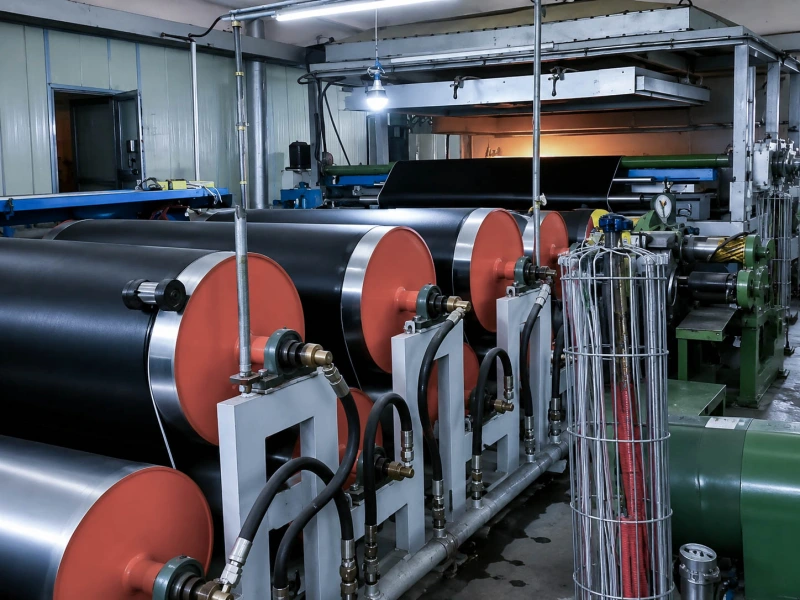
Wolorin supplies custom rollers for natural leather, synthetic leather, coated fabric-backed materials, embossed leather-like surfaces, and decorative surface-processing lines. Common positions include embossing contact, heated sections, coating support, laminating nip, guide rollers, and downstream transport rollers.
What This Industry Processes
This industry covers natural leather, synthetic leather, coated fabric-backed materials, and other leather-like substrates that need controlled surface appearance, texture, or decorative pattern replication.
Some lines work with real hide surfaces. Others process PU, PVC, or other coated structures used to create a leather-like grain, finish, or embossed look.
In some cases, embossing is the key step. In others, the line may include coating, heating, laminating, pattern transfer, and transport after the surface is already sensitive. What matters in the end is usually visible and easy to judge: whether the pattern looks clear, whether depth stays even across the width, whether the surface releases cleanly, and whether the finished material keeps a consistent appearance.
Key Line Sections and Roller Positions
Embossing / pattern-transfer positions
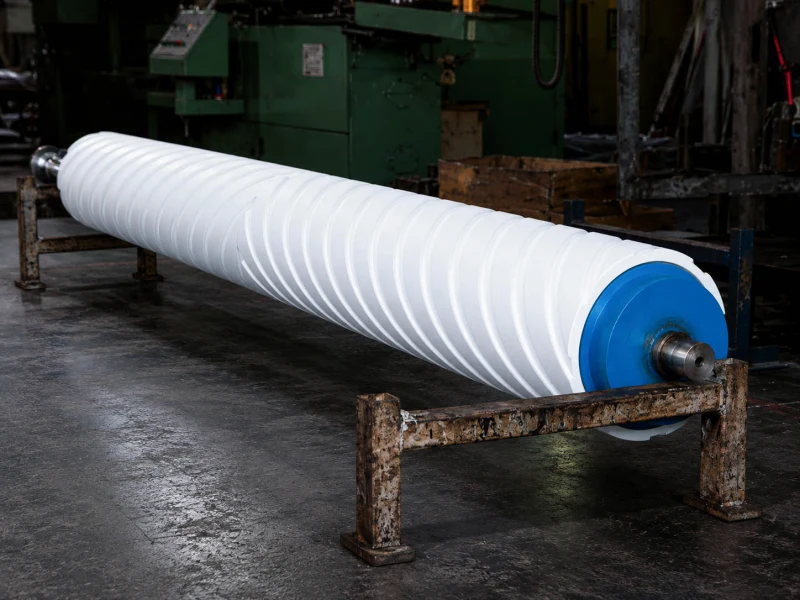
These positions directly affect grain clarity and pattern depth. If contact is not even across the width, the finish may look weak in one area and too heavy in another. When heat is involved, sticking and local pressure variation can make the result even worse.
Heated contact sections
Heated contact can help with forming or surface transfer, but it also increases the risk of sticking, build-up, gloss change, and poor release. In these sections, surface behavior often matters more than hardness alone.
Coating support positions
These rollers support coated or fabric-backed material before or after decorative treatment. They usually need enough grip for stable movement, but not so much that they leave marks or disturb the surface.
Laminating nip positions
In laminating sections, pressure still needs to be steady, but the upper surface may already be sensitive. A roller that works in a general laminating job may not be right for this kind of material build.
Guide rollers
Guide rollers affect how steadily the material enters the next section. If guidance is unstable, the later problem may show up as embossing variation, drift, or surface marking.
Transport positions
After coating, embossing, or laminating, the material may still be warm, tacky, or easy to mark. Transport rollers need to keep the line moving without creating new surface defects.
Common Problems
Embossing inconsistency
The grain may look clear in one area and weak in another. This often points to uneven pressure, unstable contact, or cover behavior that does not suit the job.
Pattern depth variation across width
If one side looks shallower or less defined, the cause is not always the embossing roll alone. Geometry, rigidity, crown logic, and cover response across the face width can all affect the result.
Poor surface replication
The line may produce the intended leather-like texture, but the finish still looks soft, unclear, or inconsistent. That usually means the roller surface is not matching the real material condition.
Sticking in heated sections
Coated synthetic leather may stick, drag, or leave residue in warm contact sections. Once that starts, release becomes less stable and the line usually becomes harder to control.
Marking or gloss change during transport
After coating, laminating, or embossing, the surface may still be easy to mark. If the transport roller is too aggressive or not suited to the finish condition, visible marks or gloss changes may appear.
Tracking and transfer instability
Leather-like materials do not always run like standard film webs. Fabric-backed structures, coated surfaces, and embossed finishes may slip, drift, or enter the next section unevenly.
What the Roller Usually Needs to Do on These Lines
Maintain stable embossing contact
In embossing-related positions, the roller needs to help keep pressure even across the width so the pattern stays visually consistent.
Support repeatable pattern depth
The roller surface should help transfer texture clearly without flattening detail or pressing too hard. Some proven builds can work well across similar applications, but final suitability still depends on the real position and running condition.
Release cleanly in heated sections
In warm contact positions, the roller often needs to reduce sticking, drag, and residue build-up so release stays stable.
Handle sensitive coated surfaces more gently
In coating support, laminating, guiding, and downstream transport, the roller may need to balance traction with low marking risk.
Stay usable under pressure and temperature
Embossing and heated sections can place the roller under both load and heat. The cover and structure need to stay stable through the working condition, not just at startup.
Match the real job in that section
A roller that works well in one part of the line may not work well in another. Guide positions, heated contact zones, and coated leather-like surfaces can place very different demands on the same nominal size. Depending on the application, cover materials may be selected from silicone, polyurethane, NBR, EPDM, or other reviewed compounds. Cover hardness is typically chosen according to process demand, commonly within a broad industrial range such as 20–95 Shore A, subject to compound and duty.
Frequently Asked Questions
It usually comes down to pressure distribution, contact stability, thermal condition, and how the cover responds under load. If the roller does not suit the real embossing condition, the pattern may become uneven across the width or less stable over time.
This usually means pressure is not being carried evenly from side to side. Geometry, rigidity, crown logic, cover compressibility, and thermal change during operation can all contribute.
It usually happens when the surface softens or becomes tacky under the real combination of heat, pressure, and contact time. Once sticking starts, residue build-up and unstable release often follow.
The key points are the roller position, substrate build, coating or laminate condition, temperature, pressure, line speed if available, and the actual defect on the line. A replacement should be reviewed by real working duty, not only by nominal dimensions.
Request a Quote
If you already have dimensions, drawings, or samples, you can send them directly for customization. If not, we can still evaluate based on the operating conditions.