Plastic Sheet and Board Processing Rollers
Plastic sheet and board lines usually place higher demands on rollers than light web lines. Once the substrate becomes thicker, wider, warmer, or more sensitive to surface marking, roller choice starts to affect traction stability, widthwise support, surface condition, and downstream handling much more directly.
On these lines, a roller may need to pull, support, guide, or stay in warm contact without causing slip, pressure concentration, drag marks, or visible surface defects. That is why a roller that seems acceptable in general converting may still perform poorly on sheet and board positions.
Wolorin supplies custom rubber rollers for plastic sheet and board processing, including haul-off, contact cooling, transport support, laminating support, and other downstream positions. The focus is practical fit for the job at that position: stable running, controlled contact, reliable support across the width, and lower risk of avoidable marking.
You do not need everything ready before contacting us.
What This Industry Processes
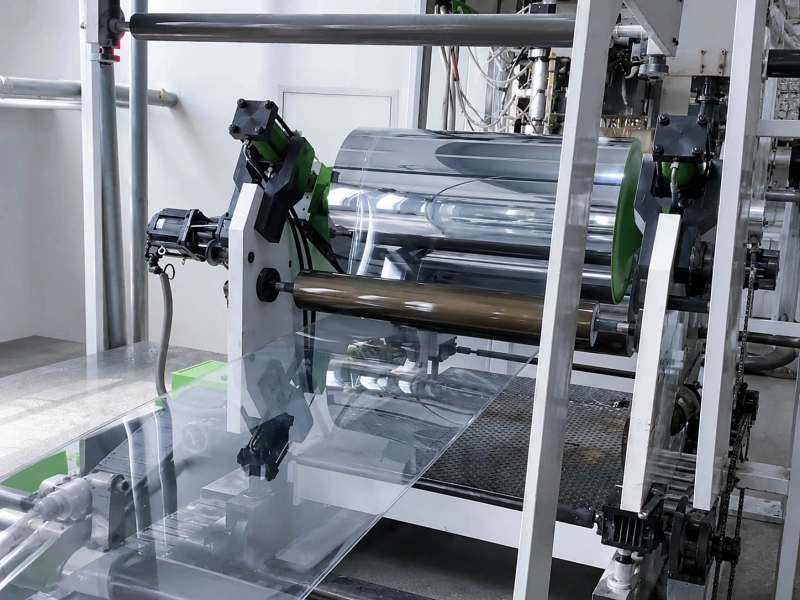
Plastic sheet and board lines usually handle thicker substrates after extrusion, when the material already has more body, more load, and more surface sensitivity than a typical thin web. At that stage, the roller is no longer just a carry point. It often becomes part of traction control, warm-contact handling, widthwise support, or downstream presentation.
Typical products may include:
plastic sheet
plastic board
extruded sheet materials
rigid or semi-rigid polymer substrates
wider downstream sheet products
Depending on the line, the material may still reach the roller warm. In other cases, the bigger issue is not heat, but how evenly the substrate stays supported through transport, trimming, laminating, stacking, or repeated downstream contact.
That is why these lines often need a different balance of traction rollers, drive rollers, pressure rollers, or pinch rollers than a lighter web-processing line.
Key Line Sections and Roller Positions
Roller requirements on sheet and board lines change by section. In one position the main job is traction. In another, it is gentler warm contact. Further downstream, the bigger issue may be support across width or repeated handling marks.
Haul-Off / Pull Positions
In haul-off sections, the roller needs to provide reliable traction without creating drag marks, compression patterns, or unstable pull across the width. This matters even more when the sheet is still warm, when thickness varies, or when heavier gauges respond badly to uneven pressure.
Useful build choices here usually depend on:
substrate thickness and surface condition
contact temperature
required pull force
driven or matched-pair running setup
sensitivity to marking during pull-off
Cooling / Contact Sections
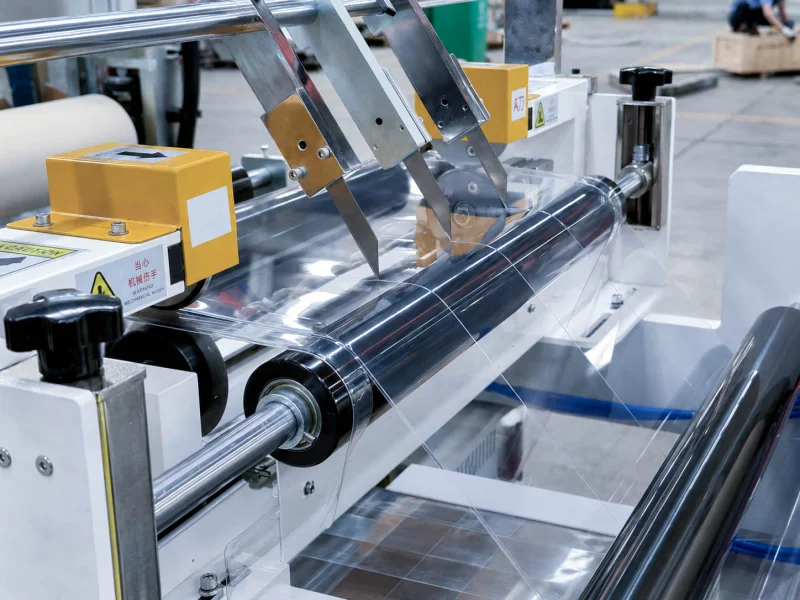
Cooling and contact rollers often work under a difficult balance. They may need to touch a warm surface, remain stable under heat, and support material movement without leaving gloss difference, pressure traces, or local deformation.
Key variables here usually include:
actual warm-contact temperature
dwell condition at contact
surface finish requirement
pressure behavior under load
whether appearance change is acceptable or not
Transport Support Rollers
Transport rollers on plastic sheet and board lines are not just passive carry points. They affect how evenly the substrate runs, how stable it stays across width, and how much contact influence builds up through downstream movement.
On wider lines, weak support logic can show up as:
tracking drift
uneven running across width
edge instability
local surface influence after repeated contact
handling inconsistency over longer spans
Laminating Support Positions
When sheet or board enters laminating-related downstream sections, support rollers need to stabilize the substrate without turning contact into a marking source. The requirement is usually flat support, predictable pressure response, and enough structural stability to keep wider material manageable through the section.
These positions are often less about aggressive traction and more about:
support consistency
pressure uniformity
local marking control
stable material presentation into the next step
Downstream Handling Positions
Further downstream, rollers may appear in transfer, guide, support, or pre-stacking positions. Problems that look minor upstream often become more visible here, especially on smoother, wider, or more appearance-sensitive products.
These positions usually benefit from:
enough support for thicker substrates
enough wear resistance for repeated contact
controlled surface behavior during routine handling
reduced risk of avoidable downstream marks
Common Problems
On plastic sheet and board lines, roller review usually starts because the line still runs, but no longer runs cleanly, evenly, or predictably enough.
Surface Marking After Contact
This may appear as gloss difference, light pressure lines, drag marks, repeated contact patterns, or visible handling marks on smoother products. Lowering pressure does not always solve it. In many cases, the real issue is mismatched cover behavior, poor contact logic, or a roller surface that does not fit the actual load and temperature.
Unstable Haul-Off Behavior
Haul-off positions may begin to show uneven pull across width, slip under warm conditions, inconsistent traction at certain thicknesses, excessive force demand, or weaker downstream presentation after pull-off.
Warm-Contact Deformation or Imprinting
If the roller is not matched to the real contact condition, warm sheet or board may develop local deformation, imprinting, drag influence, unstable running after contact, or downstream appearance problems that are later mistaken for material defects.
Wide-Format Transport Instability
A roller setup that works on narrower sheet does not always scale well to board or wider sheet formats. Once width increases, small support inconsistency may turn into running drift, edge instability, uneven transport support, and more visible surface influence near the edges.
Repeated Handling Marks Downstream
Even when upstream pulling still looks acceptable, repeated downstream contact can gradually turn the roller into a marking source. This is more common on smoother products, warmer material, or lines where several positions touch the same surface before the next process step.
What the Roller Usually Needs to Do on These Lines
On plastic sheet and board lines, the roller usually has to do more than one job at the same time. In many cases, it needs to balance traction, support, contact control, and surface protection together.
It often needs to:
maintain traction without overly aggressive surface contact
support thicker substrates without treating them like thin web material
tolerate warm-contact conditions before the sheet has fully settled
reduce marking risk on visible or semi-finished surfaces
keep support and running behavior stable across wider widths
remain durable through repeated downstream handling
match the real duty of that position instead of using one build logic everywhere
Depending on the position, this may lead the review toward polyurethane rubber rollers, SBR rubber rollers, or other build directions better suited to the actual load, surface condition, and running pattern.
Frequently Asked Questions
1. How is a roller for thicker plastic sheet or board different from a film roller?
Sheet and board rollers usually need more support, more stable traction under load, and better warm-contact control than film rollers. Thicker substrates react differently to pressure, support variation, and repeated contact, so a roller that works on thin film may create marking, pull instability, or width-related running issues on sheet and board lines.
2. What usually causes haul-off roller problems on sheet and board lines?
Common causes include insufficient traction, poor pressure distribution across width, unsuitable cover behavior under heat, and mismatch between the roller build and the actual pull force. The visible result may be slip, uneven pulling, drag marks, or unstable downstream handling.
3. How can warm-contact marking be reduced on extruded sheet or board?
The main factors are usually contact temperature, dwell condition, roller surface behavior, and pressure control. Reducing marks usually requires reviewing the cover, hardness, surface finish, and contact logic together rather than only lowering nip force or changing line speed.
4. Why does wide-format sheet or board become less stable in downstream transport?
As width increases, small differences in support, traction, or roller geometry become more visible across the line. This can lead to drift, edge instability, uneven transport, or stronger contact influence over longer spans.
5. What information is most useful when replacing rollers on extrusion downstream lines?
The most useful starting inputs are usually:
- material type
- thickness and width
- roller position
- operating temperature at contact
- current problem such as marking, slip, or instability
- existing roller drawing, dimensions, or sample if available
Even without a full drawing set, these details are usually enough to begin reviewing a replacement direction.
Common Roller Types and Materials for This Application
Need Broader Manufacturing, Quality, or Company Information?
If you are also reviewing manufacturing capability, inspection records, compound options, or general supplier background, you can continue with the pages below.
Request a Quote
If you are reviewing rollers for a plastic sheet or board line, the most useful starting point is the actual running condition.
If you already have drawings, old roller dimensions, samples, or photos, send them over. If not, you can still start with the roller position, substrate type, approximate size, and the problem you are trying to solve.