Flexible Packaging Rollers
Rollers for Printed, Laminated, Sealing-Layer, Slitting, and Rewinding Packaging Lines
Flexible packaging lines do not stay simple for long. Once the structure includes printing, adhesive lamination, sealing layers, or downstream rewinding, roller suitability usually becomes more position-specific than on a basic film transport line.
Wolorin supports roller projects for printed packaging films, laminated structures, multilayer webs, and post-lamination converting sections. We focus on positions where transport stability, controlled release, surface protection, and rewind consistency need to work together across the line.Not all rollers on these lines need to be highly customized; some proven solutions can cover similar packaging scenarios. However, long-term suitability still depends on how the roller performs in its specific position on the line.
You do not need everything ready before contacting us.
When a Roller May Need to Be Reviewed Again
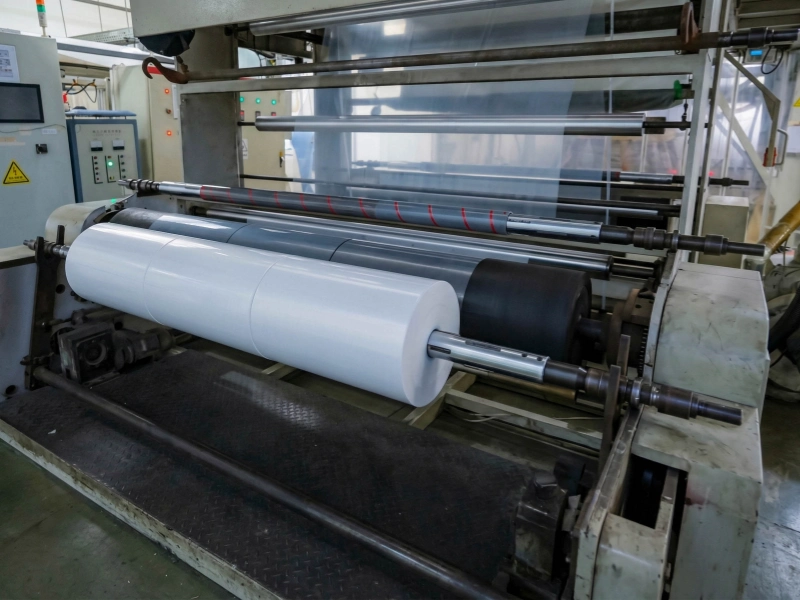
A roller that runs acceptably before lamination may not remain equally suitable after the structure changes.
On flexible packaging lines, printed surfaces, adhesive influence, sealing layers, and later-stage rewinding can all make the same position more sensitive than it was earlier in the process.
If problems start showing up only after printing, bonding, heat, or rewinding, it is often worth checking whether the roller still matches that position under the new structure.
What This Process Handles
Flexible packaging converting usually works with structures rather than a single plain web. The material moving through the line may already include printed layers, adhesive influence, laminate combinations, treated film surfaces, or sealing-layer contact that make one section behave differently from the next.
Typical structures and line situations may include:
printed BOPP packaging webs
PET-based laminated packaging structures
CPP layers used in multilayer packaging builds
PE or similar sealing-layer constructions
printed and laminated materials with two or more functional layers
webs whose traction, release, or winding response changes after lamination or heat exposure
What matters is not only whether the web keeps moving. It is whether the structure stays stable through printing-related transport, adhesive-related contact, lamination, intermediate guiding, slitting, and final rewinding without creating register drift, surface marking, sticking, or poor roll build.
Where Flexible Packaging Lines Usually Need Closer Roller Review
On flexible packaging lines, roller review often needs to be done position by position.
A roller that runs acceptably on the incoming web may start causing trouble after printing, lamination, heat exposure, or final rewinding. That is common on packaging lines because the structure, the contact side, and the running behavior do not stay the same from start to finish.
Printing-related transport positions
These positions affect web steadiness, register-related running, and how printed surfaces move forward without drag or marking. If printed material becomes harder to control as speed goes up, these positions are often worth checking first. In some cases, this also connects to how traction rollers or pressure rollers are selected.
Adhesive-contact and lamination-entry positions
Once the web starts seeing adhesive influence or enters lamination-related contact, release, surface response, and contact stability often become more sensitive. If the line starts running differently after bonding, these positions usually need another look. Some projects at this stage also relate closely to Coating and Laminating Line Rollers.
Intermediate guide and stabilizing positions
Between major sections, the web still needs to stay controlled. If these positions add slip, drag, or unnecessary surface disturbance, later sections usually become harder to keep stable. Depending on the line, this may involve guide rollers or other transport rollers in the same path.
Slitting and final rewinding positions
After printing or lamination, the finished structure often no longer winds like the incoming film. If roll build, edge condition, or unwind behavior starts changing, these positions usually need to be reviewed based on the converted structure, not the earlier web. This is also where some projects overlap with Slitting and Rewinding Line Rollers.
In flexible packaging, the place where the problem shows up is not always the place where it starts. That is why earlier contact positions are often checked again when lamination or rewind problems begin appearing later on the line.
Common Problems
Flexible packaging converters often see problems only after the structure has already passed several sections of the line. By then, the visible defect may appear at lamination or rewinding, while the roller-related influence started earlier.
Printed webs that run less steadily as speed increases, making register-related transport harder to control.
Laminated webs that feel less predictable after bonding, especially when multilayer stiffness, surface response, and traction demand change.
Material sticking, blocking, or releasing poorly in heat-related or adhesive-related sections.
Surface marking, dulling, or drag-related appearance change on printed or laminated structures.
Rewind build that changes after lamination, with tighter zones, softer zones, edge variation, or reduced roll consistency.
Traction that becomes too aggressive for one layer condition but too weak after the structure passes into another stage.
Packaging materials with sealing layers that behave differently in transport and winding than simpler film constructions.
In many cases, process settings are not the only factor. Roller surface direction, cover material choice, hardness range, and position-specific contact behavior can all influence how the packaging structure runs through the line.
What These Problems Usually Require from the Roller
When coating or laminating performance becomes unstable, the roller usually needs a better match in several directions.
Flexible packaging roller selection is usually a balance problem rather than a single-property problem. Printed and laminated packaging structures often need a roller surface that can keep the web under control without creating sticking, unstable release, or unnecessary marking.
What these applications usually require includes:
Release vs traction balance
The roller needs enough grip to maintain stable transport, but not so much surface aggression that multilayer webs drag, stick, or lose release consistency.
Stable handling of printed and laminated structures
Printed layers, adhesive influence, and laminated combinations often make the web more sensitive to surface interaction than uncoated single-layer film.
Suitability for heat, solvent, and adhesive-related conditions
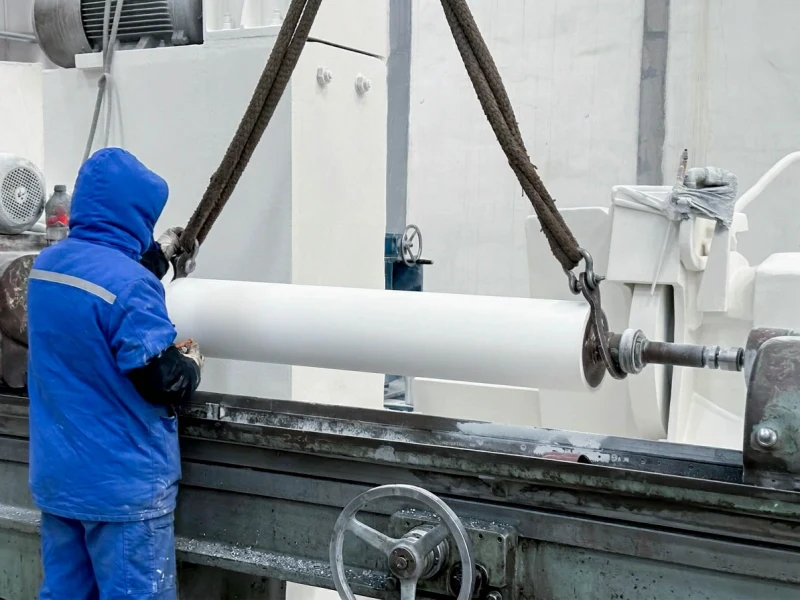
Roller behavior can change significantly once the line includes elevated temperature, solvent exposure, or adhesive-contact risk.
Consistent nip behavior in lamination-related positions
Uneven contact can affect laminate uniformity, downstream handling, and final rewind build.
Controlled surface interaction with sealing-layer structures
Packaging materials that include PE or similar sealing layers may show different release, drag, or winding behavior depending on the exact contact point.
Reliable rewind support after structure change
Once the web has been laminated, its winding response may no longer match its pre-lamination behavior. The roller needs to support stable roll formation under the converted structure, not only the incoming film.
In practice, the main question is usually not whether a roller can run at all. It is whether it remains suitable after the structure, surface condition, and winding response have already changed.
Common Roller Types and Related Directions for This Application
Technical Review for Flexible Packaging Rollers
For flexible packaging rollers, basic checks before delivery usually focus on the roller build itself and the actual line requirement.
Typical review points may include:
packaging structure and layer contact
printed, laminated, or sealing-layer behavior
roller position in the line
basic cover hardness and surface finish check
key dimensions and shaft details
drawing-based or replacement-based review before production
If you already have a drawing, sample, or existing roller data, you can send it directly for quotation.
Frequently Asked Questions
Laminated flexible packaging lines commonly use transport rollers, laminating nip rollers, guide rollers, and rewinding contact rollers. The correct build depends on the packaging structure, heat and solvent conditions, release behavior, and how the laminated web behaves after bonding.
Poor release usually comes from a combination of surface interaction, adhesive influence, heat, sealing-layer behavior, and roller cover direction. On multilayer packaging structures, the web surface can respond very differently before and after lamination, so the same roller surface may not behave consistently through the whole line.
Printed packaging webs often become less forgiving when speed rises, surface interaction changes, or laminated structure stiffness affects transport behavior. Register-related instability can come from uneven traction, poor surface consistency, or roller positions that no longer suit the converted web condition.
After lamination, the packaging structure often gains a different stiffness, surface response, and winding behavior than the incoming web had before bonding. If roller contact, traction level, or upstream handling consistency do not match that changed structure, the final roll may build unevenly.
Printed layers and sealing layers often make the web more sensitive to marking, drag, release inconsistency, and temperature-related behavior. That means the roller may need a different surface direction, contact behavior, or material selection than a simpler film application would require.
Start with the real line position and the visible problem. Then review the packaging structure, printed-surface condition, adhesive or solvent exposure, temperature, line speed, and rewind result. For flexible packaging converting, roller choice usually depends on how the full packaging structure behaves through the line, not on the base film alone.
Custom Roller Manufacturing, Formulations, and Quality Control
A reliable rubber roller depends on more than size matching. Compound formulation, hardness stability, cover thickness, surface finish, shaft structure, and running accuracy all affect how the roller performs on your line.
Manufacturing Scope
Wolorin supports both routine replacement roller projects and more demanding custom industrial rubber roller projects, with established manufacturing experience, production equipment, and inspection equipment.
Compound and Surface Matching
Our rubber compound formulation system can be matched to different operating requirements, including traction, release, wear resistance, chemical contact, hardness stability, and long-term running performance.
Quality Review Before Shipment
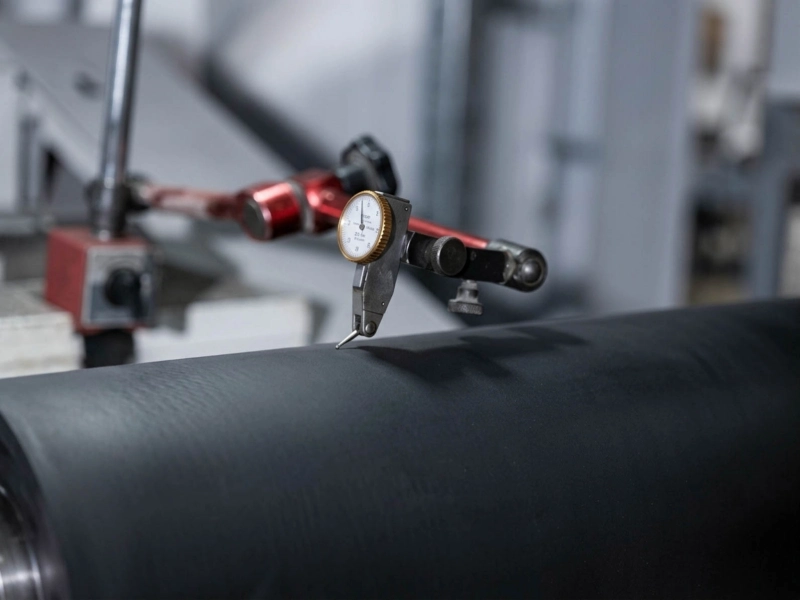
Before shipment, key items such as cover hardness, shaft details, surface condition, and running accuracy can be checked according to project requirements.
You can review our manufacturing scope, quality control process, and company background through the pages below.
Request a Quote
If you already have drawings, roller specifications, existing dimensions, samples, or a clear requirement, you can send them directly. We can use the information for custom manufacturing, quotation, or production confirmation.
If the details are not complete yet, you can also start with the roller position, web material, current line issue, site photos, or the problem you want to solve.