Coating and Laminating Line Rollers
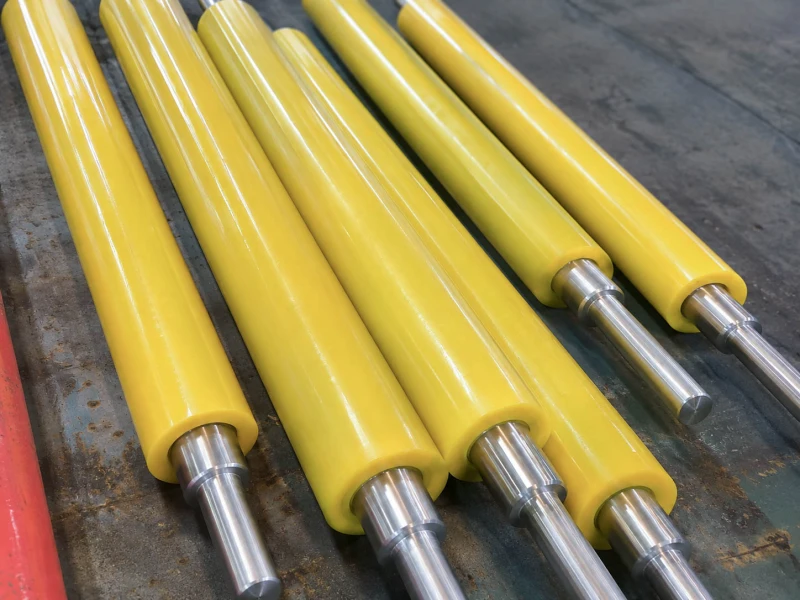
Custom rubber rollers for coating, adhesive transfer, drying, laminating, and composite web handling lines.
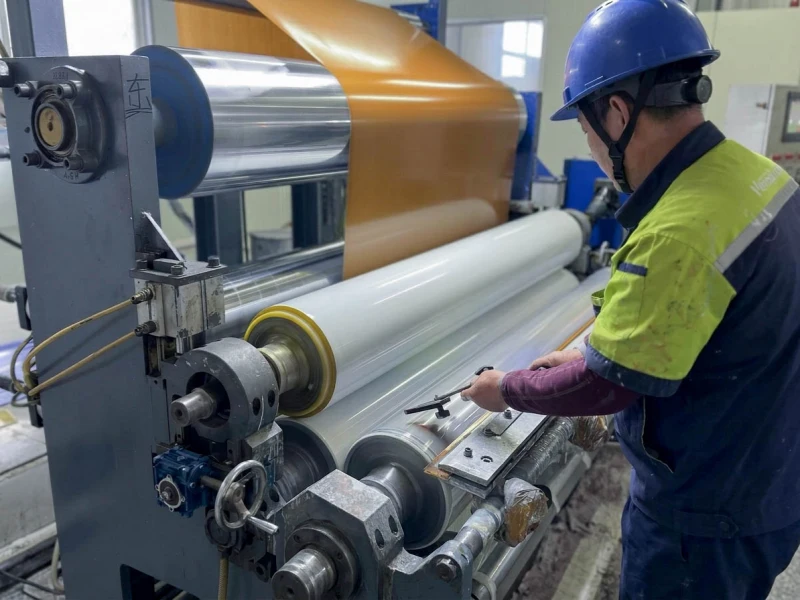
On coating and laminating lines, different roller positions often work under very different contact conditions. Some contact dry web, while others touch wet coating, adhesive, solvent, or tacky surfaces. Rollers working after drying or lamination pressure may also require better release stability, surface consistency, and pressure behavior.
Wolorin manufactures custom rubber rollers for film coating, flexible packaging lamination, label stock, tape backing, release film, protective film, paper coating, foil coating, and selected functional material coating lines.
If your line is facing adhesive pick-up, sticking after drying, coating variation, lamination bubbles, roller marks, pressure dents, unstable transport, or repeated winding marks, the replacement roller should match the actual roller position and working condition.
You do not need everything ready before contacting us.
Suitable Coating and Laminating Applications
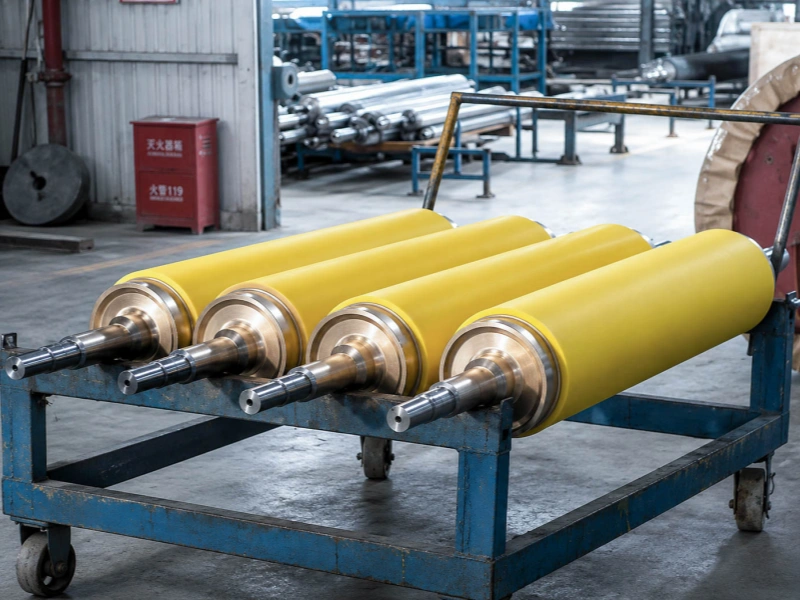
Wolorin supplies custom rubber rollers for coating, laminating, bonding, and composite web processes such as:
In these applications, the roller must do more than rotate smoothly. It must help the web remain stable while the surface condition changes through coating, drying, heating, laminating, cooling, and winding.
- Film coating lines
- Functional film coating lines
- Flexible packaging dry lamination and solventless lamination sections
- Label stock production
- Release film, protective film, and tape backing lines
- Paper and paper-based coating lines
- Aluminum foil and metal foil coating lines
- Industrial composite material coating processes
- Selected functional material coating and post-processing sections
- Roller replacement projects on coating, transfer, nip, transport, or post-drying sections
Why Coating and Laminating Lines Need Process-Matched Rollers
The web condition changes several times on the same production line.
At the infeed section, the base material may be dry, flat, and stable.
After coating or adhesive application, the surface may become wet, tacky, or easier to mark.
After drying, heating, or hot lamination, the web and adhesive layer may behave differently again.
At the lamination nip, roller pressure affects bonding appearance, air entrapment, edge stability, and surface marking.
For this reason, rollers on coating and laminating lines should not be selected only by material name, hardness, or size. The roller should match what it contacts during production: dry substrate, wet coating, adhesive, solvent, heated web, or laminated material under pressure.
Typical Process Sections and Roller Requirements
| Process Section | Web Condition | Main Roller Duty | Roller Requirements |
|---|---|---|---|
| Unwind / infeed section | Dry base web entering the line | Guide and carry the material smoothly | Stable traction, low marking, reduced tension disturbance |
| Coating support section | Web entering the coating zone | Support the web under coating contact | Uniform surface, controlled runout, clean roller face |
| Coating / adhesive transfer section | Coated or adhesive-contact surface | Control contact and transfer behavior | Balanced release and traction, reduced pick-up, chemical resistance |
| Drying / heated transport section | Heated web or changing adhesive layer | Carry the web after heat or drying | Heat resistance, stable surface condition, low sticking |
| Laminating / bonding nip | Multiple layers entering the nip | Maintain stable nip pressure | Uniform pressure, stable rebound, reduced bubbles and pressure marks |
| Pre-wind / rewind-related section | Final web condition before winding | Maintain final web stability | Reduced repeated marks, edge instability, and amplified upstream defects |
Different sections of the same coating or laminating line may need different roller behavior. A roller that works well in a dry infeed position may not be suitable for adhesive transfer, heated transport, or pressure-sensitive lamination.
For coating amount control or liquid distribution positions, metering rollers and transfer rollers may be used to control coating thickness, transfer behavior, and surface consistency.
How to Identify the Roller Position Before Selection
Before selecting the rubber compound or hardness, first identify where the roller works on the line.
| Roller Position | What Usually Matters First | Why It Matters |
|---|---|---|
| Before the coating head | Web support, runout, surface cleanliness, tension disturbance | Small surface or running errors can affect coating stability downstream. |
| Under coating or adhesive contact | Release behavior, chemical resistance, cleanability, surface finish | Wet coating, adhesive, or solvent contact can cause pick-up, swelling, build-up, or uneven transfer. |
| After drying or heating | Heat resistance, aging behavior, sticking tendency | The web or adhesive layer may become tacky or unstable after heat exposure. |
| At the lamination nip | Hardness, rebound, cover thickness, pressure uniformity | This position affects bonding appearance, bubbles, pressure marks, and cross-width consistency. |
| Before winding or rewinding | Low marking, stable contact, upstream defect review | Repeated marks in the finished roll may come from an earlier contact or nip position. |
If the roller name is unclear, the process section and current defect are usually enough to start. For example, “adhesive pick-up after drying” gives more useful information than only “rubber roller, 80 mm diameter.”
Common Problems and What They Usually Point To
Defects on coating and laminating lines do not always come from the section where they first become visible.
| Line Problem | Possible Process Area | Roller Factors to Check |
|---|---|---|
| Coating variation across the width | Coating support or transfer section | Runout, surface uniformity, support stability |
| Sticking, adhesive pick-up, or material build-up | Transfer section, post-drying transport section | Release surface, chemical resistance, heat resistance, cleanability |
| Roller marks or pressure dents on film | Contact section, nip section, heated transport section | Hardness, rebound, surface finish, pressure distribution |
| Bubbles after lamination | Laminating / bonding nip | Nip pressure, cover thickness, rebound, cross-width pressure consistency |
| Slipping in one section and sticking in another | Transfer, pinch, or heated transport section | Balance between traction, release, hardness, and contact pressure |
| Roller surface changes quickly after heat exposure | Drying, hot lamination, or heated transport section | Heat-resistant compound, aging behavior, chemical stability |
| Repeated marks in the finished roll | Earlier contact, nip, or pre-wind section | Upstream defect source, roller surface condition, pressure stability |
Repeated marks in the finished roll may not come from the rewind section itself. Bubbles after lamination may also involve more than adhesive selection. Nip pressure, roller rebound, hardness, cover thickness, and cross-width pressure consistency can all affect the final result.
Where pressure contact is involved, pressure rollers and pinch rollers should be checked according to the actual nip condition, web sensitivity, and defect type.
Nip Pressure Is Not Only About Pressing Harder
In coating and laminating sections, nip pressure must be stable and suitable for the web, adhesive layer, roller cover, and line speed.
Too much pressure may increase pressure marks, film deformation, roller cover wear, heat build-up, or cross-width pressure variation. Too little pressure may cause slipping, weak bonding, air bubbles, poor adhesive contact, or unstable winding.
| Nip-Related Problem | Roller Direction to Check |
|---|---|
| Lamination bubbles | Nip pressure, roller rebound, cover thickness, pressure uniformity |
| Pressure marks or dents | Hardness, surface finish, load distribution, roller profile |
| Weak bonding in local areas | Cross-width pressure consistency, cover aging, shaft deflection |
| Slipping at the nip or transfer section | Balance between traction, release, hardness, and contact pressure |
| Edge or center bonding difference | Roller crown, profile, runout, alignment, pressure loading method |
For wide-width laminating positions or pressure-sensitive films, hardness alone is not enough. Roller profile, cover thickness, shaft condition, runout, and dynamic balance should also be checked.
Common Specification Ranges
The following ranges are common starting points for coating and laminating line rollers. Final specifications should match the roller position, contact material, adhesive or coating chemistry, operating temperature, pressure, line speed, and current defect.
| Item | Common Specification Direction |
|---|---|
| Coating / contact roller hardness | Often around 55–90 Shore A, depending on coating control, contact pressure, and web sensitivity |
| General coating-laminating contact rolls | Many contact positions use rubber covers around 65–90 Shore A when moderate pressure, traction, and stability are required |
| High-temperature release or hot lamination contact | Silicone or release-oriented compounds are often considered around 40–80 Shore A when heat resistance and anti-stick behavior are important |
| Lamination pressure positions | Pressure roller covers are often selected around 50–90 Shore A or 60–90 Shore A, depending on nip load, web type, bonding requirement, and pressure mark sensitivity |
| Surface roughness | Some coating, transfer, or laminating positions may use controlled Ra references such as around 0.9–1.65 μm Ra, depending on release, traction, and marking requirements |
| Surface finish | Smooth ground, matte, release-oriented, traction-oriented, low-marking, grooved, crowned, or custom specified finish |
| Mechanical accuracy | Wide-width, higher-speed, or pressure-sensitive positions should check runout, shaft details, roller profile, and dynamic balance requirements |
A 70 Shore A roller cover may behave differently in a dry web support position, adhesive transfer section, heated transport section, or lamination nip.
The useful question is not only “what hardness is this roller,” but also “what is this roller touching, under what pressure, at what temperature, and what defect appears on the line?”
Material and Surface Direction by Contact Condition
Material selection should start from the roller’s contact condition. In coating and laminating lines, the same rubber compound can perform differently under dry web contact, wet adhesive contact, oven heat, solvent exposure, or lamination pressure.
| Contact Condition | Material / Surface Direction |
|---|---|
| Dry film, paper, foil, or base web contact | PU, NBR, anti-static compounds, or other industrial rubber covers depending on traction, low marking, and web stability |
| Wet coating or adhesive contact | NBR, FKM, silicone, or release-oriented compounds depending on adhesive chemistry, solvent exposure, and cleanability |
| Heated web after drying | Silicone, FKM, EPDM, or heat-resistant compounds depending on temperature, aging behavior, and sticking risk |
| Hot lamination or anti-stick contact | Silicone or release-oriented surfaces when release behavior and heat resistance are important |
| Solvent, coating liquid, or adhesive chemical exposure | NBR or FKM depending on solvent strength, exposure time, swelling risk, and operating temperature |
| Low-marking film or sensitive surface contact | Smooth ground, matte, release-oriented, low-marking, or crowned surfaces depending on nip pressure and film sensitivity |
| Wide-width pressure contact | Cover thickness, hardness, rebound, roller profile, runout, and dynamic balance should be checked together |
Common material directions include polyurethane, NBR, EPDM, silicone, FKM, anti-static compounds, and other custom rubber formulations. For heat, release, and low-marking contact, solid silicone rollers may be used as one of the material directions. For oil, ink, adhesive, or solvent-related contact, NBR and FKM compounds are often checked according to the medium and operating condition.
Common Roller Types and Materials for This Application
If the issue is concentrated at a specific roller position, these related pages can help narrow the selection direction.
Common roller types on coating and laminating lines:
- Metering Rollers — for coating amount control and liquid distribution positions
- Transfer Rollers — for coating, adhesive, ink, or liquid transfer contact
- Pressure Rollers — for controlled nip pressure and surface contact
- Guide Rollers — for web path control and stable transport
- Tension Control Rollers — for tension-sensitive web handling sections
- Pinch Rollers — for nip contact, feeding, or paired roller contact positions
Materials often considered for coating, adhesive, heat, release, or pressure contact:
- Solid Silicone Rollers — for heat, release, low-marking, or surface-protection contact
- Liquid Silicone Rollers — for cleaner silicone contact and low-marking surface requirements
- Polyurethane Rubber Rollers — for traction, wear resistance, and general contact positions
- NBR / Nitrile Rubber Rollers — for oil, ink, adhesive, and general industrial contact
- FKM Rubber Rollers — for heat, oil, solvent, or demanding chemical contact
Related application pages:
- Flexible Packaging Rollers — for printing, laminating, slitting, and converting lines in flexible packaging
- Printing Industry Rollers — for ink transfer, web transport, and surface consistency in printing lines
- Lithium Battery Line Rollers — for coating, guiding, tension, and clean-contact sections in battery material processing
Frequently Asked Questions
Typical applications include film coating, flexible packaging lamination, label stock production, tape backing, protective film, release film, paper coating, foil coating, functional films, and selected functional material coating processes. The roller should be selected according to its position on the line, such as coating support, adhesive transfer, heated transport, lamination nip, or pre-wind contact.
Two rollers with the same diameter and face length may work under completely different contact conditions. One may only support a dry web, while another may contact wet adhesive, solvent, heated film, or laminated material under nip pressure. Hardness, rubber compound, cover thickness, surface finish, runout, and release behavior should match the actual roller duty.
Start from the roller position, contact material, operating temperature, adhesive or coating chemistry, and when the problem first appears. Sticking and adhesive pick-up often point to release behavior, chemical resistance, heat aging, surface finish, or cleanability. Photos of the roller surface and finished web can help locate the source faster.
Lamination bubbles may be related to adhesive wetting, air entrapment, nip pressure, roller rebound, cover thickness, temperature, web tension, or pressure consistency across the width. The roller should be checked together with the lamination nip condition, not only by hardness or material name.
Different sections require different roller behavior. One position may need traction, another may need release, another may need pressure uniformity, and another may need heat resistance. Using the same rubber cover across the whole line can cause slipping, sticking, pressure marks, coating instability, or premature surface aging.
Custom Roller Manufacturing, Formulations, and Quality Control
A reliable rubber roller depends on more than size matching. The rubber compound formulation, hardness stability, cover thickness, surface finish, shaft structure, and running accuracy all affect how the roller performs on your line.
Wolorin supports both replacement roller projects and custom industrial rubber roller projects with extensive manufacturing experience, production equipment, inspection equipment, available certificates, and documented quality checks. We work with well-developed rubber compound formulations that can be matched to different operating requirements, including heat resistance, release, traction, wear resistance, chemical contact, low-marking surfaces, hardness stability, and long-term running performance.
Before shipment, key details such as dimensions, cover hardness, shaft details, surface condition, and running accuracy can be checked according to project requirements.
Whether you need one replacement roller or several custom rollers for a production line, you can review our manufacturing scope, company background, and quality control process before starting your project.
Discuss Your Coating or Laminating Line Roller Project
Need rollers for a coating or laminating line? Send your medium, web material, roller position, old roller dimensions, drawing, site photos, or current line problem.
Wolorin can manufacture custom rollers according to the actual process section, contact condition, and operating requirements.