Film converting lines
Stable path control before slitting or rewinding, lower scratch risk, cleaner web tracking

Guide rollers help keep continuous materials on a stable running path as they move through different sections of a production line.
They are used across film, foil, paper, nonwoven, textile, coating, laminating, printing, slitting, and rewinding lines. Even when a guide roller is not a driving roller, its parallelism, runout, bearing rotation, surface condition, wrap angle, and mounting support can still affect wandering, edge instability, scratching, vibration, and tracking behavior.
Wolorin supplies custom guide rollers, guide rolls, deflector rollers, turning rollers, redirect rollers, and rubber-covered guide rollers for both straightforward replacement projects and more position-specific builds. If drawings are not ready yet, you can also start with the roller position, web material, line speed, and the problem you are seeing.
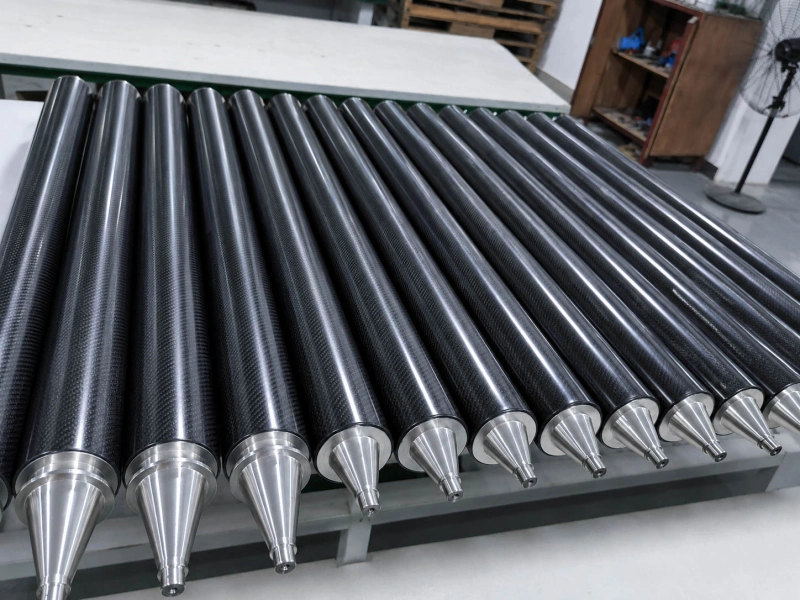
If your line handles continuous web materials and needs stable path control, guide rollers are often used at more than one position on the machine.
| Line Type | Common Needs |
|---|---|
| Film converting lines | Stable path control before slitting or rewinding, lower scratch risk, cleaner web tracking |
| Nonwoven processing lines | Better edge stability, less flutter, less dust attraction and sticking |
| Aluminum foil / copper foil lines | Low-drag guiding, surface protection, stable turning and redirection |
| Paper and packaging material lines | Smoother infeed, transition stability, controlled turning and rewinding entry |
| Coating, laminating, and printing lines | Better alignment before and after sensitive process stations |
| Textile and fabric handling equipment | Stable guiding, turning control, and surface protection during running |
Stable path control before slitting or rewinding, lower scratch risk, cleaner web tracking
Better edge stability, less flutter, less dust attraction and sticking
Low-drag guiding, surface protection, stable turning and redirection
Smoother infeed, transition stability, controlled turning and rewinding entry
Better alignment before and after sensitive process stations
Stable guiding, turning control, and surface protection during running
For many of these lines, the guide roller itself is not the only point to review. The actual position, web sensitivity, line speed, and upstream or downstream roller conditions all matter.
A guide roller helps keep the material on a stable running path as it moves through the line.
Common functions include:
supporting steady infeed and outfeed movement
helping keep edge position more stable
guiding the web through turning, redirecting, or transition sections
reducing surface damage, vibration, and unstable tracking caused by poor rotation or surface condition
helping the web enter traction, slitting, rewinding, coating, or laminating sections more cleanly
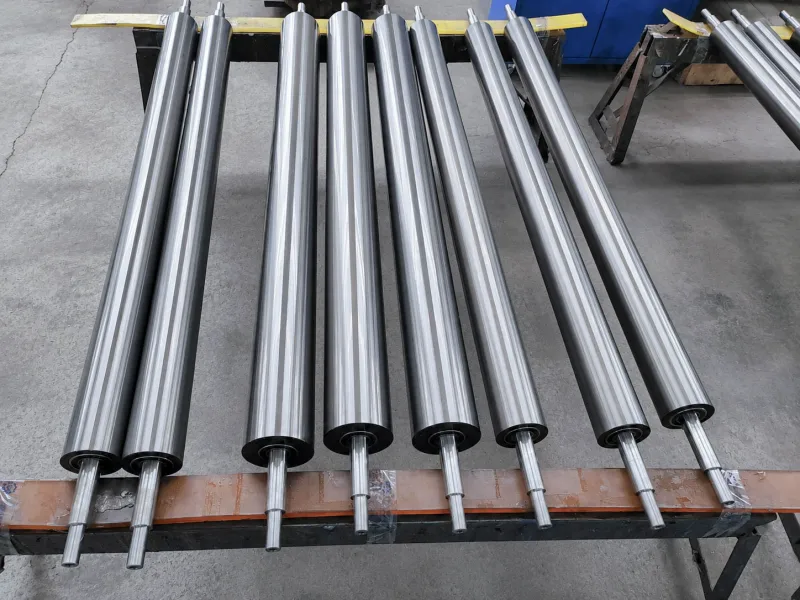
For high-speed, wide-width, thin, or surface-sensitive webs, guide roller accuracy and surface condition usually matter more.
A guide roller near machine entry and a guide roller before rewinding may have similar basic dimensions, but they are not doing the same job.
| Position | What Usually Matters More |
|---|---|
| Infeed section | Smooth web entry, stable initial edge behavior, low shock or drag |
| Long transition span | Parallelism, low bearing resistance, steady rotation, support rigidity |
| Turning / redirecting point | Wrap angle, surface condition, contamination control, local contact behavior |
| Before traction or nip section | Stable web entry, no side pull, controlled feeding into the next section |
| Before slitting | Lower edge movement, lower vibration, lower scratch risk near sensitive edges |
| Before rewinding | Stable winding entry, repeatable running path, less side-to-side change |
| Near coating, laminating, or printing stations | Cleaner surface, lower marking risk, better alignment stability |
| On foil, separator, or other sensitive web lines | Surface protection, low drag, anti-static / conductive rubber rollers review, tighter running accuracy |
Smooth web entry, stable initial edge behavior, low shock or drag
Parallelism, low bearing resistance, steady rotation, support rigidity
Wrap angle, surface condition, contamination control, local contact behavior
Stable web entry, no side pull, controlled feeding into the next section
Lower edge movement, lower vibration, lower scratch risk near sensitive edges
Stable winding entry, repeatable running path, less side-to-side change
Cleaner surface, lower marking risk, better alignment stability
Surface protection, low drag, anti-static / conductive rubber rollers review, tighter running accuracy
This helps explain why one guide roller design does not fit every machine position, even inside the same line.
A guide roller should not be selected by outside diameter and face length alone. Position behavior is also affected by rotation quality, support structure, surface condition, and how the web actually contacts the roller.
| Parameter / Design Point | Why It Matters |
|---|---|
| Roller diameter | Affects rotation speed, running behavior, and bearing load |
| Face length | Needs to match web width, edge clearance, and machine space |
| Shaft structure and support | Weak support or low rigidity can increase vibration and unstable running |
| Wrap angle | Affects contact stability, friction behavior, and guiding consistency |
| Parallelism | Poor parallelism can pull the web toward one side |
| Runout / TIR | Excessive runout can cause edge fluctuation, vibration, or local scratching |
| Surface roughness / finish | Too smooth may reduce control; too rough may leave marks or wear the web |
| Bearing rotation | High resistance can create drag, tension variation, or unstable tracking |
| Dynamic balance | More important at higher running speed |
| Cover or surface material | Affects friction, release, anti-static behavior, wear resistance, and surface protection |
Affects rotation speed, running behavior, and bearing load
Needs to match web width, edge clearance, and machine space
Weak support or low rigidity can increase vibration and unstable running
Affects contact stability, friction behavior, and guiding consistency
Poor parallelism can pull the web toward one side
Excessive runout can cause edge fluctuation, vibration, or local scratching
Too smooth may reduce control; too rough may leave marks or wear the web
High resistance can create drag, tension variation, or unstable tracking
More important at higher running speed
Affects friction, release, anti-static behavior, wear resistance, and surface protection
For most guide roller reviews, useful starting information includes roller position, diameter, face length, shaft details, web width, line speed, wrap angle, mounting method, contact material, surface requirement, and the current running problem.
For rubber-covered guide rollers, hardness should be selected around web protection, friction stability, wear demand, and the actual guide position. For high-speed or sensitive webs, runout, balance, bearing resistance, and shaft rigidity are often more critical than the rubber name alone.
A guide roller is often where the problem becomes visible, but not always where it begins.
If the running behavior changes with unwind diameter, tension zone, or line speed, also review tension control rollers and the upstream or downstream pulling condition.
If the web enters the guide position unstably or slips before the next section, also review traction rollers.
If wrinkles, width-direction instability, or spreading issues appear around the guide position, also review spreader rollers.
If dry film, nonwoven, separator, or other sensitive webs start sticking to the roller surface or attracting dust, also review anti-static / conductive rubber rollers.
For broader line review, the running conditions on Film Converting Rollers, Slitting and Rewinding Line Rollers, or Foil and Metal Strip Processing Rollers may also need to be checked together.
This does not reduce the importance of the guide roller. It helps avoid replacing one roller while leaving the real running cause untouched.
| Problem Seen on the Line | What to Check First |
|---|---|
| The web starts drifting after one roller | Parallelism, shaft position, local surface friction, bearing condition |
| The web moves left and right instead of staying repeatable | Wrap angle, span length, surface condition, rotation stability |
| Film or nonwoven sticks to the roller surface | Static, humidity, surface material, contamination, surface finish |
| Fine scratches or line marks appear | Surface damage, dirt, roughness, hard spots, trapped debris |
| Vibration becomes more obvious at higher speed | Runout, balance, bearings, shaft rigidity, mounting support |
| Edge position remains unstable before slitting or rewinding | Guide position accuracy, web tension, upstream traction, machine alignment |
| A sensitive coated web marks more easily near one position | Cleanliness, release behavior, local pressure, surface finish, build-up on the roller |
Useful when wear resistance and stronger support become part of the review.
Solid Silicone RollersUseful when surface protection, release behavior, or cleaner contact matters more.
EPDM Rubber RollersUseful for softer contact and more general wet or outdoor-related exposure conditions.
Anti-Static / Conductive Rubber RollersUseful when dust attraction, sticking, or static-sensitive running becomes part of the guide position review.
Film Converting RollersBroader line review for thin webs, tracking stability, static, and surface protection.
Slitting and Rewinding Line RollersBroader review when edge stability, tracking, and winding entry are involved.
Lithium Battery Line RollersBroader review for separator, coated foil, and other sensitive battery web positions.
Foil and Metal Strip Processing RollersBroader review for low-drag guiding and surface protection on foil and strip lines.
Tension Control RollersUseful when the guide position problem changes with running tension or winding condition.
Traction RollersUseful when the web is not entering the guide position steadily.
Spreader RollersUseful when wrinkles, width-direction instability, or spreading are part of the problem.
Flexible Packaging RollersUseful when the line involves printing, laminating, slitting, and rewinding together.
A reliable rubber roller depends on more than size matching. Compound formulation, hardness stability, cover thickness, surface finish, shaft structure, and running accuracy all affect how the roller performs on your line.
Wolorin supports both routine replacement roller projects and more demanding custom industrial rubber roller projects, with established manufacturing experience, production equipment, inspection equipment, available certificates, and documented quality checks. Our rubber compound formulation system can be matched to different operating requirements.
Before shipment, key items such as cover hardness, shaft details, surface condition, and running accuracy can be checked according to project requirements.
You can review our manufacturing scope, quality control process, and company background through the pages below.
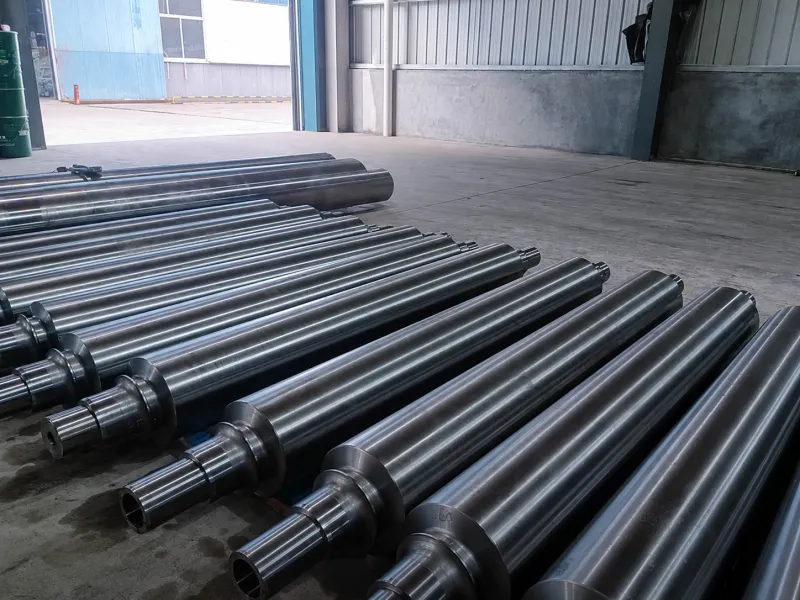
A guide roller focuses more on path control and edge stability. A turning roller, deflector roller, or redirect roller focuses more on changing the direction of the web. In many machine positions, the same roller can perform both guiding and turning functions.
No. Web wandering can also be related to tension, machine alignment, upstream and downstream traction, static, or the web edge condition. For the guide roller itself, the main points to check are surface condition, parallelism, runout, wrap angle, and bearing rotation.
It depends on film thickness, surface sensitivity, line speed, and wrap angle. A smoother surface is often preferred for sensitive films, while a slightly textured or grooved surface may help with contact stability or air release in some applications. The final surface should be matched to the actual web material and contact condition.
Anti-static or conductive rubber guide rollers may be considered when film, nonwoven, separator film, foil, or similar materials show static attraction, dust pick-up, discharge risk, or sticking to the roller surface.
If you need custom guide rollers, guide rolls, deflector rollers, turning rollers, redirect rollers, or rubber-covered guide rollers, you can send us your drawings and dimensions directly.
If drawings are not available, you can also send old roller photos, web width, line speed, roller position, and the current running problem. We can help confirm a suitable material, surface finish, and roller structure based on the actual guide roller position.