Typical hardness range:
about 60–95 Shore A
Polyurethane rubber rollers, are often used where the roller needs better wear resistance, stable grip, load support, and longer surface life.
They are commonly used in drive, traction, pinch, pressure, slitting, rewinding, conveying, and other repeated-contact positions. In these positions, the roller surface often works under friction, pressure, load, or long running hours.
Hardness, cover thickness, formulation, surface finish, bonding, roller accuracy, and the real working condition all affect the final result.At the same time, depending on the formulation, polyurethane rollers can also be adapted for some more demanding applications.
You do not need everything ready before contacting us.
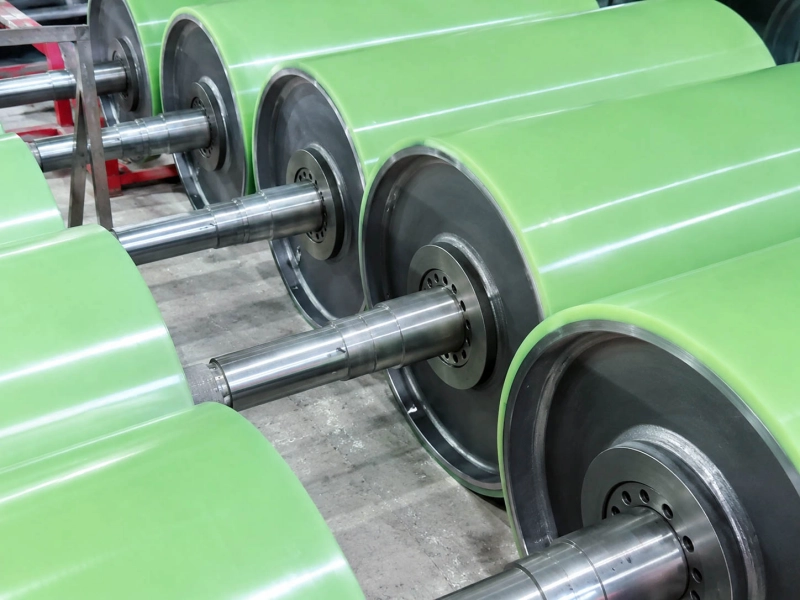
Polyurethane is often used when a roller cover needs more than basic rubber contact.
In many roller positions, the surface needs to resist wear, keep enough grip, support pressure, and stay stable during long running hours. PU is useful because it can combine these needs in one cover material.
Common reasons to review PU include:
the old rubber cover wears too fast
the roller needs better grip during running
the roller works under repeated pressure
the surface needs to last longer
the position needs both traction and wear resistance
the cover needs to be adjusted by hardness, thickness, or surface finish
This is why PU is often used for traction rollers, drive rollers, pinch rollers, and other positions where movement, pressure, and wear happen at the same time.
Many PU roller projects start from a running problem.
| Problem Seen on the Line | What May Need Review |
|---|---|
| The roller wears too fast | Hardness, formulation, surface finish, and cover thickness |
| The roller slips | Surface grip, pressure, contact material, and roller accuracy |
| The surface becomes shiny or glazed | Heat, friction, cleaning method, or contact condition |
| Edge damage appears | Edge pressure, tracking, material width, or local contact |
| The cover cracks or debonds | Heat, bonding, cover thickness, load, or media contact |
| Service life drops after speed increases | Heat build-up, pressure, friction, and process margin |
A PU roller review should not stop at “make the same roller again.” It should check why the old roller failed or why the running condition changed.
Common reference ranges for polyurethane rollers:
about 60–95 Shore A
more suitable for positions requiring softer contact, cushioning, or lighter surface pressure
more commonly used in applications that place more emphasis on wear resistance, load-bearing performance, and service life
standard polyurethane formulations are usually better kept within about 90°C
a more targeted polyurethane solution can be further evaluated
depending on the application, options can include smooth, ground, traction-oriented, grooved, crowned, and other directions
hardness, surface, and structural direction can be confirmed based on drawings, samples, an existing roller for replacement, or the actual operating conditions
Hardness is important, but it should not be checked alone.
A softer PU cover may give better contact and cushioning. It can be useful when the pressure is lighter or the material surface needs gentler contact.
A harder PU cover may give better support and wear resistance. It is often reviewed for drive, traction, pinch, pressure, and other repeated-contact positions.
Cover thickness also matters. A thicker cover can give more wear margin and cushioning, but it may also hold more heat in high-speed or high-load positions. A thinner cover may give better support in some structures, but it gives less wear allowance.
So the roller should be reviewed by hardness, cover thickness, formulation, bonding, surface finish, speed, load, and contact material together.
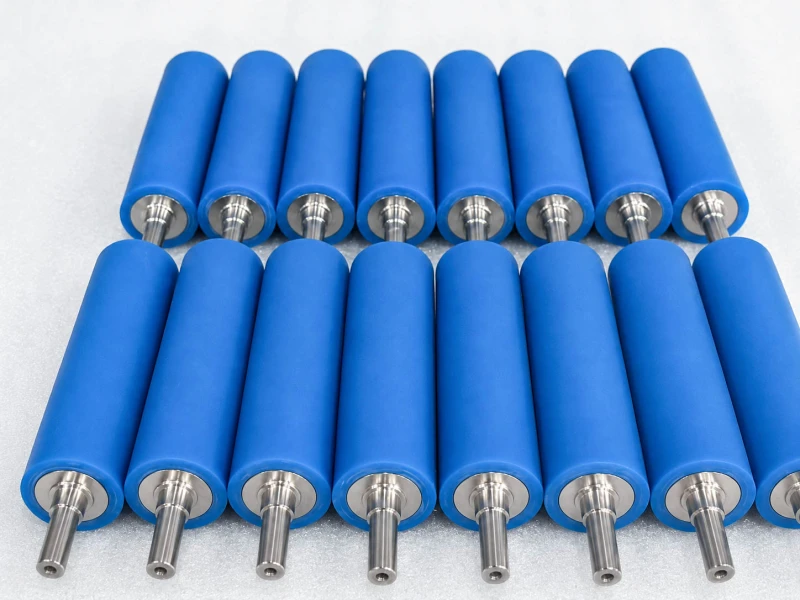
For PU rollers, the surface is not only about appearance. It affects grip, contact, cleaning, wear, and running stability.
| Surface or Structure | Common Purpose |
|---|---|
| Smooth finish | General contact and easier cleaning |
| Ground finish | Better diameter control and surface consistency |
| Traction-oriented finish | Better grip when slipping is a concern |
| Grooved surface | Drainage, air release, grip adjustment, or special process contact |
| Crowned surface | Helps with pressure distribution in some wider roller positions |
| Matte or fine-textured surface | Softer surface feel and less aggressive contact in some applications |
| Thicker cover | More wear margin and cushioning, but possible heat build-up risk |
| Thinner cover | Better support in some structures, but less wear allowance |
General contact and easier cleaning
Better diameter control and surface consistency
Better grip when slipping is a concern
Drainage, air release, grip adjustment, or special process contact
Helps with pressure distribution in some wider roller positions
Softer surface feel and less aggressive contact in some applications
More wear margin and cushioning, but possible heat build-up risk
Better support in some structures, but less wear allowance
This is why a PU roller should not be confirmed only by size and hardness. Surface, cover thickness, core condition, and bonding can all change the final result.
Some PU roller projects need more than a general polyurethane cover.
When the roller runs under heavier wear, higher load, stronger traction demand, longer working hours, or more unstable contact, the PU cover may need to be adjusted in a more targeted direction.
Common higher-performance PU roller directions include:
for repeated friction, edge wear, and long-running surface contact
for positions where the surface wears too quickly
for positions that need stronger support under pressure
for drive, traction, feeding, or pulling positions
for wet or humid conditions
for repeated load, dynamic running, or heavier stress
when standard PU is not enough for the real working condition
This does not mean every project needs a special PU compound. For many normal replacement rollers, a standard PU direction may already be enough.
The higher-performance direction should only be reviewed when the working condition actually requires it.
Polyurethane rollers can also be reviewed by formulation direction. Two common directions are polyether-based PU and polyester-based PU.
| PU Direction | Usually Reviewed When |
|---|---|
| Polyether-based PU | Moisture, water contact, cleaning sections, or hydrolysis resistance matter more |
| Polyester-based PU | Wear resistance, dry contact, mechanical strength, and load support matter more |
| Special PU formulations | Standard PU is not enough for abrasion, temperature, oil contact, wet conditions, or dynamic load |
Moisture, water contact, cleaning sections, or hydrolysis resistance matter more
Wear resistance, dry contact, mechanical strength, and load support matter more
Standard PU is not enough for abrasion, temperature, oil contact, wet conditions, or dynamic load
This does not mean one type is always better. The better direction depends on where the roller runs, what it touches, how it is cleaned, and what problem it needs to solve.
For example, a roller used in a dry, high-wear position may be reviewed differently from a roller used in a wet or frequently cleaned position. Both may still be called PU rollers, but the formulation direction can be different.
Heat build-up is easy to miss in PU roller projects.
PU is often selected for wear resistance and load support. But when the roller runs under high load, high speed, repeated pressure, or long friction contact, heat may build up inside the cover.
When heat cannot move out well, the roller may still fail even if the surface looks wear-resistant.
Common signs include:
the cover hardens earlier than expected
cracks appear near the working surface or edge
bonding becomes weaker
the surface becomes shiny or glazed
traction becomes unstable after running for some time
service life becomes shorter after speed increases
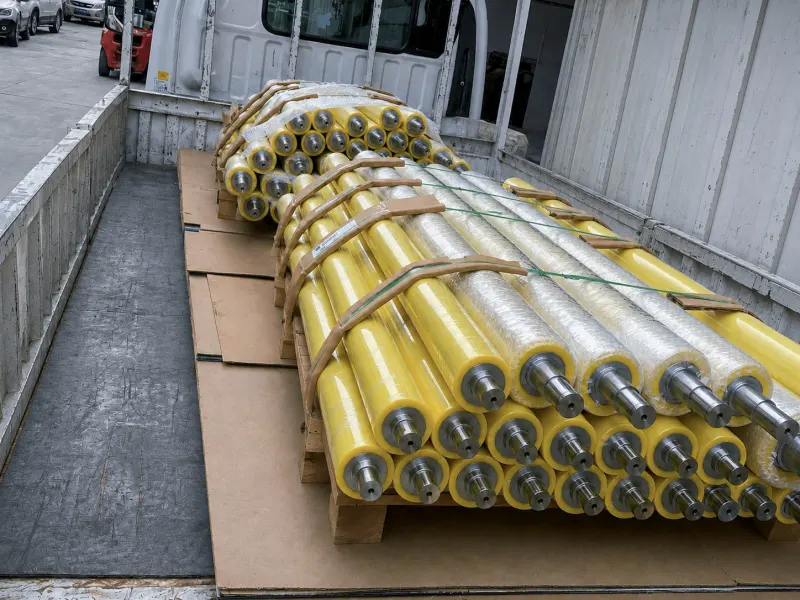
For this reason, a thicker PU cover is not always better. In some positions, a balanced design is safer: suitable hardness, controlled cover thickness, good bonding, enough core support, and the right surface finish.
The examples below show how PU roller review usually starts. They are not fixed solutions. The final direction still depends on the actual line.
If the roller turns but the material does not move steadily, and the surface wears or becomes shiny after running, the review should not only check the material.
It should also check surface finish, pressure, roller accuracy, contact material, line speed, and whether the paired roller is already worn.
If the roller is used for power transfer and the old cover wears quickly or loses grip, PU may be reviewed for stronger support.
But cover thickness and heat build-up also need attention. In heavier-load positions, making the cover thicker is not always the safer answer.
If the roller works in paired contact, the cover needs to hold pressure without losing shape too quickly.
PU may help when stronger support and longer surface life are needed. But if the contact material is sensitive, hardness and surface finish need to be selected carefully.
If the roller wears faster near the edge, the issue may not only be the rubber material.
Edge pressure, web path, winding tension, tracking condition, and the old wear pattern should also be checked.
PU is not the best material for every roller. When the working condition is not mainly about wear, grip, or load support, other rubber directions may need to be reviewed.
often reviewed for heat resistance, release, anti-sticking, and stable contact in higher-temperature or more demanding surface-protection positions.
Liquid silicone rollers:often reviewed for cleaner contact, softer surface behavior, low marking, release, and more sensitive material contact.
NBR / nitrile rollers:often reviewed for oil, ink, adhesive, and some general media contact.
EPDM rollers:often reviewed for ozone, weathering, moisture, and some general chemical environments.
FKM rollers:often reviewed for higher temperature, oil, solvent, and more demanding media contact.
SBR rollers:often reviewed for basic industrial contact and general wear-resistant rubber cover use.
The material should follow the roller position and working condition, not only the industry name or the old roller label.
PU rollers are often used where wear resistance, grip, and support need to work together.
Common positions include:
The exact design still depends on contact material, line speed, pressure, temperature, roller structure, and the current problem.
A reliable rubber roller depends on more than size matching. Compound formulation, hardness stability, cover thickness, surface finish, shaft structure, and running accuracy all affect how the roller performs on your line.
Wolorin supports both routine replacement roller projects and more demanding custom industrial rubber roller projects, with established manufacturing experience, production equipment, inspection equipment, available certificates, and documented quality checks. Our rubber compound formulation system can be matched to different operating requirements.
Before shipment, key items such as cover hardness, shaft details, surface condition, and running accuracy can be checked according to project requirements.
You can review our manufacturing scope, quality control process, and company background through the pages below.
In many applications, yes. But the final result still needs to be judged based on speed, pressure, the contact material, and the wear pattern.
Standard polyurethane is usually more suitable for moderate continuous temperature conditions.
If long-term heat contact is more significant, a more targeted polyurethane solution usually needs to be evaluated, or other material directions may also need to be considered together.
In many cases, yes.
But traction is not determined by the material alone. It is also related to hardness, surface condition, pressure, and the roller’s actual function on the line.
Yes.
If you have photos of the existing roller, basic dimensions, the roller position, the contact material, and the current problem, that is usually enough to start a first-round material review.
If you already have drawings, samples, an existing roller, or current parameters, you can send them directly to us for quotation.
If the information is not complete yet, you can also start by providing the roller position, operating temperature, contact media, and the current issue. The project can still begin from this basic information.