
Tissue Glue Applicator Roll Covers: What to Specify
A glue strip starts breaking up, adhesive spreads outside the intended area, or residue builds up faster on the applicator surface. These are common reasons to inspect a tissue gluing station and consider replacing a roller cover.
The component responsible for applying adhesive is the glue applicator, often called the cliché roll. It transfers glue to selected areas of the tissue. The marrying roll presses the paper plies together afterward.
For replacement, confirm the original working surface, glue-transfer area, and construction. Some machines use a removable cliché sleeve; others use a complete roller assembly.
If the original roller has performed well and conditions are unchanged, its existing specifications provide a practical basis for manufacturing and quotation. Recurring defects or changed working conditions require a closer look at the old cover.
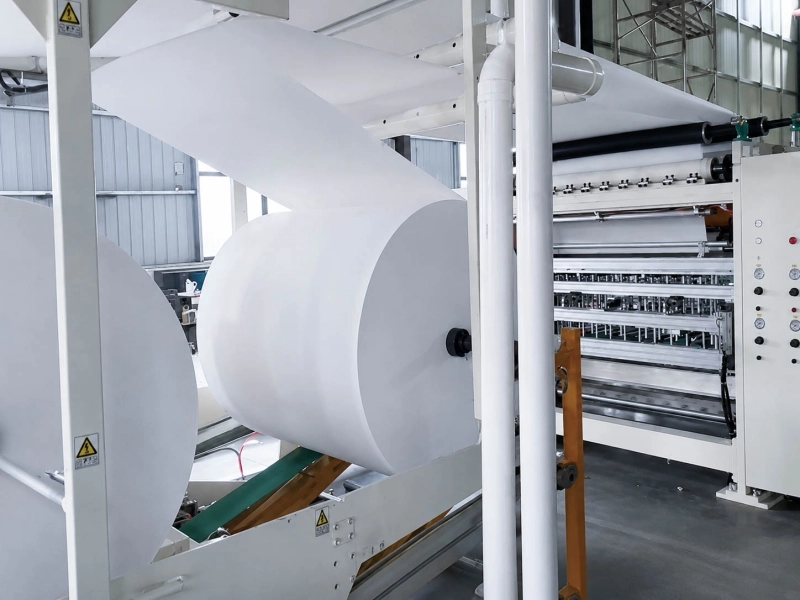
1. Which Roller Actually Applies the Glue?
Several rollers work close together around the embossing and gluing section. A purchasing request marked simply as “glue roller” can easily identify the wrong component.
The machine drawing or a photograph showing the roller position will help establish which part needs replacing.
Three Rollers with Different Jobs
| Rolle | Main function | What to identify |
|---|---|---|
| Glue applicator / cliché roll | Transfers adhesive to selected tissue areas. | The actual rubber-covered applicator. |
| Steel embossing roll | Forms the embossed pattern and supports the sheet during glue application in common arrangements. | The engraved steel component. |
| Marrying roll | Presses the tissue plies together. | The roller used for ply-contact pressure. |
The applicator may receive adhesive from a separate supply or metering roller. If that upstream component is the part being replaced, its specification must be identified separately.
Once the actual rubber-covered applicator is confirmed, the relevant manufacturing considerations are covered by Wolorin’s Übertragungswalzen behandelt.
2. What Matters at the Glue-Transfer Surface?
In a common tissue embossing-and-gluing arrangement, the applicator has a smooth rubber-covered surface. It contacts the raised portions of the embossed tissue while the sheet is supported by the steel embossing roll.
The embossed contact points establish where adhesive is deposited. The rubber applicator needs to carry a consistent glue film to those points. Other machine arrangements may use different applicator surfaces, so the original drawing remains the reference.
For replacement, pay attention to three features of the working surface: the effective glue-transfer width, the finished outside diameter, and the original surface finish.
The transfer width establishes which part of the roller carries adhesive. Its position along the roller face matters when glue is applied to a limited area.
The finished diameter affects contact with the mating roller. A replacement may fit the shaft correctly yet work differently if the rubber’s outside diameter has changed.
Surface finish matters during both pickup and release. Cuts, pits, or unevenly worn areas can disturb the glue film. Residue collecting in a damaged area may then make the transfer increasingly uneven.
For example, if a roller is intended to apply glue within a narrow working band, a mismatch in the new cover’s working width or position can move the adhesive outside that band. Matching the overall roller length alone will not prevent this.
Preserve the original working geometry when it has performed correctly. A smooth applicator should retain its specified finish. Any special profile must be confirmed from the actual drawing or sample before manufacturing.
3. How Do Adhesive and Cleaning Liquids Affect the Cover?
The applicator is exposed to adhesive during production and cleaning liquids during maintenance. The rubber compound needs to suit both.
For an established application, start with the adhesive currently in use and the original cover specification. If the combination has worked reliably, it provides a useful replacement reference.
Changes in adhesive or cleaning products deserve more attention.
A new adhesive may leave residue that is harder to remove. More frequent cleaning increases the cover’s exposure to cleaning liquids. If the rubber begins to swell or soften, its contact surface may no longer retain the original working shape.
There is also a practical difference between removable deposits and changes in the rubber itself.
Adhesive residue may come off during cleaning. Persistent tackiness, swelling, cracking, or surface deterioration after cleaning deserves closer inspection. These conditions can indicate that the existing compound or cleaning method needs to be reconsidered.
Paper lint and adhesive deposits can also collect around damaged areas of the cover. A surface that becomes difficult to clean at the same location can gradually interfere with glue transfer.
For a changed application, the adhesive product information and cleaning-liquid details help establish the required compound direction and surface finish. There is little value in specifying a rubber material by name without checking the actual liquids involved.
4. When Should the Old Roller Cover Be Checked?
A local glue-transfer defect provides a useful starting point when its position can be matched to the applicator surface.
Suppose one narrow area of the tissue repeatedly receives too little adhesive. Check the corresponding position on the roller. If the rubber has a worn patch, a cut, or persistent contamination in that area, the cover deserves closer inspection.
The response to cleaning adds another clue.
If glue transfer improves after cleaning but the same defect returns as deposits build up, inspect the surface condition and adhesive exposure. Reproducing the old compound without addressing repeated surface deterioration may reproduce the problem.
A defect that appears immediately after installing a replacement also makes the old and new working diameters, profiles, and surface finishes worth comparing.
The evidence is different when the problem covers the entire working width.
A general reduction in adhesive transfer calls for checking the glue supply and contact conditions. If the applied glue pattern remains consistent but the tissue plies separate easily, the adhesive, paper condition, and marrying contact are more relevant starting points.
For Wolorin’s roller-related work, localized defects that match visible cover wear, damage, or contamination provide a practical reason to review the rubber surface and replacement specification.
5. Can You Order Directly from the Existing Drawing?
If the original applicator has worked reliably and the operating conditions remain unchanged, the existing drawing and confirmed specifications can be used directly for replacement manufacturing and quotation.
First, establish whether the replaceable component is a sleeve or a complete roller.
A removable cliché sleeve fits onto an existing supporting shaft or mandrel. A complete roller includes its own core and shaft construction. Rubber-covered sleeves are used in tissue glue application, although their mounting designs vary between machines.
For a sleeve, the drawing should establish the internal mounting fit, working outside diameter, face length, and cover specification.
For a complete roller, shaft-end dimensions, bearing interfaces, and core details must also match the existing assembly.
The rubber cover thickness, hardness, and surface finish should follow the proven specification where available.
Be careful when measuring a badly worn component. Material loss or deformation can make its current diameter different from the original finished dimension. The original drawing, an undamaged sample, or reliable existing specifications provide a better manufacturing reference.
If the adhesive, cleaning method, or transfer requirements have changed, the original mounting dimensions can still serve as a starting point. The affected rubber compound and working-surface requirements need to be confirmed before production.
Special sleeve designs and unusual cover profiles should be checked against the supplied drawing or sample to confirm manufacturing feasibility.
Verwandte Seiten
For roller positions responsible for controlling adhesive supply and application amount.
Walzen für die Papierverarbeitung
For other roller functions and contact requirements in paper converting equipment.
Send Wolorin your drawings, dimensions, samples, or confirmed specifications for custom manufacturing, quotation, or production confirmation. If details are incomplete, start with the old-roller photos, roller position, glue-transfer area, contact liquids, or current roller-related problem you already know.