
Tissue Embossing Counter Roll Covers: Selection Guide
Replacing a tissue embossing rubber roll? First, identify the engraved steel roll it works against. The steel pattern determines where the rubber cover is compressed and how it must respond to repeated contact.
If the original counter roll has produced acceptable results and the steel pattern, paper grades, and machine setup remain unchanged, use its documented specifications as the starting point for replacement.
A new pattern, different tissue grade, or recurring cover wear may require a revised covering. The aim is to maintain the required embossing contact while protecting the paper’s bulk and strength.
Start with the original roller specifications, steel pattern, and previous production results. These provide a more useful basis for replacement than choosing a material or hardness value in isolation.
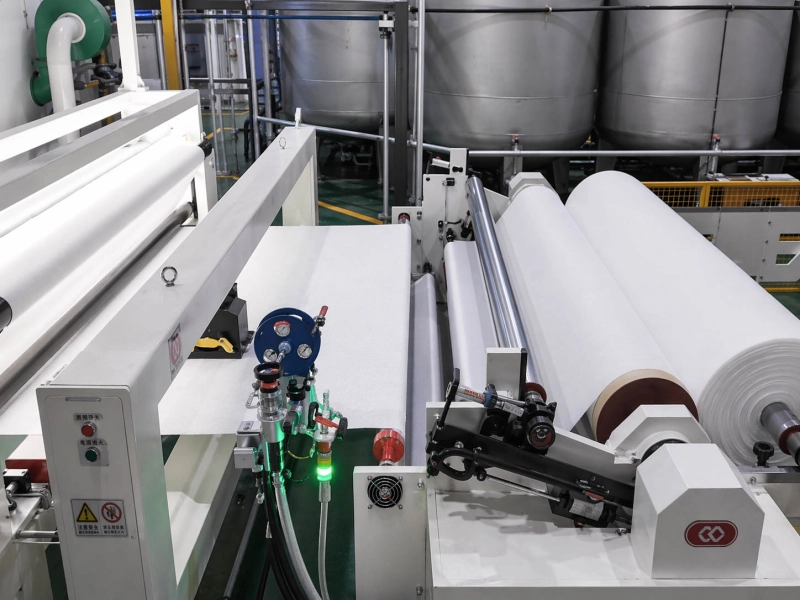
Confirm the Original Steel and Rubber Roller Pair
In a conventional steel-to-rubber embossing system, the engraved steel roll carries the pattern. The rubber counter roll supports the tissue as it passes through the nip.
Raised elements on the steel roll press the paper against the rubber covering. The cover provides the backing support needed for this repeated contact. This is a specialized application of rubber-covered Andruckwalzen.
Identify the actual counter roll before ordering. Tissue converting machines may also contain feeding rollers, glue applicators, and other rubber-covered rolls with different covering requirements.
Some embossing systems use laser-engraved hard rubber rolls or other special constructions. Confirm which roll carries the pattern and whether the original counter roll has a smooth covering before applying a conventional replacement specification.
A machine drawing or clear photograph of the original roller pair is a useful starting point.
Match the Rubber Cover to the Steel Pattern
The steel engraving determines how load reaches the rubber surface.
Closely spaced embossing dots, broad decorative elements, and deeper engravings place different demands on the covering. The size, shape, height, and distribution of the raised elements all affect local contact.
As the rolls turn, the rubber compresses beneath the engraving and recovers after leaving the nip. The same area of covering then returns for another loading cycle.
If the cover develops permanent deformation or loses its recovery performance, its contact with the engraving can change during service. This may affect how consistently the pattern forms.
Hardness influences the amount of deformation. Cover thickness, compound behavior, and construction also matter. Two covers with the same hardness can respond differently under repeated loading.
For an established pattern that has produced satisfactory results, the original covering specification is a practical reference. A substantially modified pattern should be matched against the existing cover before ordering its replacement.
What Has Changed Since the Previous Roller?
| Embossing condition | Rubber cover requirement | What helps confirm the replacement |
|---|---|---|
| Original steel pattern remains unchanged | Reproduce the established contact and recovery behavior. | Original covering specification and previous acceptable production results. |
| A finer or more closely spaced pattern is introduced | Accommodate the changed distribution of contact across the rubber surface. | New engraving details and the existing cover specification. |
| Larger or deeper decorative elements are introduced | Check the covering’s response to the changed local deformation. | Steel pattern drawing, original cover details, and paper requirements. |
Balance Embossing Depth with Paper Bulk and Strength
Embossing changes the tissue’s surface structure. Raised steel elements press into the sheet, forming the desired texture while compressing fibers around the engraved areas.
The finished sheet can gain apparent bulk through embossing. Excessive local compression, however, can damage fibers and reduce paper strength. Pattern depth needs to suit the paper grade and finished product requirements.
The rubber counter roll influences how the sheet is supported during this contact. Its deformation and recovery affect the contact between the steel engraving and the paper.
Consider a toilet tissue grade that runs well with the original roller pair. After switching to a lower-strength grade, the sheet begins tearing during embossing.
The paper change deserves attention first. If the original grade still runs normally with the same rollers, compare the paper properties and existing nip conditions before changing the covering.
A different situation arises when several previously acceptable paper batches show poorer results immediately after a counter-roll replacement. The old and new cover specifications, diameter, and contact condition then become relevant.
For replacement selection, use production results that satisfy the required pattern appearance, finished bulk, and paper strength together. A clear pattern has limited value if the finished tissue no longer meets its other requirements.
Check the Old Cover Before Repeating Its Specification
The old counter roll helps establish whether its original specification is suitable for another replacement.
Look for uneven wear, grooves, local flattening, or permanent deformation. A flattened area that no longer recovers properly may have lost its original contact behavior.
Wear concentrated in one part of the cover calls for a look at the corresponding steel-roll surface and loading condition. Repeating the same covering without identifying the source of that wear may produce the same result.
Also inspect the steel engraving for contamination or visible damage. A damaged steel pattern needs separate attention; replacing the rubber counter roll will leave that damage in place.
Use the original hardness record where available. A hardness reading taken from an aged or heavily worn cover may differ from its manufacturing specification.
If the original covering performed well throughout normal service, its documented material, hardness, thickness, and surface finish provide a straightforward replacement basis.
Repeated early wear or poor recovery may justify reviewing the compound direction, cover construction, and working surface before manufacturing another roller.
Match the Original Diameter and Shaft Details
A replacement counter roll must fit the existing assembly and maintain the intended contact with its engraved steel partner.
The steel engraving determines the pattern geometry and repeat. The rubber counter roll’s diameter and circumference affect the paired contact geometry and how frequently each area of its covering returns to the nip.
On machines with a fixed rotational-speed relationship between the rolls, changing the counter-roll diameter can also alter their relative surface speeds. The actual effect follows the machine’s drive arrangement.
Use the original design diameter whenever it is available. A heavily worn or previously ground roller may no longer have its specified outside diameter.
Working face length, cover thickness, shaft ends, and bearing fits also need to match the original assembly.
For a straightforward replacement, existing drawings or confirmed dimensions can be used directly for custom manufacturing and quotation. If the original drawing is missing, measurements and photographs of the old roller provide a starting point for confirming the required dimensions.
Verwandte Seiten
Rubber-covered rollers for controlled nip contact and application-specific pressure requirements.
Walzen für die Papierverarbeitung
Rubber roller applications across different paper converting positions.
Material information for projects where the original covering is specified as polyurethane.
Senden Sie Zeichnungen, Maße, Muster oder bestätigte Spezifikationen zusammen mit dem entsprechenden Stahlwalzenmuster für ein direktes Angebot und die Fertigungsbestätigung. Falls die Unterlagen unvollständig sind, beginnen Sie bitte mit Fotos der alten Walze, der Walzenposition, der Papiersorte, dem zuständigen Reinigungspartner und dem aktuellen Problem mit der Walze.