Чехлы для основных прижимных валов пленочных материалов: что следует указать в спецификации.
If your existing blown film nip rollers have been sealing the bubble, pulling the film steadily, and leaving the folded edges undamaged, start with the original drawing or confirmed specification. When the film structure, haul-off speed, and nip arrangement remain unchanged, the existing rubber cover specification is a practical basis for replacement.
First, identify which roll is actually rubber-covered. Some main nip assemblies pair a rubber-covered roll with a hard roll.
If the film now has thicker folds, the line runs faster, or the old cover has developed cuts or hardening, check the affected requirements before ordering. The replacement needs to maintain a continuous seal, provide sufficient grip, and avoid crushing the folded film. The original contact record and old roller condition can help determine what needs to change.
Confirm Which Main Nip Roll Needs Replacing
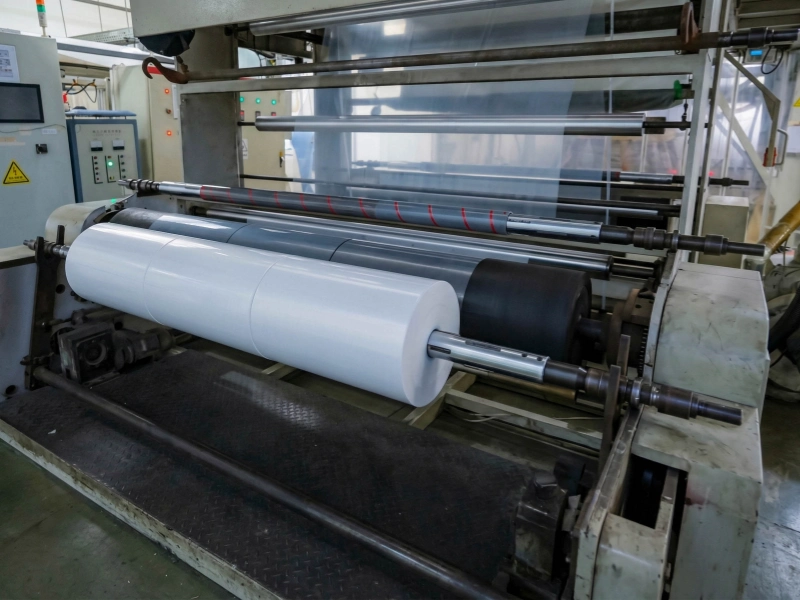
The main nip pulls the collapsed film tube away from the bubble while sealing the air inside. The rubber-covered roll works against its mating roll to maintain this contact.
Check the roller number and installation position against the machine drawing. Confirm the original hard/soft arrangement, particularly when the replacement is being ordered from an old sample.
A collapsing-frame roller or downstream nip roll may look similar, but its contact requirements can differ. Downstream rollers may use surface patterns suited to feeding, while the main nip requires continuous sealing contact.
For a straightforward replacement, the original construction, rubber compound, hardness, and surface finish provide the starting specification for a custom pinch roller.
When to Keep the Original Cover Specification
| Existing condition | Replacement direction |
|---|---|
| The film, speed, and nip arrangement are unchanged. Sealing and film quality have been satisfactory. | Use the confirmed original specification for direct replacement. |
| Folded edges are thicker, or the film now has gussets. | Check the new thickness distribution and whether the existing contact leaves edge impressions. |
| Haul-off speed has increased. | Confirm that the original cover still provides enough grip under the new operating condition. |
| The cover has cuts, cracks, hardening, or uneven wear. | Refer to the original specification and record the damage before confirming the replacement. |
How Folded Edges Affect the Main Nip Seal
The main nip needs a continuous sealing contact across the flattened film tube. Folded edges make this more difficult because their thickness differs from the central lay-flat area.
A plain collapsed tube already has thicker folded edges. Gusseted film introduces additional layers at specific positions, changing the thickness profile across the nip.
These thicker sections can carry more of the contact load. Depending on the cover and mating-roll geometry, contact elsewhere may become lighter.
Increasing the load may improve closure in one area while creating deeper impressions at the folds. The rubber cover needs enough compliance to accommodate these thickness differences without losing the required sealing contact.
What the Contact Pattern Can Tell You
- Lighter contact near the center: Check the cover profile, center wear, and mating-roll geometry. The thicker edges may affect load distribution, but roller deformation or wear can also contribute.
- Pressure marks concentrated at the folds: Compare their positions with the thicker film layers. Local compression and cover deformation are worth reviewing.
- Marks already present before the main nip: Their origin is upstream. A replacement cover will not remove damage already present in the film.
Consider a line changing from plain lay-flat tubing to gusseted film.
The existing roller may still fit the machine perfectly. However, the additional film layers change the local thickness passing through the nip.
If the new film develops impressions at the gussets, the original roller dimensions remain useful, but the cover’s ability to accommodate the thicker sections needs checking.
Where an earlier contact record is available, compare it with the current contact condition. A record taken with a different film structure or nip arrangement is a reference rather than a direct comparison.
If the contact has changed, inspect the cover profile and mating-roll condition before deciding whether the rubber hardness or cover construction needs adjustment.
Check Grip and Surface Damage Before Replacing the Cover
The main nip must pull the flattened film at a steady speed. Its rubber cover needs sufficient grip while keeping compression at the folded edges under control.
For an unchanged production condition, the original surface specification is a useful reference.
When haul-off speed increases, compare the current cover condition with its earlier performance. A glazed, contaminated, or worn surface may behave differently from the original cover.
Film movement also depends on the drive and downstream tension. If the cover appears sound but the pulling speed remains unstable, those equipment conditions need separate attention before changing the rubber specification.
Increasing nip load to gain more grip can create edge impressions. Where the seal is already satisfactory, additional compression may introduce film damage.
For the broader requirements of controlled film feeding, see Тянущие валы.
What the Old Cover Reveals
The old cover can help identify changes that are missing from the drawing.
A cut crossing the contact area may interrupt the sealing surface. Uneven wear can change the roller profile, while hardening can reduce the cover’s ability to accommodate thicker folds.
Look at the wear distribution across the roller face.
If the center has worn to a smaller diameter than the ends, compare the current profile with the original drawing. The replacement should follow the intended finished dimensions rather than reproduce the worn shape.
Original hardness and surface-finish records are preferable to measurements taken from a damaged or aged cover.
If cracking or hardening has developed near ozone-generating equipment, such as certain corona treatment systems, record the exposure and operating conditions.
Ozone can contribute to rubber ageing. The replacement compound still needs to suit the actual sealing, grip, temperature, and contact requirements. Environmental exposure alone is insufficient to select a material.
Match the Replacement to the Original Roll Pair
Once the cover requirements are clear, confirm the finished dimensions against the original drawing.
Check the outside diameter, face length, cover thickness, and shaft-end construction. An old roller may have lost diameter through wear or previous grinding, making its current measurements unsuitable as the finished replacement specification.
The mating roll matters as well.
Confirm the original hard/soft arrangement and paired dimensions. A worn mating-roll surface, changed mounting geometry, or uneven roller profile can alter contact across the width.
Where the original pair worked properly, the confirmed geometry and cover specification provide a direct manufacturing basis.
If the mating roll or mounting condition has changed, the mechanical issue needs to be addressed separately. A new rubber cover cannot compensate for an unsuitable mating arrangement.
Связанные страницы
Send Wolorin your main-nip drawing, dimensions, or confirmed specification for custom manufacturing, quotation, or production confirmation. If records are incomplete, start with the roller position, old-roll photos, film or contact medium, and the current roller-related problem.