
PCB Dry Film Lamination Defects: When the Rubber Roll Is Involved
Small air voids, thin photoresist spots, and poorly laminated bands can appear after PCB dry-film lamination. Their shape and position help narrow the cause.
Start with the copper surface and incoming dry film when defects appear as isolated spots. If similar spots recur along the feeding direction, compare their spacing with the laminating roll circumference and inspect the corresponding roll surface.
A broad area of poor lamination, particularly near the panel center, calls for a different check. Uneven contact pressure and heat transfer may be involved, depending on the laminator’s construction.
The rubber roll becomes a stronger suspect when defect spacing, position, and surface damage agree. That evidence helps distinguish a cover problem from defects originating elsewhere in the process.
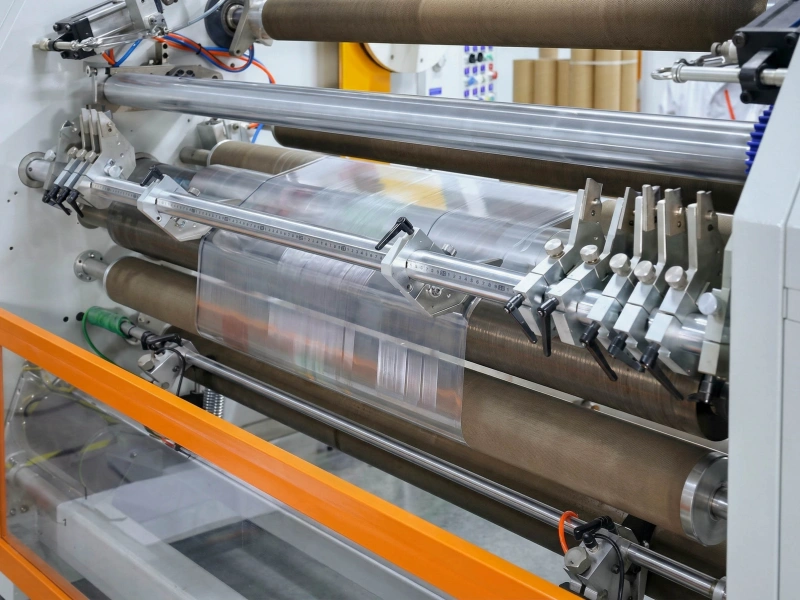
Start with the Defect on the Panel
A small void may come from contamination on the copper, a damaged area on the board, or a defect in the incoming film.
Inspect the affected area against the copper surface and film condition before lamination, where accessible. If the same irregularity is already present, investigate that source first.
For defects that appear after lamination, compare several affected panels. Look at the shape, width position, and distribution of the marks. These details help determine which contact condition deserves attention.
What Does the Defect Look Like?
Pale voids — Look for a pit or cut
A depressed area on the rubber surface can leave the film under-pressed.
Thin resist spots — Look for raised debris
A particle or deposit can concentrate pressure and thin the photoresist.
Poor lamination across the width — Check the nip
Persistent center-to-edge differences call for pressure and heat-distribution checks.
How Pits and Debris Affect the Photoresist
A pit, hole, or cut leaves a depression in the rubber cover. When that area enters the laminating nip, it provides less pressure to the film.
The photoresist may fail to conform fully to the copper surface. Air trapped beneath it can leave a pale void, while insufficient contact may produce a small area of weak adhesion.
Even a small pit can cause a visible defect. The shape of the void may resemble the damaged area on the roll.
Raised contamination produces the opposite effect.
A particle or accumulated resist residue protrudes from the rubber surface and concentrates pressure at one point. The photoresist may become thinner, leaving a slight indentation.
A thin spot without trapped air can be difficult to see under direct lighting. Viewing the panel at an angle may reveal a shallow dimple.
A larger deposit can also prevent proper contact around its edges. The resulting defect may have a thin central area surrounded by a pale region.
These appearances provide useful clues, but the corresponding roll surface must be inspected before identifying the cause. A small particle on the incoming material can produce a similar local defect.
When damage is confirmed at the roll contact point, the condition of the rubber cover becomes relevant to the Rodillos de presión used for that position.
Does the Defect Repeat with the Roll?
A damaged spot on a rotating roll can produce a similar defect each time it passes through the nip.
Compare the distance between recurring spots with the suspected laminating roll circumference. This comparison is most useful when the film and roll move together without significant slipping.
Board spacing can make the pattern difficult to recognize.
A spot may appear near the front of one panel but farther back on the next. The roll continues turning while the gap between panels passes through, so the defect shifts relative to each panel’s leading edge.
Use the actual film travel distance, including the gaps between panels, where that information is available.
The position across the panel width provides another clue.
If recurring spots remain near the same side of the panel, inspect the corresponding position along the roll face.
For example, suppose similar voids appear at intervals close to one roll circumference. They also occupy the same width position, where a small pit is found on the rubber surface. These observations together provide stronger evidence than repeat spacing alone.
If the interval differs or the roll surface has no corresponding damage, the film feed and other rotating components remain possible sources.
Why Is Lamination Weaker in the Middle?
Some PCB dry-film laminators apply pressure through the end shafts of heated rubber rolls. Under load, the rolls can deflect, leaving lower contact pressure toward the center of the panel.
Reduced contact can also limit heat transfer into the dry film and copper.
The resulting defect may extend across a broad area. Several panels may show weaker lamination near the center while the edges remain relatively well laminated.
A small pit on the roll is unlikely to explain this full-width pattern.
The equipment maintenance team should examine the actual loading arrangement, roll alignment, and available pressure-distribution records.
A loading-pressure reading alone cannot establish how evenly the panel is contacted. Existing nip-contact records, if available, can help show whether the pressure changes across the width.
For heated-roll equipment, the heating condition also needs to be checked. A persistent center-to-edge difference can involve both contact pressure and heat transfer.
An uneven rubber cover profile or significant wear may contribute to the problem. The machine’s actual loading and heating conditions should be established before specifying a replacement cover.
This center-pressure mechanism applies to laminators with the relevant roll-loading arrangement. Other machine designs may behave differently.
When Should the Rubber Cover Be Replaced?
When panel defects match damage on the roll, the next step is to examine the affected surface.
An attached particle or resist deposit may be removable through the equipment manufacturer’s approved cleaning procedure. If the rubber remains intact and subsequent panels laminate normally, replacement may be unnecessary.
If buildup repeatedly returns to the same location, inspect the surface for damage or conditions that encourage residue to accumulate.
Pits and cuts require a different response. Cleaning cannot restore missing rubber.
When a permanent depression matches recurring lamination voids, replacing the affected cover or roll becomes a practical option.
Check how the damage occurred as well. Sharp panel edges and tools used to scrape residue can cut or gouge the rubber. If the same physical damage keeps recurring, its cause should be addressed before another replacement develops the same defect.
For an established roller that has worked satisfactorily under unchanged conditions, its original drawing, dimensions, and specification can provide the basis for straightforward replacement.
If defects return after replacement or the operating conditions have changed, the old cover damage, roller position, and contact requirements deserve a closer look before confirming the new cover.
Páginas relacionadas
Rubber-covered pressure rollers for controlled contact and surface protection.
Rodillos para líneas de recubrimiento y laminación
Roller requirements for coating and laminating applications.
Send Wolorin your drawings, dimensions, or original roller specifications for custom manufacturing or a replacement quotation. If details are incomplete, start with defect photos, old-roll photos, the roller position, and the contact conditions you know.