
Rodillos de caucho para el procesamiento de madera
Wolorin manufactures custom rubber-covered rollers for wood-processing equipment, including plywood and veneer glue spreaders, wide-belt sanders, wood finishing machines, panel laminators, and selected feeding systems. We supply complete rollers for routine replacements and application-specific projects.
A plywood glue spreader needs the right groove pattern to distribute adhesive. A sanding contact roller supports the abrasive belt under load, while a finishing roller applies coating to the wood surface. Each position requires its own cover properties and surface specification.
Whether you have a complete drawing or only an existing roller, photographs, and basic dimensions, we can start with the information available.
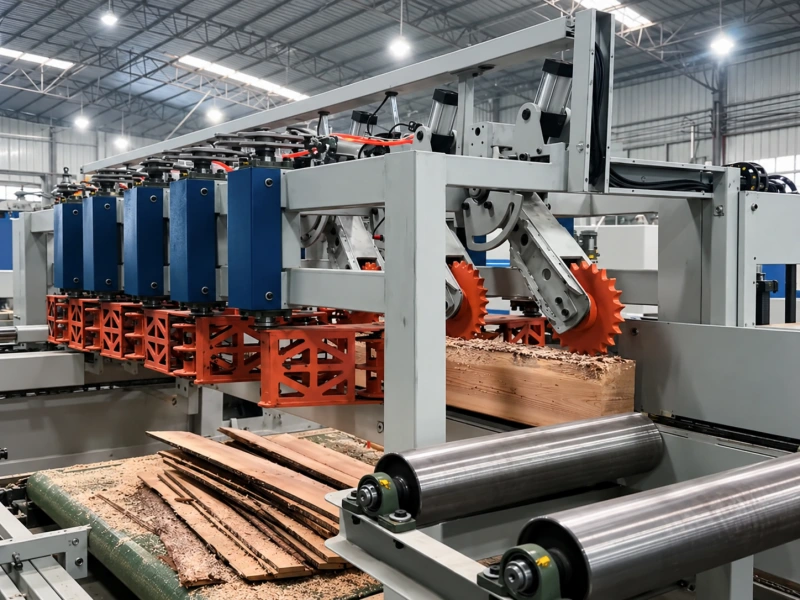
Rubber Roller Applications in Wood Processing
Wood-processing equipment handles materials ranging from thin veneer and unfinished plywood to MDF, solid wood, and finished flooring. Their surface texture, thickness, and sensitivity to pressure create different requirements for rubber-covered rollers.
The following table covers five common applications.
| Wood-processing operation | Rubber-covered roller position | Requisitos principales |
|---|---|---|
| Plywood and veneer gluing | Aplicadores de pegamento ranurados y rodillos dosificadores recubiertos de goma, cuando estén instalados. | Adhesive distribution, groove geometry, working width |
| Wide-belt sanding | Rubber contact rollers supporting the abrasive belt | Cover hardness, surface profile, sanding load, running accuracy |
| Flat-line wood finishing | Rubber applicator rollers | Coating transfer, surface finish, chemical compatibility |
| Decorative panel lamination | Rubber-covered pressure rollers | Contact across the panel without damaging the decorative surface |
| Panel feeding | Rubber-covered feed, drive, or hold-down rollers | Grip, wear resistance, limited surface marking |
Roller construction varies between machines. A glue spreader may combine rubber and metal rollers, while a wide-belt sander may use steel and rubber-covered contact rollers at different sanding heads.
Rodillos aplicadores de pegamento para madera contrachapada
Los rodillos aplicadores de adhesivo para contrachapado aplican el adhesivo a los paneles de chapa y madera antes de pegarlos. La superficie del aplicador debe ser adecuada para el adhesivo, la textura de la chapa y el ancho de trabajo.
Groove Design and Adhesive Distribution
The groove pattern affects how adhesive is carried and distributed across the veneer. Groove depth, spacing, and working width should match the original application requirements.
As a roller wears, its grooves may become shallower or uneven. Dried adhesive can also accumulate in the channels. When successive panels show glue stripes at the same position across their width, inspect the corresponding area of the roller.
Adhesive viscosity, glue supply, roller gap, and veneer condition can produce similar symptoms. Changes in the glue pattern should be checked against these conditions before replacing the applicator.
A severely worn roller may no longer retain its original groove geometry. An OEM drawing or verified replacement specification is a more reliable manufacturing reference than the damaged surface alone.
Applicator and Metering Roller Construction
Four-roll glue spreaders may use different rubber coverings for application and metering.
Por ejemplo, el aplicador de pegamento OMMA GS utiliza aplicadores ranurados recubiertos de goma y rodillos dosificadores de goma dura para la aplicación de adhesivos a base de agua en piezas y paneles de madera.
These rollers require separate specifications. Some other gluing machines use metal dosing components, so each roller's position and construction should be identified before ordering a replacement set.
The individual functions are covered in more detail under rodillos de transferencia y rodillos dosificadores.
For an existing plywood glue spreader, the replacement should preserve the required application profile and fit the machine's original roller arrangement.
Wood Sanding Contact Rollers
Wood sanding contact rollers support the abrasive belt during thickness calibration and surface sanding. The rubber cover affects how the belt contacts the workpiece under load.
Different Covers for Calibration and Fine Sanding
Calibration removes material to bring a board to its required thickness. Fine sanding places more emphasis on surface appearance, particularly when preparing veneer or panels for finishing.
The Felder FW 1352 provides a useful equipment example. In a documented configuration, its calibration unit uses a grooved rubber contact roller with a hardness of 85 Shore, while the combination sanding unit uses a 45 Shore rubber roller. Both have a diameter of 140 mm.
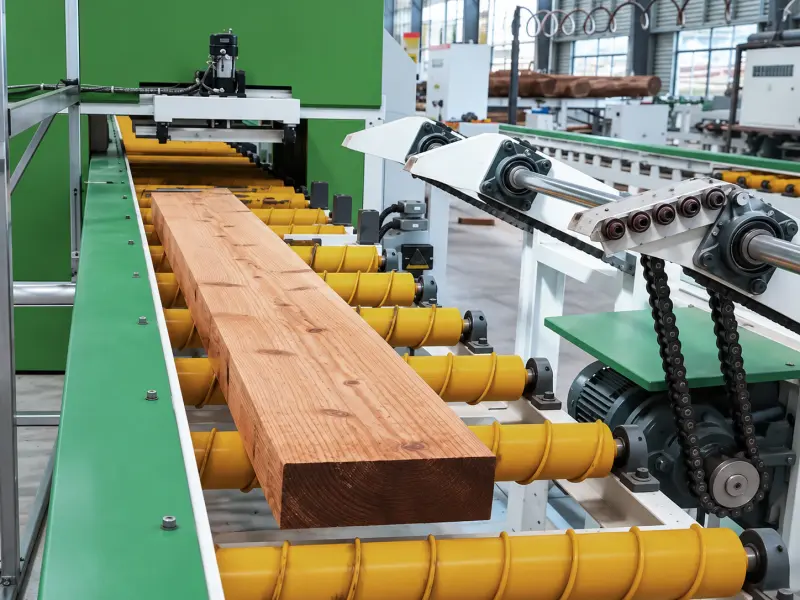
These figures belong to that particular machine configuration. Replacement wood sanding contact rollers should match the original specification of the individual sanding head.
Groove Wear and Repeated Sanding Marks
The contact roller's surface profile affects abrasive belt support. Localized wear, damaged grooves, or excessive runout can disturb the contact pattern and contribute to sanding marks.
Repeated marks may also come from abrasive belt defects, belt joints, contamination, or machine settings. The rubber roller deserves inspection when the marks correspond to its rotation or the cover shows visible damage.
A roller that has been reground several times may have a smaller diameter and altered groove geometry. Its original specification should be checked before manufacturing a replacement.
Where vibration or abnormal running is present, the shaft, bearings, and mounting condition should also be examined.
Wood Finishing Rollers
Wood finishing rollers apply stains, sealers, primers, and topcoats to wood panels, flooring, and other wooden products. Their working surfaces influence coating appearance, especially where the finished face must remain visually consistent.
Coating Flat Panels, Open Grain, and Shallow Profiles
A smooth MDF panel provides a relatively even application surface. Oak and other open-grain woods have pores and texture that influence how coating is deposited. Flooring boards and decorative panels may also have bevels or shallow grooves.
Different surfaces call for different application arrangements.
For example, Dubois reverse-fill coaters use rubber-covered applicator rolls to fill pores in materials including oak, veneer, flooring, particleboard, and MDF.
Shallow grooves present another contact requirement. In a published project for door manufacturer Puertas Proma, Cefla Finishing used a specially designed soft applicator roller to apply basecoat to doors with shallow grooves. The project also incorporated other finishing equipment.
The workpiece profile is therefore an important part of a wood finishing roller specification. A roller designed for smooth panels may require a different contact surface or arrangement for shallow-profile products. Deeper recesses may need a separate coating operation.
Coating Compatibility and Roller Marks
Water-based coatings, UV-curable finishes, solvent-containing paints, and cleaning agents expose rubber covers to different chemical conditions.
An incompatible compound may swell, soften, harden, or change dimensions. The actual coating formulation and cleaning chemicals should be checked before selecting a replacement material.
The condition of the roller surface also affects the finish. Cuts, embedded particles, coating deposits, and uneven wear may leave visible streaks.
If marks appear after cleaning, inspect the cover for swelling or surface damage. Coating viscosity, supply, and application settings should also be checked.
A replacement wood finishing roller should retain the required application surface and use a compound suited to the actual coating and cleaning conditions.
Rubber Rollers for Wood Panel Lamination and Feeding
Decorative Panel Lamination
Rubber-covered pressure rollers are used in selected equipment to laminate veneer and decorative sheets onto plywood, MDF, and other wood-based panels.
The cover must provide suitable contact across the panel without leaving unwanted impressions on the decorative surface. Panel thickness, facing material, and the opposing roller all affect the required contact.
Machine construction varies. The UNIMAK RP 140-D roller press, for example, uses a rubber-covered first pressure roller and a chrome-plated second pressure roller.
If bonding varies across a panel, inspect the rubber cover for localized wear, surface damage, or uneven contact. Adhesive distribution, substrate condition, and machine alignment may also contribute.
For more information about controlled contact, see our rodillos de presión página.
Panel Feeding and Handling
Rubber-covered feed, drive, and hold-down rollers are used at selected positions in woodworking machinery.
Unfinished panels expose the cover to wood dust and potentially abrasive surfaces. Finished flooring and decorative boards require sufficient grip without scuffing or pressure marks.
A glossy, contaminated, or unevenly worn cover may contribute to slipping. The machine's drive arrangement, hold-down settings, and board condition should also be considered.
See rodillos de tracción for more information about grip and feeding contact.
Specifying a Replacement Wood-Processing Roller
A replacement roller needs to fit the existing equipment and meet the contact requirements of its working position. The original drawing and service history provide useful references, particularly when the old roller has been damaged or modified.
Dimensions and Construction
The main dimensions include finished outside diameter, rubber face length, core diameter, overall shaft length, bearing positions, and mounting details.
The finished diameter affects the roller's installation and contact position. Face length determines the usable working width, while shaft and bearing dimensions must match the equipment.
Wolorin manufactures complete new rubber-covered rollers, including the core, shaft ends, covering, and final surface finish. Re-covering an existing core may also be considered when its condition and dimensions are suitable.
Cover Material and Hardness
The compound must suit the material and conditions at the roller's working position.
NBR rubber rollers may be considered for selected adhesive and coating applications after chemical compatibility has been checked. rodillos de caucho de poliuretano may be considered for certain wear-intensive or load-bearing positions.
Other rubber compounds may be suitable depending on the application. Hardness and cover thickness should match the contact requirements, with the original specification serving as a reference where appropriate.
A change in adhesive, coating, cleaning chemicals, or operating conditions may require a different compound or cover specification.
Surface Finish and Running Accuracy
Glue spreaders may require a defined groove pattern. Sanding contact rollers can have their own surface profiles, while finishing rollers may need a specified ground or textured surface.
The manufacturing specification should include the required surface geometry, finished dimensions, and mounting details. Runout and dynamic balancing requirements are confirmed according to the machine and application.
If the original roller performed well before wearing out, its verified specification provides a practical basis for replacement. A roller that failed prematurely or caused problems from the beginning should be reviewed before its design is reproduced.
Preguntas frecuentes
Can I replace just one roller in a four-roll glue spreader?
Yes. Identify the specific applicator or metering position and provide its dimensions, covering, surface profile, and mounting details. The rollers may have different specifications, so each replacement should be identified separately.
Do I need to ship the old roller for replacement?
Not necessarily. A drawing, reliable dimensions, and clear photographs may provide enough information to manufacture a complete new roller. A physical sample may be needed if critical details cannot be established from the available information.
Can Wolorin manufacture a complete roller with a new core and shaft?
Yes. Complete new roller manufacturing includes the core, shaft ends, rubber covering, and final surface finish. The construction and inspection requirements are confirmed according to the project.
Tipos y materiales de rodillos comunes para esta aplicación
Explore the roller functions and materials used in relevant wood-processing applications.
| Related page | Solicitud |
|---|---|
| Rodillos de transferencia | Adhesive and coating transfer at suitable application positions. |
| Rodillos dosificadores | Adhesive amount control in roller-based gluing equipment. |
| Rodillos de presión | Controlled contact for veneer and decorative-panel lamination. |
| Rodillos de tracción | Grip and feeding contact for wood panels. |
| Rodillos motrices | Driven rubber-covered rollers in selected woodworking equipment. |
| Rodillos de caucho de poliuretano | Material options for selected wear-intensive and load-bearing positions. |
| Rodillos de caucho NBR / nitrilo | Material options for selected adhesive and coating-contact applications. |
Explorar más categorías de rodillos
Manufacturing and Quality at Wolorin
Descubra nuestros servicios de fabricación, control de calidad e historia de la empresa.
Servicios
Complete roller manufacturing, rubber covering, and surface finishing.
Control de calidad
Inspection and verification according to project requirements.
Acerca de Wolorin
Información general de la empresa y sobre su proceso de fabricación.
Need a Replacement Wood-Processing Roller?
Looking for plywood glue spreader rollers, wood sanding contact rollers, wood finishing rollers, or other rubber-covered components for woodworking equipment?
Send us your drawing or existing roller dimensions. Photographs of the old roller and its position in the machine are also useful.
If available, include the wood product, working width, adhesive or coating in contact with the roller, and any roller-related problem, such as wear, slipping, swelling, or repeated surface marks.
Start with the details you have. The remaining manufacturing requirements can be confirmed before production.