El recubrimiento se endurece después de funcionar
Possible cause: Envejecimiento térmico o cambio por el medio
Why FKM may be reviewed: Puede ofrecer mayor estabilidad térmica y frente a medios
Los rodillos de caucho FKM se utilizan cuando el calor, aceite, combustible, disolventes o medios exigentes hacen que un caucho estándar pierda estabilidad con el tiempo.
En muchas aplicaciones, el rodillo no falla inmediatamente después de instalarse. La diferencia aparece cuando el calor, el contacto con medios, la presión y el tiempo de producción empiezan a modificar la superficie del recubrimiento.
Direcciones habituales de aplicación:
funcionamiento continuo a mayor temperatura o exposición térmica prolongada
contacto con aceites, combustibles, hidrocarburos aromáticos, determinados disolventes o medios industriales complejos
posiciones donde el caucho estándar presenta hinchamiento, endurecimiento, reblandecimiento, grietas o vida útil inestable
posiciones de recubrimiento, impresión, transferencia, dosificación, metal, lámina o procesos afectados por calor
También puede encontrarse como rodillo de fluorocaucho, fluoroelastómero, caucho fluorocarbonado, FPM o equivalente a Viton. Estos nombres ayudan a comunicar la familia de material, pero las condiciones reales deben confirmarse antes de seleccionar el compuesto.
No necesita tener toda la información preparada antes de ponerse en contacto con nosotros.
FKM should be reviewed earlier when the roller position has already moved beyond normal general-purpose rubber conditions.
If the roller works near a drying section, heated coating area, hot oil, heated material, or another heat-affected position, standard rubber may age faster over time.
The first sign may not be complete failure. It may be a harder cover feel, reduced elasticity, cracking, unstable pressure, or shorter replacement cycle.
FKM becomes more relevant when the roller surface has repeated contact with oils, fuels, aromatic hydrocarbons, selected solvents, ink, coating liquid, resin-related media, cleaning chemicals, or other process fluids.
The key question is not whether the rubber can touch the media once. It is whether the cover can keep its size, hardness, surface condition, and bonding stability after repeated exposure.
If a replacement roller works at first but the same problem comes back after several weeks or months, the issue may not be the dimension alone.
The material may be changing after heat and media exposure. If swelling, hardening, softening, cracking, or short service life appears together with heat or complex media, FKM should be reviewed before copying the old material again.
FKM is worth reviewing when the roller problem looks like material change after heat or media exposure, not only normal mechanical wear.
| Síntoma | Posible causa | Por qué revisar FKM |
|---|---|---|
| El recubrimiento se endurece después de funcionar | Envejecimiento térmico o cambio por el medio | Puede ofrecer mayor estabilidad térmica y frente a medios |
| El caucho se hincha con aceite, combustible o disolvente | El medio penetra y cambia el volumen | Puede reducir hinchamiento en condiciones compatibles |
| La superficie se ablanda o queda pegajosa | Compatibilidad incorrecta | Puede comprobarse frente al fluido o medio de recubrimiento real |
| Aparecen grietas prematuras | Calor, exposición química o esfuerzo mecánico | Puede ayudar si calor y medio son las causas principales |
| Funciona bien al principio y luego se vuelve inestable | La exposición cambia dureza, dimensiones o superficie | Conviene revisar FKM antes de repetir material |
| La vida útil varía entre lotes | Compuesto, adhesión o ajuste de condiciones inestable | Deben revisarse material y control de producción |
Possible cause: Envejecimiento térmico o cambio por el medio
Why FKM may be reviewed: Puede ofrecer mayor estabilidad térmica y frente a medios
Possible cause: El medio penetra y cambia el volumen
Why FKM may be reviewed: Puede reducir hinchamiento en condiciones compatibles
Possible cause: Compatibilidad incorrecta
Why FKM may be reviewed: Puede comprobarse frente al fluido o medio de recubrimiento real
Possible cause: Calor, exposición química o esfuerzo mecánico
Why FKM may be reviewed: Puede ayudar si calor y medio son las causas principales
Possible cause: La exposición cambia dureza, dimensiones o superficie
Why FKM may be reviewed: Conviene revisar FKM antes de repetir material
Possible cause: Compuesto, adhesión o ajuste de condiciones inestable
Why FKM may be reviewed: Deben revisarse material y control de producción
These symptoms should be checked together with temperature, media type, pressure, line speed, cover thickness, paired roller condition, and cleaning method.
FKM is a fluoroelastomer material family used when a roller cover needs better resistance to heat, oil, fuel, selected solvents, or demanding media contact.
In roller projects, FKM should be treated as a material direction. The final result still depends on the compound, hardness, cover thickness, bonding, surface finish, operating temperature, and actual contact media.
This material may also appear in drawings or old specifications as FPM, fluororubber, fluoroelastomer, fluorocarbon rubber, Viton-type rubber, or Viton equivalent. These names help with communication, but the working condition still needs to be checked before confirming the compound.
The figures below are reference directions for FKM roller review. They should not be treated as fixed promises for every roller project.
| Elemento | Dirección de referencia | Significado para el proyecto |
|---|---|---|
| Dureza del recubrimiento | Habitualmente alrededor de 55–90 Shore A | Recubrimientos medios a duros donde importan contacto y resistencia a medios |
| Temperatura de servicio típica | Aproximadamente -20°C a 200°C; algunos compuestos alrededor de 204°C | Punto de partida, no promesa universal |
| Compuestos de mayor temperatura | Algunos proyectos pueden revisar aproximadamente 225°C–270°C | Debe comprobarse con tiempo de exposición, medio, presión, adhesión y margen de seguridad |
| Medios habituales | Aceites, combustibles, hidrocarburos aromáticos, determinados disolventes y medios industriales complejos | Motivo habitual para elegir FKM frente a caucho estándar |
| Limitaciones | Agua caliente, vapor, cetonas, ésteres, aminas, fluidos alcalinos o algunos disolventes polares requieren revisión separada | FKM no es universalmente resistente a todos los químicos |
| Baja temperatura | FKM estándar puede no ser la mejor opción si la flexibilidad a baja temperatura es prioritaria | Puede necesitar compuesto especial u otro material |
Common reference direction: Habitualmente alrededor de 55–90 Shore A
What it means for roller projects: Recubrimientos medios a duros donde importan contacto y resistencia a medios
Common reference direction: Aproximadamente -20°C a 200°C; algunos compuestos alrededor de 204°C
What it means for roller projects: Punto de partida, no promesa universal
Common reference direction: Algunos proyectos pueden revisar aproximadamente 225°C–270°C
What it means for roller projects: Debe comprobarse con tiempo de exposición, medio, presión, adhesión y margen de seguridad
Common reference direction: Aceites, combustibles, hidrocarburos aromáticos, determinados disolventes y medios industriales complejos
What it means for roller projects: Motivo habitual para elegir FKM frente a caucho estándar
Common reference direction: Agua caliente, vapor, cetonas, ésteres, aminas, fluidos alcalinos o algunos disolventes polares requieren revisión separada
What it means for roller projects: FKM no es universalmente resistente a todos los químicos
Common reference direction: FKM estándar puede no ser la mejor opción si la flexibilidad a baja temperatura es prioritaria
What it means for roller projects: Puede necesitar compuesto especial u otro material
En el caso de los rodillos de caucho, los datos de temperatura por sí solos no son suficientes. El tiempo de exposición, el espesor de la capa, la tensión de unión, los requisitos de superficie y el contacto real con el medio suelen determinar si el compuesto seleccionado puede mantenerse estable durante la producción.
FKM should not be treated as a universal upgrade. The practical question is whether the roller position needs FKM, or whether another material direction is more suitable.
| Material | Más adecuado cuando el problema principal es... | Precaución cuando... |
|---|---|---|
| FKM | Calor, aceite, combustible, determinados disolventes y medios complejos | Vapor, agua caliente, cetonas, ésteres, aminas o flexibilidad a baja temperatura son prioritarios |
| Rodillos de caucho NBR/nitrilo | Aceite, tinta, adhesivos y medios industriales ordinarios | Temperatura o química exceden claramente las condiciones estándar |
| rodillos de silicona sólida | Calor, desprendimiento, antiadherencia, contacto suave y protección | Aceite, combustible o química agresiva es el problema principal |
| PU | Desgaste, carga, agarre, tracción y vida mecánica | Estabilidad química/térmica es más importante que desgaste |
| EPDM | Ozono, intemperie, humedad, agua caliente, vapor y algunos químicos generales | Aceite, combustible o hidrocarburos son el contacto principal |
More suitable when the main issue is: Calor, aceite, combustible, determinados disolventes y medios complejos
Be careful when: Vapor, agua caliente, cetonas, ésteres, aminas o flexibilidad a baja temperatura son prioritarios
More suitable when the main issue is: Aceite, tinta, adhesivos y medios industriales ordinarios
Be careful when: Temperatura o química exceden claramente las condiciones estándar
More suitable when the main issue is: Calor, desprendimiento, antiadherencia, contacto suave y protección
Be careful when: Aceite, combustible o química agresiva es el problema principal
More suitable when the main issue is: Desgaste, carga, agarre, tracción y vida mecánica
Be careful when: Estabilidad química/térmica es más importante que desgaste
More suitable when the main issue is: Ozono, intemperie, humedad, agua caliente, vapor y algunos químicos generales
Be careful when: Aceite, combustible o hidrocarburos son el contacto principal
If a roller is slipping because the surface finish and pressure are wrong, FKM will not automatically fix the grip. If roller marks come from hardness, crown, or pressure distribution, FKM alone will not solve the pressure problem.
Material direction matters, but roller design and operating condition still need to match.
The examples below show how FKM is usually reviewed in real roller conditions. They are not fixed formulas, but they help narrow down the material direction.
A roller works close to a drying section or heated coating area. The old roller can run at first, but after a period of production, the cover becomes harder, the surface loses stability, and coating contact becomes less consistent.
In this type of position, FKM may be reviewed if heat exposure and coating media are both involved. The review should include working temperature, exposure time, coating liquid, cover hardness, cover thickness, bonding condition, and surface finish.
Related review pages: Rodillos para líneas de recubrimiento y laminación, rodillos dosificadores, rodillos de transferencia.
A roller works with ink, solvent-related media, or cleaning chemicals. The surface begins to swell, soften, glaze, or lose stable contact after repeated operation.
If the media is beyond ordinary oil or ink contact, FKM may be more suitable than a standard NBR direction. If the main issue is only basic oil resistance, NBR may still be the more practical first review.
Related review pages: Rodillos para la industria de impresión, Rodillos de caucho NBR/nitrilo.
A roller works near metal strip, foil, oil film, process lubricant, or heat-affected contact. The old cover shows hardening, cracking, surface wear, or short service life.
If the main issue is wear and load, PU may be reviewed earlier. If the main issue is heat plus oil or media exposure, FKM becomes more relevant.
Related review page: Rodillos para procesamiento de lámina y banda metálica.
Different FKM roller descriptions usually come from different working conditions. The wording may change, but the review should still return to the real roller position.
| Common description | Usually points to | What should be checked |
|---|---|---|
| High-temperature FKM roller | Heat-affected roller position | Temperature, exposure time, cover thickness, bonding, surface stability |
| Oil-resistant FKM roller | Oil, lubricant, or hydrocarbon contact | Media type, exposure time, swelling risk, hardness change |
| Fuel-resistant FKM roller | Fuel or fuel-related media contact | Fuel type, contact pattern, safety margin, cover stability |
| Solvent-resistant FKM roller | Selected solvent or solvent-based media contact | Solvent type, concentration, cleaning method, surface change |
| Chemical-resistant FKM roller | More complex media exposure | Exact media, concentration, temperature, compatibility review |
| FKM transfer roller | Ink, coating liquid, adhesive, or media transfer | Transfer stability, surface finish, hardness, media resistance |
| FKM metering roller | Controlled coating or liquid amount | Surface consistency, hardness, runout, media compatibility |
| Viton equivalent roller | FKM-type material direction requested by name | Actual compound, operating condition, and whether brand-specific material is required |
Usually points to: Heat-affected roller position
What should be checked: Temperature, exposure time, cover thickness, bonding, surface stability
Usually points to: Oil, lubricant, or hydrocarbon contact
What should be checked: Media type, exposure time, swelling risk, hardness change
Usually points to: Fuel or fuel-related media contact
What should be checked: Fuel type, contact pattern, safety margin, cover stability
Usually points to: Selected solvent or solvent-based media contact
What should be checked: Solvent type, concentration, cleaning method, surface change
Usually points to: More complex media exposure
What should be checked: Exact media, concentration, temperature, compatibility review
Usually points to: Ink, coating liquid, adhesive, or media transfer
What should be checked: Transfer stability, surface finish, hardness, media resistance
Usually points to: Controlled coating or liquid amount
What should be checked: Surface consistency, hardness, runout, media compatibility
Usually points to: FKM-type material direction requested by name
What should be checked: Actual compound, operating condition, and whether brand-specific material is required
This table is only a starting point. A real FKM roller should still be confirmed by drawings, old roller details, or operating conditions.
Before production, the review should not stop at “make it with FKM.” The working condition should be checked first.
La información útil incluye:
roller diameter and face length
shaft end and mounting structure
old roller material, hardness, and cover thickness if available
current working temperature and heat exposure time
contact media name, concentration, and cleaning method if known
whether the roller contacts oil, fuel, solvent, ink, adhesive, coating liquid, resin, or process lubricant
surface requirement, such as smooth, matte, ground, release-oriented, or traction-oriented
current failure symptoms, such as swelling, hardening, softening, cracking, sticking, glazing, debonding, or short service life
whether the roller is used as a metering roller, transfer roller, pressure roller, drive roller, guide roller, or another process roller
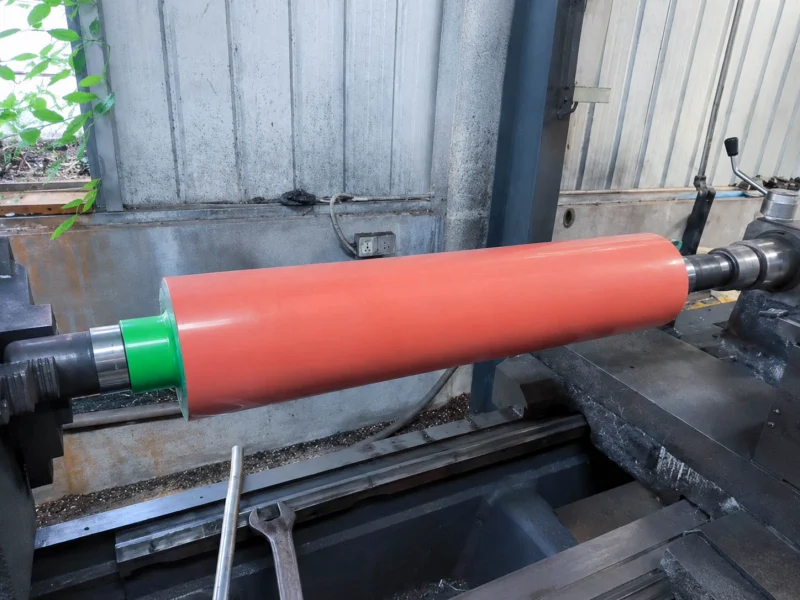
If only partial information is available, the project can still begin from the most basic details: roller position, temperature, contact media, and current problem.
These pages are useful when the FKM material direction needs to be checked together with roller position or application environment.
For ink, coating liquid, adhesive, oil, or process media transfer.
Rodillos dosificadoresFor controlled coating amount, liquid film behavior, and surface consistency.
Rodillos de presiónFor nip contact, pressure behavior, surface protection, and heat-affected contact.
Rodillos para líneas de recubrimiento y laminaciónFor coating media, drying sections, adhesive transfer, laminating contact, and release-related review.
Rodillos para la industria de impresiónFor ink contact, solvent-related media, transfer behavior, and media resistance.
Rodillos para procesamiento de lámina y banda metálicaFor foil, metal strip, oil film, surface protection, and heat- or media-related contact.
Rodillos de caucho NBR / nitriloFor more common oil, ink, adhesive, and general industrial media contact.
Rodillos de silicona sólidaFor heat, release, anti-stick behavior, and surface protection where FKM is not the first direction.
Puede continuar por categoría de material, función del rodillo o tipo de aplicación.
Viton se utiliza frecuentemente como término comercial o de especificación para materiales de tipo FKM. Para producción debe confirmarse si se exige una marca específica o simplemente una dirección FKM equivalente.
Cuando la temperatura o los medios sean más exigentes que las condiciones habituales de aceite, tinta o adhesivo para NBR.
No. La compatibilidad depende del medio concreto, concentración, temperatura y tiempo de contacto; algunos medios son precisamente limitaciones de FKM.
Un rodillo de caucho fiable depende de algo más que la coincidencia dimensional. La formulación del compuesto, la estabilidad de dureza, el espesor del recubrimiento, el acabado superficial, la estructura del eje y la precisión de giro influyen en su comportamiento en la línea.
Wolorin trabaja tanto en sustituciones rutinarias como en proyectos industriales de rodillos de caucho a medida más exigentes, con experiencia de fabricación, equipos de producción e inspección, certificaciones disponibles y controles de calidad documentados. Nuestro sistema de formulación de compuestos puede adaptarse a diferentes requisitos de operación.
Antes del envío pueden comprobarse, según el proyecto, elementos clave como dureza del recubrimiento, detalles del eje, estado superficial y precisión de giro.
Puede consultar nuestro ámbito de fabricación, el proceso de control de calidad y los antecedentes de la empresa en las páginas que aparecen a continuación.
If you already have drawings, samples, an existing roller, or current specifications, you can send them directly to us for quotation.
If your information is not yet complete, you can also start by sharing the roller position, working temperature, contact media, and current problem. The project can also begin from this basic information.