Contacto claro con aceite, grasa o lubricante
NBR estándar debe entrar normalmente en la revisión
Los rodillos de caucho NBR/nitrilo se utilizan habitualmente en posiciones que entran en contacto con aceite mineral, aceite lubricante, grasa, ciertas tintas, adhesivos y líquidos industriales en general.
NBR también se conoce como caucho nitrilo, Buna-N o caucho acrilonitrilo-butadieno. En rodillos no debe seleccionarse solo por el nombre: formulación, dureza, espesor, acabado, adhesión y medios de contacto influyen en el resultado.
Esta página ayuda a decidir si NBR estándar es adecuado o si debe considerarse un nitrilo modificado por calor, desgaste, ozono, compatibilidad o vida útil.
No necesita tener toda la información preparada antes de ponerse en contacto con nosotros.
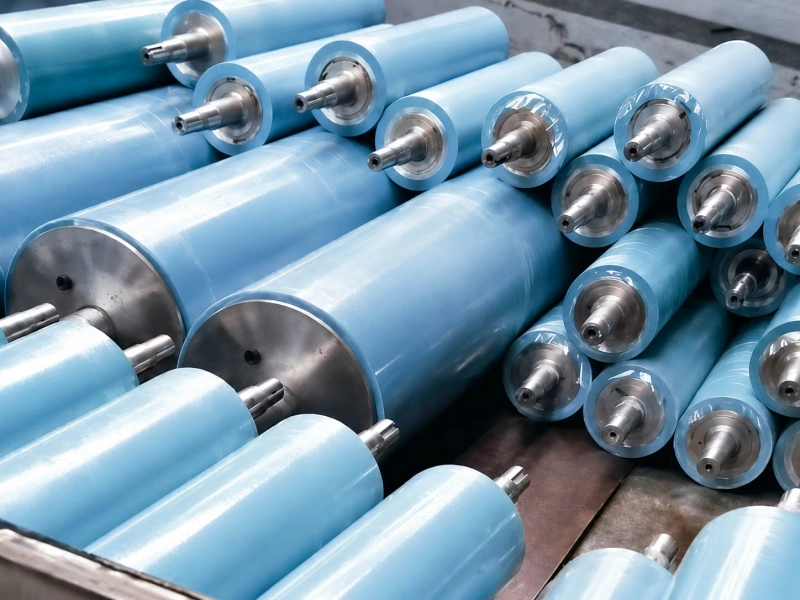
NBR se revisa cuando se necesita mejor resistencia al aceite que muchos cauchos de uso general, manteniendo contacto estable.
Direcciones habituales:
rodillos guía o de contacto con aceite
contacto con lubricante o grasa
determinadas tintas
adhesivos
líquidos industriales
sustituciones donde el material original era NBR/nitrilo/Buna-N
In liquid-related sections, rodillos de transferencia y rodillos dosificadores often need controlled surface behavior for ink, coating, adhesive, or similar media. In feeding or movement-control sections, rodillos de tracción may use NBR when oil resistance and surface grip both matter.
NBR can also be reviewed for some Rodillos para la industria de impresión y Rodillos para líneas de recubrimiento y laminación, but the actual ink, adhesive, coating liquid, cleaner, temperature, and contact pressure still need to be checked.
NBR is usually a good starting material direction when oil resistance is important and the working environment is not extremely aggressive.
| Condición | Dirección de revisión |
|---|---|
| Contacto claro con aceite, grasa o lubricante | NBR estándar debe entrar normalmente en la revisión |
| Interior, condiciones industriales estándar | Suele ser práctico y rentable |
| Determinadas tintas, adhesivos o líquidos | Revisar NBR junto con detalles reales del medio |
| El rodillo anterior era NBR y funcionaba aceptablemente | Usar esa dirección como referencia |
| El problema principal es desgaste/carga, no aceite | Comparar PU u otro material de desgaste |
| El problema es más calor, medios agresivos o disolventes fuertes | FKM, HNBR u otro compuesto puede ser más seguro |
| El problema es ozono, UV o exterior | EPDM, CR, CSM u otro material resistente a intemperie puede ser mejor |
NBR estándar debe entrar normalmente en la revisión
Suele ser práctico y rentable
Revisar NBR junto con detalles reales del medio
Usar esa dirección como referencia
Comparar PU u otro material de desgaste
FKM, HNBR u otro compuesto puede ser más seguro
EPDM, CR, CSM u otro material resistente a intemperie puede ser mejor
The material direction should follow the real working condition, not only the old material name.
These points are useful when reviewing an NBR roller at the early stage. They are reference directions, not fixed limits for every project.
| Artículo | Elemento | Dirección habitual |
|---|---|---|
| Significado práctico | NBR, nitrilo, Buna-N, acrilonitrilo-butadieno | Misma familia de material |
| Dureza común | Aproximadamente 50–90 Shore A | Afecta presión, agarre, deformación, marcas y desgaste |
| Temperatura | Aproximadamente -30°C a +100°C según compuesto/condición | Calor continuo, medio y presión deben revisarse juntos |
| Balance ACN | Más ACN suele mejorar resistencia al aceite y reducir flexibilidad en frío | Permite equilibrar aceite y flexibilidad |
| Superficie | Lisa, rectificada, mate, ranurada, coronada, tracción o transferencia | Debe corresponder a posición y medio |
| Límites | NBR estándar no es la opción más fuerte frente a ozono, exterior prolongado o algunos disolventes agresivos | Puede ser más seguro otro material |
When standard NBR is close but not enough, a modified nitrile direction can be reviewed.
| Nitrile-Based Option | Typical Reference Direction | When It May Be Considered |
|---|---|---|
| Standard NBR / Buna-N | Commonly used for oil-contact, grease-contact, selected ink-contact, adhesive-contact, and standard industrial liquid-contact positions | First review direction for many standard oil-contact rollers |
| High ACN NBR | Stronger oil resistance, with less low-temperature flexibility | When stronger oil resistance matters more than low-temperature flexibility |
| Low ACN NBR | Better low-temperature flexibility, with lower oil resistance than high-ACN grades | When flexibility at lower temperature matters and the oil-contact condition is not too aggressive |
| HNBR, hydrogenated nitrile rubber | Better heat, oxidation, ozone, and ageing resistance than standard NBR; often reviewed for higher-temperature nitrile applications, roughly around -30/-40°C to +150°C depending on compound | When nitrile-related oil resistance is still needed, but the roller also faces higher heat, ozone, or longer ageing requirements |
| XNBR, carboxylated nitrile rubber | Improved abrasion resistance, tear strength, and mechanical toughness; hardness can often be reviewed across roughly 50–95 Shore A depending on compound | When wear, tear, or mechanical stress is stronger than in a standard NBR roller position |
| NBR/PVC blend | Keeps the oil-resistance direction of NBR while improving ozone, weathering, and environmental exposure performance | When oil resistance is still needed, but ozone or open-environment exposure also matters |
| Custom modified NBR compound | Adjusted around media compatibility, hardness, surface behavior, wear, grip, and service life | When standard NBR is close, but the working condition needs a more specific balance |
Common Review Direction: NBR, nitrilo, Buna-N, acrilonitrilo-butadieno
Practical Meaning: Misma familia de material
Common Review Direction: Aproximadamente 50–90 Shore A
Practical Meaning: Afecta presión, agarre, deformación, marcas y desgaste
Common Review Direction: Aproximadamente -30°C a +100°C según compuesto/condición
Practical Meaning: Calor continuo, medio y presión deben revisarse juntos
Common Review Direction: Más ACN suele mejorar resistencia al aceite y reducir flexibilidad en frío
Practical Meaning: Permite equilibrar aceite y flexibilidad
Common Review Direction: Lisa, rectificada, mate, ranurada, coronada, tracción o transferencia
Practical Meaning: Debe corresponder a posición y medio
Common Review Direction: NBR estándar no es la opción más fuerte frente a ozono, exterior prolongado o algunos disolventes agresivos
Practical Meaning: Puede ser más seguro otro material
When standard NBR is close but not enough, a modified nitrile direction can be reviewed.
Typical Reference Direction: Commonly used for oil-contact, grease-contact, selected ink-contact, adhesive-contact, and standard industrial liquid-contact positions
When It May Be Considered: First review direction for many standard oil-contact rollers
Typical Reference Direction: Stronger oil resistance, with less low-temperature flexibility
When It May Be Considered: When stronger oil resistance matters more than low-temperature flexibility
Typical Reference Direction: Better low-temperature flexibility, with lower oil resistance than high-ACN grades
When It May Be Considered: When flexibility at lower temperature matters and the oil-contact condition is not too aggressive
Typical Reference Direction: Better heat, oxidation, ozone, and ageing resistance than standard NBR; often reviewed for higher-temperature nitrile applications, roughly around -30/-40°C to +150°C depending on compound
When It May Be Considered: When nitrile-related oil resistance is still needed, but the roller also faces higher heat, ozone, or longer ageing requirements
Typical Reference Direction: Improved abrasion resistance, tear strength, and mechanical toughness; hardness can often be reviewed across roughly 50–95 Shore A depending on compound
When It May Be Considered: When wear, tear, or mechanical stress is stronger than in a standard NBR roller position
Typical Reference Direction: Keeps the oil-resistance direction of NBR while improving ozone, weathering, and environmental exposure performance
When It May Be Considered: When oil resistance is still needed, but ozone or open-environment exposure also matters
Typical Reference Direction: Adjusted around media compatibility, hardness, surface behavior, wear, grip, and service life
When It May Be Considered: When standard NBR is close, but the working condition needs a more specific balance
The goal is to match the roller cover to the actual media, temperature, pressure, surface requirement, and expected service life.
In some projects, the issue is not that the roller cannot be installed at the beginning, nor that it cannot run at all.
A more common situation is that it works at first, but after a period of use it gradually shows softening, swelling, surface changes, short service life, or repeated rework without a stable long-term result.
These situations are commonly related to factors such as:
So even when the material is described as NBR / nitrile, actual results can still vary significantly.
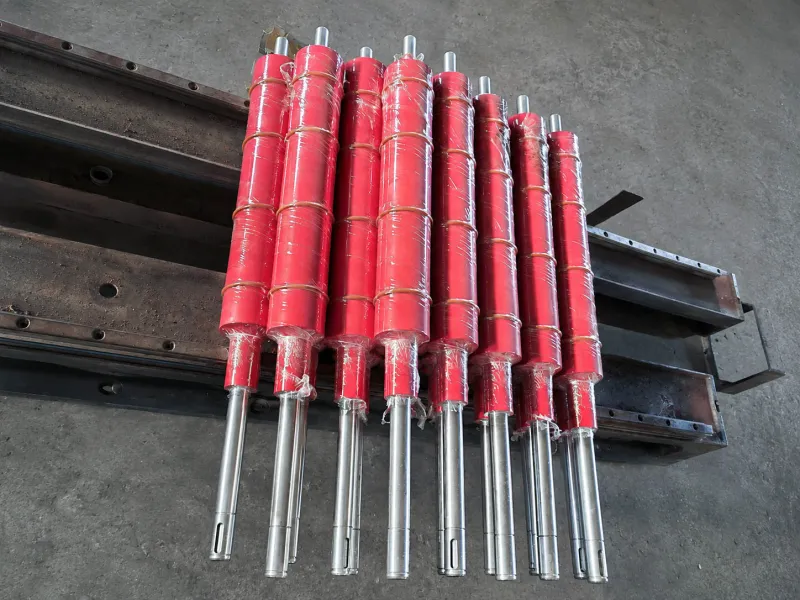
A roller works with lubricating oil, and the old cover was already nitrile. It did not swell, but the surface became polished and grip decreased after running.
NBR may still be a reasonable direction. The review should focus on hardness, surface finish, cover thickness, contact pressure, and whether a more traction-oriented surface is needed.
A roller works near an ink or adhesive-contact section. It runs normally at first, but later shows softening, tackiness, residue build-up, or difficult cleaning.
The material should not be confirmed only because NBR is oil-resistant. Ink composition, adhesive type, solvent content, cleaner, temperature, and contact time should be checked.
A roller contacts oil near a warm section, or works in an environment with ozone, sunlight, or weather exposure. The old roller shows short service life, cracking, or hardening.
Standard NBR may not be enough. A modified nitrile compound or another rubber material may need comparison according to the actual condition.
For NBR rollers, material selection is only one part of the result. The final roller also depends on the compound, hardness, cover thickness, surface finish, bonding, core structure, and installation details.
Common customization and review points include:
En muchos casos, sí.
En muchos casos, sí. Para aceites, lubricantes y determinadas tintas/adhesivos, NBR es una de las direcciones habituales.
No.
Many standard oil-contact projects do not need to start with FKM.
A more suitable approach is to first confirm whether the project requires standard oil resistance or a higher level of temperature and chemical resistance.
Not in an absolute way.
If the temperature is higher, or if continuous operating conditions are more demanding, it is better to confirm the material direction together with the actual media and operating conditions.
Sí.
Sí. Posición, dimensiones básicas, material de contacto, medio, temperatura y problema actual son suficientes para iniciar la revisión.
Swelling or softening is often related to media mismatch, solvent exposure, cleaner contact, high temperature, or unsuitable compound selection.
Modified nitrile may be reviewed when standard NBR is close but not enough. For example, HNBR may be reviewed for better heat, ozone, and ageing resistance; XNBR may be reviewed for stronger wear and tear resistance; NBR/PVC may be reviewed when oil resistance and environmental exposure both matter.
Un rodillo de caucho fiable depende de algo más que la coincidencia dimensional. La formulación del compuesto, la estabilidad de dureza, el espesor del recubrimiento, el acabado superficial, la estructura del eje y la precisión de giro influyen en su comportamiento en la línea.
Wolorin trabaja tanto en sustituciones rutinarias como en proyectos industriales de rodillos de caucho a medida más exigentes, con experiencia de fabricación, equipos de producción e inspección, certificaciones disponibles y controles de calidad documentados. Nuestro sistema de formulación de compuestos puede adaptarse a diferentes requisitos de operación.
Antes del envío pueden comprobarse, según el proyecto, elementos clave como dureza del recubrimiento, detalles del eje, estado superficial y precisión de giro.
Puede consultar nuestro ámbito de fabricación, el proceso de control de calidad y los antecedentes de la empresa en las páginas que aparecen a continuación.
For ink, coating, adhesive, or liquid transfer positions.
Rodillos dosificadoresFor controlled liquid amount, surface consistency, or coating-related contact.
Rodillos de tracciónFor feeding and gripping positions where oil resistance and surface grip may both matter.
Rodillos motricesFor drive-related contact positions where grip, oil exposure, and motion transfer need review.
Rodillos para la industria de impresiónFor ink-contact, impression-related, and print-process roller applications.
Rodillos para líneas de recubrimiento y laminaciónFor adhesive, coating, lamination, release, and liquid-contact web processing lines.
Rodillos de caucho FKMFor higher temperature or more demanding media conditions.
Rodillos de caucho de poliuretanoFor projects that place stronger emphasis on wear resistance, load, grip, or longer service life.
Send the information you already have. It can be a drawing, old roller photo, basic size, contact media, or a short description of the current running problem.
If NBR is suitable, the roller can be reviewed around compound direction, hardness, cover thickness, surface finish, bonding, and roller position. If another material direction is safer, it is better to confirm that before production.